Source Minifix Furniture Connector for Cabinets, Tables, and Shelves
Find and compare 30 Minifix Furniture Connector options from Chinese manufacturers. Evaluate specifications like zinc treatment, size ranges, and MOQs to select the right hardware for your assembly needs.
Key considerations
Products List


Steel Furniture Mini Fix Fitting, Furniture Joint Connector for Cabinet
$0.01 - $0.03
MOQ: 10000 Pieces


Furniture Cam Connector Minifix Eccentric Wheel Nut Connector Fasteners
$0.01 - $0.02
MOQ: 10000 Pieces


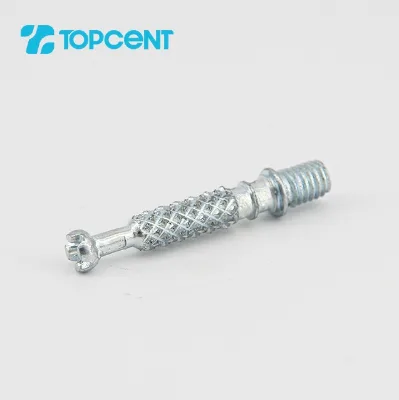

Minifix Connector for Furniture Fast Connection Bolt 32mm Minifix Fittings
$0.01 - $0.02
MOQ: 10000 Pieces


Furniture Fittings Fast Installation Invisible Minifix Fittings Connector
$0.00 - $0.10
MOQ: 50000 Pieces


Comprehensive Sourcing Guide
Minifix Furniture Connector Sourcing Guide
Minifix connectors are essential hardware components in the flat-pack furniture industry, enabling secure, tool-free assembly of particleboard and MDF panels. These systems typically consist of a cam lock and a connecting rod or dowel, allowing for repeated disassembly and reassembly without compromising structural integrity. For procurement teams, sourcing these connectors requires a nuanced understanding of material properties, surface treatments, and dimensional tolerances to ensure compatibility with existing manufacturing lines and end-user expectations.
The market offers a wide variety of minifix configurations, ranging from standard zinc-plated steel to specialized zinc alloy or nickel-plated variants. Buyers must navigate a landscape where customization is frequently available, yet standard models dominate volume orders. Understanding the distinction between fixed and unfixed designs, as well as the specific size ranges available, is critical for aligning supplier capabilities with product design requirements. This guide outlines the key verification steps and commercial considerations necessary for successful procurement.
Product Scope and Observed Listing Signals
The current market landscape for minifix connectors reveals a diverse array of product models, including ROD-B20, CAM1462, ROD-B30, and EHY019, among others. These identifiers often correspond to specific dimensional standards or functional variations, such as dowel-free or self-tapping designs. Procurement specialists should note that while some listings indicate "New" condition and "Customized" attributes, others specify "Non-Customized" or "Unfixed" configurations. This variability suggests that buyers must carefully map their bill of materials to specific model numbers rather than relying on generic product names.
Observed listing signals indicate a significant range in minimum order quantities (MOQ), spanning from 50 to 100,000 pieces, with some specific high-volume items citing an MOQ of 100,000 PCS. This disparity highlights the importance of volume negotiation and the potential for tiered pricing structures. Additionally, the presence of both "Fine Treating" and "Hard Steel" as advertised advantages suggests that surface finish and material hardness are key differentiators. Buyers should verify whether these advantages apply to their specific order volume or if they are limited to premium or customized product lines.
Technical Specifications to Verify
Dimensional accuracy is paramount when sourcing minifix connectors, as even minor deviations can lead to assembly failures or weakened joints. The available size ranges include 32, 35, 36, 40, 42, and 45mm, with specific standards such as 15x11.8mm or 3.2x6.4xM6x31.4mm noted for certain models. Buyers must cross-reference these dimensions with their panel thicknesses and hole drilling specifications. It is crucial to confirm whether the listed standard dimensions match the actual physical product, especially when dealing with mixed orders or custom tooling requirements.
Material composition and surface treatment significantly impact the durability and corrosion resistance of the connectors. Common materials include iron and zinc alloy, with treatments ranging from zinc plating to nickel plating. The color options observed, such as silver and gold, often correlate with the type of plating used. Procurement teams should request material certificates or test reports to verify the thickness of the zinc or nickel coating, ensuring it meets the required salt-spray resistance standards for the intended environment, whether indoor or outdoor use.
Compliance and Safety Documentation
While specific certification statuses are not universally disclosed in general listings, buyers must ensure that all minifix connectors comply with relevant international safety and environmental regulations. This includes verifying that the materials used are free from restricted substances such as lead, cadmium, or hexavalent chromium, particularly if the furniture is destined for markets with strict environmental laws like the EU or North America. Buyers should explicitly request compliance documentation from suppliers, including RoHS or REACH certificates, to mitigate regulatory risks.
Structural integrity and load-bearing capacity are critical safety considerations for furniture connectors. Although specific test results are not provided in general product data, buyers should inquire about the mechanical performance of the connectors under stress. This includes verifying the torque strength of the cam lock and the pull-out resistance of the connecting rod. Requesting third-party test reports or factory audit results can provide assurance that the connectors meet industry standards for durability and safety, reducing the risk of product liability claims.
Cost Drivers and Commercial Terms
The cost of minifix connectors is influenced by several factors, including material prices, surface treatment complexity, and order volume. The observed price range of 0-0.1 USD suggests that these are low-cost items, but the final price can vary significantly based on customization, packaging, and shipping terms. Buyers should be aware that "Fine Treating" or specialized plating may incur additional costs compared to standard zinc plating. Understanding these cost drivers allows for more accurate budgeting and negotiation.
Commercial terms such as EXW, FOB, CIF, and CFR are commonly offered, providing flexibility in logistics management. The lead time of 15-17 working days after sample confirmation is a typical benchmark, but this can vary based on order size and production schedule. Buyers should clarify the payment terms, warranty policies, and return procedures for defective goods. Additionally, understanding the packaging details, such as carton dimensions and pallet configurations, is essential for optimizing shipping costs and warehouse storage.
Supplier Qualification and Quality Control
Supplier qualification is a critical step in ensuring a reliable supply chain for minifix connectors. Buyers should verify the supplier's production capabilities, including their ability to handle OEM and ODM custom services. The presence of "Factory" as a profit model suggests that some suppliers are direct manufacturers, which can offer cost advantages and better quality control. However, buyers should conduct due diligence to confirm the supplier's actual manufacturing capacity and quality management systems.
Quality control measures should be clearly defined and agreed upon before placing orders. This includes establishing acceptable quality limits (AQL) for visual defects, dimensional errors, and functional failures. Buyers should request pre-shipment inspections or arrange for third-party inspection services to verify that the delivered goods meet the specified standards. Implementing a robust quality control process helps minimize the risk of receiving substandard products and ensures consistency across production batches.
Long-Term Procurement Checks
Long-term procurement success depends on continuous monitoring of supplier performance and market trends. Buyers should regularly review supplier delivery times, product quality, and responsiveness to issues. Establishing a performance scorecard can help identify potential risks and drive continuous improvement. Additionally, staying informed about changes in material costs, regulatory requirements, and technological advancements in connector design can help buyers make proactive sourcing decisions.
Building a strong relationship with suppliers can lead to better pricing, priority production, and access to new product innovations. Buyers should engage in regular communication with their suppliers to discuss future needs, potential customizations, and feedback on product performance. This collaborative approach fosters trust and ensures that the supply chain remains resilient and adaptable to changing market conditions. By maintaining a strategic focus on supplier management, buyers can secure a competitive advantage in the furniture manufacturing industry.
FAQs
What materials are used for minifix furniture connectors?
Minifix furniture connectors are primarily made from iron or zinc alloy. These materials provide the necessary strength for structural connections while allowing for surface treatments like zinc or nickel plating to enhance durability and corrosion resistance in various furniture applications.
What size ranges are available for minifix furniture connectors?
Common size ranges include 32, 35, 36, 40, 42, and 45mm. Specific models may also offer dimensions like 33, 34, 38, 43, and 44mm. Buyers should verify the exact millimeter specifications against their furniture design requirements to ensure proper fit and load capacity.
Can minifix furniture connectors be customized for specific projects?
Yes, customization is available for minifix furniture connectors. Suppliers offer OEM and ODM services, allowing buyers to request specific modifications. This includes adjustments to dimensions, surface treatments, or packaging to meet unique project specifications and brand requirements.
What is the typical lead time for Minifix Furniture Connector orders?
The lead time is typically 15 to 17 working days after confirming the sample. This period covers production and quality checks. Buyers should factor in additional time for shipping and customs clearance when planning their project timelines and inventory management.
What packaging options are provided for minifix furniture connectors?
Standard packaging includes cartons or woven bags. Specific carton dimensions vary by model, such as 32*24*14cm or 24*21*14cm. Pallets are also available for bulk shipments, with dimensions like 110*100*14cm, ensuring secure transport and easy handling for warehouse storage.
What surface treatments are applied to minifix furniture connectors?
Common surface treatments include zinc and nickel plating. These treatments protect the iron or zinc alloy base from oxidation and wear. The choice of treatment can affect the final appearance, such as silver or gold finishes, and the connector's resistance to environmental factors.
What are the main functions of minifix furniture connectors?
Minifix furniture connectors function as fasteners and connectors for joining furniture components. They are designed to be fixed or unfixed depending on the model, providing structural stability. Some types are dowel-free or self-tapping, simplifying the assembly process for various furniture styles.