Source Modern Aluminum Alloy Greenhouse with Tempered Glass for Commercial, Production, and Experiment Use
Compare 30 listings for the Modern Aluminum Alloy Greenhouse with Tempered Glass designed for commercial, production, and experiment applications. These structures feature arched or shaped roofs, sliding doors, and customizable dimensions to suit mixed farming and vegetable cultivation needs.
Key considerations
Products List

Modern Glass Greenhouse with Sturdy Aluminum Frame Garden Greenhouse
$108.00 - $280.00
MOQ: 2 Square Meters

Premium Tempered Glass Greenhouse with Aluminum Frame Plant Protection Garden Greenhouse
$108.00 - $280.00
MOQ: 2 Square Meters


Tempered Glass Greenhouse with Steel Structure for Outdoor Farming
$110.00 - $170.00
MOQ: 10 Square Meters

Modern Glass Greenhouse with Automatic Ventilation for Healthy Plants
$110.00 - $170.00
MOQ: 10 Square Meters

Tempered Glass Greenhouse for Mushroom Growing Agricultural Structure
$110.00 - $170.00
MOQ: 10 Square Meters


Garden Glass Greenhouse with Ventilation Window
$15.00
MOQ: 200 Square Meters
Cangzhou Zhuotai Greenhouse Equipment Manufacturing Co., Ltd.

Modern Style Glass Greenhouse for Yard
$15.00
MOQ: 200 Square Meters
Cangzhou Zhuotai Greenhouse Equipment Manufacturing Co., Ltd.

Aluminum Frame Glass Garden Greenhouse
$15.00
MOQ: 200 Square Meters
Cangzhou Zhuotai Greenhouse Equipment Manufacturing Co., Ltd.


Modern Agricultural/Commercial/Industrial Glass Greenhouse for Sale
$26.00 - $48.00
MOQ: 500 Square Meters


Large Size Multi Span Glass Agriculture Greenhouse for Cultivation
$26.00 - $48.00
MOQ: 500 Square Meters
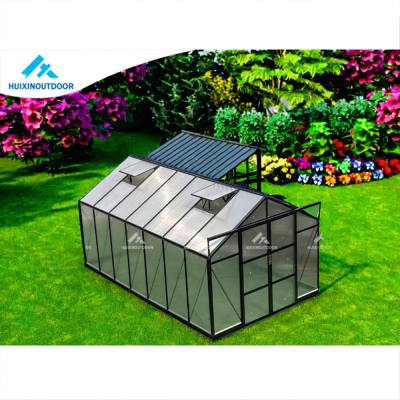


High Quality Moderate Price Agriculture Glass Greenhouse for Sale
$45.00 - $69.00
MOQ: 1000 Square Meters
Comprehensive Sourcing Guide
Sourcing Guide for Modern Aluminum Alloy Greenhouses with Tempered Glass
Understanding the Technical Architecture of Aluminum and Glass Systems
The Modern Aluminum Alloy Greenhouse with Tempered Glass represents a sophisticated intersection of structural engineering and agricultural science. Unlike traditional steel structures, aluminum alloys offer a distinct advantage in corrosion resistance, ensuring longevity in humid agricultural environments without the need for heavy, maintenance-intensive coatings. The core structural integrity of these units relies on high-grade aluminum alloy frames, which are often specified with thicknesses ranging from 1.5mm to 3.0mm. This dimensional variance is critical, as the thickness directly correlates with the structure's ability to withstand environmental stressors such as high winds and heavy snow loads.
The glazing material is equally pivotal. Tempered glass, specifically 4mm thick in many commercial configurations, provides a robust barrier against physical impact while maintaining high light transmittance rates, often exceeding 90%. This high transmittance is essential for maximizing photosynthesis in commercial and experimental settings. The roof design frequently features an arched or shaped roof profile, which facilitates natural water runoff and reduces snow accumulation risks. In terms of spatial configuration, these greenhouses are available in multi-span arrangements, allowing for expansive cultivation areas that can be customized to fit specific land plots. The frame color is typically a green or grey powder-coated finish, which not only provides aesthetic integration with the landscape but also offers an additional layer of UV protection for the underlying metal.
Structural Performance and Environmental Resilience
When evaluating the resilience of a modern aluminum alloy greenhouse, buyers must scrutinize the specific load-bearing capabilities and resistance metrics. The structural design is engineered to handle significant environmental pressures. For instance, high-performance models are rated for wind resistance speeds between 130km/h and 140km/h, a crucial specification for regions prone to typhoons or severe storms. Similarly, the snow load capacity is a primary determinant of structural safety in colder climates, with observed specifications indicating a capacity of up to 80kg per square meter.
The heating and climate control systems integrated into these structures vary based on the intended usage. Some configurations utilize continuous heating methods to maintain optimal growing temperatures year-round, while others are designed as unheated structures suitable for seasonal cultivation or specific microclimate requirements. The suitability of the greenhouse extends to various cultivation methods, including A-frame and vertical farming setups. This versatility allows the structure to support a wide array of crops, from seedling cultivation to the production of vegetables, fruits, and flowers. The door systems are also a key component of the operational workflow, with options for double or single sliding doors that ensure efficient access for machinery and personnel while maintaining the integrity of the internal climate.
Compliance, Standards, and Certification Verification
In the B2B procurement of agricultural infrastructure, verifying compliance with local and international standards is non-negotiable. While specific certification bodies vary by region, the product specifications often reference adherence to size customization standards, ensuring that the final build meets the exact dimensional requirements of the buyer's site. The origin of the materials and the manufacturing location play a significant role in compliance. Products originating from established manufacturing hubs, such as Hei Bei in China, often adhere to rigorous internal quality control protocols, though buyers must independently verify that these protocols align with their local building codes.
Buyers should request documentation regarding the material composition, specifically confirming that the frame material is indeed hot galvanized steel or aluminum alloy as advertised, and that the glass is tempered to safety standards. The warranty period is another critical compliance metric; a standard offering of 20 years for the frame indicates a high level of confidence in the material's durability. However, this warranty should be scrutinized for exclusions related to improper installation or force majeure events. Additionally, the packaging standards, which may involve 5-ply brown cartons and wooden cases for delicate components, serve as an indirect indicator of the manufacturer's attention to detail and logistics readiness.
Cost Drivers and Pricing Dynamics
The pricing of modern aluminum alloy greenhouses is influenced by a complex matrix of factors, including material costs, structural complexity, and customization levels. The observed price range for these units can vary significantly, from approximately $4 to $280 per unit, though this often reflects the price per square meter or specific component costs rather than the total project price. The total cost is heavily driven by the choice of frame thickness, the type of glazing, and the inclusion of auxiliary systems such as heating, ventilation, and shading.
Minimum Order Quantities (MOQs) also play a substantial role in the overall cost structure. The MOQ range observed spans from 2 units to 1000 units, meaning that small-scale buyers may face higher per-unit costs compared to large commercial operators who can leverage economies of scale. Customization is a primary cost driver; while standard models may be available at lower price points, bespoke solutions requiring specific lengths, widths, or specialized roof shapes will incur additional engineering and manufacturing costs. The "Size Custom" standard allows for flexibility but requires precise communication of requirements to avoid costly revisions during the production phase.
Typical Applications and Cultivation Suitability
The versatility of aluminum alloy greenhouses with tempered glass makes them suitable for a diverse range of agricultural applications. They are primarily designed for commercial greenhouse usage, supporting large-scale production of vegetables, fruits, and flowers. The high light transmittance of the tempered glass makes them particularly effective for crops that require intense sunlight, such as tomatoes, cucumbers, and ornamental flowers. Furthermore, the structural robustness allows for their use in seedling cultivation, where controlled environments are necessary for early growth stages.
The application scope extends beyond simple crop production to include experimental greenhouses for research institutions. The ability to customize the internal layout and climate control systems allows researchers to simulate various environmental conditions for testing new agricultural techniques. The "Suitable" attribute for mixed farming indicates that these structures can support integrated agricultural systems, combining different types of crops or livestock in a controlled environment. Whether used for vegetable tree cultivation or vertical farming, the modular nature of the aluminum frame allows for efficient space utilization and scalability.
Supplier Evaluation and Quality Control Protocols
Selecting the right supplier requires a rigorous evaluation process that goes beyond price comparisons. Buyers should assess the supplier's track record in delivering aluminum alloy structures, specifically looking for experience with tempered glass integration. The production model, such as the HX98 Series or GG-1, can serve as a reference point for the supplier's product line maturity. A reliable supplier will provide detailed technical drawings and specifications that align with the buyer's site conditions.
Quality control should be a continuous process, starting from the raw material inspection. Buyers must verify that the aluminum alloy meets the specified thickness and that the tempered glass has undergone proper safety testing. The packing method, whether bulk, customized, or using wooden cases, is an indicator of the supplier's logistics capabilities and their commitment to protecting the product during transit. For international procurement, verifying the supplier's ability to handle export documentation and adhere to shipping standards is essential. The "Easy Installed" and "Economic" advantages listed in product attributes should be validated through case studies or customer testimonials to ensure they are not merely marketing claims.
Long-Term Procurement and Lifecycle Management
Investing in a modern aluminum alloy greenhouse is a long-term decision that requires careful consideration of lifecycle costs. The 20-year warranty on the frame suggests a long service life, but maintenance planning is crucial to realizing this potential. Buyers should factor in the cost of periodic inspections, particularly for the sliding door mechanisms and the integrity of the glass panels. The heating method, whether continuous or unheated, will significantly impact operational energy costs over the lifespan of the structure.
Procurement strategies should also account for future scalability. The multi-span design and customizable dimensions allow for easy expansion as the business grows. Buyers should negotiate terms that allow for the addition of modules or the replacement of specific components without requiring a complete overhaul of the structure. The origin of the product, often China, implies a supply chain that is generally robust, but buyers should establish clear lead time expectations and contingency plans for potential logistical delays. By focusing on these long-term considerations, buyers can ensure that their investment in a Modern Aluminum Alloy Greenhouse with Tempered Glass remains a productive asset for decades.
FAQs
What is the wind resistance capacity of this greenhouse?
The structure withstands wind speeds between 130 and 140 km/h. This high resistance ensures safety in storm-prone regions while maintaining the integrity of the aluminum alloy frame and tempered glass panels.
Can the greenhouse be customized for specific dimensions?
Yes, the size is fully customizable to meet specific site requirements. Buyers can specify lengths such as 8, 16, 24, or 32 feet, or request other custom dimensions to fit their land plots.
Which heating methods are available for this system?
Options include continuous heating or unheated configurations depending on the model. Continuous heating maintains optimal temperatures year-round, while unheated versions suit seasonal cultivation or specific microclimate needs.
How long is the warranty period for the frame?
The frame comes with a standard 20-year warranty. This coverage reflects the durability of the aluminum alloy material, though it typically excludes damage from improper installation or force majeure events.
What is the light transmittance rate of the glass?
The tempered glass offers a light transmittance rate of more than 90 percent. This high efficiency maximizes photosynthesis, making the structure ideal for growing vegetables, fruits, and flowers in commercial settings.
Which materials are used for the frame construction?
Frames are constructed from aluminum alloy with thicknesses ranging from 1.5mm to 3.0mm. Some models may also utilize hot galvanized steel or steel-plastic building materials for enhanced structural support.
What is the snow load capacity of the structure?
The design supports a snow load of up to 80 kilograms per square meter. This capacity ensures structural stability in colder climates where heavy snow accumulation is a frequent environmental stressor.