Source Modern Crystal Pendant Light for Hotels, Homes, and Restaurants
Explore 30 options for Modern Crystal Pendant Light fixtures suitable for conference rooms, luxury homes, and hospitality venues. Compare specifications such as LED light sources, voltage ranges, and contemporary design styles to find the right lighting solution for your project.
Key considerations
Products List


Crystal Modern Pendant Lamp Light for Living Room Bedroom Hanging Lamp Pendant Light
$48.00 - $300.00
MOQ: 1 Pieces


Comprehensive Sourcing Guide
Modern Crystal Pendant Light Sourcing Guide
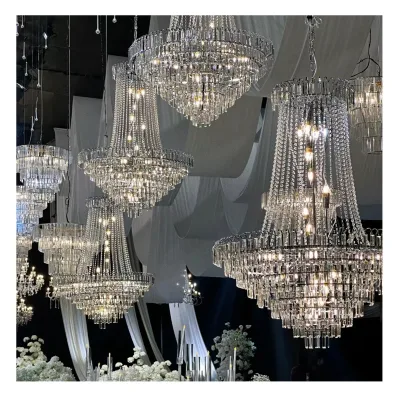
Procuring modern crystal pendant lights requires a disciplined approach to balancing aesthetic versatility with rigorous technical validation. These fixtures serve as central design elements in high-end residential and commercial spaces, where the interplay of light and material defines the atmosphere. Buyers must navigate a market where "contemporary" and "traditional" styles often coexist within the same product line, necessitating clear definition of design intent before engaging with suppliers. The observed product range indicates a strong presence of crystal and iron combinations, offering a durable yet elegant solution for spaces ranging from conference rooms to luxury homes.
The sourcing process is further complicated by the variability in electrical specifications and certification requirements across different manufacturers. While some listings highlight broad voltage compatibility suitable for global markets, others specify narrower ranges that may require additional transformers or adapters. A successful procurement strategy begins with understanding these technical divergences to ensure the selected lighting solutions integrate seamlessly with existing building infrastructure. This guide outlines the critical verification steps required to mitigate risk and secure high-quality fixtures that meet both design and safety standards.
Product Scope and Observed Listing Signals
The current market for modern crystal pendant lights presents a diverse array of configurations, primarily defined by the combination of crystal elements with iron or steel structural components. Observed listings frequently feature models with dimensions ranging from compact D600mm units to expansive multi-tiered structures with diameters up to D1200mm. These variations allow buyers to select fixtures that scale appropriately with room height and floor area, with specific models noted for irradiating areas between 10 and 15 square meters, while others are engineered for larger spaces exceeding 30 square meters. The material composition is consistently reported as a blend of crystal and iron, providing the necessary structural integrity to support the weight of the crystal elements while maintaining a sleek, modern profile.
Design flexibility is a key signal in the current product landscape, with many suppliers offering customization options for colors, finishes, and dimensions. Buyers can often request specific finishes such as polished gold or silver, and some manufacturers provide the capability to tailor the lighting source to specific requirements, including E14, E26, E27, or E39 lamp holders. The observed product names and descriptions suggest a strong focus on applications in living rooms, hotels, and restaurants, where the aesthetic impact of the light is paramount. However, the presence of "as Your Requires" color options and custom dimensions indicates that standard catalog items may need to be adapted to fit specific architectural constraints or interior design themes.
Technical Specifications to Verify
Electrical compatibility is the most critical technical parameter to verify before finalizing any purchase order, as observed voltage ranges vary significantly between suppliers. While some products are rated for a broad input voltage of AC85-265V or 90V-260V, ensuring global adaptability, other listings specify a narrower 36V requirement, which necessitates the use of external transformers. Buyers must confirm the specific input voltage of the fixture against their local grid standards to prevent immediate failure or the need for costly retrofitting. Additionally, the lamp holder types, ranging from E12 to E39, must be matched with the intended bulb specifications, particularly when the design calls for specific wattage limits such as a maximum of 40W per socket.
The physical and optical specifications of the fixture also require detailed scrutiny to ensure they meet the intended lighting performance. The beaming angle and color temperature are essential for achieving the desired ambiance, with observed options including warm white light and a beaming angle of 80 degrees. The product dimensions, often listed as specific diameters like D600mm or complex multi-tiered heights, must be cross-referenced with the ceiling height and the irradiated area requirements of the installation site. Furthermore, the choice of LED chips, such as Bridgelux, and the specific lighting source configuration, whether it be individual bulbs or LED strips, directly impacts the longevity and energy efficiency of the installation.
Compliance and Safety Documentation
Navigating the complex landscape of international certifications is essential for ensuring that modern crystal pendant lights meet safety and environmental standards in the target market. The observed product listings frequently cite a comprehensive suite of certifications, including CE, RoHS, UL, ISO, and various regional standards like SAA, VDE, and C-tick. These documents serve as proof that the electrical components and materials have undergone rigorous testing for fire safety, electromagnetic compatibility, and hazardous substance restrictions. Buyers should request valid, up-to-date certification certificates for each specific model, as the presence of a certification on a general product page does not guarantee that every batch or variant has been tested and approved.
Beyond electrical safety, the documentation must also address the environmental and material compliance of the fixture. Certifications such as REACH, FCC, and Energy Star indicate adherence to strict regulations regarding chemical emissions and energy efficiency, which are increasingly important for commercial projects and green building certifications. The observed "Our Certification" lists often include EMC and LVD, which are critical for ensuring the fixture does not interfere with other electronic devices and operates safely within low voltage directives. Procurement teams must verify that the specific batch of goods being shipped carries the same certification status as the samples reviewed, as manufacturing processes can vary between production runs.
Cost Drivers and Commercial Terms
The pricing of modern crystal pendant lights is influenced by a combination of material costs, customization complexity, and the level of service provided. The observed price range of 24 to 499 USD reflects the significant variance between basic models and those featuring premium finishes, complex multi-tier designs, or specialized LED integration. Customization options, such as specific color requirements or unique dimensions, often incur additional costs and can extend the production timeline. Buyers should be aware that the "on-demand custom" standard noted in some listings implies a higher price point compared to standard catalog items, as it involves dedicated tooling or manual assembly processes.
Commercial terms, including Minimum Order Quantity (MOQ) and lead times, are critical factors that impact the overall procurement budget and project schedule. The observed MOQ range of 1 to 30 units offers flexibility for small-scale projects, while larger orders may benefit from volume discounts not explicitly detailed in the initial listings. Lead times are a significant cost driver, with some suppliers indicating a delivery window of 25 to 30 days after the deposit to guarantee quality, which can delay project completion if not accounted for in the timeline. Packaging methods, ranging from foam packages to wooden crates, also affect shipping costs and the risk of damage during transit, necessitating a clear agreement on packaging standards to protect the fragile crystal components.
Supplier Qualification and Quality Control
Evaluating supplier qualification requires a deep dive into their manufacturing capabilities and quality assurance protocols, particularly for products originating from major lighting hubs like Zhongshan, China. Buyers should verify the supplier's ability to provide lighting and circuitry design services, as this indicates a higher level of technical competence and the capacity to solve complex integration challenges. The presence of a "Lighting Solutions Service" attribute suggests that the supplier can offer more than just a product, potentially providing value-added engineering support to ensure the fixture performs as intended in the specific application environment.
Quality control measures must be explicitly defined and agreed upon before production begins, focusing on the integrity of the crystal and iron assembly. Given the fragility of crystal elements, the packaging process is a critical quality control point, with observed methods including foam packing inside cartons or full wooden packing for extra protection. Buyers should request a detailed quality control plan that covers material inspection, electrical safety testing, and final visual inspection before shipment. The warranty periods observed, ranging from 3 to 10 years, serve as a strong indicator of the supplier's confidence in their product durability, but these terms must be clearly documented in the contract to ensure enforceability.
Long-Term Procurement Checks
Establishing a long-term procurement strategy involves setting up mechanisms for ongoing quality monitoring and performance verification after the initial installation. The warranty periods observed, which can extend up to 10 years, provide a baseline for expected product longevity, but buyers must ensure that the warranty covers both the electrical components and the structural integrity of the crystal and iron assembly. Regular audits of the supplier's production lines and quality control records can help maintain consistency, especially when reordering for expansion projects or replacing units in existing installations.
Sustainability and supply chain resilience are also key considerations for long-term procurement success. Buyers should verify the supplier's adherence to environmental standards like RoHS and REACH to ensure future compliance with evolving regulations. Additionally, maintaining a relationship with a supplier that offers customization and design services can provide a competitive advantage, allowing for rapid adaptation to changing design trends or specific client needs. By focusing on these long-term checks, procurement teams can secure a reliable supply of high-quality modern crystal pendant lights that continue to meet aesthetic and functional requirements for years to come.
FAQs
What certifications are available for modern crystal pendant lights?
Certifications include CE, CCC, RoHS, UL, ISO, EMC, LVD, SAA, VDE, ETL, FCC, and Energy Star. These ensure compliance with international safety and environmental standards. Buyers can select products based on specific regional requirements. The available options cover major global markets, providing confidence in product quality and regulatory adherence for commercial and residential installations.
Can I customize the design of a Modern Crystal Pendant Light?
Customization is available for modern crystal pendant lights. Buyers can request specific colors, dimensions, and lighting solutions. The service includes lighting and circuitry design to meet unique project needs. This flexibility allows for tailored aesthetics and functional requirements, ensuring the final product aligns perfectly with interior design concepts and spatial constraints.
What is the typical lead time for ordering modern crystal pendant lights?
The delivery date is typically 25-30 days after the deposit payment. This timeframe guarantees quality control and proper manufacturing processes. Buyers should plan their procurement schedules accordingly to avoid delays. The lead time ensures that each unit meets the specified standards before shipping, maintaining consistency across large orders for hotels or luxury homes.
What materials are used in Modern Crystal Pendant Light construction?
Materials include crystal, iron, and combinations of both. The body material often features polished gold finishes or silver tones. Crystal elements provide decorative appeal, while iron structures ensure durability. These materials are selected for their aesthetic value and structural integrity, supporting contemporary or traditional design styles in various lighting applications.
What voltage options are supported by modern crystal pendant lights?
Voltage options range from 90V-260V and AC85-265V. Some models support 36V input. This wide range ensures compatibility with different electrical systems globally. Buyers can select the appropriate voltage for their specific location, ensuring safe and efficient operation without the need for additional transformers or converters in most cases.
What is the warranty period for modern crystal pendant lights?
Warranty periods vary, with options including 3 years, 4 years, and 10 years. Longer warranties indicate higher confidence in product durability. Buyers can choose based on their risk tolerance and project requirements. The warranty covers manufacturing defects, providing peace of mind for commercial installations and long-term residential use in various environments.