Source Modern Indoor Outdoor Staircase for Villas, Homes, and Buildings
Find a wide selection of Modern Indoor Outdoor Staircase options including spiral, straight, and floating designs. Compare 30 available products with customized materials like steel and wood, varying structures, and installation types for residential and commercial projects.
Key considerations
Products List


Modern Indoor Small Space Stairs Stainless Steel Wooden Straight Staircase
$999.00 - $2999.00
MOQ: 1 Sets


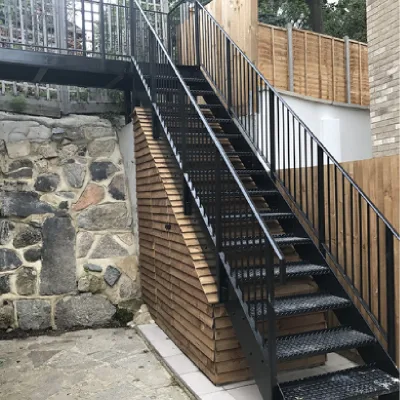

Orient Modern Design Stair Stainless Steel 304 Outdoor Indoor Customized Spiral Staircases
$2699.00 - $3999.00
MOQ: 1 Pieces

Orient Hot Sale Outdoor Steel Spiral Staircase Wooden Step Spiral Stairs
$2699.00 - $3999.00
MOQ: 1 Pieces

Orient Spiral Staircase Custom Made Concrete Steps Outdoor Use Garden Pathway Stair
$2699.00 - $3999.00
MOQ: 1 Pieces

Orient Factory Top Sales Spiral Staircase Outdoor Stainless Steel Spiral Stair Case
$2699.00 - $3999.00
MOQ: 1 Pieces


Comprehensive Sourcing Guide
Strategic Sourcing Guide for Modern Indoor and Outdoor Staircases
Understanding Product Variability and Structural Categories
When sourcing modern indoor and outdoor staircases, buyers must first navigate a complex landscape of structural configurations and design terminologies. The market does not offer a single monolithic product but rather a spectrum of solutions defined by their geometry and load-bearing mechanisms. Based on observed product attributes, the primary structural categories include spiral, straight, and floating configurations. Spiral staircases are characterized by a helical ascent around a central pole, often utilizing a "Spiral" structure type and designated as "Spiral Stair" in technical specifications. These are frequently marketed for their space-saving efficiency in both residential and commercial environments.
In contrast, straight staircases represent a linear ascent, often categorized under "Straight Stair" attributes. These units may feature a "Plate" or "Beam" structure, offering robust support for high-traffic areas. A distinct and increasingly popular category is the floating staircase, which utilizes an "Overhanging" structure design. This aesthetic choice relies on cantilevered treads that appear to float without visible support from the side, often requiring precise engineering to ensure safety. The product data also highlights "Special Stairs" and "Ordinary Stairs," indicating that procurement strategies must differentiate between standard off-the-shelf units and bespoke architectural elements.
The versatility of these products is further evidenced by their dual usage capabilities. Many modern staircases are engineered for "Indoor,Outdoor" applications, suggesting weather-resistant treatments and materials suitable for exterior exposure. However, specific models are designated strictly for "Indoor" use, necessitating careful filtering based on the intended installation environment. The "Bench" attribute in the data, ranging from "Single Stair" to "Multi Stair" and "Double Stair," likely refers to the complexity of the unit or specific configuration options, requiring buyers to clarify whether they are purchasing a single flight or a multi-level assembly.
Material Selection and Customization Parameters
Material selection is the second critical pillar in the procurement of modern staircases, directly influencing durability, aesthetics, and cost. The observed data reveals a diverse material palette, with "Metal" and "Steel-Wood" being prominent classifications. Metal construction often implies the use of steel for the framework, providing high tensile strength and a contemporary industrial look. Steel-wood combinations offer a hybrid approach, marrying the structural integrity of steel with the warmth of timber, a popular choice for modern residential interiors.
For the treads and steps, the material options are equally varied. The data explicitly lists "Wood / Glass / Marble" as potential step materials. Specific observations note "America Oak" as a tread material, indicating a preference for high-quality hardwoods in premium segments. Glass treads are often paired with metal or steel railings to create a transparent, light-filled aesthetic, while marble steps provide a luxurious, heavy-duty surface suitable for grand entrances. The handrail and railing components further expand the customization possibilities, with options including "Cusomized/SS304/Metal/Wood" for handrails and "Glass / Steel" for railings. SS304 indicates the use of stainless steel grade 304, a standard for corrosion resistance, which is particularly relevant for outdoor installations.
Customization is a defining feature of this product category. The attribute "Customization: Available" is confirmed, alongside specific mentions of "Customized Shape," "Customized Colors," and "Customized" design standards. This suggests that buyers should expect to engage in a collaborative design process rather than simply selecting from a static catalog. The "prod_standard" field often lists "customised size," reinforcing that dimensions are rarely fixed. Buyers must verify that the supplier can accommodate specific architectural constraints, such as non-standard rise and run measurements. The "Standard" field also references specific dimensions like "200.00cm * 150.00cm * 120.00cm" in certain contexts, but these should be treated as examples of customizable parameters rather than universal fixed specifications.
Technical Specifications and Compliance Verification
Technical compliance and precise specification verification are essential to ensure that the purchased staircase meets safety and performance requirements. While the provided data lists various product models such as "PR-004," "PR-005," "PR-008," "PR-LU," "S," "DEN-1007," and "DEN-5012," these serve as internal identifiers rather than universal safety certifications. Buyers must not assume that a specific model number implies compliance with international building codes without explicit verification from the supplier.
One critical area of verification is the origin and manufacturing location. The data indicates origins in "China" and specifically "Guangdong, China" or "Guangdongfoshan." While these regions are known for manufacturing capabilities, buyers must confirm that the specific production facility adheres to relevant local and international safety standards. The "prod_standard" attribute sometimes lists dimensions, but it is crucial to distinguish between packaging dimensions and structural load-bearing standards. For outdoor staircases, buyers should verify resistance to environmental factors such as UV degradation, moisture, and temperature fluctuations, which are not explicitly detailed in the generic product attributes.
Installation methods vary significantly based on the design. The data notes both "Easy Install" and "DIY Install" options. However, the complexity of "Floating Staircase" or "Spiral Stair" designs often requires professional installation to ensure structural integrity, particularly when dealing with overhanging structures. Buyers should clarify whether the "DIY" designation applies to simple straight units or if it is a marketing term for more complex systems. Furthermore, the "Framework" attribute mentioning "Combined Scaffolding" and "Building Scaffold" suggests that some products may be modular or intended for temporary or semi-permanent structures, which requires a different compliance check than permanent architectural staircases.
Cost Drivers and Commercial Terms Analysis
The commercial landscape for modern staircases is influenced by several distinct cost drivers, primarily related to material selection, customization levels, and packaging requirements. The observed price range in the market spans from $1 to $8,999, a wide variance that reflects the difference between simple, small-scale units and large, fully customized architectural installations. This range indicates that budget planning must be highly specific to the desired scope of work.
Minimum Order Quantity (MOQ) is another significant factor, with observed ranges from 1 to 100 units. For custom projects, an MOQ of 1 is highly favorable, allowing for single-unit procurement. However, buyers should be aware that higher customization levels may trigger higher MOQs or additional setup fees. The packaging methods also impact logistics costs. The data lists "Wooden Carton," "Flat Package," "Plywood Box," "Plywood Case or Carton," and "Plywood Box or Fiber Bag Packaging." Flat packaging is generally more cost-effective for shipping as it reduces volumetric weight, whereas plywood boxes offer superior protection for delicate glass or marble components.
Lead times and production schedules are not explicitly quantified in the provided data, but the presence of "Customized" attributes implies a longer production cycle compared to standard inventory items. Buyers should anticipate that custom dimensions, specific wood species like America Oak, and specialized finishes will extend the manufacturing timeline. Additionally, the "Application" field mentions "Villa," suggesting that these products are often targeted at high-end residential projects where time-to-completion is critical. Buyers must factor in the potential for delays due to the bespoke nature of the manufacturing process.
Supplier Evaluation and Quality Assurance Protocols
Evaluating suppliers for modern staircases requires a rigorous approach to quality assurance, particularly given the structural nature of the product. Since specific supplier names and certifications are not provided in the data, buyers must conduct their own due diligence. The first step is to verify the supplier's capability to handle the specific structural type required, such as "Overhanging" or "Spiral" designs. A supplier claiming to offer "Easy Install" for a complex floating staircase should be scrutinized to ensure they provide the necessary engineering drawings and support.
Quality control should focus on the finish and material integrity. For metal components, buyers should request evidence of surface treatment processes that prevent rust and corrosion, especially for outdoor units. For wood treads, verification of the wood grade, treatment against pests, and finish durability is essential. The "Railing" and "Handrail" attributes suggest that the connection points between the rail and the steps are critical failure points; therefore, visual inspections of joint quality and welding standards (if applicable) are mandatory.
Buyers should also assess the supplier's ability to provide detailed technical documentation. The "prod_model" variations indicate a large inventory, but the ability to generate custom drawings for "Customized Shape" and "Customized Size" is a key differentiator. A reliable supplier will provide 3D renderings and structural calculations before production begins. Additionally, the "Installation" attribute implies that the supplier should offer clear assembly instructions or on-site support, particularly for "DIY Install" models where the end-user is responsible for the final assembly.
Typical Applications and Long-Term Procurement Strategy
The application of modern staircases extends beyond simple vertical circulation; they serve as central design elements in various settings. The "Application" field explicitly mentions "Villa," indicating a strong presence in high-end residential markets. However, the "Indoor,Outdoor" usage capability suggests suitability for commercial spaces, public buildings, and mixed-use developments. The "Special Stairs" and "Ordinary Stairs" classifications imply that these products can be adapted for both decorative and functional purposes.
For long-term procurement, buyers should prioritize suppliers who offer comprehensive after-sales support and warranty coverage. Given the high cost and structural importance of staircases, the risk of installation errors or material failure must be mitigated. Buyers should inquire about the availability of replacement parts, particularly for glass or metal components that may be damaged during transit or installation. The "Packing" methods, such as "Plywood Box" or "Fiber Bag Packaging," should be evaluated for their ability to protect the product during long-distance shipping, which is common for imports from "Guangdong, China."
Furthermore, the trend towards "Customized" solutions means that future maintenance and modifications may be necessary. Buyers should ensure that the supplier can support future requests for matching components or design alterations. The "Design: Customized" attribute suggests that the initial design phase is just the beginning of a long-term relationship. Establishing a clear communication channel for technical support and design changes is essential for the longevity of the installation.
Final Procurement Considerations and Risk Mitigation
In conclusion, sourcing modern indoor and outdoor staircases requires a balanced approach between aesthetic desires and technical realities. The wide range of materials, from "America Oak" to "Glass," and structures, from "Spiral" to "Floating," offers immense flexibility but demands rigorous specification management. Buyers must navigate the variability in product models and standards, ensuring that every unit meets the specific safety and performance requirements of its intended application.
The observed data highlights a market rich in customization options, with "Customized Shape," "Customized Colors," and "Customized Size" being standard offerings. However, this flexibility comes with the responsibility of precise communication. Buyers should avoid assuming that generic product descriptions apply to their specific project needs. Instead, they must demand detailed technical drawings, material certifications, and installation guidelines.
Finally, the cost implications of customization and the logistical challenges of shipping large, fragile items like glass and marble steps must be carefully managed. By understanding the cost drivers, evaluating supplier capabilities, and implementing strict quality control measures, buyers can successfully procure modern staircases that enhance their architectural projects while ensuring safety and durability. The key to success lies in treating product attributes as observations to be verified rather than guarantees to be assumed, ensuring a procurement process that is both efficient and reliable.
FAQs
What materials are used for modern indoor outdoor staircases?
Materials include metal, steel-wood, wood, glass, and marble. Specific treads may use America Oak, while handrails offer customized, SS304, metal, or wood options to suit various design needs.
Which staircase structures are available for purchase?
Available structures include spiral, plate, overhanging, and beam designs. These configurations support straight, spiral, and floating staircase types suitable for both indoor and outdoor applications.
Can buyers customize the size and shape of the staircase?
Yes, customization is available for shape, size, and colors. Buyers can request specific dimensions and designs, though standard sizes like 200cm by 150cm may serve as reference points.
How are these staircases packaged for shipping?
Packaging options include wooden cartons, flat packages, plywood boxes, and fiber bags. The specific method depends on the product model and material, ensuring protection during transit.
What is the minimum order quantity for these products?
The minimum order quantity ranges from 1 to 100 units. Single-unit orders are possible for custom projects, while larger orders may apply to standard inventory items.
Where are these staircases manufactured?
Products originate from China, specifically Guangdong and Foshan regions. Buyers should verify specific factory locations and capabilities when sourcing for international delivery.
What installation methods are supported for these staircases?
Installation options include easy install and DIY install methods. However, complex designs like floating or spiral stairs may require professional assistance despite DIY claims.