Source Modern Iron Hamster Cage for homes, shelters, and displays
Explore 30 listings for a Modern Iron Hamster Cage designed for small animal housing. Buyers can compare models made of iron and plastic, featuring various sizes and styles like house or cage types for different seasonal needs.
Key considerations
Products List


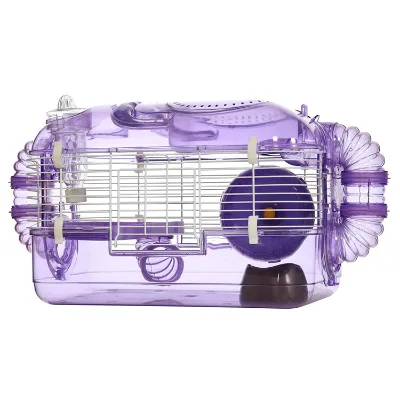


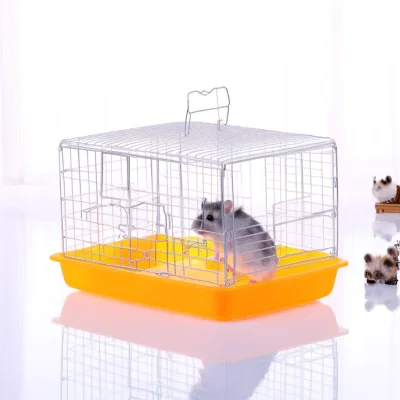
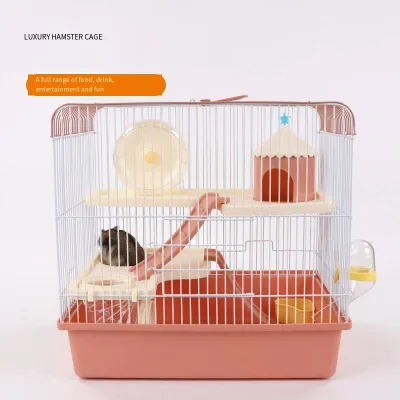
Hot Sale High Quality Luxury Hamster Cage Pet House Plastic Small Animal Cage
$5.19 - $10.57
MOQ: 150 Minimum

New Double-Layer Luxury Breathable Plastic Iron Hamster Cage with Handle
$3.85 - $4.25
MOQ: 300 Pieces


Hamster Villa Hamster Supplies Double Layer Custom Pet Cage Large Cage for Hamsters
$10.80 - $11.80
MOQ: 500 Pieces

Double Layer Custom Pet Cage Large Cage for Hamsters Four Seasons General Hamster Cage
$10.80 - $11.80
MOQ: 500 Pieces

Hamster Cage Villa-Sized Large Breeding Box Pet Cage with Spacious Interior
$17.90 - $18.90
MOQ: 500 Pieces


$68.00 - $183.00
MOQ: 5 Pieces


$68.00 - $183.00
MOQ: 5 Pieces
Comprehensive Sourcing Guide
Strategic Sourcing Guide for Modern Iron Hamster Cages
The global demand for specialized small animal housing has driven a significant shift toward durable, aesthetically pleasing, and functional designs. For procurement professionals seeking a Modern Iron Hamster Cage, the market presents a diverse array of options ranging from compact single-unit carriers to multi-level habitat systems. This guide synthesizes available product data and industry best practices to assist buyers in navigating the complexities of sourcing these specific pet supplies. The focus remains on identifying reliable supply chains that deliver high-quality iron and mixed-material constructions without relying on unverified claims or speculative market data.
Understanding Material Composition and Structural Integrity
The foundation of any modern hamster cage lies in its material composition. While the core keyword specifies "iron," the observed product data indicates a prevalent trend toward hybrid construction. Many high-quality units combine iron frames with plastic components to enhance durability and ease of cleaning. The supplied facts explicitly list "Iron" and "Metal" as primary materials, alongside "Plastic" and "Iron, Plastic" combinations. This hybrid approach is critical for modern designs; the iron provides the necessary structural rigidity to support multi-level habitats, while plastic elements often serve as trays, doors, or decorative accents.
Buyers must verify the specific alloy or finish of the iron used. In the context of pet cages, the metal is often coated to prevent rust and ensure safety for small animals. The data shows products with models such as AL167, AL169, and AL166, which are described with metal and iron attributes. When evaluating a supplier, procurement teams should request detailed specifications regarding the metal gauge and coating type. The presence of "Eco-Friendly" attributes in the product list suggests that some manufacturers are moving toward non-toxic finishes, but this requires direct confirmation rather than assumption. The structural integrity is further defined by the shape, with "Quadrate" and "Cage" styles being common, ensuring efficient use of floor space while providing ample vertical room for hamster activity.
Technical Specifications and Dimensional Standards
Precision in dimensions is paramount when sourcing pet cages, as the internal volume directly impacts animal welfare and the cage's fit within a retail or home environment. The supplied product data reveals a wide variance in standard dimensions, highlighting the need for careful selection based on the target market. For instance, one model is listed with a standard of "34x24x32 cm," while another specifies "240 X 183 X 249" (likely in millimeters), and a third offers "46x30x26.5 cm." These variations indicate that there is no single universal size for a "modern" cage; rather, the market is segmented by intended use and capacity.
The data also notes specific model numbers such as JP224, HZCT-GG701, and L510, each associated with distinct standard measurements. A procurement strategy must account for these dimensional differences. For example, a model with a standard of "27x20.5x29.5 cm" is significantly more compact than one measuring "277 X 205 X 250mm." Buyers should not assume that all iron cages fall within a specific size range. Instead, they must define their requirements based on the "Applicable Pet" category, which is listed as "Small Animals." The "Size" attribute in the data includes "S" and "M" designations, suggesting a tiered sizing strategy. When reviewing supplier catalogs, purchasers should cross-reference the model number with the exact physical dimensions to ensure compatibility with logistics and display requirements.
Design Features and Functional Attributes
Modern hamster cages are defined by a suite of functional attributes that go beyond simple containment. The product data highlights several key features that influence buyer decisions. "Customization" and "Customized" are listed as available attributes, indicating that suppliers can tailor dimensions, colors, or structural elements to specific client needs. This is particularly relevant for private label buyers who require unique branding or specific sizing. The "OEM" (Original Equipment Manufacturer) capability is also noted as "Avaliable," reinforcing the flexibility of the supply chain to produce goods under a buyer's brand name.
Aesthetic and functional design elements are equally important. The "Style" attribute appears in various forms, including "House," "CLASSICS," and "Cage," reflecting different design philosophies. The "Pattern" is listed as "Striped," and "Color" options range from "Yellow,Red" to "Multicolor," offering visual variety. Furthermore, the "Season" attribute varies from "All Seasons" to specific periods like "Spring & Autumn" or "Summer," suggesting that some designs may include ventilation features optimized for specific climates. The "Feature" attribute includes "Eco-Friendly" and "Outdoor," which implies that certain models are designed for durability in varying environmental conditions. The "Closure Type" is specified as "Horizontal Sliding," a mechanism that offers ease of access and secure containment. Buyers should prioritize cages with robust closure mechanisms and ventilation patterns that align with the intended usage environment.
Compliance, Safety, and Certification Verification
In the pet supply industry, compliance and safety are non-negotiable. While the supplied facts do not list specific certification bodies or test results, the presence of "Standard" attributes like "34x24x32 cm" and "Customized" suggests that manufacturers adhere to certain dimensional or design standards. However, the absence of explicit certification data in the provided text means that buyers must conduct their own due diligence. It is critical to verify that the iron and plastic materials used are non-toxic and safe for small animals.
Buyers should request documentation confirming that the products meet relevant international safety standards for pet products. This includes verifying that the metal coatings do not contain harmful heavy metals and that the plastic components are BPA-free or meet similar safety thresholds. The "Eco-Friendly" attribute mentioned in the data should be substantiated with third-party verification or specific material declarations. Additionally, the "Place of Origin" is listed as "China" and "Zhejiang, China," which are major manufacturing hubs. While these regions have a mature supply chain, buyers must ensure that the specific factories adhere to strict quality control protocols. The "Packing" specifications, such as "Carton" or "Color Box," also play a role in compliance, as packaging must protect the product during transit and provide clear safety instructions to the end consumer.
Cost Drivers and Pricing Dynamics
The pricing landscape for modern iron hamster cages is influenced by several factors, including material costs, customization levels, and order volume. The observed listed price range in the data spans from 0.7 to 183 USD, a wide spectrum that reflects the diversity of products available. This range likely encompasses simple, small-scale carriers to large, complex multi-level habitats. The "MOQ" (Minimum Order Quantity) range of 1 to 1000 units further illustrates the flexibility of the market, catering to both small retailers and large distributors.
Cost drivers include the complexity of the design, the amount of iron versus plastic used, and the level of customization. Models with "Customized" attributes or specific "OEM" requirements will typically command a higher price point due to the additional engineering and setup costs. The "Packing" method also affects cost; "Carton Size: 67X58.5X31cm" implies a specific volume that impacts shipping expenses. Buyers should analyze the total landed cost, including shipping and duties, rather than focusing solely on the unit price. The "Stock" attribute, listed as "in Stock," suggests that some suppliers offer immediate availability, which can reduce lead times and inventory holding costs. However, for customized orders, lead times will inevitably increase.
Supplier Evaluation and Quality Control Protocols
Selecting the right supplier is a critical step in the procurement process. The data indicates that suppliers are located in China, with specific mentions of "Zhejiang, China." This region is known for its manufacturing capabilities, but it also requires rigorous vetting. Buyers should evaluate suppliers based on their ability to meet the specific "Model Number" requirements and their track record with "Customization" and "OEM" projects. The availability of "Stock" is a positive indicator for immediate needs, but for long-term partnerships, consistent quality is more important.
Quality control should be a central part of the supplier evaluation. Buyers must implement a system to verify that the "Material" (Iron, Plastic) matches the specifications and that the "Standard" dimensions are accurate. Random sampling and third-party inspections are recommended to ensure that the "Closure Type" and "Shape" meet the agreed-upon standards. The "Brand Name" attribute, with examples like "ekia" and "hanhanle," suggests that some suppliers operate with established brands, which can be a proxy for reliability. However, buyers should not rely solely on brand names; instead, they should audit the supplier's production facilities and quality assurance processes. The "Selling Units" being "Single item" indicates that the products are designed for individual sale, which requires high attention to detail in finishing and assembly.
Long-Term Procurement and Market Adaptability
Sourcing modern iron hamster cages is not just a one-time transaction but a strategic long-term endeavor. The market is dynamic, with trends shifting toward eco-friendly materials and innovative designs. The "Season" attributes, ranging from "All Seasons" to specific seasonal needs, highlight the importance of product adaptability. Buyers should look for suppliers who can pivot their production to meet changing consumer preferences, such as the demand for "Outdoor" features or specific color patterns like "Striped."
The "Customization" and "OEM" capabilities are key indicators of a supplier's long-term viability. A supplier that can offer tailored solutions will be better positioned to help buyers differentiate their product lines in a competitive market. Additionally, the "Stock" availability suggests that some suppliers can handle fluctuating demand, which is crucial for maintaining supply chain resilience. Buyers should establish clear communication channels with suppliers to stay informed about new models, such as the various "AL" series or "QD-HC" models, and to ensure that the supply chain remains agile. By focusing on suppliers with strong customization capabilities and a proven track record in quality control, buyers can secure a reliable source for modern iron hamster cages that meets both current and future market demands.
FAQs
Can I find modern iron hamster cages with customization options?
Yes, customization is available for these cages. Suppliers offer tailored dimensions and features, with some models supporting OEM branding. Buyers can request specific styles like House or Classics to match their brand identity.
What materials are used in modern iron hamster cages?
These cages primarily use iron and metal for structural integrity. Many designs also incorporate plastic components for trays and doors. This hybrid construction ensures durability while maintaining safety for small animals.
Which size options are available for small animal cages?
Cages come in various sizes including Small and Medium designations. Specific models have standards like 34x24x32 cm or 277 X 205 X 250mm. Buyers must select dimensions based on the specific needs of the small animals.
How are these cages packed for shipping?
Products are typically packed in cartons or color boxes. Specific packing dimensions vary, such as 67X58.5X31cm for certain models. This packaging ensures protection during transit and provides clear safety instructions for end consumers.
What is the origin of these iron hamster cages?
The products originate from China, with specific manufacturing in Zhejiang. This region is a major hub for pet supply production. Buyers should verify quality control protocols at these specific factory locations.
Can suppliers provide OEM services for these cages?
Yes, OEM services are available for these products. Manufacturers can produce goods under a buyer's brand name with customized features. This capability supports private label strategies for retailers seeking unique product lines.