Find Modern Kitchen Countertop with Backsplash for Hotel, Bathroom, Commercial
Source 30 options for a Modern Kitchen Countertop with Backsplash in granite, marble, and artificial stone. Compare grey, black, white, and green finishes with heavy or medium load-bearing capacities for hotel, bathroom, and commercial projects.
Key considerations
Products List


Polished Tile Kitchen Countertop Black/Beige/Green/White Marble Countertop
$15.00 - $80.00
MOQ: 100 Square Meters
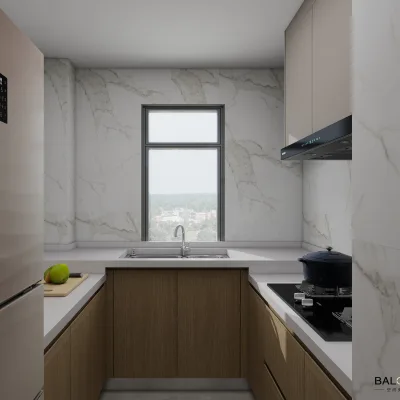


Elegant Premium Artificial Marble Countertops for Contemporary Kitchens
$30.00 - $150.00
MOQ: 1 Square Meters


Hot Sale Polished Marble Kitchen Countertop &Vanity Top with Artificial Quartz Stone
$35.00 - $75.00
MOQ: 100 Square Meters
Comprehensive Sourcing Guide
Strategic Sourcing Guide for Modern Kitchen Countertops with Backsplash
Understanding Material Varieties and Functional Attributes
When sourcing a Modern Kitchen Countertop with Backsplash, the primary decision point often revolves around the material composition, which dictates the aesthetic, durability, and maintenance profile of the installation. The current market offers a diverse range of options, including natural stone, engineered stone, and artificial composites. Buyers must carefully distinguish between these categories as they carry different structural properties and performance characteristics.
Natural stone options, such as granite and marble, are frequently cited in procurement catalogs. Granite countertops are noted for their heavy load-bearing capacity, making them suitable for high-traffic commercial and residential kitchens where durability is paramount. These surfaces typically undergo a polished surface finishing process and may feature eased edges to ensure safety and a refined look. The color palette for natural stone is extensive, with grey, black, and white being common observations in current listings. However, buyers should verify the specific color consistency, as natural variations are inherent to the material.
In contrast, artificial stone and quartz-based products offer a different value proposition. These materials, often labeled as "Artificial Quartz Countertop for Kitchen" or "White Quartz Kitchen Top Countertop," provide a more uniform appearance. They are engineered to meet specific thickness standards, such as the 3/4" specification observed in certain product lines. While natural stone is celebrated for its unique veining, artificial stone often competes on its ability to mimic high-end aesthetics with lower porosity. The load-bearing capacity for these engineered options can vary, with some classified as medium load-bearing, which is sufficient for standard residential use but may require structural reinforcement for heavy commercial applications.
The functional scope of these countertops extends beyond the kitchen island. Modern designs often integrate multi-function capabilities, serving as bathroom vanities, hotel reception desks, or commercial workspace surfaces. The availability of customization is a critical factor; suppliers frequently offer services to specify exact sizes and colors, ensuring the countertop and backsplash unit fits the architectural constraints of the project. This flexibility is essential for modern kitchens where bespoke designs are the norm rather than the exception.
Technical Specifications and Dimensional Standards
Precision in technical specifications is non-negotiable when integrating a countertop with a backsplash. The backsplash is not merely an aesthetic add-on but a functional barrier against moisture and splashes, requiring seamless integration with the countertop surface. Buyers must scrutinize the dimensional data provided by suppliers to ensure compatibility with cabinetry and plumbing fixtures.
Standard thickness is a primary specification to verify. While 3/4" is a common standard for quartz and granite tops, the specific requirements for the backsplash integration must be confirmed. The backsplash must match the countertop material to ensure consistent thermal expansion and contraction, preventing cracks or separation over time. In cases where the backsplash is a separate piece, the edge profile of the countertop must align perfectly with the bottom edge of the backsplash.
Size customization is a prevalent feature in the market. Suppliers often provide a range of vanity top dimensions, such as 25" x 19", 31" x 19", 37" x 19", 49" x 19", and 61" x 19", alongside larger countertop sizes like 96" x 26" and 108" x 26". These dimensions serve as a baseline, but the ability to request specified sizes is a key differentiator. For projects requiring unique backsplash heights or lengths, the supplier's capability to provide CAD drawings according to the order is a vital technical service. This ensures that the final product matches the design blueprints exactly, minimizing on-site cutting and waste.
The following table outlines common dimensional and structural attributes observed in the market to assist buyers in their specification checks:
| Attribute | Natural Stone (Granite/Marble) | Artificial Stone (Quartz) | Verification Requirement |
|---|---|---|---|
| Typical Thickness | Varies, often 3/4" | 3/4" (Standard) | Confirm exact thickness for structural fit |
| Load Bearing | Heavy | Medium to Heavy | Assess based on intended commercial/residential use |
| Edge Profile | Eased, Polished | Customizable | Ensure backsplash edge compatibility |
| Customization | Available (Size/Color) | Available (Size/Surface) | Request CAD drawings for complex shapes |
| Surface Finish | Polished | Polished/Custom | Verify finish consistency across countertop and backsplash |
Compliance, Certification, and Quality Assurance Protocols
In the global supply chain for stone and engineered surfaces, compliance with international standards and rigorous quality control (QC) protocols are essential to mitigate risk. Buyers should prioritize suppliers who demonstrate adherence to recognized quality management systems. Certifications such as SGS, CE, and ISO are frequently cited as indicators of a supplier's commitment to quality and safety. Specifically, ISO 9001:2000 is a standard that reflects a systematic approach to quality management, ensuring that production processes are consistent and reliable.
The "Grand A" standard is another specific quality benchmark observed in certain product listings, indicating a high grade of material selection and processing. However, buyers must treat these standards as observations of specific product lines rather than universal guarantees for all items from a supplier. It is crucial to request proof of certification for the specific batch of goods being ordered.
Quality control in the stone industry is a multi-stage process. A professional QC team typically checks pieces individually, a practice known as "piece-by-piece" inspection. This level of scrutiny is necessary to identify natural flaws, cracks, or inconsistencies in color and texture that could compromise the installation. For artificial stone, the QC process focuses on surface uniformity and structural integrity. The presence of a dedicated QC team that provides photo documentation of products and container loading is a strong indicator of transparency. This visual evidence allows buyers to verify that the goods leaving the factory match the agreed-upon specifications before they are shipped.
Furthermore, the warranty terms provide a long-term assurance of quality. A 10-year limited warranty is a significant value proposition, suggesting that the manufacturer stands behind the durability of the material. Buyers should carefully review the terms of this warranty to understand what constitutes a defect versus normal wear and tear, particularly regarding the integration of the backsplash and countertop.
Cost Drivers and Economic Considerations
The pricing of modern kitchen countertops with backsplashes is influenced by a complex interplay of material costs, processing complexity, and logistical factors. The observed price range in the market spans from approximately $15 to $235.64 USD, reflecting the vast difference between basic artificial stone options and premium natural granite or marble installations.
Material cost is the most significant driver. Natural stones like granite and marble involve extraction, quarrying, and transportation costs that are inherently higher than those for artificial stone. The color and rarity of the stone also play a role; unique colors or patterns may command a premium. Additionally, the processing required for the backsplash adds to the cost. A seamless backsplash that is cut and polished to match the countertop requires more labor and precision than a standard pre-fabricated unit.
Customization is another major cost factor. While suppliers welcome specified sizes and colors, the non-standard nature of these requests often incurs additional charges. The production capability of the supplier, such as a capacity of 15 containers per month, can also influence pricing. High-demand periods or limited production slots may affect the final quote.
Logistics and packaging are often overlooked but significant cost components. The requirement for fumigated, seaworthy professional wooden crates ensures the safety of the stone during transit, but these crates add weight and volume to the shipment. The export port, such as Xiamen, and the destination market will determine freight costs. Buyers should also consider the Minimum Order Quantity (MOQ), which ranges from 1 to 100 units. While some suppliers welcome trail orders, larger orders may benefit from economies of scale, reducing the per-unit cost.
Typical Applications and Design Integration
Modern kitchen countertops with backsplashes are designed to serve a wide array of applications, from residential homes to high-end commercial establishments. The versatility of these products allows them to be adapted for various environments, provided the technical specifications align with the usage requirements.
In residential settings, the focus is often on aesthetics and ease of maintenance. Granite countertops with a polished finish and eased edges are popular for their durability and classic look. The backsplash serves a dual purpose, protecting the wall from moisture while extending the visual continuity of the countertop. In this context, the color coordination between the countertop and backsplash is critical. Suppliers offering services to specify colors and surface finishes enable homeowners to achieve a cohesive design.
Commercial applications, such as hotels, restaurants, and office spaces, demand higher durability and load-bearing capacity. The "Heavy" load-bearing classification of granite makes it ideal for these environments where heavy equipment and high traffic are common. The "Multi-Function" attribute of some products suggests they can be used in various commercial settings, from reception desks to kitchen prep areas. The professional QC team's role is particularly important here, as any defect in a commercial installation can lead to significant downtime and reputational damage.
The integration of the backsplash into the overall design is a key consideration. In modern kitchens, the backsplash is often designed to be a continuous extension of the countertop, creating a seamless look. This requires precise manufacturing and installation. Suppliers that provide CAD drawings according to the order can assist in planning this integration, ensuring that the backsplash fits perfectly with the countertop and any surrounding cabinetry.
Supplier Evaluation and Long-Term Procurement Strategy
Selecting the right supplier is a critical step in the procurement process. Buyers should evaluate potential partners based on their production capabilities, quality control measures, and customer service offerings. The ability to supply photos of products and container loading is a strong indicator of a supplier's transparency and confidence in their product. This visual documentation helps buyers verify the quality of the goods before they are shipped, reducing the risk of receiving substandard materials.
Lead time is another crucial factor in supplier evaluation. A typical delivery detail of 15-30 days after confirmation and prepayment is common in the industry. Buyers must ensure that this timeline aligns with their project schedule. Delays in delivery can disrupt construction timelines and increase costs. Suppliers with a production capability of 15 containers per month may have more stable lead times, but buyers should confirm this capacity against their specific order volume.
Long-term procurement considerations include the availability of after-sales support and warranty claims. A 10-year limited warranty is a significant benefit, but buyers should understand the process for filing a claim. Suppliers that offer professional QC checks and provide detailed documentation are more likely to honor warranty claims efficiently. Additionally, the export markets served by the supplier can indicate their experience with international logistics and compliance. A global export presence suggests that the supplier is accustomed to meeting diverse regulatory requirements and shipping standards.
Finally, buyers should consider the customization capabilities of the supplier. The ability to provide CAD drawings and specify sizes and colors is essential for projects with unique design requirements. Suppliers that welcome trail orders and offer flexible MOQs can be valuable partners for smaller projects or those testing new designs. By thoroughly evaluating these factors, buyers can establish a reliable supply chain that ensures the delivery of high-quality modern kitchen countertops with backsplashes that meet their specific needs.
FAQs
What customization services are available for these countertops?
Suppliers welcome specified sizes and colors for both granite and artificial stone options. They also provide CAD drawings according to the order to ensure precise fit for your specific project requirements.
How long is the delivery time after confirmation?
The delivery detail specifies 15 to 30 days after your confirmation and prepayment. This timeline applies to the production and preparation of the countertops before they are shipped from the origin.
Which certifications do the suppliers hold for quality assurance?
Products often carry SGS, CE, and ISO certifications to ensure safety and quality standards. The production standard may also meet ISO 9001:2000 requirements for systematic quality management in the manufacturing process.
Can I order a small quantity as a trial order?
Yes, suppliers welcome trail orders and the minimum order quantity ranges from 1 to 100 pieces. This flexibility allows buyers to test the product quality before committing to larger commercial shipments.
What is the warranty period for the countertop products?
A 10-year limited warranty is provided to assure long-term durability and performance. This warranty covers defects and ensures the product meets the heavy or medium load-bearing requirements specified.
How are the products packed for international shipping?
Items are packed in fumigated seaworthy professional wooden crates to ensure safety during transit. This packaging method is standard for granite, marble, and artificial stone countertops to prevent damage.
What is the production capacity of the manufacturers?
The production capability is listed as 15 containers per month for certain product lines. This capacity supports both small trial orders and larger commercial projects requiring consistent supply.