Source Modern Kitchen Shelf Support for Cabinet, Door, Table
Find and compare 30 Modern Kitchen Shelf Support options from verified suppliers. Buyers can review specifications, materials, and pricing for applications including cabinet, door, and table installations.
Key considerations
Products List


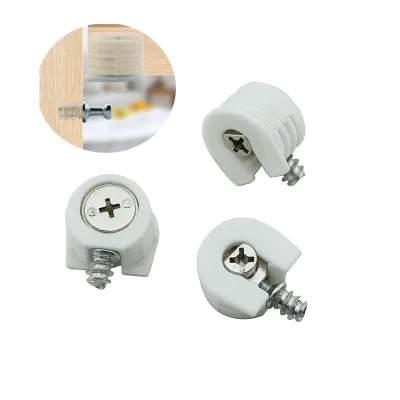


Furniture Fittings Kitchen Cabinet Shelf Pegs Plastic Shelf Support Suppliers
$0.03 - $0.04
MOQ: 20000 Pieces


Comprehensive Sourcing Guide
Strategic Sourcing Guide for Modern Kitchen Shelf Support Systems
The procurement of Modern Kitchen Shelf Support systems requires a nuanced understanding of the intersection between structural engineering, material science, and aesthetic integration. In the contemporary kitchen environment, shelf supports are no longer merely functional fasteners; they are critical components that define the load-bearing capacity of storage units while contributing to the overall design language. Buyers entering this market must navigate a complex landscape of specifications, where the distinction between fixed and unfixed mechanisms, material compositions, and dimensional tolerances dictates the suitability of a product for specific applications. This guide provides a disciplined framework for evaluating potential suppliers and products, grounded in observable market data and technical requirements.
Technical Specifications and Dimensional Standards
The foundation of any successful procurement strategy for shelf supports lies in the precise interpretation of technical specifications. Unlike generic fasteners, shelf supports must adhere to strict dimensional standards to ensure compatibility with existing cabinetry and shelving systems. Market observations indicate a wide variance in product dimensions, ranging from compact units measuring 15x13mm to larger assemblies reaching 34x22x40mm. These variations are not arbitrary; they correspond to specific load requirements and the thickness of the shelf materials they are designed to support.
Buyers must scrutinize the "prod_standard" attributes listed in product datasheets. For instance, specific models are identified by dimensions such as 20x14mm, 19x9mm, and 27.5x26.5mm. These figures represent the critical interface between the support and the shelf or cabinet wall. A mismatch in these dimensions can lead to structural failure or an inability to install the unit within the designated cavity. Furthermore, the physical size of the support, such as a model with a size of 20mm or a specific profile of L103W15T2.5mm, determines the surface area available for load distribution.
The "prod_model" identifiers, such as SS009, SS121S-S, and HT-05.041, serve as unique fingerprints for these technical profiles. When sourcing, it is imperative to cross-reference these model numbers with the intended application. For example, a support designed for a 28mm tube, as noted in specific product attributes, is unsuitable for standard 19mm or 25mm shelving systems. Additionally, the "Single package size" of 16X6X3 cm and the "Single gross weight" of 0.080 kg provide essential data for logistics planning, ensuring that the chosen supplier's packaging efficiency aligns with the buyer's shipping constraints.
Material Composition and Finish Quality
The longevity and aesthetic appeal of kitchen shelf supports are heavily dependent on the materials used in their construction. The market presents a diverse array of material combinations, including Plastic + Steel, Plastic + Metal, and pure Plastic or Zinc variants. The choice of material is not merely a cost decision but a functional one. For high-load applications in modern kitchens, a composite of Plastic and Metal or Plastic and Steel offers a balance of corrosion resistance and tensile strength. Pure plastic options, while cost-effective, may be limited to lighter-duty applications such as decorative shelving or low-traffic areas.
Surface finish is equally critical, particularly in kitchen environments where exposure to moisture, grease, and cleaning chemicals is constant. The "Finish" attribute, such as Nickel Plated, indicates a protective layer designed to prevent oxidation and maintain the visual integrity of the support. The color options observed, including Silver, White, Brown, and Silver Grey, must align with the kitchen's design scheme. A mismatch in color can detract from the modern aesthetic that buyers seek.
It is important to note that while some products are listed with a "Customized" attribute, others are "Non-Customized." This distinction affects the availability of specific material grades or finishes. Buyers should verify if the standard material composition meets the environmental demands of their specific kitchen projects. For instance, a Zinc-based material might offer superior corrosion resistance compared to standard steel in humid environments, but this must be confirmed through supplier documentation rather than assumed.
Functional Classification and Installation Mechanics
Understanding the functional classification of shelf supports is essential for selecting the right product for the job. The market distinguishes between "Fixed" and "Unfixed" mechanisms. Fixed supports provide a permanent, rigid connection, ideal for heavy-duty shelving where movement is undesirable. In contrast, Unfixed supports may offer adjustability or a temporary mounting solution, suitable for modular kitchen systems that require frequent reconfiguration.
The "Installation Method" is another critical technical parameter. Products may be designed for "Top/Wall Mount" configurations, which dictate how the support interfaces with the cabinet structure. This method influences the drilling requirements and the structural integrity of the final assembly. Additionally, the "Usage" attribute specifies the intended application, ranging from Chair and Cabinet to Table and Door. A support rated for "Chair, Cabinet, Table" implies a versatility that may be beneficial for multi-purpose kitchen islands or dining areas, whereas a support designated solely for "Cabinet, Door" might be optimized for specific hinge or latch mechanisms.
The "Customization" availability allows buyers to tailor products to unique architectural constraints. However, the presence of a "Customized" attribute in one model does not guarantee that all models in a supplier's catalog offer this flexibility. Buyers must explicitly confirm the customization capabilities for their specific order, including the ability to alter dimensions, materials, or finishes to meet project-specific needs.
Cost Drivers and Minimum Order Quantities
The economics of sourcing shelf supports are influenced by several factors, including material costs, manufacturing complexity, and order volume. The observed price range in the market spans from 0 to 0.29 USD per unit, indicating a highly competitive and cost-sensitive sector. However, this low unit price often masks the impact of Minimum Order Quantities (MOQ). The observed MOQ range is extensive, stretching from 100 units to 2,000,000 units.
This variance in MOQ reflects the different production capabilities of suppliers. Smaller manufacturers may accommodate lower MOQs, such as 50000 PCS, which is noted in specific product listings, while larger industrial suppliers may require orders in the millions to justify production runs. Buyers must align their procurement volume with the supplier's capacity. Ordering below the MOQ can result in significantly higher unit costs or an inability to fulfill the order.
Furthermore, the "prod_packing" specifications, such as 3000 PCS / CTN or 10000PCS/CTN, affect the logistics cost. Bulk packaging reduces the per-unit shipping cost but requires adequate storage space. Buyers should calculate the total landed cost, including packaging efficiency and storage, rather than focusing solely on the unit price. The "Selling Units" attribute, whether "Single item" or bulk, also plays a role in pricing strategy.
Supplier Evaluation and Origin Verification
Evaluating suppliers requires a rigorous check of their origin and operational capabilities. The "prod_origin" and "place of origin" attributes consistently point to China, with specific regions like Guangdong highlighted. Guangdong is a known manufacturing hub for hardware and fasteners, offering a dense ecosystem of suppliers with varying levels of quality and specialization.
When assessing a supplier, buyers should verify the "brand name" associated with the products, such as Huishengfa, to ensure brand consistency and reputation. However, reliance on brand names alone is insufficient. Buyers must conduct due diligence on the supplier's ability to maintain quality control across large production runs. The "mail packing" attribute, marked as "Y" in some listings, suggests specific packaging protocols that may be relevant for international shipping and protection against damage.
It is crucial to avoid assuming that all products from a specific origin meet the same quality standards. The "Condition" of the products is listed as "New," but this is a baseline requirement. Buyers should request evidence of the supplier's quality management systems and their track record in delivering consistent products. The "Customization" capability mentioned earlier also serves as a proxy for a supplier's technical flexibility and willingness to engage in collaborative development.
Quality Control and Long-Term Procurement Considerations
Quality control in the shelf support sector must address both immediate functional performance and long-term durability. Given the "New" condition of the products, buyers should establish clear acceptance criteria based on the observed specifications. This includes verifying the dimensional accuracy against the stated standards (e.g., 15x20mm, 27.5x26.5MM) and ensuring the material composition matches the description (e.g., Plastic + Steel).
Long-term procurement considerations involve the stability of the supply chain. The wide range of MOQs suggests that buyers should plan for scalability. A supplier capable of handling both small pilot runs and large-scale orders provides greater flexibility. Additionally, the "Single gross weight" and "Single package size" data are vital for forecasting logistics costs over the life of a contract.
Buyers should also consider the "Installation Method" and "Usage" compatibility in the context of future renovations or expansions. A support system that is too specialized may become obsolete if the kitchen design evolves. Therefore, selecting products with versatile usage attributes, such as those suitable for "Chair, Cabinet, Table," can offer a strategic advantage.
Comparative Analysis of Product Attributes
To facilitate decision-making, the following table summarizes key attributes observed in the market, highlighting the diversity of options available to buyers.
| Attribute Category | Observed Variations | Procurement Implication |
|---|---|---|
| Dimensions | 15x13mm to 34x22x40mm | Must match cabinet cavity and shelf thickness. |
| Material | Plastic, Zinc, Plastic+Steel, Plastic+Metal | Determines load capacity and corrosion resistance. |
| Finish | Nickel Plated, Silver, White, Brown | Aesthetic alignment and environmental protection. |
| MOQ | 100 to 2,000,000 PCS | Aligns order volume with supplier capacity. |
| Packing | 2000 to 10000 PCS/CTN | Impacts logistics efficiency and storage needs. |
| Origin | China (Guangdong) | Indicates manufacturing hub and potential lead times. |
| Customization | Available / Non-Customized | Affects ability to meet unique project specs. |
Conclusion
Sourcing Modern Kitchen Shelf Support systems demands a meticulous approach that balances technical precision with economic efficiency. The market offers a vast array of options, from compact plastic supports to robust metal-composite assemblies, each with distinct specifications regarding dimensions, materials, and finishes. Buyers must navigate the complexities of MOQs, packaging standards, and origin verification to ensure a successful procurement outcome. By focusing on the observable facts—such as the specific model numbers, dimensional standards, and material compositions—procurement teams can make informed decisions that align with their project requirements. The key to success lies in rigorous supplier evaluation, clear definition of technical needs, and a strategic approach to volume management. As the market continues to evolve, maintaining a disciplined focus on these core parameters will enable buyers to secure high-quality shelf support systems that meet the demands of modern kitchen design.
FAQs
What materials are used for modern kitchen shelf supports?
Modern kitchen shelf supports typically use Plastic + Steel, Plastic + Metal, or pure Plastic and Zinc materials. These combinations balance corrosion resistance with tensile strength for various load requirements in kitchen environments.
Which dimensions are standard for kitchen shelf support models?
Standard dimensions vary significantly, ranging from compact 15x13mm units to larger assemblies like 34x22x40mm. Specific models also feature sizes such as 20x14mm, 19x9mm, and 27.5x26.5mm to match different cabinet cavities.
Can I find fixed and unfixed shelf support options?
Yes, the market offers both Fixed and Unfixed mechanisms for different installation needs. Fixed supports provide rigid connections for heavy-duty shelving, while unfixed options allow for adjustability in modular kitchen systems.
How does the MOQ affect sourcing modern shelf supports?
Minimum Order Quantities range widely from 100 units up to 2,000,000 units depending on the supplier. Some specific listings require 50,000 pieces, so buyers must align their order volume with supplier production capacity.
Where are these shelf supports typically manufactured?
Products are primarily sourced from China, with specific manufacturing hubs located in Guangdong. This region offers a dense ecosystem of suppliers capable of producing hardware and fasteners with varying quality levels.
What packaging options are available for bulk orders?
Packaging specifications vary, with common options including 3000 PCS per carton or 10000 PCS per carton. Some items are sold as single items with a single gross weight of 0.080 kg and package size of 16x6x3 cm.
Are customization services available for these products?
Customization is available for some models, while others are listed as non-customized. Buyers should verify specific capabilities for altering dimensions, materials, or finishes to meet unique project architectural constraints.