Source Modular Steel Wall Formwork for Building, Bridge, Infrastructure
Find 26 Modular Steel Wall Formwork options with high stiffness and repeated turnover capabilities. Buyers can compare specifications like lateral pressure resistance, thickness, and surface treatment from suppliers in China.
Key considerations
Products List


Efficient Modular Steel Frame Wall Formwork with Quick Assemble Feature
$70.00 - $75.00
MOQ: 100 Square Meters

Modular Steel Frame Wall Formwork with Quick Assemble and High Pressure Resistance
$70.00 - $75.00
MOQ: 100 Square Meters


Durable Modular Steel Formwork for Efficient Concrete Construction
$70.00 - $75.00
MOQ: 100 Square Meters


Modular Panels Wall Formwork with Powder Coated Steel Frames for Durability
$100.00 - $130.00
MOQ: 500 Square Meters

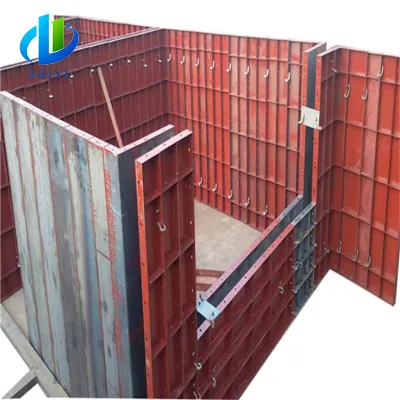


Hot Modular Reusable Efficient Lightweight Steel Wall and Column Formwork
$140.00 - $200.00
MOQ: 200 Square Meters

Modular Reusable Efficient Lightweight Strong Steel Wall and Column Formwork
$140.00 - $200.00
MOQ: 200 Square Meters


$10.00
MOQ: 200 Pieces

Comprehensive Sourcing Guide
Strategic Sourcing Guide for Modular Steel Wall Formwork
Procuring Modular Steel Wall Formwork represents a critical decision for construction projects requiring high-strength, reusable, and efficient concrete casting solutions. The global market for these systems is dominated by manufacturers offering specialized steel frame structures designed to withstand significant lateral pressures while maintaining dimensional accuracy. For procurement professionals, navigating this sector requires a disciplined approach to verifying technical specifications, understanding compliance frameworks, and evaluating supplier capabilities without relying on unverified marketing claims. This guide synthesizes observed market data and technical attributes to provide a robust framework for sourcing decisions.
Technical Specifications and Structural Attributes
The foundational element of any Modular Steel Wall Formwork system is its material composition and structural design. Based on available product data, the primary material utilized is steel, often reinforced with specific alloy compositions to ensure durability. Some variations in the market may incorporate steel-wood composites, but the core structural integrity relies on the steel frame. The thickness of these components is a variable specification; while some listings indicate standard thicknesses ranging from 0.9mm to 3.0mm, others emphasize that thickness is customized according to specific design requirements. Buyers must verify the exact gauge required for their project's concrete pressure loads rather than assuming a universal standard.
The functional design of these systems prioritizes high stiffness and the ability for repeated turnover. This characteristic is essential for projects where formwork is stripped and re-erected multiple times to achieve cost efficiency. The systems are engineered to handle significant lateral pressure, with observed specifications indicating a capacity to withstand up to 60 kN/meter for column applications and fresh concrete pressures exceeding 60 kN/sqm. The modular nature allows for customization in length and width, with observed ranges extending from 100mm to 600mm in specific components and up to 3000mm in length for larger panels. Widths can range from 300mm to 2400mm, allowing for flexible configuration to match various wall and column dimensions.
Surface treatment is another critical technical attribute. To prevent corrosion and ensure a smooth concrete finish, the steel surfaces typically undergo painting or paint spraying processes. The color options observed in the market include blue, red, or fully customized finishes, which can be useful for site identification and safety coding. The product models vary, with designations such as D00A, D00AA, and generic classifications like "Alloy Steel Formwork" or "Steel Frame Formwork." These identifiers often correlate with specific load-bearing capacities and assembly mechanisms, necessitating a detailed review of the model-specific datasheets before ordering.
Compliance, Certification, and Standard Verification
In the construction industry, compliance with international and local standards is non-negotiable. When sourcing Modular Steel Wall Formwork, buyers must rigorously verify the certification status of the supplier. Observed data indicates that many products carry ISO certification, with specific references to ISO9001 quality management systems. Additionally, CE marking is frequently cited as a compliance indicator, suggesting adherence to European safety and health requirements. However, the presence of these marks on a product listing does not automatically guarantee that every unit in a batch meets these standards; they must be validated through official documentation provided by the manufacturer.
Beyond general certifications, specific technical standards govern the performance of formwork systems. While some background knowledge references standards such as EN 1065 or EN74, procurement teams should treat these as benchmarks for verification rather than guaranteed inclusions unless explicitly stated in the supplier's contract. The product standards observed in the market often list thickness tolerances or material grades, such as 0.9/1.2/1.5/1.8/2.4/3.0MM. Buyers should demand test reports that confirm the material meets the specific thickness and strength claims. It is crucial to distinguish between "customized" standards and fixed industry standards. If a supplier claims a product meets a specific standard, the buyer must request the third-party test certificate that validates this claim.
The origin of the product is also a factor in compliance. The majority of the observed supply chain originates from China, with specific manufacturing hubs noted in Changsha. This geographic concentration implies a mature supply ecosystem but also necessitates careful scrutiny of export compliance and shipping regulations. Buyers should ensure that the supplier can provide all necessary documentation for customs clearance, including material certificates and compliance declarations, to avoid delays at the destination port.
Cost Drivers and Economic Considerations
The pricing of Modular Steel Wall Formwork is influenced by a complex interplay of factors, including material costs, customization levels, and logistical requirements. The observed price range in the market is broad, spanning from approximately $9.99 to $1,500 per unit or system component. This variance is not indicative of quality alone but reflects differences in size, thickness, and the complexity of the specific formwork module. A single small panel will naturally cost significantly less than a large, heavy-duty system designed for high-rise construction.
Minimum Order Quantity (MOQ) is another significant economic driver. The market data shows MOQs ranging from 2 to 999 units. For smaller projects or those requiring specific custom configurations, a low MOQ of 2 units may be available, though this often comes with a higher per-unit cost. Conversely, larger orders may benefit from economies of scale, potentially lowering the unit price but requiring a higher upfront capital commitment. Buyers must balance their project timeline and budget against these MOQ constraints.
Packaging and shipping costs are often overlooked but can substantially impact the total landed cost. The observed data indicates that products are typically shipped on steel pallets or in standard packages labeled as "Pallat." The weight and dimensions of the steel formwork mean that freight costs can be substantial. Buyers should negotiate Incoterms carefully to understand who bears the risk and cost of transportation. Additionally, the "customized" nature of some products, such as specific thicknesses or colors, may incur additional tooling or setup fees that are not reflected in the base unit price.
Typical Applications and Project Suitability
Modular Steel Wall Formwork is designed for a wide array of construction applications, ranging from standard building projects to complex infrastructure. The primary application areas identified include high-rise buildings, general infrastructure, bridge construction, and mass concrete works. The systems are particularly well-suited for wall and column construction, where the high lateral pressure resistance is critical. The ability to handle pressures above 60 kN/sqm makes these systems ideal for deep foundation walls and tall structural columns where concrete is poured in large volumes.
The versatility of the formwork is enhanced by its adjustable and reusable nature. The "Quick Assemble" feature is a key advantage for projects with tight schedules, as it reduces the labor time required for setup and stripping. The modular design allows for the creation of various shapes and sizes, making it adaptable to different architectural requirements. For example, the system can be configured for slab formwork or specialized column formwork, depending on the specific project needs.
When selecting formwork for a specific project, buyers should consider the "Project Solution Capability" of the supplier. Many manufacturers offer graphic design services and total solutions for projects, which can be invaluable for complex geometries. This service ensures that the formwork is not only purchased but also designed to fit the specific structural drawings of the project, minimizing on-site adjustments and potential errors.
Supplier Evaluation and Technical Support
Evaluating a supplier for Modular Steel Wall Formwork requires looking beyond the product listing to assess their technical support and after-sales capabilities. A reliable supplier should offer comprehensive support services, including online technical support and onsite installation assistance. The observed market data highlights that suppliers often provide remote or onsite instruction to ensure that the construction team can assemble and use the formwork correctly. This level of support is crucial for preventing installation errors that could lead to structural defects or safety hazards.
The "After-Sale Service" is another critical metric. Suppliers that offer onsite training demonstrate a commitment to the long-term success of the project. This training ensures that the labor force is proficient in the specific assembly and disassembly procedures of the formwork system, which can extend the lifespan of the equipment and improve safety on the site. Buyers should inquire about the availability of spare parts and the lead time for replacements, as damaged components can halt construction if not quickly addressed.
Furthermore, the supplier's capacity to provide a "Total Solution for Projects" indicates a higher level of integration. This capability suggests that the supplier can handle the entire lifecycle of the formwork, from initial design and manufacturing to delivery and on-site support. This holistic approach reduces the coordination burden on the buyer and ensures that all aspects of the formwork system are aligned with the project's overall timeline and budget.
Quality Control and Long-Term Procurement Strategy
Quality control in the manufacturing of steel formwork is paramount. Buyers must verify that the surface treatment processes, such as painting or paint spraying, are applied consistently to prevent rust and ensure a smooth concrete finish. The "Repeatedly Turnover" feature implies that the formwork must withstand multiple cycles of use without significant degradation. To ensure this, buyers should request evidence of durability testing or case studies from previous projects where the formwork was used extensively.
Long-term procurement considerations involve the lifecycle management of the formwork assets. Since the material is steel, the formwork has a long service life if maintained correctly. However, the "Customized" nature of some products means that replacements or additional units may need to be manufactured specifically for the project, potentially leading to longer lead times. Buyers should plan for this by ordering sufficient quantities upfront or establishing a framework agreement with the supplier for future needs.
The "Feature" of high stiffness and the "Performance" of high strength are not just marketing terms but engineering requirements. Buyers should ensure that the formwork system is designed to meet the specific load requirements of their project. This includes verifying the "Maximum Lateral Pressure to Be Born" for columns and walls. By maintaining a rigorous quality control process and selecting a supplier with strong technical support, buyers can ensure that their investment in Modular Steel Wall Formwork yields reliable results throughout the construction lifecycle.
Final Procurement Considerations
In conclusion, sourcing Modular Steel Wall Formwork requires a meticulous approach that balances technical specifications, compliance, cost, and supplier capability. The market offers a wide range of options, from standard steel panels to highly customized alloy systems. Buyers must verify all claims regarding thickness, pressure resistance, and certification through official documentation. By focusing on suppliers who offer comprehensive technical support and proven project solutions, construction professionals can ensure the successful execution of their projects. The key to a successful procurement strategy lies in thorough due diligence, clear communication of requirements, and a commitment to quality standards that align with the specific demands of the construction site.
FAQs
What certifications do Modular Steel Wall Formwork systems typically hold?
Many systems carry ISO and CE certifications, with some specifically meeting ISO9001 standards. Buyers must verify these through official documentation rather than assuming all units comply, as certification status varies by batch and manufacturer.
How much lateral pressure can these formwork systems withstand?
Observed specifications indicate a capacity to withstand up to 60 kN/meter for column applications and pressures exceeding 60 kN/sqm. This high resistance makes them suitable for deep foundation walls and tall structural columns requiring significant load support.
Can the thickness of the steel frame be customized for specific projects?
Yes, thickness is often customized according to design requirements, though standard ranges like 0.9mm to 3.0mm exist. Buyers should request specific gauge details to ensure the material meets the exact concrete pressure loads for their unique project needs.
What surface treatments are applied to prevent corrosion on the steel?
Steel surfaces typically undergo painting or paint spraying processes to prevent rust and ensure a smooth concrete finish. Color options often include blue, red, or fully customized finishes to aid in site identification and safety coding during construction.
Which applications are best suited for this modular steel formwork?
These systems are ideal for high-rise buildings, infrastructure, bridge construction, and mass concrete works. They are particularly effective for wall and column construction where high lateral pressure resistance and repeated turnover capabilities are critical for efficiency.
What after-sales support services are available for buyers?
Suppliers often provide online technical support, onsite installation assistance, and remote or onsite instruction. Comprehensive support includes onsite training to ensure the labor force is proficient in assembly procedures, which extends equipment lifespan and improves site safety.