Source Double Deck Extralateral Rod for Hotel, Hospital, Home
Compare 30 Double Deck Extralateral Rod options from verified Chinese manufacturers. These steel rods are available in plain dyed styles with customization for hotel, hospital, and home applications.
Key considerations
Products List


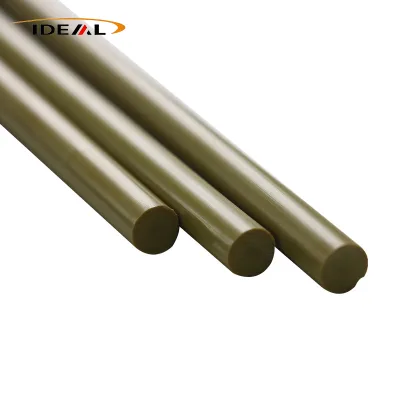




Comprehensive Sourcing Guide
Strategic Sourcing Guide for Double Deck Extralateral Rods
Understanding Product Classification and Technical Attributes
When sourcing a Double Deck Extralateral Rod, buyers must first distinguish between the specific product attributes observed in the market and the general functional requirements of the component. The term "double deck" in the provided data context refers to a specific structural configuration, often associated with mechanical systems or specialized hardware where dual-layer support is critical. In the supplied product facts, the attribute "Deck: Double" appears alongside "Muffler Type: Rear Muffler" and "Type: Cooling System," suggesting that in certain industrial contexts, this terminology may overlap with engine or machinery components. However, for a procurement focus on a "rod," the primary technical observation is the structural capacity to support dual levels of load or separation.
The material composition is a primary determinant of performance. The supplied facts indicate that steel is a confirmed material for similar hardware applications, with specific mentions of "Steel" as a base material. Furthermore, advanced sourcing options include "Ti/SUS304/SUS316/Carbon Fiber/Glass Fiber." This range suggests that while standard steel rods are available, high-performance variants utilizing stainless steel (SUS304/SUS316) or composite materials like carbon fiber may be required for environments demanding corrosion resistance or high strength-to-weight ratios. The attribute "Other Material" explicitly lists these options, indicating that the extralateral rod is not limited to a single metal type.
Surface treatment and dimensional accuracy are equally critical. The data notes a "Surface Treatment: Polishing" and specifies a "Straightness Accuracy: 0.05-0.1mm/100mm." These figures represent high-precision manufacturing standards. When evaluating a Double Deck Extralateral Rod, buyers should verify if the supplier can consistently maintain this level of straightness, as deviations can lead to mechanical failure in double-deck assemblies. The "Od Tolerance" is noted as having a surface roughness below 0.8s, a specific metric that should be included in technical drawings or purchase orders to ensure the finished product meets operational smoothness requirements.
Compliance, Certification, and Standard Verification
Navigating the regulatory landscape for industrial rods requires a rigorous check against international and local standards. The supplied product facts reveal a diverse array of standards, including "ANSI," "ISO CB," "JIS Code," "China GB Code," and "GB." This variation highlights that there is no single universal standard for all double deck extralateral rods; rather, compliance depends heavily on the intended application and the origin of the supplier.
For buyers operating in North America, verifying adherence to "ANSI" standards is essential to ensure compatibility with existing infrastructure and safety regulations. Conversely, if the supply chain is rooted in China, as indicated by the "prod_origin: China" and "Wenzhou, Zhejiang, China" or "Hebei Province, China" locations, compliance with "China GB Code" or "GB" standards is a baseline expectation. The presence of "JIS Code" suggests that some manufacturers may also cater to the Japanese market or utilize Japanese engineering specifications for their tooling and machining processes.
The "Standard Export Package" and "Customed" packing options mentioned in the facts imply that packaging standards can be customized, but the product itself must still meet the declared material and dimensional standards. Buyers should explicitly request a Certificate of Conformity (CoC) that references the specific standard (e.g., ISO, ANSI, or GB) applicable to the batch. It is crucial to note that the "Standard: 71x71mm" listed in the facts appears to be a dimensional specification rather than a standard code, and should not be confused with certification bodies. Verification of the "ISO CB" standard, if relevant to the buyer's industry, should be a priority, as it indicates adherence to specific international quality management or product safety protocols.
Cost Drivers and Pricing Dynamics
The pricing structure for double deck extralateral rods is influenced by a complex interplay of material costs, manufacturing complexity, and order volume. The observed price range in the market data spans from 0 to 9999 USD, a wide variance that reflects the difference between basic steel components and high-specification titanium or composite rods. The "MOQ range: 1-2000" further indicates that buyers can source small quantities for prototyping or large volumes for mass production, with unit costs likely decreasing as order volume increases toward the upper limit.
Material selection is the most significant cost driver. A rod made from standard steel will be significantly more affordable than one constructed from "Ti" (Titanium) or "SUS316" (316 Stainless Steel), which commands a premium due to raw material scarcity and processing difficulty. The "Machining Method: CNC Machining" noted in the facts suggests that high-precision rods require automated, computer-controlled production, which adds to the manufacturing cost compared to manual or less precise methods.
Customization is another factor that impacts pricing. The attribute "Customization: Available" and "OEM: Accept" indicate that suppliers are willing to tailor dimensions, finishes, and packaging. While this flexibility is valuable, it often incurs additional setup fees or higher per-unit costs, especially for orders below the standard "20PCS/CTN" or "Standard Export Package" thresholds. Buyers should anticipate that "Customed" packing or specific "prod_standard" requirements will increase the overall landed cost. Additionally, the "Production Type: Single Production" suggests that some suppliers may operate on a make-to-order basis, which can affect lead times and pricing stability compared to mass-production facilities.
Typical Applications and Usage Scenarios
The versatility of the Double Deck Extralateral Rod is evident in the diverse usage scenarios listed in the product facts. The "Usage" attribute explicitly includes "Hotel, Hospital, Home, Cafe," which points to architectural and interior design applications. In these settings, the rod likely serves as a curtain rod or a structural element for blinds, as supported by the "prod_model: curtain rod" and "prod_prop.Type: Vertical Blind" entries. The "Plain Dyed" and "Plain" pattern attributes suggest that these rods are often used in environments where a clean, unobtrusive aesthetic is preferred, such as in hospitality or residential spaces.
However, the data also reveals heavy industrial applications. The "Type: Cooling System," "Product Type: 6bt," and "Muffler Type: Rear Muffler" entries indicate that similar "double deck" terminology or components are used in automotive and machinery sectors. The "Application: Hardware Tool, Machinery Accessory, Fastener, Auto and Motorcycle Accessory" confirms that these rods function as critical fasteners or structural supports in vehicles and industrial machinery. The "Deck: Double" attribute in this context likely refers to a dual-layer mounting system or a specific configuration within a cooling or exhaust assembly.
Buyers must align the product selection with the specific application. For a hotel or hospital setting, the focus should be on the aesthetic finish, such as the "Color: White" option, and the "Straightness Accuracy" to ensure smooth operation of blinds or curtains. For automotive or machinery applications, the "High Hardness and Strength" and "Surface Treatment: Polishing" become the primary concerns, ensuring the rod can withstand vibration, heat, and mechanical stress. The "prod_model: RC-HQ-3000" and "G1658" entries suggest that specific model numbers correspond to these distinct application categories, and buyers should verify the model number against their specific use case.
Supplier Evaluation and Operational Capabilities
Evaluating a supplier for double deck extralateral rods requires a deep dive into their operational capabilities and geographical footprint. The supplied facts indicate that major production hubs are located in "Wenzhou, Zhejiang, China," "Jiangshu, China," and "Hebei Province, China." These regions are known for their manufacturing clusters, but buyers should verify the specific factory location to assess logistics and supply chain reliability. The "prod_origin: China" is a consistent attribute, suggesting that the vast majority of these components are sourced from Chinese manufacturers.
Key evaluation criteria include the supplier's ability to handle "OEM" requests and "Customization." The "OEM: Accept" attribute is a strong indicator of a supplier's flexibility and experience in producing branded goods for clients. Buyers should also assess the "prod_packing" capabilities, ranging from "20PCS/CTN" to "Carton," "on Pallets," and "Wooden Case." The choice of packaging often reflects the supplier's experience with different shipping modes and the fragility of the product. For example, a "Wooden Case" is typically used for high-value or delicate items, while "Carton" is standard for general hardware.
The "Machining Method: CNC Machining" is a critical capability to verify. Suppliers with advanced CNC facilities are better equipped to meet the "Straightness Accuracy: 0.05-0.1mm/100mm" and "Surface Roughness Below 0.8s" requirements. Buyers should request evidence of their machining capabilities, such as photos of their facility or quality control reports, to ensure they can consistently produce high-precision rods. Additionally, the "Production Type: Single Production" suggests that some suppliers may specialize in low-volume, high-mix orders, which could be beneficial for prototyping but may lack the economies of scale for large orders.
Quality Control and Long-Term Procurement Strategy
Ensuring long-term success in sourcing double deck extralateral rods requires a robust quality control (QC) framework. The "Standard: Customed" and "Standard: 71x71mm" entries highlight the need for clear, written specifications before production begins. Buyers should implement a QC protocol that verifies the "Material" (Steel, Ti, SUS304, etc.), "Surface Treatment" (Polishing), and dimensional tolerances against the agreed-upon standards. The "Advantages: High Hardness and Strength" attribute should be validated through third-party testing or in-house inspection reports, especially for applications involving heavy loads or high stress.
Long-term procurement considerations include the stability of the supply chain and the supplier's ability to maintain consistent quality over time. The "prod_packing: Standard Export Package or on Your Request" indicates that packaging can be adapted, but buyers should establish a standard packaging protocol to minimize damage during transit. The "MOQ range: 1-2000" offers flexibility, but buyers should negotiate volume-based pricing tiers to optimize costs as their demand grows.
Furthermore, the "Customization: Available" and "OEM: Accept" attributes suggest that buyers can work closely with suppliers to refine product designs. However, this requires clear communication and detailed technical drawings. Buyers should also consider the "prod_model" variations, such as "6BT," "C240 5122300391," and "4BD1 4BD1T FM3541," to ensure they are selecting the correct component for their specific system. A strategic approach involves building a relationship with a supplier who can provide both standard and customized solutions, ensuring continuity and adaptability in the face of changing market demands.
Comparative Analysis of Product Specifications
To facilitate decision-making, the following table summarizes the key technical and operational attributes observed in the market for double deck extralateral rods and related components. This comparison helps buyers identify the specific features that align with their procurement needs.
| Attribute Category | Standard / Common Observation | High-Performance / Specialized Observation | Procurement Verification Point |
|---|---|---|---|
| Material | Steel | Ti, SUS304, SUS316, Carbon Fiber, Glass Fiber | Verify material grade certificate (e.g., Mill Test Report). |
| Dimensions | 43/44" Width (for blinds), 71x71mm (Standard) | Customized sizes based on "Customed" standard | Confirm exact dimensions and tolerance (0.05-0.1mm/100mm). |
| Surface Finish | Polishing | Surface Roughness < 0.8s | Request surface roughness test results. |
| Standards | ANSI, ISO CB, JIS Code, GB Code | Custom Standards | Match standard to target market (e.g., ANSI for US). |
| Packaging | 20PCS/CTN, Carton, Pallets | Wooden Case, Custom Export Package | Define packaging requirements in the PO. |
| Origin | China (Wenzhou, Jiangshu, Hebei) | N/A | Verify factory location for logistics planning. |
| Application | Hotel, Hospital, Home, Cafe, Auto, Machinery | Cooling Systems, Mufflers, Hardware Tools | Ensure model number matches application (e.g., RC-HQ-3000). |
This table underscores the diversity of the product landscape. Buyers must carefully map their specific requirements to these attributes to avoid mismatches between the product ordered and the application intended. By focusing on these verified facts and avoiding assumptions about unlisted attributes, buyers can navigate the complex B2B market for double deck extralateral rods with confidence and precision.
FAQs
What materials are available for double deck extralateral rods?
Steel is the confirmed base material, with options including Ti, SUS304, SUS316, Carbon Fiber, and Glass Fiber. Buyers should verify specific material grades to ensure corrosion resistance and high strength for their intended application.
Which standards do these rods typically comply with?
Compliance varies by origin, covering ANSI, ISO CB, JIS Code, and China GB Code standards. Buyers must request a Certificate of Conformity referencing the specific standard applicable to their batch and region.
Can suppliers customize packaging and dimensions for these rods?
Yes, customization is available for dimensions and packaging, ranging from standard export packages to wooden cases. OEM requests are accepted, though setup fees may apply for non-standard specifications or low-volume orders.
How precise is the straightness and surface finish of these rods?
The straightness accuracy is typically 0.05-0.1mm per 100mm with a surface roughness below 0.8s. CNC machining is used to maintain these high-precision tolerances required for double-deck assemblies.
What is the typical MOQ range for ordering these rods?
The minimum order quantity ranges from 1 to 2000 units depending on the supplier and customization level. Small quantities suit prototyping, while larger volumes often yield better unit costs and standardized packaging.
Where are the manufacturing facilities for these rods located?
Production hubs are primarily located in Wenzhou, Zhejiang, Jiangshu, and Hebei Province in China. Buyers should verify specific factory locations to assess logistics reliability and supply chain stability.
What are the primary applications for double deck extralateral rods?
Applications span architectural uses in hotels and hospitals to industrial machinery and automotive accessories. The specific model and material must align with either aesthetic interior needs or heavy-duty mechanical requirements.