Source Modular Structure Weather Monitor for Industrial Sites
Find 30 listings for the Modular Structure Weather Monitor featuring customizable designs and diverse applications. Buyers can compare specifications like wind speed, humidity, and communication systems across suppliers from China to select the right industrial solution.
Key considerations
Products List

Integrated Meteorological Monitoring System of Agricultural Wireless Weather Station
$4500.00 - $4980.00
MOQ: 1 Pieces


Climate Station Online Monitoring System Indoor Outdoor Weather Station
$5720.00 - $6108.00
MOQ: 1 Pieces


Remote Condition Monitoring System for Wind Turbine Predictive Maintenance
$4000.00 - $5000.00
MOQ: 1 Pieces


Trustworthy Weatherproof Weather Station for Highway/Airport Weather Monitoring
$1300.00 - $3215.00
MOQ: 1 Pieces


Top Manufacturer Multifunctional Weather Station for Reliable Weather Monitoring and Data
$1300.00 - $3215.00
MOQ: 1 Pieces


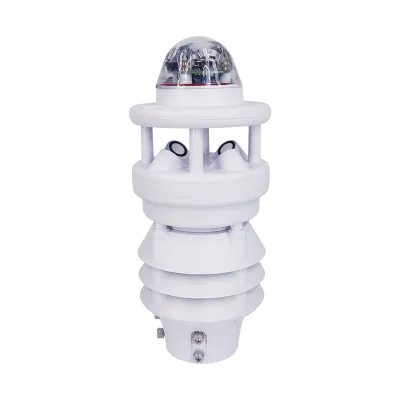
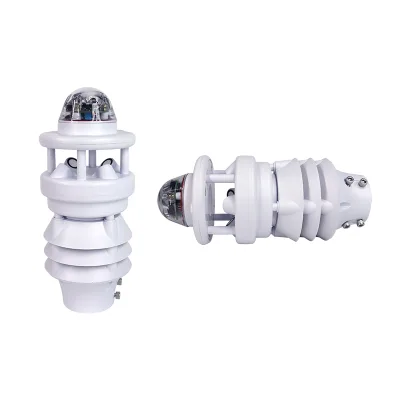


Comprehensive Sourcing Guide
Strategic Sourcing Guide for Modular Structure Weather Monitors
Understanding Modular Weather Monitoring Architectures
When sourcing a Modular Structure Weather Monitor, buyers must first distinguish between integrated sensor units and the structural frameworks that support them. The market offers distinct product categories, ranging from compact meteorological stations to large-scale industrial monitoring towers. A critical observation from current product listings indicates that specific models, such as the AMAWS00X and FAWS00X, are explicitly designed as weather stations featuring Modbus communication systems. These units typically aggregate data on wind speed, wind direction, air humidity, atmospheric pressure, rainfall, and illumination. The modular nature of these systems often allows for the independent replacement or upgrade of sensor heads without dismantling the entire support structure.
However, the term "modular structure" also frequently refers to the physical tower or mast itself. In this context, the structural integrity is paramount. Products like the PSY8/20-40W and PSKD10-30B-AR represent different structural configurations, with origins traced to regions like Sichuan and Fujian in China. Buyers should verify whether the "modular" aspect refers to the sensor array's connectivity or the physical assembly of the tower. For instance, some structural units are designed with a "Vertical Type" shape and a "Cross Type" belly bar, indicating specific load-bearing geometries. Understanding this distinction is the first step in defining the procurement scope, as a modular sensor system requires a compatible physical mount, while a modular tower requires specific foundation engineering.
Technical Specifications and Sensor Performance
The technical viability of a weather monitor depends heavily on the precision of its sensors and the robustness of its communication protocols. Based on observed product attributes, high-performance units often feature a wind speed range of 0 to 70 meters per second and a wind direction capability spanning 0 to 360 degrees. These ranges are critical for industrial applications where extreme weather events must be captured accurately. Similarly, atmospheric pressure sensors should cover a range of 10 to 1100 hPa, and air humidity sensors must operate across the full 0 to 100% Rh spectrum.
Communication is another vital technical specification. The GPRS communication system is a documented feature in several listings, enabling remote data transmission which is essential for distributed monitoring networks. Power supply options vary, with some units supporting 220V AC input while others utilize solar power supply, offering flexibility for remote or off-grid installations. For structural components, the design wind speed capability is a key metric. Some high-grade towers are engineered to withstand design wind speeds up to 300 km/h, adhering to specific design standards such as Tia/Eia-222-G/H/F, En 1991-1-4, and En 1993-3-1.
Buyers must also evaluate the physical dimensions and material composition. Structural models may have standard dimensions like 824434 cm or 786350 cm, though these likely refer to specific component packages rather than the full tower height. The tower height itself can range from 10 to 60 meters, depending on the application. Material quality is equally important; bodies are often constructed from SS304 Stainless Steel to ensure longevity, while nozzles or specific fittings may use Hard Anodized Aluminum Alloy. The working pressure for associated pneumatic or hydraulic components in these systems can reach up to 8 Bar.
Compliance, Certification, and Engineering Standards
In the B2B procurement of industrial weather monitoring equipment, compliance with international standards is non-negotiable. While specific certification statuses like CE or RoHS are sometimes mentioned in broader market contexts, buyers should rely on verified documentation for the specific units they intend to purchase. High-confidence data indicates that certain products carry ISO certifications, and specific towers may hold ISO 9001:2008 certificates, validating the manufacturer's quality management systems.
Engineering standards provide the technical backbone for structural safety. For modular towers, the welding process must adhere to AWS D1.1 standards, ensuring that joints can withstand dynamic loads. Galvanization, a critical process for corrosion resistance in outdoor environments, should follow ASTM A123 or ISO 1461 standards. These standards dictate the thickness and quality of the zinc coating, which directly impacts the product's lifetime. Observations suggest that some units boast a lifetime of up to 30 years, a claim that is contingent upon adherence to these galvanization and material quality standards.
Furthermore, material specifications must be verified against project requirements. The use of materials such as 20#, Q355, ASTM A36, and A572 Gr50 steel indicates a range of structural strengths suitable for different load conditions. Bolt grades, ranging from Gr 4.8 to Gr 8.8, also play a crucial role in the assembly's integrity. Buyers should request mill test reports to confirm that the supplied materials match the specified grades. Additionally, surface treatments like Hot Dip Galvanizing or Painting are standard methods to protect against environmental degradation, with color options often customizable to Red, Orange, or White.
Cost Drivers and Pricing Variables
The pricing of modular weather monitors is influenced by a complex interplay of factors, including sensor precision, structural height, material quality, and customization levels. The observed price range in the market spans from 1 to 6108 USD, a variance that reflects the difference between basic sensor kits and fully engineered, tall structural towers. Several variables drive these costs. First, the communication system adds value; units with GPRS capabilities generally command a higher price than those with basic wired connections. Second, the power supply configuration matters; solar-powered units with integrated battery management systems are typically more expensive than those requiring a 220V connection.
Material selection is another significant cost driver. Stainless steel (SS304) and high-grade aluminum alloys are more costly than standard carbon steels but offer superior corrosion resistance, justifying the premium for coastal or harsh industrial environments. The structural height is perhaps the most impactful factor; towers ranging from 10 to 60 meters require exponentially more material and engineering effort than shorter units. Customization also plays a role; attributes such as "Customization: Available" for product models and color options can increase the unit price and lead time.
Minimum Order Quantity (MOQ) is another financial consideration. The observed MOQ range is between 1 and 10 units. Buyers purchasing single units for pilot projects may face higher per-unit costs compared to those ordering in batches of 10. Packaging requirements, such as "Two-Level Carton Packing" or "Wooden Case" for heavy structural components, also add to the logistics cost. Buyers should analyze the total cost of ownership, including shipping, installation, and maintenance, rather than focusing solely on the unit price.
Typical Applications and Usage Scenarios
Modular weather monitors are deployed across a diverse array of industrial sectors, each with unique environmental demands. The "Industrial" usage category is broad, encompassing everything from chemical plants to construction sites. Specific applications include firefighting and fire protection systems, where accurate wind data is crucial for predicting fire spread. Vehicle-related applications also utilize these monitors, likely for tracking weather conditions affecting transportation logistics or testing vehicle aerodynamics.
The "Widely" applicable nature of these devices suggests their utility in general meteorological monitoring, agriculture, and environmental research. For instance, the ability to measure rainfall (04mm/Min) and illumination (0200000lux) makes these units suitable for agricultural planning and solar energy site assessments. In the context of structural towers, the "Firefighting / Fire Protection / Vehicle / Industrial" application list highlights their role in safety-critical infrastructure. High-wind resistance towers (up to 300 km/h) are essential for coastal monitoring stations or facilities in hurricane-prone regions.
The modularity of these systems allows for scalable deployment. A single weather station can be expanded by adding more sensors or upgrading the communication module. This flexibility is particularly valuable for large industrial complexes that require a network of monitoring points rather than a single data source. The "Parts Covered with Two-Level Carton Packing" and "Covered with Carton Package" attributes indicate that these units are designed for safe transport to various global locations, supporting their widespread application.
Supplier Evaluation and Quality Assurance
Selecting a reliable supplier for modular weather monitors requires a rigorous evaluation process. Buyers should prioritize suppliers who can provide verifiable evidence of their manufacturing capabilities and quality control measures. The origin of the products, such as Sichuan or Fujian in China, provides geographical context but does not guarantee quality on its own. Instead, buyers must look for concrete evidence of adherence to standards.
Key evaluation criteria include the supplier's ability to provide documentation for the ISO certifications mentioned, such as ISO 9001:2008. Buyers should also request detailed specifications for the welding and galvanization processes to ensure they meet AWS D1.1 and ASTM A123/ISO 1461 standards. The "Condition: New" attribute is a basic requirement, but buyers should verify the manufacturing date to ensure the product has not been stored in conditions that could degrade its components.
Quality control should extend to the physical inspection of the product upon delivery. The "Marking: Hydraulic Press Stamping" on components is a traceability feature that buyers should verify to ensure the parts match the ordered specifications. Additionally, the "Allowable Deflection" of 0.5-1.0 Degree is a critical structural parameter that must be tested to confirm the tower's stability under load. Buyers should consider requesting third-party inspection reports or factory audit results to validate the supplier's claims regarding material quality and production processes.
Long-Term Procurement and Maintenance Considerations
Procuring modular weather monitors is not a one-time transaction but the beginning of a long-term operational relationship. The "Lifetime: 30 Years" claim for certain structural units underscores the importance of selecting high-quality materials and finishes. However, this longevity is contingent upon proper maintenance and the availability of spare parts. Buyers should inquire about the supplier's support for long-term maintenance, including the availability of replacement sensors, communication modules, and structural components.
The "Customization: Available" attribute suggests that suppliers may offer tailored solutions, but buyers must ensure that these customizations do not compromise the standardization of the system. Standardized components are easier to replace and maintain. Furthermore, the "Surface Treatment: Hot DIP Galvanized or Painting" choice should be made based on the specific environmental conditions of the installation site. In corrosive environments, hot-dip galvanizing is generally preferred over painting for its durability.
Buyers should also consider the modularity of the system for future upgrades. As technology evolves, the ability to swap out older sensors for newer, more accurate models without replacing the entire tower is a significant advantage. The "Communication System: GPRS" indicates a level of connectivity that should be future-proofed against changes in network infrastructure. Finally, buyers should establish clear protocols for warranty claims and technical support, ensuring that any issues with the "New" condition or performance can be resolved promptly. By focusing on these long-term factors, buyers can secure a reliable and cost-effective weather monitoring solution that serves their operational needs for decades.
FAQs
What communication systems are available for modular weather monitors?
GPRS is a documented communication system for these units, enabling remote data transmission. Some models also support Modbus protocols for industrial integration, allowing flexible connectivity options for distributed monitoring networks.
Which wind speed range do these weather stations typically support?
High-performance units feature a wind speed range of 0 to 70 meters per second. This capability ensures accurate capture of extreme weather events in industrial applications where precision is critical for safety and operations.
Can these modular structures withstand high wind speeds up to 300 km/h?
Yes, high-grade towers are engineered to withstand design wind speeds up to 300 km/h. These structures adhere to standards like Tia/Eia-222-G/H/F and En 1991-1-4 to ensure stability in hurricane-prone regions.
What certifications verify the quality of these industrial weather monitors?
Certain products carry ISO certifications, and specific towers may hold ISO 9001:2008 certificates. These documents validate the manufacturer's quality management systems and ensure adherence to international engineering and safety standards.
How long is the expected lifetime of a galvanized modular tower?
Some units boast a lifetime of up to 30 years when properly maintained. This longevity depends on adherence to galvanization standards like ASTM A123 or ISO 1461, which protect against environmental corrosion.
What is the typical price range for modular weather monitoring equipment?
The observed price range spans from 1 to 6108 USD depending on complexity. Costs vary based on sensor precision, structural height, material quality, and whether the unit includes solar power or GPRS capabilities.
Which materials are used for the body and nozzle of these monitors?
Bodies are often constructed from SS304 Stainless Steel to ensure longevity. Nozzles or specific fittings may use Hard Anodized Aluminum Alloy, providing durability and resistance to harsh industrial environments.