Source Moto Frame for Motorcycle Parts, Bikes, and Scooters
Compare 30 Moto Frame options from verified Chinese manufacturers. Buyers can evaluate materials like aluminum alloy and iron, certifications including ISO 9001 and CE, and customization services for various motorcycle models.
Key considerations
Products List


$200.00 - $400.00
MOQ: 1 Pieces


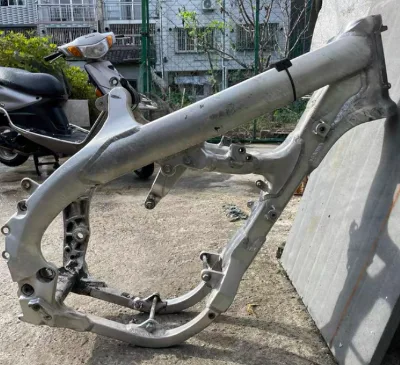


Comprehensive Sourcing Guide
Strategic Sourcing Guide for Motorcycle Frame Procurement
Understanding Technical Specifications and Material Variability
When initiating a procurement strategy for motorcycle frames, buyers must first navigate the diverse landscape of technical specifications. The market offers frames constructed from various materials, each dictating distinct performance characteristics and manufacturing processes. Based on current market observations, frames are frequently manufactured using high-strength aluminum alloys, iron, and stainless steels. The selection of material is not merely a cost decision but a critical engineering choice that influences the unit weight and structural integrity of the final product.
For applications requiring lightweight performance, aluminum alloy frames are a primary consideration. Market data indicates that aluminum alloy units can have a unit weight of up to 30kg, which is significant for larger chassis components. Conversely, frames constructed from iron or stainless steel often present a lower unit weight profile, with specific observations noting stainless steel units weighing up to 5kg. This discrepancy suggests that "unit weight" in this context may refer to specific sub-components or varying model densities rather than the total mass of a complete frame assembly. Buyers must verify the exact weight specifications for their specific model requirements, as the material choice directly impacts the vehicle's handling and fuel efficiency.
The manufacturing process also plays a pivotal role in the final product's quality. The predominant molding style observed is forging, a process known for enhancing the grain structure of the metal and improving tensile strength. This is often followed by post-processing steps such as CNC machining, which ensures precise dimensional accuracy. Forging tolerances are critical; observed data suggests a tolerance range of +/-0.2mm for forged components. This level of precision is essential for ensuring that mounting points align correctly with other motorcycle systems, such as the engine and suspension.
Furthermore, heat treatment processes are integral to achieving the desired mechanical properties. Normalizing is a specific heat treatment method noted in the supply chain, which helps refine the grain structure and relieve internal stresses introduced during the forging and machining phases. Buyers should explicitly inquire about the heat treatment protocols applied to any frame they consider, as this step is vital for durability and resistance to fatigue under dynamic loads.
Compliance Standards and Certification Verification
Navigating the regulatory landscape is a non-negotiable aspect of sourcing motorcycle frames, particularly for export-oriented markets. The certification landscape for these components is robust, with several key standards frequently appearing in supplier profiles. A primary certification to verify is ISO 9001, which appears in various iterations such as ISO 9001:2000 and general ISO 9001 compliance. This standard ensures that the supplier maintains a quality management system capable of consistently providing products that meet customer and regulatory requirements.
Beyond quality management, product-specific safety and environmental certifications are crucial. The market data highlights the presence of CE, RoHS, CCC, DOT, and EEC certifications. The CE mark indicates conformity with health, safety, and environmental protection standards for products sold within the European Economic Area. RoHS compliance ensures that the frame and its associated coatings do not contain restricted hazardous substances, a critical requirement for modern electronics and metal assemblies. For markets in North America, DOT (Department of Transportation) certification may be required to ensure the part meets safety standards for road use. Similarly, CCC (China Compulsory Certification) is relevant for domestic sales within China, while EEC certification pertains to European Economic Community standards.
Buyers must exercise caution when reviewing certification claims. While many suppliers list these certifications, the specific version or scope of the certification can vary. For instance, some listings specify "ISO9001: 2000," which is an older version of the standard, whereas others simply state "ISO9001." It is imperative for the procurement team to verify the current validity of these certificates and ensure they cover the specific manufacturing site and product line in question. Additionally, standards such as AISI (American Iron and Steel Institute) are referenced regarding material specifications, ensuring that the steel or alloy composition meets recognized industry benchmarks.
Cost Drivers and Pricing Dynamics
The pricing structure for motorcycle frames is influenced by a complex interplay of material costs, manufacturing complexity, and order volume. The observed price range in the market is exceptionally broad, spanning from $0.10 to $2,000. This wide variance is not indicative of a single product type but rather reflects the diversity of the category, which includes simple sub-components to complete, high-strength chassis assemblies. A frame for a standard commuter motorcycle will naturally differ in cost from a frame designed for a high-performance or custom build.
Material costs are a primary driver. Aluminum alloy frames generally command a higher price point than iron or steel alternatives due to the raw material cost and the energy-intensive nature of the forging and heat treatment processes. However, the long-term value proposition of aluminum often lies in its weight savings and corrosion resistance. Conversely, steel frames may offer a lower upfront cost but require careful consideration regarding weight and potential corrosion mitigation strategies.
Order volume is another significant factor affecting the unit price. The Minimum Order Quantity (MOQ) varies widely, with observed ranges from 1 to 1,000 units. Specific data points indicate an MOQ of 200 units for certain custom or forged products. Buyers purchasing below this threshold may face higher per-unit costs or may be restricted to standard, non-customized inventory. Customization is a key value-add in this sector, with many suppliers offering "Acceptable" or "Available" customization options. However, custom orders typically involve higher MOQs and potentially longer lead times, which must be factored into the total cost of ownership.
The following table summarizes the observed cost and volume parameters to assist in budget planning:
| Parameter | Observed Range/Value | Impact on Procurement |
|---|---|---|
| Price Range (USD) | $0.10 - $2,000 | Highly dependent on material, size, and complexity. |
| MOQ Range | 1 - 1,000 Units | Lower MOQs allow for testing; higher MOQs reduce unit cost. |
| Specific MOQ | 200 Units | Common threshold for custom forged items. |
| Lead Time | 25-30 Days | Standard production window for custom orders. |
Typical Applications and Model Compatibility
Motorcycle frames are not one-size-fits-all components; they are engineered for specific applications and vehicle models. The market features frames designed for a wide array of motorcycle types, from standard commuter bikes to specialized off-road and sport models. A prominent example in the current supply landscape is the frame designed for the Ybr125 model. This specific application highlights the importance of model compatibility, as the frame must align with the engine mounting points, suspension geometry, and bodywork of the target vehicle.
Another observed application is for the Wuyang-150 model, demonstrating that the supply chain supports various displacement classes and manufacturer specifications. The "Type" of product is often categorized broadly as "Motorcycle Body Parts," but the specific "Product Name" and "Fit for" fields provide the necessary granularity for procurement. Buyers must ensure that the frame's model number, such as HDCF090, 2820780, or 2820517, matches the exact requirements of their assembly line or distribution needs.
Customization is a significant trend in this sector. Many suppliers offer frames that can be "Customised" or made "As your request." This flexibility allows buyers to adapt frames for niche markets or specific brand requirements. For instance, a buyer might require a frame with a specific color, such as Black, or a specific packing style like "Neutral Packing" or branded packaging like "Jalyn Packing." The ability to customize the frame's appearance and packaging is often tied to the "One-Stop Sourcing" advantage offered by certain suppliers, allowing buyers to streamline their logistics by consolidating frame and body part orders.
Supplier Evaluation and Geographic Considerations
When evaluating potential suppliers for motorcycle frames, geographic origin and logistical capabilities are critical factors. The majority of the observed supply originates from China, with specific mentions of Ningbo, Zhejiang, and general Zhejiang province. These regions are established manufacturing hubs known for their metalworking expertise and supply chain efficiency. The proximity of suppliers to major ports in Ningbo can facilitate faster shipping times and lower freight costs for international buyers.
Supplier evaluation should extend beyond location to include their service capabilities. The presence of "After-Sales Service: Yes" and a "Warranty: 1 Year" indicates a supplier's confidence in their product quality and their commitment to resolving post-delivery issues. This warranty period is a standard benchmark for new products and provides a safety net for buyers against manufacturing defects. Additionally, the "Condition" of the products is consistently listed as "New," ensuring that buyers receive fresh inventory rather than refurbished or used components.
The "Advantage" of "One-Stop Sourcing" is a recurring theme in supplier profiles. This suggests that many manufacturers offer a comprehensive range of motorcycle parts, including frames, body parts, and accessories. Leveraging a supplier with this capability can simplify the procurement process, reduce administrative overhead, and ensure consistency in quality control across different components. However, buyers should verify that the supplier's core competency lies in frame manufacturing and not just in trading, as this impacts the depth of technical support and quality assurance available.
Quality Control and Long-Term Procurement Strategy
Ensuring the long-term viability of a motorcycle frame supply chain requires a rigorous approach to quality control and strategic planning. The manufacturing process involves multiple stages, from the initial forging to the final CNC machining and heat treatment. Each stage presents potential points of failure that must be monitored. The "Forging Tolerance" of +/-0.2mm is a specific metric that buyers should use as a baseline for acceptance criteria. Any deviation beyond this tolerance could lead to assembly issues or compromised structural integrity.
Packaging is another critical aspect of quality control. The observed packaging methods include "Paper Carton," "Cartons+Bubble Film," "OPP Bag," and "Cardboard Box." The choice of packaging depends on the fragility of the frame and the shipping distance. For international shipments, robust packaging like "Cartons+Bubble Film" is essential to prevent damage during transit. Buyers should specify their packaging requirements clearly in the purchase order to ensure that the frames arrive in pristine condition.
Long-term procurement considerations also involve managing the relationship with the supplier regarding lead times and production capacity. The standard lead time observed is 25-30 days. This timeline should be factored into inventory planning to avoid stockouts. For custom orders, this lead time may extend, and buyers should establish clear communication channels to track production progress. Furthermore, the "Standard" of the product can vary from "AISI" to "As your request" or "Standard." Buyers must define these standards clearly at the outset to avoid misunderstandings regarding material composition and finish.
In conclusion, sourcing motorcycle frames requires a balanced approach that considers technical specifications, regulatory compliance, cost dynamics, and supplier reliability. By leveraging the observed data on materials, certifications, and manufacturing processes, buyers can make informed decisions that ensure the quality and performance of their motorcycle assemblies. The key to success lies in detailed verification of all claims, clear communication of requirements, and the establishment of a robust quality control framework that spans the entire supply chain.
FAQs
What certifications do Moto Frame suppliers typically hold?
Suppliers typically hold ISO 9001, CE, RoHS, CCC, DOT, and EEC certifications. These standards ensure compliance with quality management and safety regulations for global markets, though specific versions like ISO 9001:2000 may vary by vendor.
How long is the lead time for custom moto frames?
The standard lead time for custom orders is 25 to 30 days. This duration applies to new products requiring heat treatment and CNC machining, assuming the order meets the minimum quantity requirements for production scheduling.
Which materials are used for manufacturing motorcycle frames?
Frames are commonly manufactured from high-strength aluminum alloy, iron, and stainless steel. Aluminum units can weigh up to 30kg, while stainless steel options often weigh up to 5kg, depending on the specific model and design.
Can I request custom specifications for my motorcycle frame?
Yes, customization is acceptable and available for most suppliers. Buyers can request specific models, colors, or packaging styles, provided the order meets the minimum quantity thresholds required for custom production runs.
What is the minimum order quantity for forged moto frames?
The minimum order quantity for specific custom forged items is 200 units. However, general ranges in the market can vary from 1 to 1000 units depending on the supplier and the complexity of the customization requested.
Where are these motorcycle frame manufacturers located?
Most manufacturers are located in China, specifically in Ningbo, Zhejiang. This region is a known hub for metalworking and offers efficient logistics access for international buyers sourcing these components.
What warranty is provided for new motorcycle frames?
A standard one-year warranty is provided for new products. This warranty covers defects and ensures after-sales service is available to address any issues arising from manufacturing or material quality shortly after delivery.