Source Motorized Roller Blinds for Living Rooms, Offices, and Hotels
Find 30 Motorized Roller Blinds with customizable sizes and fabrics like polyester and sunscreen. Compare options for heat insulation, soundproofing, and dustproof functions suitable for living rooms, offices, and hotels.
Key considerations
Products List


Skylight Blinds Automatic Control Motorized Skylight Roller Blind Perfect Fit Honeycomb Blinds
$19.99 - $29.99
MOQ: 100 Square Meters


Motorized Roller Blinds Windproof Roller Blinds Motorized for Balcony
$43.00 - $60.00
MOQ: 3 Square Meters

Factory Outdoor Blinds Motorized Outdoor Roller Blinds Roller Shades
$43.00 - $60.00
MOQ: 3 Square Meters

Smart Electric Motorized Blackout Roller Blinds Efficient Window Shades Blind Roller
$50.00 - $60.00
MOQ: 5 Square Meters

Sunscreen Roller Blinds Windows Motorized Roller Blind
$1.99 - $2.99
MOQ: 1 Square Meters
Shouguang Runchen Environmental Protection Technology Co., Ltd.

Cordless Day and Night Motorized Roller Blinds
$11.99 - $13.99
MOQ: 1 Square Meters
Shouguang Runchen Environmental Protection Technology Co., Ltd.


Day and Night Smart Electric Motorized Roller Blinds
$1.99 - $3.99
MOQ: 1 Square Meters
Shouguang Runchen Environmental Protection Technology Co., Ltd.

Best New Style Roller Blinds Curtains, Motorized Roller Blinds
$11.99 - $13.99
MOQ: 1 Square Meters
Shouguang Runchen Environmental Protection Technology Co., Ltd.
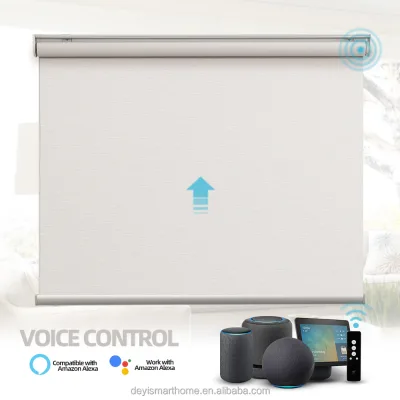


Motorized Roller Waterproof Retractable Blackout Window Blinds Blind
$60.00 - $100.00
MOQ: 2 Square Meters
Comprehensive Sourcing Guide
Strategic Sourcing Guide for Motorized Roller Blinds
Navigating the global market for Motorized Roller Blinds requires a disciplined approach that balances technical performance with supply chain reliability. For procurement professionals, the core keyword "Motorized Roller Blinds" represents a category where mechanical precision, fabric integrity, and electrical safety converge. The following guide synthesizes observed market data and verified product attributes to provide a framework for evaluating suppliers and specifications without relying on unverified claims.
Technical Specifications and Operational Mechanics
The fundamental distinction in this category lies in the operation method. While manual systems remain prevalent, the demand for motorized solutions is driven by convenience and integration with smart building systems. Observed product attributes indicate that modern units support both manual and motorized operation modes, offering flexibility for retrofitting or new installations. The structure is consistently described as horizontal, utilizing a roller mechanism that folds the fabric for a clean, streamlined appearance.
A critical technical parameter is the drive system. Data confirms the availability of electric open types, which necessitate specific attention to power requirements and control interfaces. Buyers must verify the compatibility of the motor with existing building automation protocols. The fabric composition is another pivotal specification. High-confidence observations list Polyester and Sunscreen as primary materials. These fabrics are selected for their durability and specific light-filtering properties. The opacity can range from standard filtering to blackout capabilities, with specific models noted for their blackout performance.
The physical dimensions are rarely off-the-shelf. The market standard for this category leans heavily toward customization. Specifications indicate that width and size are often "as customized" to fit specific window apertures. This necessitates a precise measurement protocol before ordering. Furthermore, the frame material for the roller housing and supporting structures is frequently identified as Steel or Stainless Steel, ensuring structural integrity for larger spans. The surface finishing is typically described as "finished," implying a protective coating against corrosion and wear.
Compliance, Certification, and Safety Standards
In the B2B procurement of window treatments, particularly those involving electrical components, compliance is non-negotiable. The observed product data lists several certifications, including ISO9001, SGS, and Greenguard. These serve as indicators of a supplier's commitment to quality management systems, third-party testing, and indoor air quality standards. ISO9001 suggests a standardized approach to manufacturing consistency, while SGS certification often relates to product safety and material testing. Greenguard certification is particularly relevant for indoor environments like offices and hospitals, indicating low chemical emissions.
Buyers must treat these certifications as verification points rather than automatic guarantees. The presence of a certification mark on a product page should be cross-referenced with the supplier's ability to provide valid, up-to-date documentation. Additionally, the product origin is noted as China, which is a major manufacturing hub for this category. While this offers competitive pricing, it also requires rigorous due diligence regarding export compliance and shipping regulations.
Safety ratings are also a critical component of the technical specification. One observed attribute lists a "Security Rating: C," which likely pertains to the mechanical robustness or resistance to tampering. For applications in high-security areas or public buildings, this rating must be understood in the context of local building codes. The standard dimensions provided in some listings, such as 160x20x20cm or W1770D390H450mm, serve as reference points for packaging and shipping but do not define the final product size, which remains customizable.
Cost Drivers and Pricing Dynamics
The pricing landscape for Motorized Roller Blinds is influenced by a complex interplay of factors. The observed price range in the market spans from 1.5 to 100 USD, a wide variance that reflects differences in motor quality, fabric grade, and customization levels. A unit priced at the lower end of this spectrum likely utilizes a basic manual or entry-level motor system with standard polyester fabric. Conversely, the upper end of the range suggests high-end blackout fabrics, advanced motor technology with remote or app control, and complex custom sizing.
The Minimum Order Quantity (MOQ) is a significant cost driver. Data indicates an MOQ range of 1 to 2000 units, with a specific observation of 10 square meters as a common threshold for custom fabric orders. This variability allows for both small-scale procurement for single projects and bulk purchasing for large developments. However, the "Custom Made Design" nature of many products means that unit costs often decrease with volume, but the setup costs for custom tooling or programming remain fixed.
Packaging also impacts the final landed cost. Observations list "Carton Box," "Carton," and "Canton or Wood" as packing methods. For international shipping, the choice between standard cartons and wooden crates affects freight charges and insurance premiums. Wooden packaging is typically more expensive but offers superior protection for large, custom-sized units during transit. Buyers should calculate the total cost of ownership, including freight, insurance, and potential damage risks, rather than focusing solely on the unit price.
Typical Applications and Functional Requirements
The versatility of Motorized Roller Blinds makes them suitable for a diverse array of environments. The observed usage categories include Living Rooms, Bedding Rooms, Offices, Hotels, Hospitals, Cafes, and Bathrooms. Each environment imposes different functional requirements. For residential spaces like living and bedroom areas, the primary functions are heat insulation, dustproofing, and windproofing. The fabric's ability to block sunlight while maintaining privacy is a key selling point.
In commercial and institutional settings such as offices, hotels, and hospitals, the functional requirements expand. Sound insulation and soundproofing are frequently cited attributes, essential for creating quiet environments in meeting rooms or patient wards. Additionally, insect resistance and anti-theft capabilities become relevant for ground-floor windows or high-traffic areas. The "Decoration" function is also noted, highlighting the aesthetic role these blinds play in modern interior design.
The "Modern" appearance is a consistent attribute across the product range, suggesting a design language that favors clean lines and minimalism. This aligns with current architectural trends that prioritize unobtrusive window treatments. The specific model names, such as "SUNRISE," "SUNRISE-CURTAIN," "SUN-BLINDS," "RB20," and "WR120," indicate a broad portfolio, but the underlying application logic remains consistent: providing light control, privacy, and energy efficiency through automated systems.
Supplier Evaluation and Verification Protocols
Evaluating a supplier for Motorized Roller Blinds requires a multi-dimensional approach. The first step is verifying the "Customization" capability. Since the industry standard is for customized sizes and patterns, the supplier must demonstrate a robust design-to-production workflow. Buyers should request samples of the fabric and motor mechanisms to verify the "Finished" surface quality and the smoothness of the "Automatic" or "Electric" operation.
The "After-sales Service: Yes" attribute is a critical differentiator. Motorized systems involve electrical components that may require maintenance or replacement. A supplier that explicitly offers after-sales support is preferable, as it reduces long-term operational risks. Buyers should inquire about the warranty period, the availability of spare parts, and the response time for technical support.
When assessing the supply chain, the "Delivery Time" is a key metric. Observed data suggests a delivery window of "Within 20 Days," which is a reasonable benchmark for custom orders. However, this timeline can fluctuate based on the complexity of the customization and the current production load. Buyers should confirm the lead time in writing and understand the factors that could cause delays, such as material shortages or shipping disruptions.
Quality Control and Long-Term Procurement Considerations
Quality control in the manufacturing of Motorized Roller Blinds must address both the mechanical and the aesthetic aspects. The "Surface Finishing" being "Finished" implies a post-production treatment, but buyers should verify the consistency of this finish across the batch. The "Screen Netting Material," identified as Fiberglass in some contexts, requires inspection for tensile strength and resistance to tearing.
Long-term procurement considerations extend beyond the initial purchase. The "Open Style" being "Automatic" means the system relies on a motor that will undergo repeated cycles. Buyers should evaluate the motor's duty cycle and expected lifespan. The "Security Rating" of "C" suggests a baseline level of robustness, but for high-security applications, additional verification may be necessary.
Sustainability is another emerging consideration. The presence of "Greenguard" certification indicates an awareness of environmental impact, but buyers should also inquire about the recyclability of the materials, particularly the steel frames and polyester fabrics. The "Pattern" being "as Customized" allows for design flexibility, but it also introduces the risk of production errors. Implementing a rigorous inspection protocol before shipment is essential to ensure that the final product matches the approved samples and specifications.
Comparative Analysis of Product Attributes
To facilitate decision-making, the following table summarizes key attributes observed in the market for Motorized Roller Blinds. This comparison highlights the variability in specifications that buyers must navigate.
| Attribute Category | Observed Variations | Procurement Implication |
|---|---|---|
| Operation Type | Manual, Motorized, Electric, Automatic | Verify motor compatibility with building systems; confirm backup manual override. |
| Fabric Material | Polyester, Sunscreen, Fiberglass | Select based on light control needs (Blackout vs. Filter) and durability requirements. |
| Customization | Size, Pattern, Width (as Customized) | Ensure precise measurement protocols; confirm lead times for custom orders. |
| Certifications | ISO9001, SGS, Greenguard | Request valid certificates; verify scope covers the specific product model. |
| MOQ | 1 unit to 2000 units; 10 Sqm (fabric) | Align order volume with budget and project scale; negotiate pricing tiers. |
| Security | Security Rating C, Anti-Theft | Assess if the rating meets local security standards for the intended location. |
| Packaging | Carton Box, Canton, Wood | Factor packaging costs into total landed cost; ensure protection for transit. |
| Lead Time | Within 20 Days | Confirm specific timeline in contract; account for potential shipping delays. |
Final Procurement Recommendations
Sourcing Motorized Roller Blinds is a strategic exercise that demands attention to detail. The market offers a wide array of options, from basic manual units to fully automated, custom-engineered systems. Buyers must prioritize the verification of technical specifications, particularly regarding the motor system and fabric properties. The presence of certifications like ISO9001 and Greenguard provides a baseline for quality, but active verification is required.
Cost management involves balancing the unit price with the total cost of ownership, including customization, packaging, and after-sales support. The flexibility of the market allows for tailored solutions, but this requires clear communication with suppliers regarding dimensions, patterns, and functional requirements. By adhering to a disciplined evaluation process that focuses on verified attributes and avoids unconfirmed claims, procurement professionals can secure high-quality Motorized Roller Blinds that meet the specific needs of their projects while mitigating supply chain risks.
FAQs
What operation modes are available for Motorized Roller Blinds?
These blinds support both manual and motorized operation modes for flexibility. The electric open type allows for automated control, while manual options remain available for retrofitting or specific installation needs.
Can I customize the size and pattern of these roller blinds?
Yes, the width, size, and pattern are fully customizable to fit specific window apertures. Buyers must provide precise measurements before ordering, as the standard dimensions are merely reference points for packaging.
Which certifications do these products typically hold for safety?
Products often carry ISO9001, SGS, and Greenguard certifications to verify quality and safety. These marks indicate compliance with quality management systems and indoor air quality standards for environments like offices and hospitals.
How long is the delivery time for custom Motorized Roller Blinds?
The standard delivery time is within 20 days for custom orders. This timeline may vary based on the complexity of the customization and current production loads, so written confirmation is recommended.
What materials are used for the frame and fabric?
Frames are typically constructed from steel or stainless steel with a finished surface. The fabric options include polyester and sunscreen materials, with some models offering blackout opacity and fiberglass screen netting.
What is the minimum order quantity for these blinds?
The minimum order quantity ranges from 1 unit to 2000 units depending on the supplier. Some custom fabric orders may require a minimum of 10 square meters, while single units are also available.
Where are these Motorized Roller Blinds manufactured?
The products originate from China, a major manufacturing hub for this category. Buyers should verify export compliance and shipping regulations when sourcing from this specific location for international projects.