Source Multi Flower Donut Maker for Cafes, Bakeries, and Retail
Compare 30 multi flower donut maker options from Chinese manufacturers. These electric and gas-powered units feature stainless steel construction, automatic or semi-automatic grades, and capacities ranging from 300 to 1200 pieces per hour for diverse production needs; compare the available evidence and request quotations based on your requirements.
Key considerations
Products List




Comprehensive Sourcing Guide
Multi Flower Donut Maker Sourcing Guide
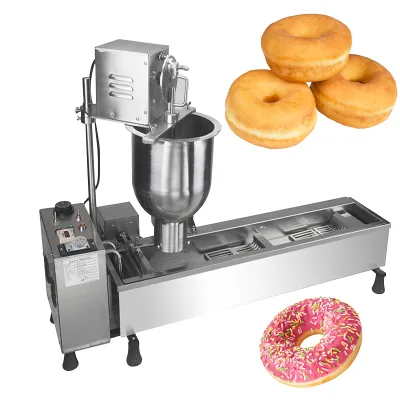
The multi flower donut maker represents a specialized category of thermal processing equipment designed for high-volume production of shaped pastries. Based on observed market listings, these units typically feature electric power sources ranging from 3kw to 6kw, with capacities varying significantly from 300 to 1200 pieces per hour depending on the specific model configuration. Buyers must recognize that while some listings emphasize high productivity, the actual output is heavily dependent on the specific automatic grade and the complexity of the flower shapes being produced.
Procurement decisions should prioritize the distinction between fully automatic and semi-automatic grades, as this directly impacts labor requirements and operational consistency. The observed data indicates that machines are constructed primarily from stainless steel, with specific models utilizing 304 grade material for enhanced durability and food safety compliance. When evaluating potential suppliers, it is critical to verify that the claimed capacity aligns with the physical dimensions and power consumption of the unit, as discrepancies often arise between marketing claims and actual thermal processing performance.
Product Scope and Observed Listing Signals
The product scope for these machines extends beyond simple donut production to include versatile applications for dumplings, samosas, and empanadas, reflecting a broader capability in thermal food processing. Listings frequently highlight customization options where the final product size can range from 20mm to 120mm, allowing manufacturers to tailor output to specific customer requirements for shape and volume. This flexibility is a key selling point, enabling buyers to adapt the equipment for different product lines without requiring multiple distinct machines for various pastry types.
Buyers should carefully scrutinize the listed packing specifications, as units are often shipped in fumigation-free wooden boxes or cases to ensure safe transit. The physical footprint of these machines varies, with standard dimensions observed between 1000mm and 1100mm in length, and weights ranging from 40kg to 60kg. Understanding these logistical parameters is essential for warehouse planning, as the heavy stainless steel construction necessitates robust flooring and adequate space for maintenance access around the unit.
Technical Specifications to Verify
Technical verification must begin with the power source and voltage compatibility, as listings show variations between 220V and 380V systems that must match the facility's electrical infrastructure. The heat power configuration is another critical variable, with some models offering gas or electric options while others are strictly electric. Ensuring the correct voltage and power rating is vital to prevent equipment failure, as the observed power ratings of 3kw and 6kw indicate significant energy demands that require dedicated circuits and proper grounding.
Capacity and automatic grade are equally critical specifications that define the operational efficiency of the machine. While some units are rated for 450 pieces per hour, others claim capacities up to 1200 pieces per hour, a difference that often correlates with the level of automation and the specific mold configurations available. Buyers should request detailed performance data for the specific flower shapes they intend to produce, as the transition from simple donuts to complex multi-flower designs can impact the throughput and the consistency of the thermal processing cycle.
Compliance and Safety Documentation
Compliance documentation is a non-negotiable aspect of sourcing, with CE certification appearing as a standard requirement for many of the listed units. This certification indicates that the equipment meets essential health, safety, and environmental protection requirements for the European market, which is often a baseline expectation for international trade. Buyers must verify that the CE mark is accompanied by valid test reports and that the manufacturer can provide the full technical file to demonstrate adherence to relevant machinery directives.
In addition to CE, ISO certification is frequently cited in product listings, suggesting a commitment to quality management systems. However, the presence of an ISO mark does not automatically guarantee food safety compliance for the specific application, so buyers should request evidence of material certifications for the 304 stainless steel used in construction. Ensuring that all components in contact with food meet local regulatory standards is essential, particularly when the equipment is intended for commercial use in regions with strict food safety laws.
Cost Drivers and Commercial Terms
The cost of a multi flower donut maker is driven primarily by the level of automation, the material grade, and the specific capacity of the unit. Listings show a wide price range, reflecting the difference between basic semi-automatic models and advanced fully automatic systems with higher throughput capabilities. Buyers should expect that units with higher power ratings and larger capacities will command a premium, but they must also consider the long-term operational costs associated with energy consumption and maintenance.
Commercial terms such as Minimum Order Quantity (MOQ) and lead times are significant factors in the procurement process, with observed MOQs ranging from 1 to 1000 units depending on the supplier's production capacity. While some suppliers offer single-unit purchases, larger orders may benefit from volume discounts or customized packaging solutions. It is crucial to clarify the delivery terms, including whether the wooden box packaging is included in the price and if fumigation-free certification is provided for international shipping.
Supplier Qualification and Quality Control
Supplier qualification requires a thorough review of the manufacturer's origin and production capabilities, with Guangzhou and Henan identified as key manufacturing hubs in China. Buyers should verify the supplier's history of producing similar thermal processing equipment and request references from existing clients who have operated the machines in commercial settings. The condition of the equipment, typically listed as new, should be confirmed through detailed inspection reports or third-party quality audits before finalizing the purchase.
Quality control measures must extend beyond the initial factory inspection to include pre-shipment testing of the machine's performance. Buyers should insist on witnessing a trial run where the machine produces the specific multi-flower donut shapes required, verifying that the product size and shape consistency meet the stated specifications. This step ensures that the automatic grade and thermal processing capabilities function as advertised, reducing the risk of receiving equipment that fails to meet production targets.
Long-Term Procurement Checks
Long-term procurement success depends on establishing a reliable supply chain for spare parts and ongoing technical support. Given the mechanical complexity of automatic donut makers, buyers should secure a comprehensive list of wear parts and ensure that the supplier maintains adequate inventory for critical components. This proactive approach minimizes downtime and ensures that the machine can continue to operate at peak efficiency throughout its lifespan.
Regular maintenance and performance monitoring are essential to sustain the high productivity claimed by the equipment. Buyers should develop a maintenance schedule that includes cleaning, lubrication, and calibration of the thermal processing elements to prevent degradation of the stainless steel surfaces and mechanical parts. By maintaining a close relationship with the supplier for ongoing support, buyers can ensure that the multi flower donut maker remains a reliable asset in their production facility.
FAQs
What power source does the donut maker use?
The machine uses an electric power source with options for 220V or 380V voltage. Some models offer gas or electric heat power choices. This ensures flexible operation for various commercial kitchen setups while maintaining consistent thermal processing for donut production.
Can the machine be customized for specific donut shapes?
Yes, customization is available for specific donut shapes and sizes according to customer requirements. The product size ranges from 20 to 120mm, allowing flexibility. Buyers can request custom dimensions to match their specific product lines or branding needs effectively.
Which certifications do these donut makers hold?
These machines hold CE and ISOCE certifications to ensure safety and quality standards. The stainless steel construction meets hygiene requirements for food processing. Buyers can rely on these documented certifications when selecting equipment for commercial food production environments.
How much capacity does the donut maker produce per hour?
Production capacity varies by model, ranging from 300 to 1200 pieces per hour. Specific models offer capacities like 450 pieces per hour or 300 pieces per hour. This range supports different business scales from small bakeries to large industrial facilities.
What material is used to construct the donut maker?
The machine is constructed from stainless steel, specifically 304 stainless steel for durability. This material ensures resistance to corrosion and easy cleaning for food safety. The robust build supports long-term use in high-volume commercial donut production settings.
Where are these donut makers manufactured?
These machines are manufactured in China, specifically in Guangzhou and Henan provinces. The origin is clearly stated as Mainland China for all listed models. Buyers can expect standard shipping logistics from these established manufacturing regions in the industry.
What is the typical weight of the donut maker?
The weight of the machine varies between 40kg and 60kg depending on the specific model. Some units weigh 48kg, while others are 55kg or 52kg. This weight range reflects the sturdy stainless steel construction required for stable thermal processing operations.