Source Multi-Head Pneumatic Perfume Filling Machine for Cosmetics, Oils, Liquids
Compare 30 multi-head pneumatic perfume filling machine options from verified suppliers. These units support vacuum filling, rotary structures, and customizable configurations for various liquid packaging needs.
Key considerations
Products List


Good Quality Quantitative Liquid Filling Machine/Perfume Filling Machine
$960.00 - $48965.00
MOQ: 1 Pieces


Parfum Filler Machine Fully Automatic Perfume Filling and Cap Sealing Machine
$25000.00 - $30000.00
MOQ: 1 Pieces


Multi-Functional Pneumatic Perfume Filling Machine Aerosol Fully Automatic
$17000.00 - $70000.00
MOQ: 1 Sets


Custom Heads Automatic Perfume Filling Machine for Perfume Glass Bottles
$13000.00 - $19000.00
MOQ: 1 Pieces

Multiple Heads Chemical Industry Perfume Filling Machine Small Bottle Filling Machine
$13000.00 - $19000.00
MOQ: 1 Pieces

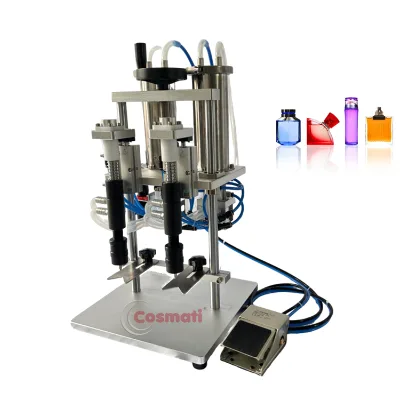
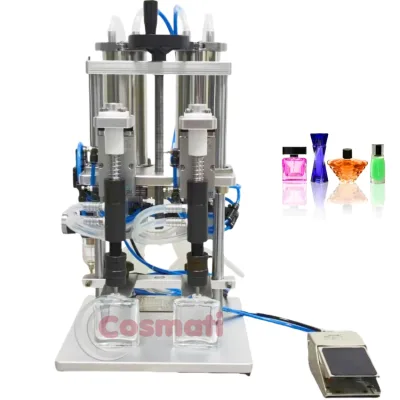
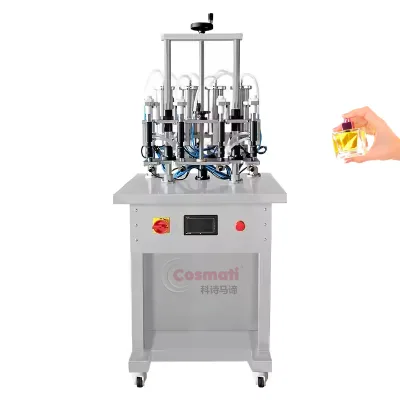
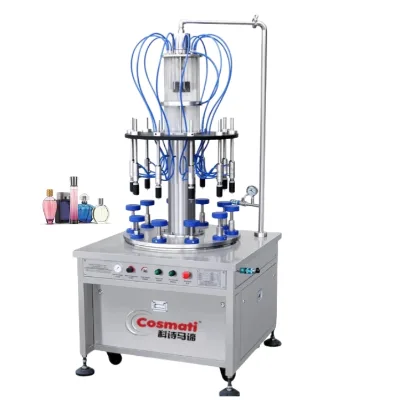
10-Head Fully Pneumatic Turntable Perfume Filling Machine Semi-Automatic Oil Glass Filler
$13000.00 - $18000.00
MOQ: 1 sets


Automatic Perfume Filling Machine for Commodity and Perfume
$30000.00 - $35000.00
MOQ: 1 Pieces
Guangzhou Jinfeng Light Industry Machinery Equipment Co., Ltd.
Comprehensive Sourcing Guide
Strategic Sourcing Guide for Multi-Head Pneumatic Perfume Filling Machines
Understanding the Core Technology and Operational Principles
The procurement of a multi-head pneumatic perfume filling machine requires a deep understanding of the specific filling principles and mechanical structures that define this equipment category. Based on the available product data, the defining characteristic of these systems is the Vacuum filling principle. This method is particularly critical for volatile liquids like perfume, as it minimizes oxidation and evaporation during the dispensing process. The machines operate using Pneumatic Lifting structures for the packaging container, ensuring precise alignment between the bottle neck and the filling valve head.
The mechanical architecture typically features a Rotary structure, which allows for continuous operation rather than the stop-and-go motion of linear systems. This rotary design is paired with Multi-Head filling valve configurations, which are essential for achieving high throughput. The data indicates specific configurations such as 4 Heads and 10 Heads, with the latter often associated with models like the "10 Heads Liquid Pneumatic Perfume Filling Machine." The feeding mechanism is another critical variable; while some units utilize a Single-Room Feeding cylinder structure, high-capacity models employ a Multi-Room Feeding system to handle larger volumes efficiently. The core components driving these operations generally include a Gear, Motor, and Pump, all controlled via a Touch Screen interface that allows operators to adjust parameters with precision.
Technical Specifications and Performance Metrics
When evaluating a multi-head pneumatic perfume filling machine, buyers must scrutinize specific technical specifications to ensure the equipment matches their production requirements. The Filling Volume capacity is a primary constraint, with observed ranges spanning from 15ml to 1000ml. This versatility allows the machine to handle various bottle sizes, provided the Suitable Bottle Height does not exceed 250mm. The Air Pressure requirement is a fixed operational parameter, typically listed as 0.5MPa, which buyers must ensure their facility's compressed air supply can consistently meet.
Performance metrics are equally vital for capacity planning. The Speed of operation for these rotary systems is substantial, with observed rates ranging from 15,000 to 25,000 Bottles/Day. For specific high-capacity models, the machinery capacity is explicitly noted as 2000 bottles per hour (bph). The Filling Accuracy is a critical quality indicator, with standard specifications citing an accuracy of 0.5%. This level of precision is necessary to prevent product loss and ensure regulatory compliance regarding fill levels. The machine is designed for Automatic Grade operation, though some listings also reference Semi-Automatic variants, which may offer different levels of operator intervention. The Usage is explicitly defined for Liquid and Perfume, with compatible filling materials including Water, Oil, and Perfume.
| Specification Parameter | Observed Value / Range | Relevance to Procurement |
|---|---|---|
| Filling Principle | Vacuum | Critical for volatile liquid preservation |
| Structure Type | Rotary | Determines throughput and footprint |
| Valve Head Configuration | Multi-Head (4, 10) | Directly impacts production speed |
| Filling Volume Range | 15-1000ml | Must match target bottle sizes |
| Filling Accuracy | 0.5% | Ensures product consistency and cost control |
| Air Pressure Requirement | 0.5MPa | Facility infrastructure compatibility check |
| Max Bottle Height | ≤250mm | Limits compatible packaging formats |
| Daily Capacity | 15,000-25,000 Bottles | Production planning and ROI calculation |
Compliance, Certification, and Material Standards
In the realm of industrial machinery, particularly for food and cosmetic applications like perfume, compliance and material standards are paramount. The supplied data highlights that the Packaging Material often involves Composite Materials, and the machine itself is frequently constructed from Stainless Steel, specifically noted in descriptions of mixing and freezing equipment. This material choice is essential for preventing corrosion and ensuring hygiene during the filling process.
Buyers must verify that the machine adheres to relevant safety and quality standards, although specific certification numbers are not universally listed in the provided product descriptions. The Standard for the product is generally defined as a Set, implying a complete operational unit. When evaluating suppliers, it is crucial to confirm that the Core Components (Gear, Motor, Pump) meet international quality benchmarks. The Machinery Capacity and Speed claims should be validated against independent testing or third-party verification, as these figures directly impact the return on investment.
Furthermore, the Customization of the machine is a key factor. The data indicates that customization is Available, which suggests that buyers can request modifications to the Feed Cylinder Structure or the Filling Valve Head to suit specific bottle geometries or production line layouts. However, buyers should not assume that every listed product satisfies every customization request without explicit confirmation from the supplier. The Packaging of the machine itself is often a Woodencase or Polywood Case, which is standard for international shipping to protect the equipment from damage during transit.
Cost Drivers and Pricing Dynamics
The pricing for multi-head pneumatic perfume filling machines is influenced by several distinct factors, resulting in a wide observed range from 950 to 70,000 USD. This significant variance is not arbitrary but reflects differences in automation levels, head counts, and material quality. The Automatic Grade of the machine is a primary cost driver; fully automatic systems with Touch Screen controls and advanced Vacuum systems command higher prices than semi-automatic counterparts.
The number of Heads on the filling valve is another critical determinant. A 4 Heads machine will generally be less expensive than a 10 Heads model due to the increased complexity of the rotary mechanism and the additional components required. The Material Type also plays a role; machines constructed with high-grade Stainless Steel for the freezing and mixing sections will be priced higher than those with standard metal finishes. Additionally, the inclusion of specialized features, such as a Freezing Filter Making Machine or a Perfume Blender integrated into the system, will significantly increase the overall cost.
Buyers should also consider the MOQ (Minimum Order Quantity) and Lead Time when calculating the total cost of ownership. The observed MOQ range is 1-1, indicating that single-unit purchases are generally feasible, which is advantageous for small to medium enterprises. However, the Lead Time and Location of the supplier, primarily China, can impact shipping costs and delivery schedules. The prod_packing method, whether Woodencase or Polywood Case, also affects the final landed cost due to the weight and volume of the packaging.
Typical Applications and Production Scenarios
The primary application for these machines is the Filling for Liquid, Perfume, making them indispensable for the fragrance industry. The Function is explicitly described as a Perfume Liquid Filling Machine, designed to handle the unique properties of aromatic liquids. The Vacuum filling principle is particularly suited for perfumes, as it reduces the risk of product degradation caused by exposure to air.
Beyond simple filling, these machines often serve as part of a broader production line that includes Mixing and Freezing Equipment. The data references Perfume Making Equipment Machine for PE and High Quality Perfume Making Machine/Mixing Machine, suggesting that buyers may need to integrate filling units with upstream processing equipment. The Perfume Freezing Filter Making Machine is another specific application, indicating that the system can be used for filtering and clarifying the liquid before or during the filling process.
The Usage extends to other liquids such as Water and Oil, making these machines versatile for cosmetic and essential oil manufacturers. The Semi-Automatic variants are particularly useful for smaller production runs or for facilities that require frequent changeovers between different bottle types. The Rotary structure allows for high-speed production, making these machines ideal for large-scale manufacturing operations where efficiency is a priority.
Supplier Evaluation and Quality Control Protocols
Evaluating a supplier for a multi-head pneumatic perfume filling machine requires a rigorous approach to quality control and verification. Buyers should prioritize suppliers who can provide detailed documentation regarding the Core Components and the Material Type used in construction. The prod_model designations, such as CM-PF-10, serve as specific identifiers that buyers can use to track the machine's specifications and history.
Quality control should begin with a review of the Filling Accuracy and Speed claims. Buyers should request test results or video evidence of the machine in operation to verify that the 0.5% accuracy and 15,000-25,000 Bottles/Day capacity are achievable under real-world conditions. The Air Pressure requirement of 0.5MPa should be tested to ensure the machine operates smoothly without fluctuations that could affect fill levels.
Furthermore, the Customization capabilities of the supplier should be assessed. Buyers need to confirm that the supplier can adapt the Feed Cylinder Structure and Filling Valve Head to meet specific production needs. The prod_packing method should be inspected to ensure that the Woodencase or Polywood Case provides adequate protection during shipping. Finally, buyers should verify the prod_origin and prod_standard to ensure the machine meets the regulatory requirements of their target market.
Long-Term Procurement and Operational Considerations
Long-term procurement success depends on more than just the initial purchase price; it requires a focus on maintenance, scalability, and support. The Automatic Grade of the machine implies a need for regular maintenance of the Gear, Motor, and Pump components. Buyers should establish a relationship with the supplier to ensure a steady supply of spare parts and technical support.
The Customization options available at the time of purchase can also impact long-term flexibility. As production needs evolve, the ability to upgrade the Multi-Head configuration or modify the Feed Cylinder Structure can extend the lifespan of the machine. The Filling Volume range of 15-1000ml offers some flexibility, but buyers should consider whether the machine can accommodate future product lines that may require different bottle sizes or fill volumes.
Finally, the Location of the supplier, primarily China, necessitates careful planning for logistics and after-sales support. Buyers should factor in the time and cost associated with international shipping and potential customs duties. The Standard of Set implies a complete unit, but buyers should verify what is included in the set to avoid unexpected costs for additional components or accessories. By focusing on these long-term considerations, buyers can ensure a sustainable and efficient production process for their perfume and liquid filling operations.
FAQs
How does the vacuum filling principle benefit perfume production?
The vacuum filling principle minimizes oxidation and evaporation of volatile liquids like perfume during dispensing. This method ensures product quality is preserved by reducing air exposure, which is critical for maintaining the integrity of aromatic compounds in the final bottle.
Which filling volume range is supported by these machines?
These machines support a filling volume range from 15ml to 1000ml. This versatility allows the equipment to handle various bottle sizes, provided the suitable bottle height does not exceed 250mm, ensuring compatibility with diverse packaging formats.
What is the typical daily capacity for rotary models?
The typical daily capacity ranges from 15,000 to 25,000 bottles per day. Specific high-capacity models can achieve a machinery capacity of 2000 bottles per hour, making them suitable for large-scale manufacturing operations requiring high throughput.
Can the machine be customized for specific bottle geometries?
Yes, customization is available for the feed cylinder structure and filling valve head. Buyers can request modifications to suit specific bottle geometries or production line layouts, though explicit confirmation from the supplier is required for each specific request.
What air pressure is required for operation?
The machine requires an air pressure of 0.5MPa for operation. Buyers must ensure their facility's compressed air supply can consistently meet this fixed operational parameter to maintain smooth performance and accurate fill levels.
How accurate is the filling process for liquid products?
The filling accuracy is standard at 0.5%. This level of precision is necessary to prevent product loss and ensure regulatory compliance regarding fill levels, making the machine suitable for high-value liquids like perfume and essential oils.