Source Plastic Trigger Animal Feeder for Poultry, Pets, and Farms
Compare 30 verified listings for the Plastic Trigger Animal Feeder designed for poultry farms, home pets, and general animal feeding applications. Buyers can evaluate options featuring PP materials, manual operation, and various packing standards to find the right solution.
Key considerations
Products List


Pets Plastic Animal Feeding Device Baby &Animal Medicine Feeding Sprayer
$0.58 - $0.60
MOQ: 5000 Pieces

Dog Medicine Feeders Pets Medicine Feeding Sprayer Baby Animal Medicine Feeder
$0.63 - $0.65
MOQ: 5000 Pieces


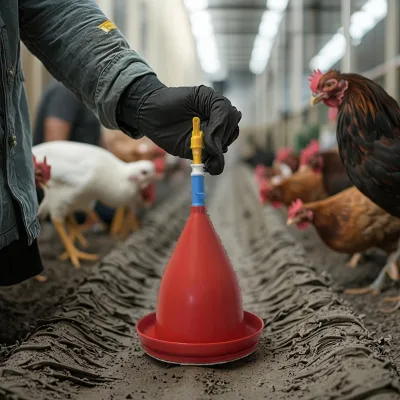
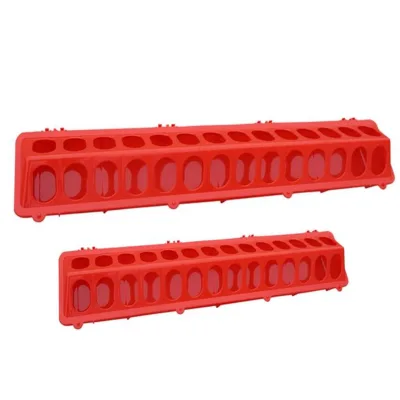
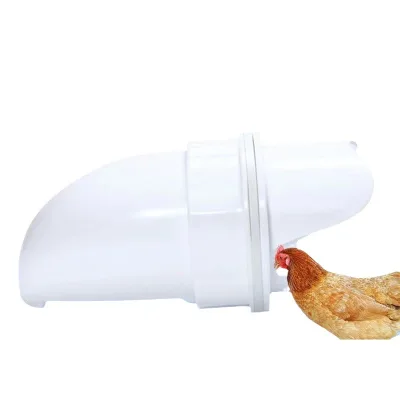
Chicken Feeder Farming Plastic Chicken Grower Feeder Chicken Poultry Feeders
$0.25 - $2.50
MOQ: 1000 Pieces

Chicken Feeders and Drinkers Farming Use Feeders for Chicken Feeder Automatic
$0.30 - $1.50
MOQ: 1000 Pieces
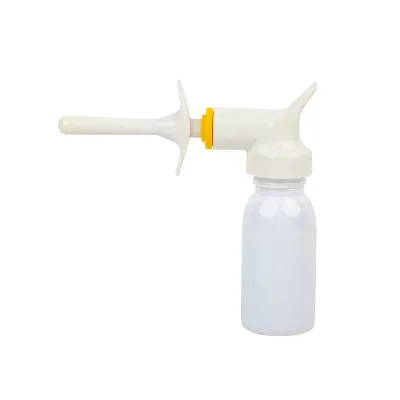
Hot Sale Fluid Feeder Trigger Animal Fluid Sprayer Poultry Pet Feeder PS-814
$0.59 - $0.65
MOQ: 5000 sets


Plastic Supplement Feeder for Nursery Pigs
$21.00 - $24.00
MOQ: 10 Pieces
Xinxiang Modern Agriculture and Animal Husbandry Development Co., Ltd.

Plastic Piglet Feeder for Pig Farms
$21.00 - $24.00
MOQ: 10 Pieces
Xinxiang Modern Agriculture and Animal Husbandry Development Co., Ltd.




Comprehensive Sourcing Guide
Strategic Sourcing Guide for Plastic Trigger Animal Feeders
Understanding Product Definitions and Core Specifications
The term "Plastic Trigger Animal Feeder" encompasses a specific category of agricultural equipment designed to automate or semi-automate the feeding process for livestock, particularly poultry. In the context of current market offerings, these devices are distinct from gravity-fed systems or fully automated electronic stations. They rely on mechanical interaction, often involving a trigger mechanism that dispenses feed or water when activated by the animal or a manual lever. The primary material composition for these units is consistently reported as Polypropylene (PP) or a blend of PP and Polyethylene (PE). This material selection is critical for B2B buyers because PP offers high chemical resistance against disinfectants and feed additives, ensuring longevity in harsh farm environments.
The physical dimensions of these units vary significantly based on the intended application scale. Observed product specifications indicate a range of standard package sizes, with specific models measuring approximately 54x40x30 cm or 46x41x37 cm. The weight of individual units can range from lightweight portable models to heavier industrial-grade units weighing between 11 and 12 kilograms. Buyers must verify the "prod_standard" or dimensional specifications against their facility's infrastructure, as the "Small" size classification often applies to home pet or small-scale poultry setups, whereas larger dimensions may be required for commercial poultry farms. The "Trigger" type attribute suggests a manual or semi-automatic operation, powered by human effort or animal movement rather than an external electrical power source, which is a vital distinction for farms with limited power infrastructure.
Technical Compliance and Certification Verification
When sourcing industrial-grade animal feeders, verifying compliance with international standards is a non-negotiable step for risk mitigation. The supply chain for these products frequently cites adherence to ISO certification standards, specifically ISO9001:2008, which indicates that the manufacturing process meets quality management requirements. Additionally, the CE mark is a common certification observed in listings, signifying conformity with health, safety, and environmental protection standards for products sold within the European Economic Area. Buyers should not assume that all listed products possess these certifications; rather, they must request valid certificates for each batch or model to ensure the supplier maintains a certified quality management system.
Beyond general manufacturing certifications, specific product attributes such as "Degradable" materials require careful scrutiny. While some listings highlight "Degradable" as a feature, this claim must be substantiated by the supplier with specific material composition data or third-party testing results. In the absence of explicit test data in the provided context, buyers should treat this as an observation requiring verification. The "Condition" of the products is typically listed as "New," but the "After-sales Service" terms, such as a "5 Years" warranty or "Free Replacement of Damaged Goods," provide a practical metric for the supplier's confidence in their product durability. These service terms often correlate with the quality of the plastic molding and the robustness of the trigger mechanism.
Cost Drivers and Pricing Dynamics
The pricing structure for plastic trigger animal feeders is influenced by several variable factors, including material costs, customization requirements, and order volume. The observed market price range spans from $0.25 to $30.00 USD per unit. This wide disparity is primarily driven by the scale of the unit, the complexity of the trigger mechanism, and the inclusion of value-added services like free logo customization. For instance, a basic manual trigger feeder for home pets may fall at the lower end of the spectrum, while a heavy-duty, ISO-certified unit designed for large-scale poultry farms with a 5-year warranty will command a higher price point.
Minimum Order Quantity (MOQ) is another significant cost driver that affects the unit price. Suppliers typically enforce MOQs ranging from 100 to 5,000 pieces, with specific models requiring 1,000, 2,000, or 5,000 pieces to qualify for the base price. Buyers sourcing smaller quantities may face higher per-unit costs or may need to negotiate with suppliers who offer lower MOQs, such as the 1-piece entry point observed in some listings. The "Free Logo" attribute can also impact the final cost; while some suppliers offer this service at no extra charge, others may include it only in larger orders. Understanding the relationship between MOQ, customization, and unit price is essential for budgeting and ensuring the procurement strategy aligns with the buyer's inventory needs.
Typical Applications and Operational Scenarios
The versatility of plastic trigger animal feeders makes them suitable for a diverse range of agricultural and domestic applications. The primary application scenes identified include "Poultry Farm" and "Home Pet" environments. In commercial settings, these feeders are often categorized under "Poultry Farm Equipment" and are specifically designed for "Chicken Feeders and Drinkers." The "Applicable" attribute confirms their suitability for poultry, including chickens, where the trigger mechanism allows for controlled feed dispensing to reduce waste and prevent overfeeding.
For home pet owners, the "Small" size and "Manual" power source make these units ideal for managing feeding schedules for smaller animals. The "Usage" classification often overlaps between "Disinfection" and "Feeding," indicating that these units may be integrated into broader hygiene protocols. The "Sprinkler Installation Type" of "External Thread Connection" suggests that some models are designed to be mounted on existing infrastructure, allowing for easy integration into existing water or feed lines. Buyers should evaluate whether the "Application Scene" matches their specific operational needs, as a unit designed for a large-scale poultry farm may be over-engineered and cost-prohibitive for a home pet owner, and vice versa.
Supplier Evaluation and Sourcing Logistics
Selecting the right supplier requires a thorough evaluation of their logistical capabilities and geographic location. The majority of suppliers for these products originate from China, with specific manufacturing hubs identified in Shandong and Zhejiang provinces. These regions are known for their robust plastic manufacturing industries, which often results in competitive pricing and a wide variety of product models. However, the "Delivery Time" is a critical factor to consider, with typical lead times ranging from 7 to 15 days. Buyers must account for this lead time in their production planning, especially if they are sourcing for peak agricultural seasons.
Packaging standards are another key aspect of supplier evaluation. Products are commonly shipped in "PP Bags" with 400 pieces per carton, or in "Export Standard Packages" to ensure protection during transit. The "prod_packing" specifications, such as the "Carton" type and the "Standard" dimensions of 54x40x30 cm, must be verified to ensure compatibility with the buyer's storage and handling equipment. Additionally, the "After-sales Service" terms, such as a "5 Years" warranty or "Free Replacement of Damaged Goods," provide a safety net for buyers. Suppliers offering "Free Logo" customization also demonstrate a higher level of service, which can be a differentiator when choosing between multiple vendors.
Quality Control and Long-Term Procurement Strategy
Implementing a robust quality control (QC) strategy is essential for ensuring the long-term reliability of plastic trigger animal feeders. Buyers should prioritize suppliers who provide clear specifications regarding the "Material" composition, specifically confirming the use of PP or PP+PE blends. The "Condition" of the product being "New" is a baseline requirement, but buyers should also inspect the "Feature" of "Degradability" if environmental compliance is a priority. The "Warranty" period, often listed as 1 year or up to 5 years, serves as a strong indicator of the manufacturer's confidence in their product's durability.
For long-term procurement, buyers should establish a relationship with suppliers who offer consistent "After-sales Service" and clear return policies. The "Advantage" of "Convenient, Long Time Use" suggests that these products are designed for extended operational lifespans, but this claim should be validated through pilot testing. Buyers should also verify the "Standard" specifications, such as the "54X40X30cm" or "464137" dimensions, to ensure that the products meet their specific operational requirements. By focusing on suppliers with proven track records in ISO certification and CE compliance, buyers can mitigate risks associated with product failure and ensure a steady supply of high-quality animal feeders for their operations.
Comparative Analysis of Product Attributes
To facilitate a clearer understanding of the market landscape, the following table summarizes the key attributes observed across different product listings. This comparison highlights the variations in specifications, certifications, and service terms that buyers should consider during the sourcing process.
| Attribute Category | Observation 1 | Observation 2 | Observation 3 |
|---|---|---|---|
| Material | PP | PP+PE | Plastic (General) |
| Type | Trigger | Automatic Drinkers | Poultry Farm Equipment |
| Usage | Disinfection / Chicken Drinkers | Chicken Feeders | Chicken Feeders and Drinkers |
| Certification | ISO | ISO9001:2008, CE | None Listed |
| MOQ | 1000 PCS | 2000 PCS | 5000 PCS |
| Warranty | 5 Years | 1 Year | Free Replacement |
| Origin | China | Shandong, China | Zhejiang, China |
| Packaging | PP Bag, 400PCS/Carton | Export Standard Package | Carton |
| Delivery Time | 7-15 Days | Not Specified | Not Specified |
| Customization | Available | Free Logo | Not Specified |
This table underscores the importance of matching specific product attributes to the buyer's operational needs. For instance, a buyer requiring a long-term warranty of 5 years must specifically target suppliers offering that term, while a buyer with a high-volume requirement must be prepared to meet the 5,000-piece MOQ threshold. By carefully analyzing these attributes, buyers can make informed decisions that align with their strategic procurement goals.
FAQs
What certifications do plastic trigger animal feeders typically have?
Many models carry ISO and CE certifications, such as ISO9001:2008, to ensure quality management and safety standards. Buyers should verify specific certificates for each batch since not every listed product automatically includes these marks without explicit confirmation from the supplier.
How long is the delivery time for these feeders?
The standard delivery time ranges from 7 to 15 days after order confirmation. This lead time applies to most suppliers originating from China, but buyers must confirm the exact schedule based on current production capacity and shipping logistics.
Which minimum order quantity applies to these plastic feeders?
Minimum order quantities vary significantly, ranging from 1 piece to 5000 pieces depending on the specific model and supplier. Some models require 1000, 2000, or 5000 pieces to qualify for base pricing, so buyers must check the MOQ for their selected item.
Can I get free logo customization on these feeders?
Yes, free logo customization is available on certain models, often linked to larger order volumes. Buyers should confirm this service with the supplier, as it may depend on the specific product type and the agreed minimum order quantity.
What materials are used to make these animal feeders?
These feeders are primarily constructed from Polypropylene (PP) or a blend of PP and Polyethylene (PE). This material choice ensures chemical resistance against disinfectants and durability for long-term use in both poultry farms and home pet environments.
What warranty periods are offered for these products?
Warranty periods typically range from 1 year to 5 years depending on the supplier and product model. Some vendors offer a 5-year warranty or free replacement of damaged goods, which indicates their confidence in the product's durability and trigger mechanism.
Where are these plastic feeders manufactured?
Most products originate from China, with specific manufacturing hubs located in Shandong and Zhejiang provinces. These regions are known for robust plastic manufacturing, offering competitive pricing and a wide variety of models for global buyers.