Source Multifunctional Granule Filling Machine for Cosmetics, Oil, and Detergent
Find and compare 30 Multifunctional Granule Filling Machine options from Chinese manufacturers. Evaluate models like the AH-KLJ series for powder and grain packaging, noting speeds up to 2700 bags/hour and automatic forming functions for cosmetics, oil, and detergent applications.
Key considerations
Products List


High-Speed Granule Filling and Sealing Machine for Optimal Production
$9000.00 - $15500.00
MOQ: 1 Sets

High-Speed Automatic Granule Packing Machine for Efficient Production
$6500.00 - $12500.00
MOQ: 1 Sets

Automatic Multi Function Packing Machine for Weighing Granule Filling Machine
$19620.00 - $24820.00
MOQ: 1 Pieces


$10000.00 - $30000.00
MOQ: 1 Pieces


High-Efficiency Granule Packaging Machine for Automatic Filling Processes
$12800.00 - $15000.00
MOQ: 1 Sets




Comprehensive Sourcing Guide
Multifunctional Granule Filling Machine Sourcing Guide
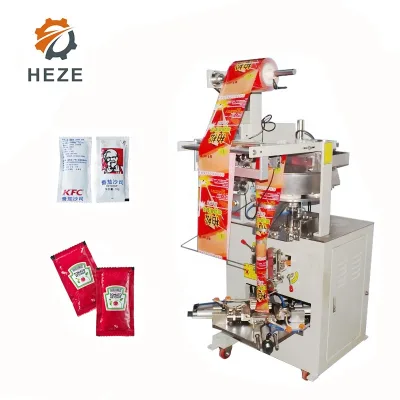
Selecting the right Multifunctional Granule Filling Machine requires a clear understanding of the specific forming and filling functions available in the current market. Buyers must distinguish between machines designed primarily for filling versus those that integrate forming, filling, and sealing into a single automated unit. The observed product landscape includes models capable of handling granular materials like grains, as well as powders and liquids, indicating that the term "granule" often encompasses a broader range of particulate and semi-particulate forms in supplier listings.
Procurement decisions should be grounded in the specific production speed and bag size requirements of the facility. Data indicates that packing speeds can vary significantly, ranging from 1,200 to 2,700 bags per hour depending on the model and configuration. A buyer must align their throughput needs with the machine's maximum bag dimensions, which are observed to range from small formats like 150x120mm up to larger sizes of 260x190mm, ensuring the selected equipment can accommodate the intended packaging geometry without bottlenecks.
Product Scope and Observed Listing Signals
The product scope for these machines spans various applications including hair care, skin care, cosmetics, and cleaning detergents, reflecting a versatile design intended for the consumer goods sector. While the core keyword focuses on granules, the observed listings reveal a dual capability where machines are configured to handle powders and liquids as well, suggesting that the "multifunctional" label often implies adaptability to different material viscosities and flow characteristics. Buyers should verify if the specific unit they are evaluating is optimized for the granular flow properties of their specific product, as grain and powder handling may require distinct feeding mechanisms.
Listing signals indicate a strong emphasis on automation, with most observed units classified as automatic grade and driven by electric or mechanical systems. The packaging material is frequently listed as film or plastic, and the forming function is explicitly noted as either bag moulding or general forming, which dictates the machine's ability to create the package from a roll or handle pre-made bags. This distinction is critical for buyers who need to determine whether the machine will generate the packaging format or simply fill and seal existing bags, as this impacts the overall line layout and material costs.
Technical Specifications to Verify
Buyers must rigorously verify the dosing device and filling principle to ensure accuracy for their specific granule type. The market offers machines utilizing plunger dosing devices with pressure-based filling principles, which are suitable for consistent volume control, while others may employ rotary structures for higher throughput. It is essential to confirm the number of filling valve heads, as single-head configurations are common but may limit speed compared to multi-head systems, and the feed cylinder structure, such as single-room feeding, must match the material's flowability to prevent bridging or clogging.
Dimensional and weight constraints are equally critical for facility planning and installation. Observed specifications show dimensions ranging from 1,000x800x1,700mm to 1,200x1,100x2,300mm, with unit weights varying between 320kg and 450kg. Procurement teams must ensure their factory floor can support these physical loads and provide the necessary clearance for operation and maintenance. Additionally, the power supply requirement of 220V/50Hz must be confirmed against local utility standards, and the maximum bag size capabilities must be cross-referenced with the client's current or future packaging specifications to avoid premature obsolescence.
Compliance and Safety Documentation
Safety and compliance documentation should be scrutinized to ensure the machine meets the regulatory requirements of the destination market. While some listings explicitly mention SGS and CE standards, buyers should not assume these certifications apply to every unit without requesting specific test reports or certificates of conformity for the exact model number. The presence of CE marking suggests adherence to European safety directives, but the buyer must verify that the documentation is current and covers the specific electrical and mechanical safety features of the equipment being purchased.
Quality assurance standards, such as ISO9001, are often cited in the broader industry context but require verification on a per-supplier basis rather than being assumed as a universal attribute of the machine itself. Buyers should request evidence of the manufacturing quality management system to ensure consistent production standards. Furthermore, the normal package measurement ranges, such as 100-500g or 5-100g, should be validated against the machine's calibration capabilities to ensure that the filling accuracy remains within acceptable tolerances for the specific product weight ranges being processed.
Cost Drivers and Commercial Terms
The cost of a Multifunctional Granule Filling Machine is heavily influenced by its automation level, production speed, and the complexity of its forming and sealing mechanisms. Units with higher packing maximum speeds, such as those reaching 2,700 bags per hour, typically command a higher price point compared to slower models operating at 1,200 bags per hour. Buyers should analyze the total cost of ownership, considering that higher-speed machines may offer better long-term value through increased output, but they also require more robust maintenance and potentially higher energy consumption.
Commercial terms regarding customization and packaging are vital for finalizing the procurement agreement. Customization is noted as available, allowing buyers to tailor the machine to specific bag sizes or material types, but this often incurs additional costs and extended lead times. The observed price range of 380 to 90,000 USD suggests a wide variance based on these factors, and buyers must clarify what is included in the base price versus what constitutes an add-on. Additionally, the normal package measurement and maximum bag size limits should be confirmed as part of the technical agreement to avoid disputes over the machine's actual capabilities.
Supplier Qualification and Quality Control
Supplier qualification should focus on the manufacturer's origin and their track record in producing automatic filling and sealing machines. The observed data indicates that these machines originate from China, a major hub for packaging machinery, but buyers must verify the specific supplier's experience with granule handling applications. It is advisable to request references from other clients in the cosmetics, hair care, or cleaning detergent sectors to ensure the supplier has successfully delivered machines that meet similar performance and reliability standards.
Quality control processes must be established to verify the machine's performance before shipment and upon arrival. Buyers should insist on factory acceptance tests that demonstrate the machine's ability to handle the specific material type, whether grain, powder, or liquid, at the required speed and accuracy. The structural integrity of the machine, including the rotary structure or plunger dosing system, should be inspected to ensure it can withstand continuous operation. Establishing a clear protocol for testing the filling valve heads and the pneumatic lifting structures is essential to confirm that the machine meets the specified production speed and packaging quality.
Long-Term Procurement Checks
Long-term procurement success depends on the availability of spare parts and the supplier's support for maintenance and troubleshooting. Buyers should verify the lead time for critical components such as filling valve heads, feed cylinders, and electrical drives to minimize downtime during the machine's operational life. The complexity of the machine, particularly those with rotary structures or advanced dosing devices, necessitates a reliable supply chain for replacement parts to ensure consistent performance over years of operation.
Performance monitoring and periodic calibration are necessary to maintain the machine's efficiency and accuracy. Buyers should implement a schedule for checking the packing maximum speed and the normal filling range, which may drift over time due to wear and tear. Regular maintenance of the electric or mechanical drive systems and the pneumatic lifting structures will help sustain the observed production speeds of 1,500 to 2,100 bags per hour. Establishing a long-term relationship with the supplier for technical support and training ensures that the machine continues to meet the evolving needs of the production line.
FAQs
What is the maximum bag size for the AH-FJQ500 model?
The maximum bag size is 260mm in length and 190mm in width. This specification supports the production of larger pouches for various cosmetic and cleaning products. The machine operates at a speed of up to 1200 bags per hour, ensuring efficient output for medium to large-scale manufacturing needs.
Can the machine handle different material types like powder and grain?
Yes, the equipment is designed to process multiple material types including powder, grain, and liquid. Different models such as the AH-KLJ series handle grains, while the AH-1000 manages liquids. This versatility allows manufacturers to use the same machinery for diverse product lines without requiring separate specialized equipment.
What certifications are available for the multifunctional filling machines?
The machines are available with SGS and CE certifications. These standards ensure compliance with international safety and quality requirements for industrial equipment. Buyers can verify these credentials to meet regulatory needs in various global markets, ensuring the machinery operates safely and efficiently within their production facilities.
How fast can the AH-KLJ100/300/500 model produce bags?
The AH-KLJ100/300/500 model achieves a packing maximum speed of 2700 bags per hour. This high throughput is suitable for fast-moving consumer goods like skin care and hair care products. The machine utilizes a mechanical drive system to maintain consistent performance during high-volume production runs.
What is the normal filling range for the AH-1000 volumetric machine?
The normal filling range is 110 to 500 milliliters, excluding special types. This range is ideal for liquid products such as oils and detergents. The machine uses a plunger dosing device with a single-head filling valve to ensure accurate volume control for each package produced.
Is customization available for the packaging dimensions and speed?
Customization is available for various machine parameters to suit specific production requirements. Buyers can adjust settings for different bag sizes and production speeds. This flexibility allows manufacturers to adapt the equipment to unique product formats, ensuring optimal performance for specialized cosmetic or cleaning product packaging lines.