Source multilayer pex-al-pei floor heating pipe for Buildings, Water Supply, and Heating Systems
Find 30 listings for multilayer pex-al-pei floor heating pipe suitable for building water distribution and heating systems. Buyers can compare specifications like size, material, and certifications to identify the right supplier for their project needs.
Key considerations
Products List


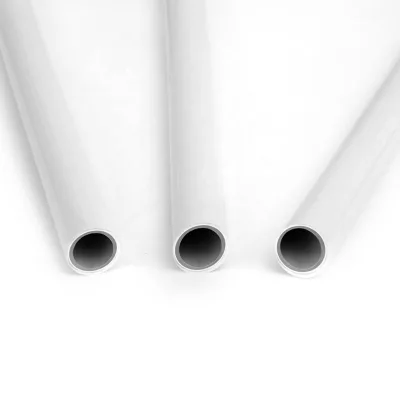


Various Colors of Pex Pipes Pex-B Pipes 1inch 1/2inch 3/4inch Floor Heating Pipes
$0.86 - $2.58
MOQ: 1000 Pieces


Comprehensive Sourcing Guide
Strategic Sourcing Guide for Multilayer PEX-Al-PEX Floor Heating Systems
Understanding Multilayer PEX-Al-PEX Construction and Technical Specifications
When sourcing multilayer PEX-Al-PEX pipes for floor heating applications, buyers must first distinguish the specific construction from other piping variants. The core product category often referenced as "multilayer pex-al-pei" in search queries typically refers to PEX-Al-PEX (Cross-linked Polyethylene-Aluminum-Polyethylene) composite pipes. These systems are engineered to combine the flexibility of plastic with the structural rigidity and low thermal expansion of aluminum. The supplied product data confirms that the primary material composition is a "Crosslinked Polyethylene Aluminum Composite Pipe," often categorized under the specific model designation of PEX-Al-PEX.
The technical specifications for these pipes vary significantly based on the intended diameter and application pressure. Observed product models indicate a size range spanning from 16mm up to 63mm, with specific listings noting models such as "16mm-32mm" and broader ranges like "10-63mm." This dimensional variability is critical for floor heating layouts, where smaller diameters (16mm, 20mm) are often used for residential underfloor circuits, while larger diameters (40mm, 50mm, 63mm) may serve main distribution lines or commercial systems. The pipe shape is consistently described as "Round," and the structure is defined as "Hollow," designed to facilitate fluid flow.
A defining characteristic of these multilayer pipes is the "Inner and Outside Coating" process. The technology involves an "Internal and External Coating" method where the aluminum layer is sandwiched between inner and outer layers of cross-linked polyethylene. This construction ensures that the pipe does not require gluing or solvent welding in the traditional sense. Instead, the "Installation and Connection" method relies heavily on "Clamping Type Installation," utilizing compression fittings or press-fit systems that grip the aluminum core. The "Welding Type" observed in related composite contexts includes "Overlapped and Butt-Weld," though these are more commonly associated with the manufacturing of the pipe itself or specific joining methods for larger industrial variants rather than standard floor heating installation.
Compliance, Certification, and Standard Verification
Navigating the regulatory landscape for floor heating pipes requires rigorous verification of certifications and standards. The product data indicates a diverse array of certifications held by suppliers in this sector, including CE, ROHS, ISO, GOST, TUV, EAC, and UL. The presence of "CE" and "ISO9001" is particularly prevalent, suggesting that many manufacturers adhere to international quality management systems and European conformity standards. However, buyers must exercise caution; the listing of certifications like "ISOHeatingType" appears to be a data artifact, and the specific standard "En ISO 21003" is cited, which relates to the classification of piping systems for water supply and heating.
It is essential to verify that the specific batch of pipes being purchased meets the "En ISO 21003" standard, which governs the performance requirements for plastic pipes. While "ISO 15875" is mentioned in background knowledge as a relevant standard for PEX systems, the supplied facts explicitly highlight "En ISO 21003" as the primary standard for the product properties. Buyers should request the specific test reports that validate the "ISO9001" certificate and the "CE" marking for the specific model number (e.g., GS-—X-SP-T-EP) to ensure the pipe has undergone the necessary pressure and temperature testing.
Furthermore, the "Temperature" rating is a critical compliance metric. The observed data specifies an operating range of "-40°C to 110°C." This wide range indicates suitability for both freezing environments and high-temperature heating applications. However, buyers must confirm that the specific pipe grade (e.g., PEX-a, PEX-b, or PEX-c) aligns with the manufacturer's stated temperature limits, as the "PEX" material designation alone does not guarantee the specific cross-linking method or thermal stability required for long-term floor heating.
Cost Drivers and Pricing Dynamics in the Market
The procurement cost for multilayer PEX-Al-PEX pipes is influenced by several distinct factors, primarily raw material costs, order volume, and packaging requirements. The observed price range in the market is quite broad, spanning from 0.1 to 3 USD per unit, likely reflecting differences in diameter, wall thickness, and the specific supplier's pricing strategy. This wide variance suggests that buyers should not rely on a single price point but rather evaluate the cost per linear meter relative to the pipe's specifications.
A significant cost driver is the Minimum Order Quantity (MOQ). The data reveals an MOQ range from 100 to 20,000 units, with specific listings showing MOQs of 1,000 and 10,000. For smaller contractors or residential projects, meeting a 10,000-unit MOQ may be prohibitive, necessitating a search for suppliers with lower thresholds or the ability to consolidate orders. Conversely, large-scale commercial projects may benefit from the economies of scale offered by higher volume purchases.
Packaging also impacts the final landed cost. The observed packing methods include "Wrap/ PP Bags," "Coils," "Wove Package," and "Carton/Box." Coiled packaging is often preferred for floor heating to reduce the number of joints, but it may incur higher shipping costs due to volume. Customization is listed as "Available," which can introduce additional costs for specific lengths, colors (White, Red, Orange), or OEM branding. Buyers should factor in the "Sample" availability, noting that "Free Sample" options exist, which can be a valuable tool for cost-effective quality verification before committing to a large order.
Typical Applications and Performance Expectations
The primary application for these pipes is the "Floor Heating System," as explicitly stated in the product attributes. The "Used" category also includes "Water Distribution Pipe in Building" and "Water Heater Tube," indicating versatility beyond just radiant heating. The "Heating Type" is confirmed as "Water Heating Systems," which is the standard for hydronic underfloor heating. The material's "Tensile Strength" of 17MPa provides the necessary structural integrity to withstand the pressure of water circulation within the heating loops.
The "Life" expectancy of these pipes is a critical performance metric for long-term investment. The data cites a "Life" of "50 Years," which is a standard claim for high-quality PEX-Al-PEX systems. This longevity is attributed to the corrosion resistance of the aluminum layer and the chemical stability of the cross-linked polyethylene. The "Type" is identified as "Thermoplastic Pipe," which implies specific handling requirements during installation to avoid overheating or damaging the plastic layers.
For floor heating specifically, the "Shape" being "Round" and the "Hardness" described as "Hoses" (likely referring to flexibility) are advantageous. The ability to bend the pipe without kinking reduces the need for fittings, which are potential leak points. The "Aluminium Plastic Compound Pipe Use" further reinforces its suitability for "Water Distribution Pipe in Building," making it a dual-purpose solution for both heating and potable water supply in some jurisdictions, provided the specific certification allows for potable water contact.
Supplier Evaluation and Sourcing Strategy
Evaluating suppliers for multilayer PEX-Al-PEX pipes requires a focus on origin, customization capabilities, and logistical reliability. The "prod_origin" is listed as "China," which is a major manufacturing hub for these products. Buyers should verify the specific factory location and capacity, as the "Location" data is generalized. The "Customization" attribute being "Available" is a strong indicator of a supplier's flexibility, allowing for tailored solutions regarding pipe length, color, and packaging.
When assessing suppliers, buyers should prioritize those who can demonstrate a robust "Certificate" portfolio, specifically "ISO9001" and "CE." The presence of "TUV" and "UL" certifications suggests a higher level of quality assurance and international market readiness. However, the listing of "ISOGOST" alongside other certifications may indicate a focus on the Eurasian market, so buyers should ensure the supplier's certifications align with their local regulatory requirements.
The "Packing Methord" (Packing Method) and "prod_packing" (Product Packing) details are vital for logistics planning. Suppliers offering "Coils" are preferable for floor heating to minimize joints, while those offering "Carton/Box" may be better for smaller, segmented orders. The "Sample" availability is a key differentiator; a supplier willing to provide a "Free Sample" demonstrates confidence in their product quality and allows the buyer to physically inspect the "Inner and Outside Coating" quality and the "Clamping Type Installation" fittings before mass procurement.
Quality Control and Long-Term Procurement Considerations
Implementing a robust quality control (QC) protocol is essential when sourcing multilayer pipes. The "Process" of "Plastic Composite Pipe Coating Form" must be scrutinized to ensure the "Internal and External Coating" is uniform and free of defects. Buyers should request cross-sectional analysis of the pipe to verify the aluminum layer thickness and the bond strength between the aluminum and the polyethylene layers. The "Base Pipe of Plastic Composite Pipe" is sometimes listed as "Welded Steel Pipe" in other contexts, but for PEX-Al-PEX, the core is aluminum; buyers must ensure the supplier does not confuse the two product types.
Long-term procurement considerations include the "Standard" compliance and the "Life" expectancy. While a 50-year life is claimed, this is contingent on operating within the specified temperature range of -40°C to 110°C. Buyers should establish a maintenance schedule and ensure that the installation team is trained in "Clamping Type Installation" to prevent mechanical failures. The "Welding Type" of "Overlapped and Butt-Weld" mentioned in the data should be verified for relevance to the specific product; if the pipe is intended for press-fit installation, welding should not be a requirement for the end-user.
Finally, buyers must consider the "Colour" options (White, Red, Orange, OEM) in the context of their project specifications. While color may seem cosmetic, it often indicates the pipe's intended use (e.g., red for hot water, blue for cold) or specific manufacturer branding. Ensuring that the "OEM" option is clearly defined and that the "Customization" process is documented will prevent misunderstandings during the production phase. By adhering to these verification steps and leveraging the specific data points regarding size, material, and certification, buyers can secure a reliable supply of multilayer PEX-Al-PEX pipes for their floor heating projects.
FAQs
What certifications do multilayer pex-al-pei floor heating pipes hold?
These pipes typically hold CE, ROHS, ISO9001, TUV, EAC, and UL certifications. Buyers should verify specific batch reports to ensure compliance with En ISO 21003 standards for water heating systems.
How large is the size range for these composite pipes?
The available size range spans from 16mm up to 63mm, with specific models covering 10mm to 63mm. This variability supports both residential underfloor circuits and larger commercial distribution lines.
What is the minimum order quantity for purchasing these pipes?
Minimum order quantities range from 100 to 20,000 units, with common listings requiring 1,000 or 10,000 units. Buyers should check specific supplier thresholds before placing large orders.
Can these pipes be customized for specific project needs?
Customization is available for color, length, and packaging options like coils or cartons. Suppliers also offer OEM branding and specific packing methods such as woven packages or PP bags.
What temperature range can these pipes safely operate in?
The pipes operate safely within a temperature range of -40°C to 110°C. This wide range ensures suitability for freezing environments and high-temperature water heating applications.
Which installation method is used for connecting these pipes?
Installation relies on clamping type connections using compression or press-fit fittings. The design eliminates the need for traditional gluing or solvent welding during standard floor heating setups.