Source Multilayer FR4 Embedded Microcontroller for IoT and Industrial
Find and compare 30 Multilayer FR4 Embedded Microcontroller options for your next project. Evaluate key specifications such as clock frequency, memory size, and interface types to select the right component for your design requirements; compare the available evidence and request quotations based on your requirements.
Key considerations
Products List




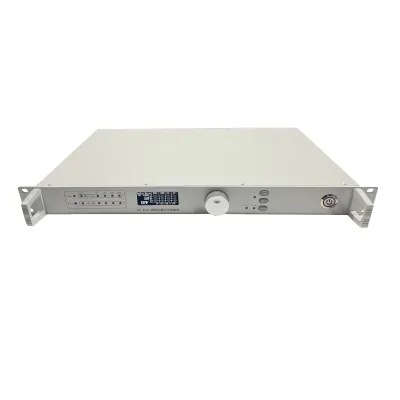
Intelligent Microprocessor RS485 Communication Port Generator Controller
$128.00 - $139.00
MOQ: 5 Pieces




Comprehensive Sourcing Guide
Multilayer FR4 Embedded Microcontroller Sourcing Guide
Sourcing multilayer FR4 embedded microcontrollers requires distinguishing between high-performance ARM-based solutions and versatile 8-bit or 16-bit PIC families, as the supply chain offers distinct tiers of processing power. Buyers must verify that the specific FR4 substrate supports the required thermal dissipation for the target clock frequency, whether it is the 120 MHz ARM Cortex-M3 or the 64 MHz PIC variants. The physical footprint, ranging from LQFP208 to SOIC-28, dictates the PCB layout complexity and the necessary soldering profile for the multilayer stack-up.
Procurement teams should prioritize suppliers who explicitly list the encapsulation type and pin count, as these directly impact the assembly yield on multilayer boards. The observed inventory includes options with 165 I/O terminals for complex systems and others with 22 I/O for simpler control loops. Understanding the specific memory architecture, such as 512 Kb Flash versus 32 Kb Flash, is essential for matching the component to the firmware requirements without over-specifying the hardware budget.
Product Scope and Observed Listing Signals
The current market listings reveal a diverse range of microcontroller families, including the LPC1788FBD208 and various PIC series, each tailored for different embedded control applications. Buyers will observe significant variation in data bus widths, with some units offering 32-bit throughput while others are limited to 8-bit architectures. This distinction is critical when selecting components for high-speed data acquisition or simple I/O monitoring tasks on a multilayer FR4 board.
Listing signals also indicate varied supply voltage ranges, spanning from 1.8V to 5.5V, which necessitates careful power rail design on the PCB. The packaging formats, such as Tray, Carton Box, and specific encapsulations like TQFP44 or QFN-28, suggest different handling and storage requirements for the procurement team. It is vital to confirm that the listed interface types, including CAN, Ethernet, and USB, align with the system's communication needs before finalizing the order.
Technical Specifications to Verify
Engineers must rigorously verify the maximum clock frequency and memory capacity to ensure the microcontroller can handle the real-time processing demands of the application. For high-performance tasks, the 120 MHz capability with 96 Kb of RAM is a key differentiator, whereas lower-frequency applications may suffice with 20 MHz units and smaller memory footprints. The ADC resolution, typically 12-bit in the observed high-end models, must be confirmed to meet the precision requirements of analog signal conditioning.
Interface compatibility is another critical verification step, as the available protocols range from basic I2C and SPI to advanced Ethernet and USB connections. Buyers should cross-reference the number of input/output terminals against the schematic to avoid pin conflicts on the multilayer board. Additionally, the operation temperature range of -40℃ to +85℃ must be validated against the environmental conditions of the final product to prevent field failures.
Compliance and Safety Documentation
While specific certification documents are not explicitly detailed in the provided listings, buyers must request proof of RoHS compliance and REACH adherence for all electronic components. The manufacturing origin, noted as China or Thailand, implies that the supply chain must be audited for adherence to international environmental and safety standards. Procurement teams should ensure that the supplier can provide a Certificate of Conformance that verifies the material composition and manufacturing process.
Safety documentation should also cover the handling of the optoelectronic semiconductor materials and element semiconductors used in the production. Since the manufacturing technology involves specific semiconductor processes, verifying that the supplier follows standard ESD protection protocols is essential. Buyers should confirm that the packaging, whether Carton Box or Tray, meets the necessary standards for protecting sensitive components during transit and storage.
Cost Drivers and Commercial Terms
The cost of these microcontrollers is heavily influenced by the complexity of the encapsulation and the density of the integrated memory. High-pin-count packages like the LQFP208 and larger memory sizes such as 512 Kb Flash generally command a higher price point compared to simpler 8-bit solutions with 32 Kb memory. Buyers should analyze the total cost of ownership, including the potential for higher assembly costs associated with complex multilayer boards and fine-pitch components.
Commercial terms such as Minimum Order Quantity (MOQ) and lead times vary significantly across the observed listings, ranging from 1 unit to 2600 units with lead times of 7-10 days. Shipping methods, including DHL, FedEx, and sea freight, add another layer of cost consideration that must be factored into the budget. Negotiating favorable terms for volume purchases can mitigate the impact of these variable costs, especially when sourcing from multiple origins.
Supplier Qualification and Quality Control
Supplier qualification should focus on their ability to provide consistent quality for multilayer FR4 applications, given the sensitivity of the components to thermal and mechanical stress. Buyers must verify that the supplier has a robust quality control system in place to handle the diverse range of encapsulations and memory types observed in the market. The presence of specific manufacturing technologies, such as optoelectronic semiconductor processes, requires specialized handling and testing protocols.
Quality control checks should include verifying the integrity of the supply chain from the point of origin to the final delivery. Since the products originate from different regions, ensuring that the logistics partners maintain the required environmental conditions is crucial. Buyers should also request sample testing results to confirm that the components meet the specified electrical characteristics before committing to a large-scale order.
Long-Term Procurement Checks
Long-term procurement strategies must account for the potential obsolescence of specific microcontroller models and the availability of long-term supply agreements. Buyers should establish relationships with suppliers who can guarantee component availability for the expected product lifecycle, particularly for high-volume applications. Monitoring the market for updates on newer models with similar specifications can help in planning future product iterations without disrupting the supply chain.
Regular audits of the supplier's manufacturing capabilities and quality records are essential to maintain high standards over time. Buyers should also track changes in lead times and shipping methods to anticipate potential disruptions in the supply chain. By maintaining a proactive approach to supplier management, organizations can ensure a steady flow of high-quality microcontrollers for their multilayer FR4 embedded systems.
FAQs
What customization options are available for these microcontrollers?
Customization is available for these microcontrollers to meet specific project needs. Buyers can request tailored configurations for encapsulation types like Lqfp208 or Tqfp44. This flexibility allows engineers to adapt the 32-bit data bus width or 120 MHz clock frequency to their unique application requirements without changing the core component.
Which supply voltage ranges do these embedded microcontrollers support?
These embedded microcontrollers support supply voltage ranges between 2.4V and 3.6V for some models, while others operate from 1.8V to 5.5V. The specific range depends on the model selected, such as the LPC1788FBD208 or PIC18F series. This wide voltage tolerance ensures compatibility with various power systems in industrial and consumer electronics.
How many input and output terminals are available on these chips?
The number of input and output terminals varies significantly across the product range. High-end models offer up to 165 I/O terminals, whereas smaller variants provide 22 or 24 terminals. This capacity allows designers to select the exact pin count required for their circuit complexity, ranging from simple interfaces to complex multi-peripheral systems.
Can these microcontrollers operate in extreme temperature environments?
Yes, these microcontrollers are designed to operate in extreme temperature environments ranging from -40°C to +85°C. This wide operating temperature range ensures reliable performance in harsh industrial settings or outdoor applications. The robust thermal design supports consistent functionality regardless of environmental fluctuations during operation.
What types of program memory are included in these devices?
These devices utilize Flash type program memory for non-volatile storage of code. Memory sizes vary from 7 Kb to 512 Kb depending on the specific model chosen. This Flash memory allows for easy reprogramming and updates, making it ideal for applications requiring frequent firmware changes or large code storage capacity.
Which interface types are supported by these microcontroller units?
Supported interface types include Can, Ethernet, I2c, Uart, and USB for advanced connectivity. Some models also feature Spi and Usart for simpler communication needs. These diverse interfaces enable seamless integration with various peripherals and networks, facilitating robust data exchange in complex embedded systems.
What is the maximum clock frequency for these microcontrollers?
The maximum clock frequency reaches up to 120 MHz for high-performance models. Lower power variants operate at 20 MHz or 64 MHz. This range of speeds allows users to balance processing power against energy consumption, ensuring optimal performance for real-time control tasks or data-intensive applications.