Source Musical Deformation Driving Toy Car for gifts, events, and promotions
Find 30 options for the Musical Deformation Driving Toy Car suitable for retail, corporate gifts, and promotional events. Compare specifications like size, power, and certifications from verified suppliers to find the best fit for your needs.
Key considerations
Products List
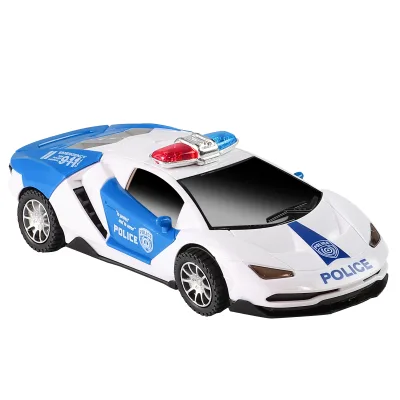


Baby Toy Car Kids Ride on Toy Car Children Mega Car with Push Bar Have Music and Light
$8.00 - $15.00
MOQ: 500 Pieces


Multifunction Driving Car Adventure Car Deformation Bus Toys Kids Track Toys
$9.80 - $9.90
MOQ: 90 pieces



Comprehensive Sourcing Guide
Sourcing Strategy for Musical Deformation Driving Toy Cars
The global market for ride-on and interactive toy vehicles continues to expand, driven by a demand for products that blend physical activity with digital engagement. Within this sector, the "Musical Deformation Driving Toy Car" represents a specific niche where mechanical transformation and audio-visual stimulation converge. For B2B procurement professionals, sourcing these items requires a disciplined approach to verifying technical attributes, ensuring regulatory compliance, and understanding the supply chain dynamics inherent to manufacturing in Guangdong, China. This guide outlines the critical factors buyers must evaluate when sourcing these complex toy vehicles, relying strictly on observed product data and established industry standards.
Technical Specifications and Functional Attributes
When evaluating a Musical Deformation Driving Toy Car, the primary focus must be on the mechanical integrity of the deformation mechanism and the reliability of the audio system. Based on observed product data, these units typically operate on battery power or electric-driven systems, requiring careful assessment of the power source's longevity and safety. The physical dimensions of the product are variable; specific listings indicate a product size of approximately 23710cm for smaller variants, while larger ride-on models may measure 1421.524.5cm or 22.720.415.8cm. Buyers must verify that the "deformation" feature—where the car changes shape—is robust enough to withstand repeated manipulation by children without structural failure.
The packaging and shipping specifications are equally critical for logistics planning. Observed data reveals a wide range in carton dimensions, with some units packed in cartons measuring 81355*55cm containing 12 pieces, while others utilize smaller window boxes with a single item per unit. The gross weight (G.W) for larger units can reach 25kg per carton, whereas smaller packaged units may weigh around 15.12kg. The "deformation" aspect often implies moving parts, which must be engineered to prevent pinching hazards. Furthermore, the product style is frequently categorized as a "Sedan" or "Ride On Toy," and the assembly required is typically listed as "No," indicating a ready-to-play or minimal-assembly state upon delivery. The presence of sound features, described as "Sound" or "Musical," necessitates that the audio components are integrated securely to prevent dislodging during the deformation process.
Compliance and Certification Verification
Regulatory compliance is the most significant barrier to entry for toy imports, particularly for products involving electrical components and mechanical moving parts. The observed product listings explicitly mention certifications such as ENASTM, CE, ENCE, and ASTM. These designations indicate adherence to specific safety standards, though buyers must treat these as claims that require independent verification rather than absolute guarantees. The "ENASTM" and "ASTM" references point to compliance with American and European safety norms, while "CE" indicates conformity with European health, safety, and environmental protection standards.
Buyers should not assume that a supplier's claim of "EN71" or "EN62115" compliance is valid without requesting current test reports from accredited laboratories. The EN71 standard covers mechanical and physical properties, which is vital for toys with deformation features to ensure no small parts become detached. The EN62115 standard specifically addresses the safety of electrical toys, which is directly relevant given the "Battery" and "Electric-driven" power attributes observed in the product data. Additionally, the "CE" mark requires a Declaration of Conformity (DoC) and must be backed by a technical file. For the US market, ASTM F963 is the mandatory standard, and the presence of "ASTM" in the product data suggests an intent to meet these requirements. However, the absence of specific test report numbers in the general listing data means buyers must request the actual documentation to confirm that the specific model (e.g., model 1901, 2003, or 602) has been tested and passed.
Cost Drivers and Pricing Dynamics
The pricing structure for musical deformation driving toy cars is influenced by several distinct variables, including the complexity of the deformation mechanism, the quality of the materials, and the volume of the order. The observed price range for these products spans from $0.04 to $150 USD, a vast disparity that reflects the difference between small, simple plastic toys and large, electric ride-on vehicles. The lower end of the spectrum likely corresponds to small, non-electric, or minimally functional items, while the higher end encompasses full-sized ride-on cars with advanced features like sound, lights, and complex motorized transformation systems.
Material costs play a pivotal role in pricing. The primary material identified is "Plastic," but the grade of plastic (e.g., ABS, PP) significantly impacts durability and cost. High-quality, impact-resistant plastics are necessary for the moving parts of a deformation toy to prevent breakage. The "OEM/ODM" capabilities of the supplier also affect the price; custom branding, logo printing via silkprint, and specific packaging requirements (such as window boxes) add to the unit cost. The Minimum Order Quantity (MOQ) is another critical cost driver, with observed ranges from 12 pieces to 8,000 units. Buyers ordering near the lower MOQ of 12 pieces will face a higher per-unit cost compared to those placing orders for 8,000 units, where economies of scale significantly reduce the price. Additionally, the "Selling Units" being listed as "Single item" for some products suggests that the base price may be for a single unit, whereas bulk pricing applies to the carton quantities (e.g., 12 PCS/CTN).
Target Applications and Demographic Segmentation
Understanding the intended application and target demographic is essential for matching the right product to the market. The observed age ranges for these toys are broad, spanning from 2 to 4 years up to 14 years and older. This suggests that the product line includes items suitable for toddlers, young children, and even older kids or collectors. The "Usage" attributes listed include "Funny," "Particular Toys," "Odd Toys," "Intellectual Toy," "Souvenir," "Promotion," "Sports," and "Recreation." This diversity indicates that these toys are not just for play but can serve as promotional items for corporate events, souvenirs for travel, or educational tools for intellectual development.
The "Gender" is listed as "Unisex," making these products suitable for a wide audience. The "Features" such as "Moving Parts" and "Educational Function" align with the "Intellectual Toy" and "Educate" usage categories. For instance, a deformation toy that requires the child to manipulate the car to change its shape can be marketed as an educational tool that develops fine motor skills and spatial reasoning. The "Style" being a "Sedan" or "Ride On Toy" suggests applications in outdoor recreation or indoor play areas where space allows for movement. The "Keywords" like "Kids Toy Car" confirm the primary market is children, but the inclusion of "Souvenir" and "Promotion" highlights a secondary B2B market for corporate gifting and event giveaways.
Supplier Evaluation and Manufacturing Capabilities
When evaluating suppliers for musical deformation driving toy cars, buyers must look beyond the basic product listing and assess the manufacturer's capacity for customization and quality control. The data indicates that "OEM/ODM" is acceptable and supported, meaning suppliers are willing to produce custom designs or modify existing models. The "Customization" and "Customized" attributes confirm that branding options are available, including "Logo Print" via "Silkprint" and "Simple Color" variations. Buyers should verify the supplier's ability to handle these customizations at scale, especially given the "Qty/CTN" of 12 pieces for some models, which implies a specific packing line setup.
The "Place of Origin" is consistently listed as "Guangdong, China," a major hub for toy manufacturing. This location offers access to a robust supply chain for plastics and electronic components. However, buyers should verify the specific factory's location within Guangdong to assess logistics efficiency. The "Assembly Required: No" attribute suggests that the supplier handles final assembly before shipping, which reduces the risk of damage during transit and ensures the product is ready for retail. The "Product Name" variations, such as "Deformation car toys" and "Universal Telephone Car," indicate that suppliers may offer different product lines under similar categories. Buyers should request samples to verify the quality of the "Moving Parts" and the clarity of the "Sound" features, as these are the most likely points of failure in a deformation toy.
Quality Control and Long-Term Procurement Considerations
Ensuring long-term success in sourcing these toys requires a rigorous quality control (QC) process. The "Features" of "Moving Parts" and "Educational Function" must be tested for durability. A deformation mechanism that jams or breaks after a few cycles will lead to high return rates and brand damage. Buyers should implement a QC protocol that includes stress testing the transformation mechanism and checking the battery compartment for safety. The "Certification" claims of ENASTM, CE, and ASTM must be validated through third-party testing reports for every production batch.
Long-term procurement considerations also involve the stability of the supply chain. The "MOQ" range of 2 to 8,000 units offers flexibility, but buyers should negotiate terms that allow for smaller initial orders to test the market before committing to large volumes. The "Packing Size" and "Carton Size" data provided (e.g., 64.5X38.5X73cm) are crucial for calculating shipping costs and warehouse space requirements. Buyers should also consider the "G.W & N.W" (Gross Weight and Net Weight) to ensure accurate freight calculations. Finally, the "Style" and "Product Name" consistency across orders is vital for maintaining brand identity. If a supplier changes the "Product Size" or "Material" without notice, it could disrupt the product line. Therefore, establishing a clear specification sheet and requiring approval for any changes is a best practice for long-term procurement relationships.
Comparative Analysis of Product Variants
To assist in decision-making, the following table summarizes the key observed attributes of different product variants found in the market data. This comparison highlights the diversity in specifications and helps buyers identify the most suitable options for their specific needs.
| Attribute | Variant A (Model 1901) | Variant B (Model 2003) | Variant C (Model 602) |
|---|---|---|---|
| Product Name | Deformation car toys | Universal Telephone Car | (Not specified) |
| Product Size | 23710cm | 1421.524.5cm | 22.720.415.8cm |
| Power Source | Battery | Electric-driven | (Not specified) |
| Style | Ride On Toy | Sedan | (Not specified) |
| Certification | ENASTM, CE | ENCE, ASTM | (Not specified) |
| Packing | Window Box | Window Box | 6PCS/Carton |
| Carton Size | 81355*55cm | 64.5X38.5X73cm | (Not specified) |
| Qty/CTN | 12 PCS | (Not specified) | 6 PCS |
| G.W | (Not specified) | 15.12/13.44kg | 25kg |
| Age Range | 2-4, 5-7, 8-13, 14+ | 3-8 years | (Not specified) |
This table illustrates that while the core concept of a "Musical Deformation Driving Toy Car" remains consistent, the execution varies significantly in terms of size, power, and packaging. Buyers must carefully match these specifications to their target market's expectations and logistical constraints. The variation in "Carton Size" and "Qty/CTN" directly impacts shipping efficiency, while the differences in "Power Source" and "Certification" dictate the regulatory pathway for each variant. By systematically evaluating these factors, procurement professionals can make informed decisions that balance cost, quality, and compliance.
FAQs
What certifications do these toys have?
The products carry ENASTM, CE, ENCE, and ASTM certifications. Buyers must verify these claims with current test reports from accredited labs to ensure compliance with safety standards for mechanical and electrical components.
Can suppliers customize the product logo?
Yes, customization is available with logo printing via silkprint. Suppliers support OEM and ODM services, allowing for simple color variations and specific branding on the plastic body of the deformation car toys.
What is the minimum order quantity for these cars?
The minimum order quantity ranges from 12 pieces to 8,000 units depending on the supplier. Ordering near the lower MOQ of 12 pieces typically results in a higher per-unit cost compared to bulk orders.
How are the toys packaged for shipping?
Packaging options include window boxes for single items or cartons holding 12 pieces. Carton dimensions vary, with some measuring 81 by 35 by 55 cm, while others are smaller to accommodate different product sizes.
Where are these toys manufactured?
The products originate from Guangdong, China, a major hub for toy manufacturing. This location provides access to a robust supply chain for plastics and electronic components used in the electric-driven systems.
What age groups are these toys suitable for?
The toys are designed for age ranges from 2 to 4 years up to 14 years and older. They feature moving parts and educational functions suitable for toddlers, young children, and older kids seeking intellectual play.