Source Raycus Handheld Laser Welder for Manufacturing, Automotive, Electronics
Compare 30 Raycus Handheld Laser Welder options featuring 1500W to 3000W power and continuous wave technology. Buyers can evaluate specifications for welding, cutting, and cleaning across stainless steel, aluminum, and copper applications in various industries.
Key considerations
Products List


Handheld Laser Welder with CE Certificate and 12+ Years OEM Experience
$2880.00 - $6500.00
MOQ: 1 Pieces

3000W Handheld Laser Welder for Metal Welding Materials with CE Certified
$1800.00 - $2000.00
MOQ: 1 Pieces

2000W Raycus Laser Mobile Handheld Laser Welding Machine Laser Welder Cleaner
$4000.00 - $5500.00
MOQ: 1 Pieces


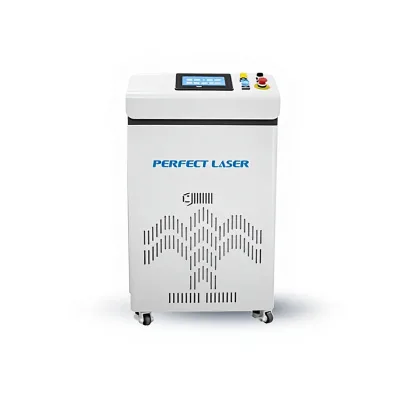
New Foreign Trade Export Small Handheld Laser Welder 1500W 2000W 3000W Raycus Stainless Steel
$2663.70 - $5179.56
MOQ: 1 Minimum

Handheld Laser Welder Cutter Cleaner 1500W 2000W 3000W Raycus 5in1 Laser Welding Machine
$1299.00 - $2200.00
MOQ: 1 Sets


2000W 5 in 1 Raycus Handheld Laser Welder Laser Welding Cutting Cleaning Machine
$4450.00 - $4650.00
MOQ: 1 Sets


3 in 1 Laser Welder 1500 Watts Cleaning Welder Cutter Laser Laser Welders Raycus
$2100.00 - $2450.00
MOQ: 1 Pieces


High Efficiency Hand-Held Fiber Laser Welding Machine Portable Handheld Laser Welder
$5299.00 - $5799.00
MOQ: 1 Sets


Portable and Hand Held Fast Speed Fiber Laser Welding Machine Fast Speed Fiber Laser Welder
$5000.00 - $10000.00
MOQ: 1 Sets

Industrial Handheld Laser Welder for Stainless Steel/Aluminum Welding Machine
$5000.00 - $13000.00
MOQ: 1 Sets

Comprehensive Sourcing Guide
Strategic Sourcing Guide for Raycus Handheld Laser Welders
The global manufacturing landscape has increasingly adopted handheld laser welding technology for its precision, speed, and versatility. Among the various components that define the performance of these machines, the laser source is paramount. Buyers specifically seeking units equipped with Raycus laser sources are prioritizing a balance of reliability and cost-efficiency. This guide provides a comprehensive, evidence-based framework for sourcing handheld laser welders, focusing on technical specifications, compliance verification, and supplier evaluation strategies. By adhering to the observed market data and established industry standards, procurement teams can navigate the complexities of acquiring high-performance welding equipment without relying on unverified claims.
Technical Architecture and Laser Source Selection
The core of any handheld laser welding system is its optical fiber laser source. In the current market, Raycus is a recognized brand alongside others such as Max, JPT, BWT, and Reci. When evaluating a product listing, buyers should verify that the laser source is explicitly identified as an Optical Fiber Laser operating in the Continuous Wave (CW) mode. The power density of these systems is critical for determining the welding depth and speed. Observed specifications indicate that these machines typically utilize heat conduct welding or deep fusion welding techniques, depending on the specific configuration and power settings.
Power output is a primary differentiator in this category. The market data reveals a standard range of laser power options, specifically 1500W, 2000W, and 3000W. Some listings also reference models like 2500W, suggesting a flexible configuration capability. For applications involving stainless steel, aluminum, copper, and carbon steel, the 3000W units are generally preferred for their ability to handle thicker materials, with observed specifications noting a maximum welding thickness of 7mm for metal sheets. The laser head is another critical component; standard configurations often include models like the Sup23t 4-in-1 wobble head, which allows for various welding modes and improved seam quality.
The cooling system is equally vital for maintaining operational stability. Most observed units employ a water cooling system, often paired with chillers from brands like Hanli or S&a. The fiber cable length is a practical consideration for operator mobility, with 10 meters being a standard specification that allows for significant workspace flexibility. Additionally, the inclusion of an auto wire feeder, often described as a standard double auto wire feeder, is a common feature that streamlines the welding process by eliminating manual wire feeding, thereby increasing efficiency and consistency.
Compliance, Certification, and Safety Standards
In the B2B procurement of industrial machinery, verifying compliance with international safety and quality standards is non-negotiable. For handheld laser welders, the CE Certificate is the most frequently observed certification in the supply chain. This certification indicates that the product meets EU safety, health, and environmental protection requirements. Buyers must explicitly request proof of this certification from the supplier, as the presence of the CE mark on the product page or datasheet is a strong indicator of regulatory adherence.
Beyond the CE mark, buyers should be aware of the distinction between product certifications and management system certifications. While some background information may suggest ISO 9001 compliance, this is a standard for the supplier's quality management system rather than a specific product certification. Procurement teams should not assume that a supplier's ISO 9001 status automatically guarantees the safety of every specific laser welder unit without direct verification. The primary focus should remain on the product-specific safety certifications, such as the CE Certified status observed in the market data.
Safety features are also inherent in the design of these machines. The laser classification is Optical Fiber Laser, which requires strict adherence to safety protocols regarding eye protection and enclosure. Buyers should ensure that the equipment includes necessary safety interlocks and that the operator is trained on the specific hazards associated with high-power fiber lasers. The input voltage for these units is typically standardized at AC 380V, which is common for industrial 3-phase power in many regions, though customized power supply options are available to meet specific local grid requirements.
Cost Drivers and Pricing Structures
Understanding the cost drivers for handheld laser welders is essential for budgeting and negotiation. The observed price range in the market spans from $1,299 to $13,000 USD. This significant variance is driven by several factors, including the laser source brand, total power output, and the inclusion of auxiliary equipment. A unit priced at the lower end of the spectrum may feature a 1500W source with basic components, while a unit at the higher end likely includes a 3000W Raycus source, advanced wobble heads, and premium cooling systems.
The minimum order quantity (MOQ) is another critical financial consideration. The data indicates an MOQ of 1 unit, which suggests that these machines are available for single-unit purchase, making them accessible for small workshops as well as large manufacturing plants. However, buyers should be cautious of "customized" pricing. While the base price might be observable, customizations such as specific power supplies, extended fiber cables, or unique color schemes (ranging from Black, Gray, Blue, to Red) can influence the final cost.
Weight and packaging also contribute to logistics costs. The net weight of these machines varies, with observations ranging from 30kg for smaller components to 184kg or even 195kg for the complete system. The gross weight can reach 205kg. Shipping costs will be heavily influenced by the dimensions and weight, with standard packing often utilizing wooden boxes to ensure protection during transit. Buyers should calculate the total landed cost, including freight, insurance, and potential import duties, rather than focusing solely on the ex-works price.
Typical Applications and Industry Fit
Handheld laser welders are versatile tools designed to serve a broad spectrum of industries. The observed application data highlights their use in the Manufacturing Industry, Automotive Industry, Electronic Industry, and Powder Metallurgy. The ability to weld various materials, including stainless steel, aluminum, copper, and carbon steel, makes these machines suitable for diverse production environments.
In the automotive sector, these welders are often used for body repairs, frame assembly, and component joining. The precision of the laser allows for minimal heat-affected zones, preserving the integrity of surrounding materials. In the hardware and metal furniture industries, the machines are utilized for joining guardrails, kitchenware, and structural metal components. The "4-in-1" welding head capability allows for welding, cutting, and cleaning functions, which adds value for shops that require multi-functionality without investing in separate machines.
The specific model numbers, such as SAN-3000W, often correlate with specific application requirements. For instance, the 3000W models are better suited for thicker metal sheets and high-volume production lines, while lower wattage models may be preferred for delicate electronic components or thin-gauge hardware. The cleaning width of 30-50mm is a specification that buyers should consider when evaluating the machine's capability for surface preparation or post-weld cleaning tasks.
Supplier Evaluation and Quality Control
When selecting a supplier for a Raycus Handheld Laser Welder, buyers must look beyond the product specifications to the supplier's track record and service capabilities. The market data indicates that suppliers often highlight over 10 years of experience, which can be a proxy for reliability and technical expertise. However, this should be verified through independent channels rather than accepted as a standalone claim.
OEM (Original Equipment Manufacturer) and ODM (Original Design Manufacturer) services are commonly offered, with the data confirming that OEM services are available. This means suppliers can customize the machine with the buyer's branding or specific technical requirements. Buyers should assess the supplier's ability to provide technical support, spare parts, and after-sales service. The availability of a standard double auto wire feeder and the option to choose between different laser source brands (Max, Raycus, JPT, etc.) are indicators of a supplier's flexibility and supply chain robustness.
Quality control should be a collaborative effort. Buyers should request detailed test reports or performance data for the specific model they intend to purchase. While specific test results are not provided in the general market data, the presence of CE certification and the specification of standard components like the Sup/Qilin/Relfar/Raytools laser heads suggest a baseline quality. Buyers should also verify the dimensions of the machine, as standard sizes vary between 1650×730×1220mm and 184kg/1.25CBM configurations. Ensuring that the physical dimensions match the intended workspace is a crucial step in the quality assurance process.
Long-Term Procurement and Operational Considerations
Sourcing a handheld laser welder is not just a one-time transaction but an investment in long-term operational efficiency. The customization options available, such as the ability to choose the laser source brand and power supply, allow buyers to tailor the machine to their specific future needs. The "History" attribute of 10+ years experience suggests that the technology is mature and stable, reducing the risk of obsolescence.
Buyers should also consider the maintenance requirements of the water cooling system and the auto wire feeder. Regular maintenance of the chiller and the cleaning of the laser head are essential for maintaining the 1500W to 3000W power output and ensuring consistent weld quality. The availability of spare parts, such as fiber cables and laser heads, should be confirmed with the supplier to minimize downtime.
Furthermore, the portability of the machine, indicated by the "Portable Welding Machine" classification and the 10m fiber cable, offers significant advantages in terms of workflow flexibility. However, the weight of the unit, which can range from 30kg to over 200kg depending on the configuration, must be factored into the facility layout and material handling plans. By carefully evaluating these long-term factors, buyers can ensure that their investment in a Raycus Handheld Laser Welder delivers sustained value and productivity gains in their manufacturing operations.
FAQs
Which laser source brands are available for this welder?
Available laser source brands include Max, Raycus, Jpt, Bwt, and Reci. Buyers can select the specific brand based on their preference for reliability and cost-efficiency while maintaining the required 1500W to 3000W power output.
What is the maximum welding thickness for metal sheets?
The maximum welding thickness for metal sheets is 7mm. This capability applies to materials such as stainless steel, aluminum, copper, and carbon steel when using the appropriate power settings and wobble head configuration.
Can the machine operate with an auto wire feeder?
Yes, the machine comes with a standard auto wire feeder, often described as a double auto wire feeder. This feature streamlines the welding process by eliminating manual feeding and ensuring consistent weld quality across various applications.
What certifications does the product hold for safety?
The product holds a CE Certificate indicating compliance with EU safety standards. Buyers should verify this specific product certification rather than assuming general management system certifications like ISO 9001 apply to the unit itself.
What is the standard fiber cable length included?
The standard fiber cable length is 10 meters. This length provides significant workspace flexibility for operators, allowing them to move freely while maintaining a stable connection to the laser source and cooling system.
How much does the complete system weigh?
The weight varies by configuration, with net weights ranging from 30kg to 195kg and gross weights up to 205kg. Shipping dimensions and packaging in wooden boxes must be considered for logistics planning and facility layout.
Is OEM service available for custom branding?
Yes, OEM services are provided to allow buyers to customize the machine with their branding. Suppliers offer flexibility in power supply and color options, enabling tailored solutions for specific manufacturing or hardware industry requirements.