Source Natural Horsehair Angle Broom for Home, Garden, and Hotel
Compare 30 listings for the Natural Horsehair Angle Broom from verified manufacturers. Buyers can evaluate customization options, materials like microfiber and steel, and pricing details for home, garden, and hotel applications.
Key considerations
Products List


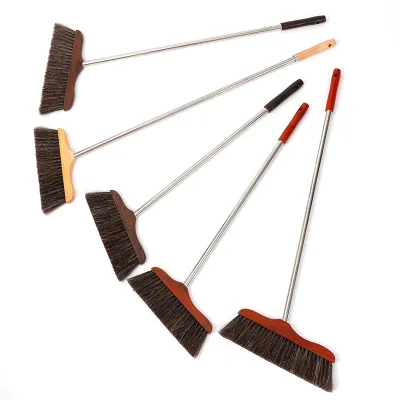

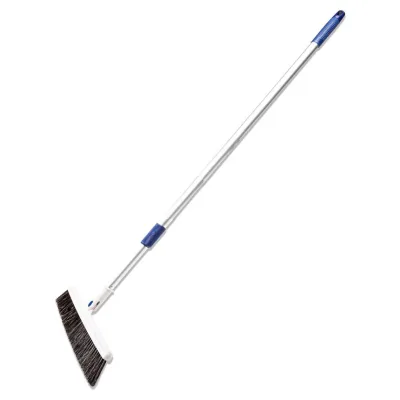
Long Bristle Horse Hair Leather Cleaning Brush Horsehair Care Cleaning Brush
$1.00 - $5.00
MOQ: 200 Pieces


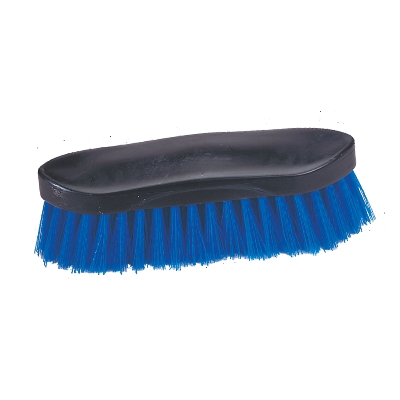
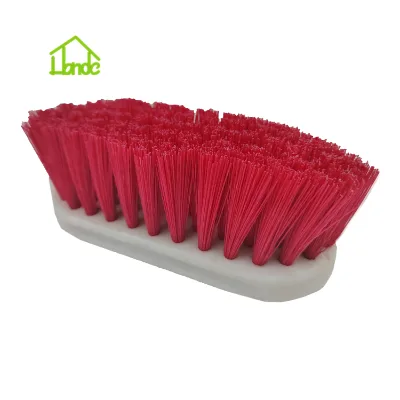
Horse Grooming Horse Hair Cleaning and Care Tools Horse Hair Itching Brush
$1.00 - $5.00
MOQ: 200 Pieces

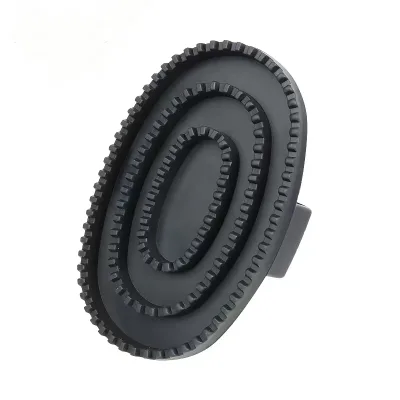
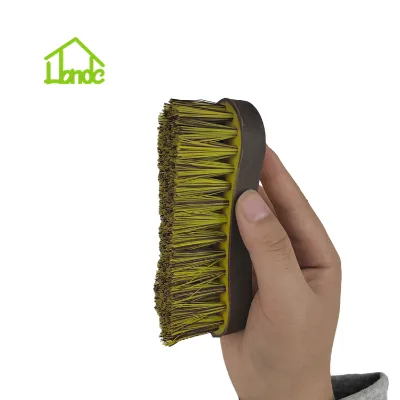
Classic Plastic Horse Curry Comb Essential Horse Grooming Equipment Brush
$1.00 - $4.00
MOQ: 200 Pieces

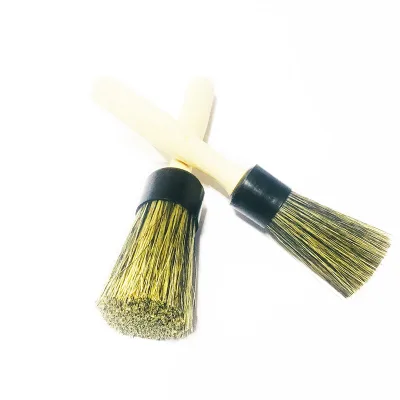
Horse Sweat Scraper Comb Horse Curry Comb Horse Hair Grooming Brush Tool
$1.00 - $4.00
MOQ: 200 Pieces







Comprehensive Sourcing Guide
Strategic Sourcing Guide for Natural Horsehair Angle Brooms
Understanding Product Variants and Material Composition
When sourcing a Natural Horsehair Angle Broom, buyers must first distinguish between genuine natural fiber products and synthetic alternatives that may mimic the appearance of horsehair. The supplied product data indicates a diverse market where "Microfiber" and "Rubber" are frequently cited materials for mop heads and grooming tools, respectively. While the core keyword specifies "natural horsehair," the observed inventory includes items with "Brush Handle Material" listed as Wood or Plastic and "Pole Material" as Steel. This suggests that a true Natural Horsehair Angle Broom will likely feature a handle constructed from Wood or Plastic, paired with a bristle head composed of natural fibers, distinct from the microfiber or rubber compositions found in other listings.
The angle design is a critical functional specification. In the context of the provided data, "Handle Type" is noted as "Unextensible," which implies a fixed-length shaft. For an angle broom, the handle must be rigid to maintain the specific angle required for effective corner and edge cleaning. The "Size" specifications in the data vary significantly, ranging from "27280cm" to "18.5X9.5cm" and "one size." Buyers should verify that the bristle head dimensions and the angle of the head relative to the handle meet the specific cleaning requirements for their intended application, whether for home, garden, or industrial road use. The "Color" options observed, such as Red, White, Dark Brown, Black, and Green, indicate that the natural bristles may be dyed or that the handle color is customizable. However, the natural color of horsehair is typically a light tan or brown, so buyers must confirm if the "Dark Brown" or "Black" options refer to the bristles or the handle material.
Technical Specifications and Customization Capabilities
The technical requirements for a Natural Horsehair Angle Broom extend beyond simple dimensions to include customization flexibility. The data confirms that "Customization" is available and that the "prod_model" can be "custom." This is a vital attribute for B2B buyers who require specific bristle density, handle length, or head angle to suit unique operational environments. The "Specification" field lists "Size: Customized" and "Length: as Your Request," indicating that suppliers are capable of tailoring the physical dimensions of the broom.
Furthermore, the "prod_packing" options, such as "Polybags/Carton" or "OPP Bag + Carton," suggest that packaging can be adapted to the buyer's logistics needs. The "prod_standard" is also listed as "Customized" or "Customer's Requirement," reinforcing the ability to align the product with specific technical drawings or quality benchmarks. For an angle broom, the "Operation Type" is consistently "Manual," and the "Power Source" is noted as "Animal Labour" in the context of grooming tools, though for cleaning brooms, this refers to the manual effort of the user. The "Single gross weight" of 1.0 kg observed in the data provides a baseline for shipping calculations, though natural horsehair brooms may vary in weight depending on the density of the bristles and the material of the handle.
Buyers should pay close attention to the "Feature" attributes listed, such as "Eco-Friendly," "Easily Cleaned," and "Waterproof." While "Waterproof" is a common claim for synthetic mops, for a natural horsehair product, this attribute requires careful verification. Natural fibers are generally absorbent, so a "Waterproof" claim might refer to the handle or the ferrule (the metal band holding the bristles) rather than the bristles themselves. The "Feature: Durable" attribute is essential for longevity, particularly in high-traffic areas like hotels or roads. The "Usage" field spans "Home, Garden, Outdoor, Road, Hotel," indicating that the product must be robust enough for diverse environments.
Compliance, Certification, and Quality Verification
Navigating compliance and certification is a critical step in the procurement process. The supplied data mentions "ISO9001:Condition:New" as a certification, which is a standard for quality management systems. However, the data also lists "FSC" and "ISO 27001" as low-confidence background information. Buyers should not assume that every Natural Horsehair Angle Broom listed carries FSC (Forest Stewardship Council) certification unless explicitly verified by the supplier, as this certification applies to the wood sourcing for handles, not the bristles. Similarly, ISO 27001 relates to information security and is unlikely to be relevant to the physical product itself.
The "Certification" field in the data is specific, noting "ISO9001:Condition:New." This suggests that the supplier has a quality management system in place, but it does not guarantee the ethical sourcing of the horsehair or the safety of the materials. Buyers must verify if the natural horsehair is sourced ethically and if the product meets any specific regional safety standards for cleaning tools. The "Brand Name" is listed as "OEM," indicating that the products are manufactured for private labeling. This is common in the B2B sector, but it requires the buyer to ensure that the OEM supplier adheres to strict quality control protocols to maintain their brand reputation.
When evaluating certifications, buyers should request documentation for the specific batch of goods. The "Condition:New" note implies that the products are not refurbished, which is a standard expectation for new procurement. However, the lack of specific safety certifications (such as those for chemical resistance or fire retardancy) in the high-confidence data means buyers must explicitly ask for these details. The "Standard" is listed as "Customer's Requirement," which places the onus on the buyer to define the necessary compliance standards before placing an order.
Cost Drivers and Pricing Structure Analysis
Understanding the cost drivers for natural horsehair angle brooms is essential for budgeting and negotiation. The observed price range in the data is 0.2 to 15 USD, a wide spectrum that reflects the diversity of products, from simple synthetic brushes to high-end natural fiber tools. The "Advantage" field lists "OEM" and "Low Price," suggesting that cost competitiveness is a key selling point for many suppliers. However, "Low Price" should not be the sole determinant of value, as natural horsehair is a premium material that can be significantly more expensive than synthetic alternatives.
The "MOQ" (Minimum Order Quantity) ranges from 1 to 1000 units, with specific items showing an MOQ of "2 Pcs." This flexibility allows buyers to test the market with small orders or scale up for bulk procurement. The "Selling Units" are listed as "Single item," which simplifies the ordering process but requires careful calculation of total costs when ordering in bulk. The "Payment" terms are noted as "T/T" (Telegraphic Transfer), a standard method in international trade that requires buyers to understand the payment schedule and associated risks.
Cost is also influenced by the "Sample Time" and "Delivery Time," both of which are listed as "7 Days" in the data. Fast sample times can accelerate the product development cycle, but buyers must ensure that the speed does not compromise quality. The "Lead Time" for production is not explicitly detailed beyond the sample time, so buyers should clarify the production lead time for bulk orders. The "Location" of the suppliers, primarily "Ningbo, Zhejiang" and "Shandong, China," indicates that shipping costs and logistics will be a factor in the total landed cost. Buyers should factor in freight charges, customs duties, and insurance when calculating the final cost per unit.
Typical Applications and Usage Scenarios
The versatility of the Natural Horsehair Angle Broom is highlighted by the "Usage" field, which includes "Home, Garden, Outdoor, Road, Hotel," as well as "Pets Grooming" and "Horse" applications. This broad range of applications suggests that the product can be adapted for various cleaning and grooming tasks. For home and hotel use, the broom is likely designed for delicate surfaces, such as hardwood floors or carpets, where natural bristles provide a soft yet effective cleaning action. The "Feature: Eco-Friendly" attribute aligns with the growing demand for sustainable cleaning solutions in residential and hospitality settings.
In garden and outdoor settings, the broom may be used for sweeping debris from patios, driveways, or walkways. The "Usage: Road" application implies a more rugged design capable of handling outdoor conditions. The "Handle Type: Unextensible" ensures stability and control when sweeping uneven surfaces. For pet grooming and horse care, the data references "Horse Hair Cleaning Brush" and "Horse Curry Comb," indicating that similar products are used for animal care. The "Material: Rubber" and "Application: Horse" entries suggest that some products in this category are specialized for grooming rather than general cleaning.
Buyers should consider the specific environment where the broom will be used to determine the appropriate specifications. For example, a broom for a hotel lobby may require a different bristle density and handle length than one for a road maintenance crew. The "Feature: Easily Cleaned" attribute is particularly relevant for commercial applications where hygiene is paramount. The "Color" options, such as Red, White, and Dark Brown, can be used for color-coding in large facilities to designate different cleaning zones or tools.
Supplier Evaluation and Quality Control Protocols
Evaluating suppliers for natural horsehair angle brooms requires a thorough assessment of their capabilities and quality control processes. The data indicates that "OEM" is acceptable and that the "Brand Name" is OEM, suggesting that many suppliers are manufacturers capable of private labeling. Buyers should verify the supplier's production capacity, quality control measures, and ability to meet customization requests. The "Customized" status of the "prod_model" and "prod_standard" indicates that suppliers are flexible, but buyers must ensure that the customization process is well-documented and controlled.
Quality control should focus on the integrity of the natural horsehair, the durability of the handle, and the strength of the ferrule. The "Feature: Durable" attribute is a key indicator of product longevity, but buyers should request test results or samples to verify this claim. The "Single gross weight" of 1.0 kg provides a reference point for consistency, but buyers should check for weight variations across batches. The "Product Name" and "Model Number" (e.g., "HG003", "KD989") should be clearly defined to avoid confusion during the ordering process.
Buyers should also assess the supplier's responsiveness and communication. The "Sample Time" of 7 days and "Delivery Time" of 7 days suggest a relatively quick turnaround, but buyers should confirm if these times are consistent for bulk orders. The "Location" of the suppliers in Ningbo and Shandong is a positive indicator, as these regions are known for their manufacturing expertise. However, buyers should conduct site visits or third-party audits to ensure that the supplier's facilities meet international standards.
Long-Term Procurement and Supply Chain Considerations
Long-term procurement of natural horsehair angle brooms involves strategic planning to ensure supply chain stability and cost efficiency. The "Customization" and "OEM" capabilities of suppliers offer opportunities for building a unique product line, but buyers must establish clear agreements regarding intellectual property and branding. The "MOQ" range of 1 to 1000 allows for flexible ordering, but buyers should aim to consolidate orders to reduce shipping costs and improve inventory turnover.
The "Payment" terms of "T/T" require buyers to manage cash flow effectively and mitigate payment risks. Buyers should consider using letters of credit or other secure payment methods for large orders. The "Location" of the suppliers in China means that buyers must navigate international trade regulations, tariffs, and logistics challenges. Establishing a strong relationship with the supplier can help mitigate these risks and ensure a steady supply of high-quality products.
Buyers should also plan for product lifecycle management. The "Feature: Eco-Friendly" attribute aligns with sustainability goals, but buyers should verify the end-of-life disposal options for the brooms. The "Standard: Customer's Requirement" suggests that buyers can influence the product design to meet specific sustainability targets. By maintaining a proactive approach to procurement, buyers can ensure that their supply chain remains resilient and competitive in the long term.
FAQs
Can I customize the size and model of the Natural Horsehair Angle Broom?
Yes, customization is available for size and model. The product specifications allow for custom dimensions and models like HG003 or KD989, with lengths available as your request to meet specific operational needs.
What materials are used for the handle and bristles of this broom?
The handle is typically made of steel, wood, or plastic, while the bristles may be microfiber or rubber depending on the specific variant. Natural horsehair is the core material, but synthetic options like microfiber are also observed in the inventory.
What is the minimum order quantity for purchasing these brooms?
The minimum order quantity ranges from 2 pieces to 1000 units depending on the supplier and product type. Some items like the Horse Hair Cleaning Brush have an MOQ of just 2 pieces, while others may require higher volumes.
How long does it take to receive samples and bulk orders?
Sample time is typically 7 days, and delivery time is also listed as 7 days for many items. Buyers should confirm specific lead times for bulk production as these durations may vary based on order volume and customization requirements.
Which certifications do the manufacturers hold for quality assurance?
Some suppliers hold ISO9001 certification for quality management systems. While FSC and ISO 27001 are mentioned as background standards, buyers should verify specific certifications for the batch to ensure compliance with ethical sourcing and safety requirements.
Where are the manufacturers of these brooms located?
Manufacturers are primarily located in Ningbo, Zhejiang, and Shandong, China. These locations indicate the origin of the products and help determine shipping logistics and potential trade costs for international buyers sourcing these cleaning tools.
What payment terms are accepted for placing an order?
The accepted payment term is T/T, which stands for Telegraphic Transfer. This is a standard method in international trade, and buyers should clarify the payment schedule and associated risks before finalizing the transaction with the supplier.