Find Needle and Hook Dental Stool for clinics, hospitals, and labs
Source 30 Needle and Hook Dental Stool options from verified Chinese manufacturers. Buyers can compare manual power sources, CE certifications, and leather materials for dental clinic applications.
Key considerations
Products List


Comprehensive Sourcing Guide
Strategic Sourcing Guide for Needle and Hook Dental Stools
The procurement of specialized seating solutions, specifically those categorized as needle and hook dental stools, requires a rigorous approach to ensure operational efficiency and clinical safety. In the context of dental clinic equipment, these stools are not merely furniture but critical components of the operator's workflow, designed to provide stability, adjustability, and ergonomic support during prolonged procedures. The market presents a diverse array of options, ranging from manual operation systems to more complex mechanical configurations. This guide synthesizes available product attributes, compliance requirements, and sourcing strategies to assist buyers in making informed decisions without relying on unverified external claims.
Technical Specifications and Functional Attributes
When evaluating needle and hook dental stools, the primary focus must be on the mechanical and material specifications that define their utility. The observed product data indicates a significant variation in model numbers, suggesting that "needle and hook" may refer to specific locking mechanisms or adjustment styles found in models such as DSH3, Sv038A, Sv042, or the SCS series (SCS-041, SCS-007, SCS-002, SCS-016, SCS-047). Buyers must verify that the specific model selected matches the intended clinical application, whether for a general dental clinic or specialized adult care settings.
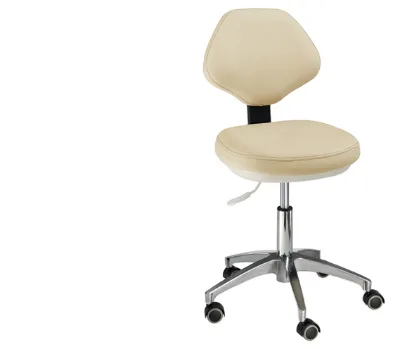
A critical technical distinction lies in the power source and lifting mechanism. The supplied facts highlight a "Manual" power source for certain classifications, while other entries describe a "Steam Lifting" method with an adjustable stroke of 120-180mm. This variance implies that buyers must explicitly confirm the actuation method required for their facility. A manual stool may offer simplicity and lower maintenance, whereas a steam-lifting system provides smoother height adjustments. Furthermore, the seat configuration varies; some units are described as having a "Multi-Function Chair" seat number, while others are explicitly noted as "Without Armrest" and "With Back." The absence of armrests in specific models suggests a design prioritizing close access to the patient, which is often a requirement for needle and hook operations where the operator must maneuver freely.
Material composition is another decisive factor. The product data lists "leather sofa cushion" and "Microfiber Leather" as chair face materials, alongside "PU Leather" for other variants. The structural integrity often relies on "Stainless Steel" components, which are essential for hygiene and durability in a wet environment. The casters, described as "High Quality Imported Mute Casters," are vital for mobility without disturbing the clinical environment. Buyers should verify the specific material grade of the chassis, as some data points mention "High Quality Glue" in the context of the chassis, which may refer to bonding methods rather than structural material. The standard dimensions provided, such as 560x570x290mm or 560x290x570mm, offer a baseline for spatial planning but must be cross-referenced with the specific model's footprint to ensure compatibility with the dental operatory layout.
Compliance and Certification Verification
In the medical device sector, compliance is not optional but a prerequisite for market entry and safe operation. The observed data confirms that products in this category often carry "CE" certification, indicating conformity with health, safety, and environmental protection standards for products sold within the European Economic Area. However, the presence of a CE mark in a listing does not automatically guarantee that every unit in a batch meets the current directive requirements. Buyers must request valid, up-to-date certification documents directly from the supplier for the specific model number being purchased.
Beyond CE, the data references the "GB15979-2002" safety standard. This is a Chinese national standard for the hygiene requirements of medical devices, specifically focusing on the safety of materials and the prevention of infection. For buyers sourcing from China, verifying adherence to GB15979-2002 is essential to ensure the materials used, particularly the leather or microfiber surfaces, do not pose a biological risk. The standard also implies requirements for the sterility and cleanability of the stool, which is critical in a dental setting where cross-contamination is a major concern.
Buyers should also investigate the "Quality Certification" status beyond the generic CE mark. While the data lists "CE" as a quality certification, it is prudent to ask if the manufacturer holds ISO 13485 certification, which is the international standard for quality management systems specific to medical devices. The absence of this specific mention in the provided facts does not negate its importance; rather, it highlights a gap that the buyer must actively investigate. The "Shelf Life" of 1 year and "Warranty" of 1 year mentioned in the data suggest a specific product lifecycle that must be factored into procurement planning. Ensuring that the warranty terms align with the expected usage intensity is a key part of the compliance and risk management strategy.
Cost Drivers and Pricing Dynamics
The pricing for needle and hook dental stools exhibits a wide range, observed between 32 and 3000 USD. This significant disparity is not arbitrary but is driven by several tangible factors. The primary cost driver is the complexity of the lifting mechanism. A manual stool with a simple gas lift or hydraulic system will naturally be priced lower than a unit with a steam lifting system, multi-function adjustments, and high-grade imported casters. The material quality also plays a substantial role; "High Quality Imported Mute Casters" and "Stainless Steel" frames command a premium over standard steel or plastic alternatives.
The "MOQ" (Minimum Order Quantity) is another critical cost variable. The data shows an MOQ range of 1 to 30 units, with specific listings indicating an MOQ of 10 sets. For smaller clinics or those testing a new supplier, an MOQ of 1 allows for a single-item purchase, though the unit price may be higher. Conversely, larger orders that meet the 10-set or 30-unit thresholds may unlock volume discounts, significantly reducing the cost per unit. The "Selling Units" are listed as "Single item," which suggests flexibility in purchasing, but buyers should negotiate based on the total volume to optimize the price point.
Additionally, the "Customization" availability is a hidden cost driver. While customization is listed as "Available" and "Customized," any deviation from standard models—such as specific color requests, custom branding, or modified dimensions—will likely increase the production cost and potentially the lead time. The "Packing" method, described as "1set/Box" or "Carton Box" with "Standard Export Packing," also influences the final landed cost. Heavy or specialized packaging designed to protect the delicate hydraulic mechanisms during international shipping adds to the overall expense. Buyers must balance the desire for customization and premium features against the budget constraints, ensuring that the price reflects the actual value of the specifications provided.
Typical Applications and Operational Context
The application of these stools is primarily defined by the "Dental Clinic" setting, with specific mentions of "Doctor Chair" and "Doctor Stool" usage. The design features, such as the "Without Armrest" configuration and "With Back" support, are tailored for the dentist or dental hygienist who requires a low center of gravity and the ability to lean forward or backward without obstruction. The "Adult" application specification confirms that these units are designed for the operator's body type, ensuring that the height adjustment range (e.g., 120-180mm or 450-570mm) accommodates the user's needs.
The "Needle and Hook" terminology likely refers to the specific clinical tasks performed while seated, such as suturing or intricate restorative work where stability is paramount. The "Multi-Function Chair" designation suggests that these stools may offer more than just height adjustment; they might include tilt, swivel, or recline capabilities that are essential for maintaining a neutral posture during long procedures. The "Condition: New" status is standard for new equipment, but buyers should verify the condition of the hydraulic systems and the integrity of the upholstery, as these are the components most prone to wear in a high-traffic clinical environment.
The "Place of Origin" varies between Henan, Hebei, and Foshan in China. While the origin itself does not dictate quality, it can influence logistics and supply chain reliability. Foshan is a known hub for furniture manufacturing, which may suggest a higher concentration of specialized dental furniture suppliers in that region. Buyers should consider the proximity of the supplier to major shipping ports if they are concerned about lead times and shipping costs. The "After-sale Service" of "Online Technical Support" is a standard offering, but for critical equipment like dental stools, the availability of on-site repair services or the ease of obtaining replacement parts should be a key consideration in the application context.
Supplier Evaluation and Quality Control
Evaluating suppliers for needle and hook dental stools requires a focus on their ability to maintain consistency and provide reliable after-sales support. The data indicates that "Customization" is available, which implies that the supplier has the manufacturing flexibility to meet specific client needs. However, this flexibility must be balanced with rigorous quality control processes. Buyers should request a detailed quality control plan that covers the inspection of the "Stainless Steel" frame, the testing of the "Steam Lifting" or manual mechanisms, and the durability testing of the "Microfiber Leather" or "PU Leather" surfaces.
The "Safety standard: GB15979-2002" serves as a baseline for hygiene, but buyers should also inquire about the testing protocols for the "High Quality Imported Mute Casters." These components are critical for the smooth operation of the stool, and their failure can lead to safety hazards. The "Standard Export Packing" mentioned in the data is a positive indicator, suggesting that the supplier understands the requirements for international shipping. However, buyers should verify that the packaging is sufficient to prevent damage to the hydraulic systems and the upholstery during transit.
When assessing the supplier's reliability, the "Warranty: 1 Year" and "Shelf Life: 1years" are important metrics. These figures suggest a standard product lifecycle, but buyers should clarify what the warranty covers. Does it include the hydraulic cylinder, the casters, and the upholstery, or only specific structural components? The "Online Technical Support" is a valuable asset, but buyers should also ask about the response time and the availability of spare parts. A supplier that can provide a comprehensive warranty and readily available spare parts is more likely to ensure the long-term viability of the equipment.
Long-Term Procurement Considerations
Sourcing dental stools is not a one-time transaction but a long-term investment in the clinic's operational efficiency. The "Model Number" variations, such as DSH3, Sv038A, and the SCS series, indicate that buyers should consider the longevity and obsolescence of the specific model. Selecting a model with a proven track record and a wide availability of spare parts is crucial for minimizing downtime. The "Condition: New" status is standard, but buyers should also consider the potential for refurbished units if the budget is constrained, though this requires careful vetting of the refurbishment process.
The "Customization" option offers a path to tailoring the equipment to the specific needs of the clinic, but it also introduces complexity into the supply chain. Buyers should weigh the benefits of customization against the potential for longer lead times and higher costs. The "MOQ" of 10 sets for some models suggests that bulk purchasing may be necessary to achieve the best value, which is a strategic consideration for clinics planning to expand or replace multiple units simultaneously.
Finally, the "After-sale Service" of "Online Technical Support" is a baseline expectation. For long-term procurement, buyers should seek suppliers who offer more comprehensive support, such as training for staff on the proper use and maintenance of the stools, and a clear protocol for handling warranty claims. The "Place of Origin" in China, specifically Henan, Hebei, and Foshan, suggests a robust manufacturing base, but buyers should ensure that the supplier has a reliable logistics network to handle any future repairs or replacements efficiently. By focusing on these long-term factors, buyers can secure a supply chain that supports the clinic's growth and operational needs for years to come.
Comparative Analysis of Key Product Attributes
To facilitate a clearer decision-making process, the following table summarizes the key attributes observed in the product data, highlighting the variations that buyers must navigate.
| Attribute | Observed Values | Procurement Implication |
|---|---|---|
| Power Source | Manual, Steam Lifting | Verify mechanism type; Steam offers smoother adjustment, Manual offers simplicity. |
| Material (Frame) | Stainless Steel | Essential for hygiene and durability; verify grade and finish. |
| Material (Seat) | Leather sofa cushion, Microfiber Leather, PU Leather | Check for stain resistance and ease of cleaning; PU may be more durable than leather. |
| Adjustment Stroke | 120-180mm, 450-570mm | Ensure range matches operator height and task requirements. |
| Certification | CE, GB15979-2002 | Mandatory for safety; verify validity and scope of certification. |
| MOQ | 1, 10, 30 | Higher MOQs may reduce unit cost; check if single-item purchase is viable. |
| Warranty | 1 Year | Standard term; clarify coverage details for hydraulic and mechanical parts. |
| Origin | Henan, Hebei, Foshan (China) | Consider logistics and supplier specialization in the region. |
| Customization | Available, Customized | Can tailor to needs but may increase cost and lead time. |
This table underscores the importance of detailed specification checks. The wide range of values for attributes like adjustment stroke and material type means that a generic search for "Needle and Hook Dental Stool" is insufficient. Buyers must drill down into the specific model numbers and their associated attributes to ensure the selected product meets the precise clinical and operational requirements of their facility. By adhering to these evidence-based guidelines, buyers can navigate the complexities of the dental stool market with confidence, ensuring a procurement process that prioritizes safety, quality, and long-term value.
FAQs
What certifications do needle and hook dental stools have?
These stools typically carry CE certification and comply with the GB15979-2002 safety standard. Buyers must verify valid documents for specific models like DSH3 or SCS-041 to ensure compliance with health and hygiene requirements.
How is the height adjusted on these dental stools?
Adjustment methods vary between manual power sources and steam lifting mechanisms. Some models offer a stroke range of 120-180mm, while others provide a 450-570mm lift, requiring buyers to confirm the specific actuation method needed.
Which materials are used for the chair face and frame?
Chair faces are constructed from microfiber leather, PU leather, or sofa cushion materials. The structural frame often utilizes stainless steel, while high-quality imported mute casters ensure smooth mobility without disturbing the clinical environment.
Can buyers customize the needle and hook dental stools?
Yes, customization is available for specific model requirements. Buyers should note that custom orders may affect the minimum order quantity, which ranges from 1 to 30 sets depending on the supplier and specific configuration requested.
What is the warranty period for these dental stools?
The standard warranty period is 1 year, matching the stated shelf life. This coverage typically applies to the new condition of the unit, but buyers should clarify if hydraulic cylinders and casters are included in the terms.
How much does a Needle and Hook Dental Stool cost?
Prices range from 32 to 3000 USD based on features and specifications. The cost is driven by the lifting mechanism complexity, material quality like imported casters, and whether the unit is a single item or part of a bulk order.
Where are these dental stools manufactured?
Products originate from various locations in China, including Henan, Hebei, and Foshan. Buyers should consider these origins when evaluating logistics, as Foshan is a known hub for furniture manufacturing which may influence supply chain reliability.