Source New Excavator Slewing Circle for construction mining drilling
Compare 30 listings for New Excavator Slewing Circle with varying teeth counts, weights, and dimensions. Buyers can evaluate standard models with ISO certifications and delivery options for heavy machinery applications.
Key considerations
Products List


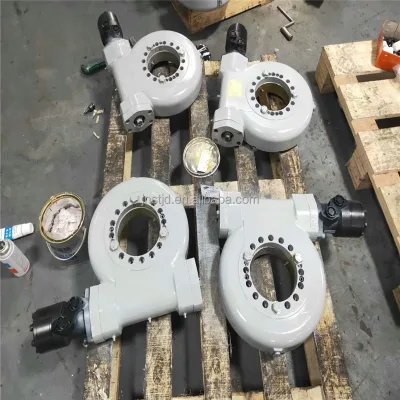


Crane Slewing Bearing Excavator Slewing Bearing Slewing Ring Bearing
$2000.00 - $4000.00
MOQ: 1 Pieces

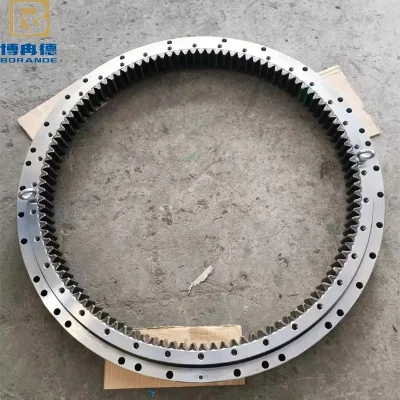


Excavator Turntable Slewing Circle for Kobelco Jcb Js200LC Tractor Parts
$489.25 - $500.24
MOQ: 2 Pieces
Comprehensive Sourcing Guide
Strategic Sourcing Guide for New Excavator Slewing Circles
Understanding Technical Specifications and Variability
When sourcing a New Excavator Slewing Circle, buyers must first recognize that this component is not a monolithic product but a highly specialized assembly defined by precise geometric and mechanical parameters. The core function of the slewing circle, often referred to as a swing bearing, is to support the rotating upper structure of the excavator while transmitting torque and radial loads. The technical landscape is characterized by significant variability in model numbers, dimensions, and tooth counts, which directly correlates to the specific excavator platform it serves.
Data indicates a vast array of model numbers available, ranging from specific machine identifiers like EC360B, JCB 220, HD 770E2, and 520LC-9 to engine-specific designations such as SAA4D95L and generic model ranges like 3000-6. This diversity necessitates that buyers do not assume a universal fit. For instance, the physical dimensions of these components vary significantly. Observed standard dimensions include configurations such as 15501239150mm, 13301093102mm, 14021132100mm, 17751394127mm, and 1106X884X75mm. These measurements, typically denoted as Outer Diameter x Inner Diameter x Height (ODXIDXH), are critical for ensuring the component fits the mounting flanges of the excavator's upper carriage.
Furthermore, the internal gearing is a primary differentiator. The product attributes highlight that these are internal gear types, with specific tooth counts observed in the market data including 90, 92, 96, 110, and 118 teeth. A mismatch in tooth count will prevent the drive motor from engaging the slewing mechanism, rendering the excavator inoperable. Buyers must verify the exact tooth count against the original equipment manufacturer (OEM) specifications before placing an order. Additionally, the hardness of the gear teeth is a crucial performance metric, with observed ranges falling between 229 and 269. This hardness level is essential for durability under the high-stress cyclic loading typical of excavation work.
Compliance, Certification, and Manufacturing Standards
In the B2B procurement of heavy machinery components, compliance with international standards and manufacturing certifications is non-negotiable. The supply chain for slewing circles is subject to rigorous quality management systems to ensure reliability. The available data confirms that suppliers often hold ISO 9001 certifications, with specific references to ISO 9001:2000 and general ISO 9001 standards for the manufacturing process. These certifications indicate that the supplier's quality management system has been audited to meet international benchmarks for consistency and traceability.
Beyond general quality management, specific product certifications such as CE (Conformité Européenne) are relevant for equipment intended for the European market, ensuring the component meets health, safety, and environmental protection standards. While the presence of CE is noted in background data, buyers should treat this as a verification point rather than an automatic guarantee for every unit. The manufacturing process itself is a key compliance factor. The data specifies that the production method involves forging, a process that generally enhances the grain structure and mechanical strength of the steel compared to casting. This forging process is critical for the structural integrity of the slewing circle, particularly when handling the immense loads generated during digging and lifting operations.
Furthermore, the standard classification of these products is often listed as "Standard" rather than "Nonstandard," implying that they are manufactured to established industry norms. However, buyers must also verify the specific national or international standards applied, such as the GB (Guobiao) standard mentioned in the data. When evaluating a supplier, procurement teams should request documentation proving the forging process was utilized and that the final product adheres to the relevant ISO or GB standards. The absence of surface treatment, noted as "Without Processing" in some listings, suggests that the components may be supplied in a raw or semi-finished state, requiring the buyer to understand if additional surface hardening or coating is necessary for their specific operating environment.
Cost Drivers and Pricing Dynamics
The pricing structure for new excavator slewing circles is influenced by a complex interplay of material costs, manufacturing complexity, and logistical factors. The observed price range in the market spans from 10 to 10,000 USD. This wide variance is not indicative of quality differences alone but reflects the substantial differences in component size, weight, and complexity. For example, a slewing circle weighing 600 kg will inherently cost significantly more than a smaller unit due to the volume of steel required and the energy-intensive forging process involved.
Material costs are a primary driver, as these components are manufactured from high-grade steel alloys capable of withstanding extreme stress. The hardness range of 229-269 requires specific heat treatment processes, identified in the data as Q+T (Quenching and Tempering). This thermal treatment adds to the production cost but is essential for achieving the required toughness and wear resistance. The complexity of the internal gear cutting also impacts the price; higher tooth counts and precise gear profiles require more sophisticated CNC machining and longer production times.
Logistics and packaging represent another significant cost factor. The data indicates that transportation is handled via sea, air, or express couriers like NTN, FedEx, UPS, and DHL. Given the heavy weight of some units, such as the 600 kg example, sea freight is often the most economical option, though it extends the lead time. Conversely, air freight or express delivery incurs premium costs but reduces the waiting period. Packaging is also a cost consideration; while standard export packing is common, some models utilize non-fumigation wooden cases, which may carry different shipping regulatory costs depending on the destination country. Buyers should factor in these logistical variables when budgeting, as the base unit price is only one component of the total landed cost.
Typical Applications and Operational Requirements
Excavator slewing circles are integral to the operation of heavy earth-moving machinery, specifically designed for applications where rotational movement is required. The primary application identified is for excavators, but the component's versatility extends to other heavy equipment that utilizes a similar slewing mechanism. The data explicitly categorizes the application under "Excavator," confirming its role in supporting the rotating cabin and boom assembly.
The operational environment for these components is harsh, involving continuous exposure to dust, debris, moisture, and high mechanical loads. The design features of the slewing circles address these challenges. Attributes such as "4-point contact," "Anti-magnetic," "Corrosion-resistant," and "Cross roller" indicate that these bearings are engineered to handle multi-directional loads, including radial, axial, and tilting moments. The "Cross roller" designation suggests a specific internal architecture that allows for high load capacity in a compact design, which is vital for the space-constrained environments of excavator undercarriages.
Lubrication is another critical operational requirement. The data notes that these components support both "Grease" and "Oil" lubrication methods. This flexibility allows operators to choose the lubrication strategy that best fits their maintenance protocols and the specific environmental conditions of the job site. For instance, grease might be preferred for sealed, low-maintenance applications, while oil systems might be utilized in high-speed or high-temperature scenarios. The condition of the product is listed as "New," ensuring that buyers receive components with full fatigue life remaining, which is essential for minimizing downtime in critical construction or mining operations.
Supplier Evaluation and Verification Protocols
Selecting the right supplier requires a rigorous evaluation process that goes beyond simple price comparison. Buyers should prioritize suppliers who demonstrate a proven track record in the industry. The data highlights that experienced suppliers often possess "15 Years Experience" or "10 Years Experience," which serves as a proxy for their ability to navigate supply chain disruptions and maintain consistent quality. While experience is a positive indicator, it must be validated through references and past performance data.
One of the most critical evaluation criteria is the supplier's ability to handle customization. The product attributes confirm that "Customization" is available, meaning suppliers can adapt standard designs to meet specific OEM requirements. However, buyers must verify the supplier's capacity to manage these customizations without compromising lead times or quality. The "MOQ" (Minimum Order Quantity) data suggests a flexible approach, with some listings stating "No Requirements, Any Qty Is Acceptable," while others imply a range of 1-2 units. This flexibility is beneficial for buyers needing single replacements or small batch orders, but it requires careful negotiation to ensure the supplier remains committed to the order.
Lead time is another vital factor in supplier evaluation. The observed delivery time is consistently listed as "15 Days." Buyers should treat this as a baseline and verify if it holds true for custom orders or specific models. Additionally, the availability of stock is a key differentiator. The data mentions that "Some Models in Stock," which can significantly reduce lead times for standard replacements. Buyers should explicitly ask suppliers which models are currently available in stock versus those that require production runs. Finally, the export port information, listing Shanghai Port, Qingdao Port, and other locations in China, helps buyers assess the logistical feasibility of shipping to their specific destination and understand potential port congestion risks.
Quality Control and Long-Term Procurement Strategy
Ensuring the long-term reliability of excavator slewing circles requires a robust quality control (QC) strategy. The manufacturing process, specifically the forging and Q+T heat treatment, must be verified through material test reports (MTRs) and hardness testing. Buyers should request documentation confirming that the hardness falls within the observed 229-269 range and that the gear teeth have been machined to the specified tooth counts (e.g., 90, 92, 96, 110, 118). The warranty period is also a strong indicator of quality confidence. The data shows warranty terms ranging from "1 Year" to "18 Months." A longer warranty period, such as 18 months, suggests the supplier has higher confidence in the durability of their product and is willing to stand behind it.
For long-term procurement, buyers should consider the total cost of ownership rather than just the initial purchase price. A component with a lower upfront cost but a shorter warranty or inferior heat treatment may lead to premature failure and costly downtime. The "Rich Experience" of the supplier, combined with their certification status, should be weighed heavily in this decision. Furthermore, the packaging method, such as "Non-Fumigation Wooden Case" or "in Nude," should be evaluated for its ability to protect the component during transit, especially for heavy items like the 600 kg units.
Buyers should also establish a relationship with suppliers who offer "Standard Export Packing" to ensure consistency in handling. The availability of various transportation methods (Sea, Air, Express) allows for flexible logistics strategies based on urgency. By maintaining a clear understanding of the technical specifications, verifying certifications, and evaluating supplier experience, buyers can secure a reliable supply of new excavator slewing circles that meet the demanding requirements of modern heavy machinery operations. The combination of standardized production with available customization options provides a balanced approach to sourcing, ensuring that both immediate replacement needs and long-term fleet maintenance are met effectively.
FAQs
What customization options are available for new excavator slewing circles?
Customization is available for these components to meet specific OEM requirements. Buyers can request tailored specifications while noting that lead times may vary based on the complexity of the custom request and current stock availability.
How long is the delivery time for new excavator slewing circles?
The standard delivery time is 15 days for most orders. Some models are available in stock for immediate shipment, while others require production time depending on the specific model number and customization needs.
Which certifications do New Excavator Slewing Circle manufacturers hold?
Manufacturers typically hold ISO 9001 certifications for their manufacturing processes. Some products also carry CE certification, ensuring compliance with international safety and quality standards for heavy machinery components.
Can I order any quantity of new excavator slewing circles?
Yes, there are no minimum order quantity requirements, and any quantity is acceptable. This flexibility allows buyers to purchase single units for replacement or larger batches for fleet maintenance without minimum constraints.
What is the hardness range for the gear teeth of these circles?
The hardness of the gear teeth falls within a range of 229 to 269. This level is achieved through Q+T heat treatment to ensure durability and resistance to wear under high-stress excavation conditions.
How many teeth are typically found on these internal gear slewing circles?
The tooth count varies by model, with observed counts including 90, 92, 96, 110, and 118 teeth. It is critical to match the exact tooth count to the original equipment specifications to ensure proper drive motor engagement.