Source New Excavator Engine for Construction, Mining, and Agriculture
Source a New Excavator Engine from 30 available listings. Compare specifications such as cylinder count, cooling type, and power output to find the right fit for your machinery needs.
Key considerations
Products List


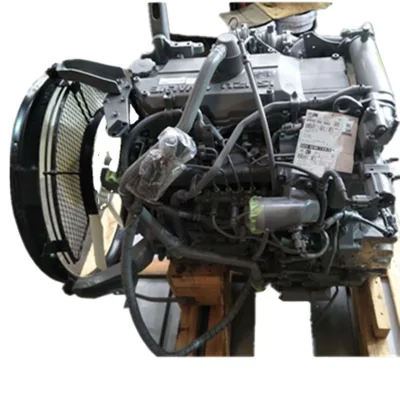
Construction Machinery Engine Excavator Engine Eqb3.9 Eqb235 Diesel Engine
$3000.00 - $70000.00
MOQ: 1 Pieces




Comprehensive Sourcing Guide
New Excavator Engine Sourcing Guide
Procuring a New Excavator Engine requires a disciplined approach to aligning technical specifications with operational demands. Buyers must navigate a market where models vary significantly in cylinder configuration, cooling methods, and emission standards. The following guide outlines the critical verification steps for sourcing these power units, ensuring that the selected engine meets the mechanical and regulatory requirements of the intended application.
Product Scope and Observed Listing Signals
The current market for new excavator engines presents a diverse range of configurations, primarily centered around diesel-powered combustion units. Listings frequently highlight four-cylinder and six-cylinder options, with some models featuring an L-shaped cylinder arrangement. These engines are typically designed as four-stroke, reciprocating piston units, indicating a standard mechanical architecture suitable for heavy-duty construction equipment. The presence of supercharged intake systems in several listings suggests a focus on maximizing power output within compact footprints, a common requirement for modern excavator chassis designs.
Observations of product listings reveal a wide variance in pricing and minimum order quantities (MOQ). Prices observed range from $1 to $99,999, reflecting the disparity between smaller auxiliary engines and larger main power units. The MOQ is generally low, often starting at just one unit or one set, which facilitates direct replacement purchases for individual machinery repairs. Buyers should note that while some listings offer customization, the core product attributes such as cooling type (water-cooled or air-cooled) and ignition mode (electric or compression-ignition) are fixed design choices that must be matched to the specific excavator model.
Technical Specifications to Verify
Displacement and power output are the primary technical metrics that determine an engine’s suitability for a specific excavator class. Available data indicates displacement volumes ranging from 4.8 liters to 6.128 liters, with rated power outputs spanning from 75 kW to 129 kW. Speed ratings also vary, with some units operating at 2500 rpm and others at lower speeds between 1500 and 2500 rpm. Buyers must verify that the engine’s torque curve and rotational speed match the hydraulic pump requirements of the host machine to prevent drivetrain stress or inefficient power transfer.
Physical dimensions and weight are critical for ensuring the engine fits within the designated engine bay and does not compromise the excavator’s center of gravity. Listed dimensions for some models include lengths up to 1009 mm, widths around 692 mm, and heights up to 1052 mm, with weights ranging from 450 kg to 500 kg. It is essential to confirm the exact mounting hole patterns and shaft configurations, as these mechanical interfaces are rarely universal. Additionally, the cooling system type—whether water-cooled or air-cooled—must be compatible with the existing radiator and fan assembly to avoid thermal management failures during operation.
Compliance and Safety Documentation
Emission standards are a non-negotiable aspect of modern engine procurement, particularly for equipment operating in regulated regions. Some listed models comply with Euro2 emission standards, which may be sufficient for older machinery or operations in regions with less stringent environmental regulations. However, buyers must verify the specific emission certification required by their local jurisdiction, as newer models may need to meet higher tiers such as Euro Stage III or EPA Tier 4. Failure to match the emission standard can result in legal penalties or the inability to register the equipment for use.
Documentation regarding the engine’s origin and quality assurance processes provides insight into the manufacturing reliability. Products are noted to originate from China, with specific mentions of Beijing as a production hub. Buyers should request video outgoing inspections, which are provided for some listings, to visually verify the condition of the engine prior to shipment. This visual confirmation helps ensure that the unit is 100% brand-new and free from manufacturing defects or transit damage, serving as a preliminary quality control step before final payment release.
Cost Drivers and Commercial Terms
The total cost of ownership for a New Excavator Engine is influenced by more than just the unit price. Factors such as packing method, which can be wooden boxes, cases, or packages, impact shipping costs and the risk of damage during transit. Heavier engines with larger dimensions will incur higher freight charges, and the choice of packaging must be robust enough to protect the engine’s delicate components, such as the turbocharger and fuel injectors, during long-distance logistics. Buyers should calculate the landed cost, including insurance and customs duties, to accurately compare suppliers.
Commercial terms often include provisions for customization and specific starting systems. While many engines feature electric start mechanisms and electric ignition modes, some may require compression-ignition setups depending on the design. The availability of customization allows buyers to tailor certain features to their existing electrical systems or mounting constraints. However, customized orders may affect lead times and return policies, so buyers must clarify these terms upfront. Understanding the full scope of what is included in the price, such as whether mounting brackets or starter motors are included, prevents unexpected additional expenses.
Supplier Qualification and Quality Control
Verifying the supplier’s capability to deliver high-quality engines is essential for long-term reliability. Buyers should prioritize suppliers who provide video outgoing inspections, as this demonstrates a commitment to transparency and quality assurance. The presence of quality control measures, such as pre-shipment checks, reduces the risk of receiving a defective unit. Additionally, suppliers who offer competitive pricing while maintaining high-quality standards are often more reliable, as they have optimized their manufacturing and logistics processes.
It is crucial to assess the supplier’s ability to provide consistent product attributes across orders. Listings indicate that engines are available in various models, such as D5E, D7E, D4D, and 3TNV70 series, each with distinct specifications. Buyers must ensure that the supplier can consistently deliver the exact model and specifications ordered, avoiding substitutions that may not fit the excavator. Clear communication regarding the product model, displacement, and power output is necessary to prevent mismatches. Suppliers who provide detailed technical datasheets and respond promptly to verification requests are generally more trustworthy.
Long-Term Procurement Checks
Establishing a reliable supply chain for excavator engines requires ongoing monitoring of supplier performance and product consistency. Buyers should track the lead times and delivery accuracy of their suppliers to ensure that engine replacements are available when needed to minimize equipment downtime. Consistent quality over multiple orders is a strong indicator of a supplier’s reliability. If a supplier consistently delivers engines that match the described specifications and pass initial inspections, they are likely a valuable long-term partner.
Maintenance and support considerations should also be part of the long-term procurement strategy. Engines with widely available spare parts and clear technical documentation are easier to maintain over their lifespan. Buyers should inquire about the availability of replacement components such as filters, gaskets, and sensors for the specific engine model. Additionally, understanding the warranty terms and the supplier’s policy for handling defective units is critical. A supplier that stands behind their product with clear warranty coverage reduces the financial risk associated with the initial investment in a New Excavator Engine.
FAQs
What cooling types are available for new excavator engines?
Both water-cooled and air-cooled options are available for new excavator engines. The specific cooling method depends on the model selected, such as the D5E which uses water cooling or other variants designed for air cooling.
Which cylinder configurations can be found in these engines?
Engines are available in 4-cylinder and 6-cylinder configurations. Some models also feature multi-cylinder arrangements, allowing buyers to select the power output and physical size that best fits their specific machinery requirements.
Can I find new excavator engines with electric ignition?
Yes, electric ignition is a standard feature for many of these engines. They also support electric start systems, ensuring reliable operation and easy startup for various engineering machinery applications without manual intervention.
What is the minimum order quantity for these engines?
The minimum order quantity is typically one unit or one set. This low MOQ allows buyers to purchase single units for testing or immediate replacement needs without requiring large bulk commitments from suppliers.
How are these engines packaged for shipping?
Engines are packaged in wooden boxes, wooden packages, or wooden cases to ensure safe transport. This robust packaging protects the machinery during transit and is standard for all listed models originating from China.
What power ratings are available for these diesel engines?
Rated power ranges from 75kw to 129kw depending on the specific model. Buyers can choose between different speed ratings, such as 2500rpm or 1500-2500rpm, to match the operational demands of their equipment.