Source Non Slip Resistance Bands for Yoga, Leg Workouts, and Stretching
Compare 30 Non Slip Resistance Bands from verified Chinese suppliers. Buyers can evaluate latex and TPE options with varying resistance levels, thicknesses, and custom packaging to suit bodybuilding and fitness needs.
Key considerations
Products List
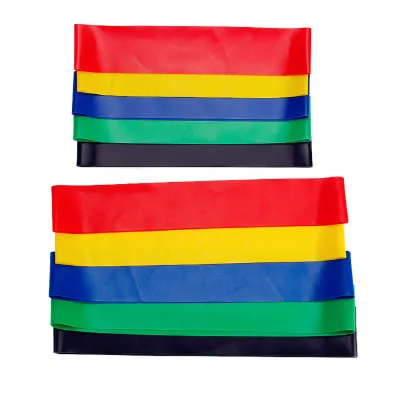


Resistance Band Pull up Band Workou Resistance Gym Customized Resistance Bands
$1.85 - $7.25
MOQ: 500 Pieces


Multiple Training Premium Exercise Safe Sport Body Exercise Resistance Band
$2.00 - $3.00
MOQ: 333 Pieces


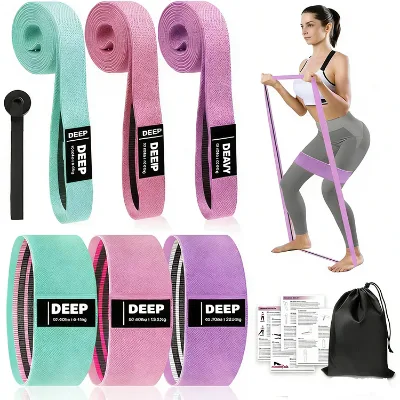


Versatile Fitness Resistance Band for Strength Training and Rehabilitation
$0.10 - $3.80
MOQ: 1000 Meters


Comprehensive Sourcing Guide
Strategic Sourcing Guide for Non-Slip Resistance Bands
Understanding Product Variants and Core Specifications
When sourcing non-slip resistance bands, buyers must first navigate the diverse landscape of product configurations available in the global market. The core keyword "non-slip resistance bands" encompasses a spectrum of items ranging from simple latex loops to complex fabric blends designed for specific fitness applications. Based on current market observations, the primary distinction lies in the material composition and the intended resistance profile. The supply chain offers products constructed from pure latex, which provides high elasticity and snap-back properties, as well as TPE (Thermoplastic Elastomer) options that offer a different tactile feel and durability profile. Furthermore, a hybrid category exists featuring a fabric and latex blend material, often marketed for enhanced grip and reduced skin irritation during high-intensity workouts.
The physical dimensions of these bands are critical for procurement planning. Market data indicates that width specifications typically center around 5 cm, though variations exist to accommodate different user needs. Thickness is a variable attribute that directly correlates with resistance levels; observed specifications include a range of 0.35mm to 1.1mm. This variation allows suppliers to offer a tiered product line, from light resistance for rehabilitation to heavy resistance for advanced bodybuilding. The perimeter of the bands is another defining characteristic, with standard sizes observed at 50 cm and 60 cm, while other configurations may follow specific metric standards such as 76 cm or 104 cm. Buyers should verify that the specific model number, such as BE-RB003 or SP-RB9, aligns with the required dimensional tolerances for their target demographic.
Technical Performance and Functional Applications
The functional utility of non-slip resistance bands extends beyond simple strength training. The primary applications identified in the market include body slimming, yoga practice, leg workouts, and pull-up assistance. The "non-slip" attribute is particularly vital for these activities, as it ensures the band remains secure during dynamic movements like squats, lunges, or stretching routines. Without this feature, the band could shift or roll, compromising the exercise form and potentially causing injury. The resistance levels are generally categorized into a multi-tier system, ranging from X-Light to X-Heavy, often spanning five distinct levels. Some product lines simplify this to three levels (Light, Medium, Heavy), while others offer a broader spectrum to cater to a wider range of fitness enthusiasts.
The target audience for these products is predominantly adults, with specific designs catering to bodybuilding and fitness regimens. The "Kind" of product is consistently identified as a Latex Band or a Fabric Band, depending on the material composition. For users requiring assistance with pull-ups, the band must possess sufficient tensile strength and a specific perimeter length to provide the necessary leverage. The "Folded" status of some products suggests they may be designed for compact storage or specific usage patterns where the band is doubled over. Buyers should ensure that the selected product's function matches the specific training goals of their end-users, whether that is general strength training, yoga stretching, or body shaping. The material choice also influences the "Condition" of the product, with new items being the standard expectation for all commercial transactions.
Compliance, Standards, and Material Verification
In the realm of B2B procurement, verifying compliance and material standards is essential to mitigate risk. While specific certification bodies are not universally mandated for all resistance bands, buyers must rigorously check the material safety and construction standards. The supply data indicates origins from major manufacturing hubs in China, specifically Jiangsu and Zhejiang provinces. These regions have established infrastructure for textile and rubber goods, but quality control can vary between factories. The "prod_standard" field in supplier listings often contains dimensional data (e.g., 3.15"*26", 2x10") rather than formal safety certifications. Therefore, buyers should not assume compliance with international safety standards based solely on the product listing.
Material verification is a critical step. The observed materials include Latex, TPE, and Spandex/Polyester blends. For buyers with clients sensitive to latex, the TPE or fabric-blend options become mandatory. The "Customized" attribute suggests that many suppliers offer OEM services, allowing buyers to specify material compositions. However, when customizing, the buyer must ensure that the new material mix maintains the non-slip properties and durability required for the product's function. The "Common Colors" observed, such as the Pink Series, indicate that color is a standard customization option, but the dyeing process must not compromise the structural integrity of the latex or fabric. Buyers should request material safety data sheets (MSDS) or third-party test reports to confirm that the materials do not contain harmful substances like heavy metals or phthalates, especially since these products are used in close contact with the skin.
Cost Drivers and Pricing Structures
The pricing of non-slip resistance bands is influenced by several interconnected factors, including material costs, customization complexity, and order volume. The observed price range in the market spans from $0.03 to $15.00 USD per unit. This wide disparity reflects the difference between basic, unbranded latex loops and premium, custom-packaged sets with carry bags. The lower end of the price spectrum typically corresponds to single-item sales with minimal packaging, such as a simple poly bag. In contrast, the higher price points are associated with sets that include polyester carry bags, mesh bags, or custom packaging, as well as products with more complex resistance level configurations.
Order volume plays a significant role in cost determination. The Minimum Order Quantity (MOQ) ranges from 5 units to 20,000 units. For small businesses or startups, an MOQ of 5 allows for low-risk market testing, while larger retailers may leverage the higher volume tiers to negotiate better unit prices. The "Selling Units" attribute indicates that some products are sold as single items, while others are packaged as sets. The "Single gross weight" of 0.300 kg per item is a crucial factor for logistics planning. Heavier sets, such as those weighing 550g per set, will incur higher shipping costs, which must be factored into the total landed cost. Buyers should analyze the cost per unit against the value-added features, such as custom logos or specific color schemes, to determine the most cost-effective sourcing strategy.
Supplier Evaluation and Manufacturing Capabilities
Evaluating suppliers requires a focus on their production capabilities and consistency. The observed "Place of Origin" is consistently China, with specific mentions of Jiangsu and Zhejiang. These regions are known for their manufacturing density, but buyers must distinguish between trading companies and actual factories. Key indicators of a reliable supplier include the ability to handle "Customized logo" requests and "Customized Colors." The presence of a "Customized" attribute in the product data suggests that the supplier has the flexibility to adapt products to the buyer's brand requirements.
The "Packaging" options, ranging from poly bags to custom packaging and cartons, indicate the supplier's capacity for value-added services. A supplier that offers "1 Set/Polyester Carry Bag" or "1set/Mesh Bag" demonstrates an ability to create complete, market-ready products rather than just raw components. Buyers should verify the supplier's capacity to handle the "Single package size" of 20x15x10 cm, as this impacts palletization and container loading efficiency. Additionally, the "Brand Name" attribute, such as BEONE, suggests that some suppliers may have their own established brands, while others operate purely as OEM providers. Buyers should clarify the branding terms to ensure they have the rights to use their own logo on the products.
Quality Control and Long-Term Procurement Strategy
Implementing a robust quality control (QC) strategy is essential for maintaining product integrity. Given the mechanical stress placed on resistance bands during use, QC should focus on tensile strength, elasticity retention, and the durability of the non-slip surface. Buyers should establish clear acceptance criteria for the "Resistance Levels" to ensure that a "Medium" band from one batch performs identically to a "Medium" band from another. The "Thickness" variations (0.35mm to 1.1mm) must be strictly controlled to prevent inconsistencies in resistance.
For long-term procurement, buyers should consider the "Condition" of the product upon arrival. All items should be "New," and the packaging must protect the bands from UV exposure and extreme temperatures, which can degrade latex and TPE materials. The "Folded" nature of some products requires careful handling to prevent creasing that could lead to premature failure. Establishing a relationship with a supplier who can provide consistent "Customized" solutions is beneficial for building a unique brand identity. However, buyers must remain vigilant about the "prod_standard" specifications, ensuring that any changes in dimensions or materials do not compromise the product's safety or performance. By focusing on these technical and operational details, buyers can secure a reliable supply chain for non-slip resistance bands that meets the rigorous demands of the fitness market.
Comparative Analysis of Product Specifications
To facilitate informed decision-making, the following table summarizes the key technical attributes observed in the market for non-slip resistance bands. This comparison highlights the variability in materials, dimensions, and packaging that buyers must consider during the sourcing process.
| Attribute | Observation 1 | Observation 2 | Observation 3 | Observation 4 |
|---|---|---|---|---|
| Material | Latex | TPE | Spandex / Polyester | Fabric and Latex Blend |
| Width | 5 cm | N/A | N/A | 3.2 cm |
| Thickness | 0.35mm - 1.1mm | N/A | N/A | N/A |
| Perimeter | 50 cm / 60 cm | 3.15"*26" | 76 cm | 104 cm |
| Resistance Levels | Light/Medium/Heavy | X-Light ~ X-Heavy (5 Levels) | 3 Levels | N/A |
| Function | Body Slimming | Strength Training | Yoga Practice | Pull up Assistance |
| Packaging | Poly bag | Polyester Carry Bag | Mesh Bag | Cartons |
| Origin | Jiangsu, China | Zhejiang, China | China | China |
| Weight | 0.300 kg | N/A | 550g Per Set | N/A |
This table illustrates that there is no single "standard" product. Instead, buyers must select the specific configuration that aligns with their target market's needs. For instance, a buyer targeting high-end yoga studios might prioritize the Fabric and Latex Blend with a Mesh Bag, while a distributor of budget-friendly gym equipment might focus on the pure Latex options with Poly bag packaging. Understanding these nuances is the foundation of successful procurement in this category.
FAQs
What materials are used for Non Slip Resistance Bands?
Non Slip Resistance Bands are primarily made from latex, TPE, or a fabric and latex blend. Some options also use spandex and polyester for specific durability needs. Buyers should verify the material composition to ensure compatibility with client skin sensitivities and intended workout intensity levels.
Which resistance levels are available for these bands?
Available resistance levels range from X-Light to X-Heavy, often spanning five distinct tiers. Some product lines simplify this to three levels including light, medium, and heavy. The specific resistance depends on the band thickness, which varies from 0.35mm to 1.1mm.
How are the bands packaged for shipping?
Bands are typically packaged in poly bags, polyester carry bags, or mesh bags depending on the set configuration. Some suppliers offer custom packaging solutions to meet specific branding requirements. Single items may be sold individually while sets often come in cartons for bulk transport.
Can buyers customize the logo and colors?
Yes, most suppliers offer customized logo printing and a variety of color options including solid colors and specific series like pink. Customization allows buyers to create unique brand identities while maintaining the functional non-slip properties required for yoga and bodybuilding exercises.
What are the standard dimensions for these bands?
Standard widths are typically 5 cm, though some models measure 3.2 cm. Perimeters vary significantly, with common sizes at 50 cm, 60 cm, 76 cm, and 104 cm. Buyers must verify specific model numbers to ensure the dimensions match their target exercise requirements.
Where are these products manufactured?
These products are manufactured in China, specifically in the Jiangsu and Zhejiang provinces. These regions have established infrastructure for textile and rubber goods production. Buyers should verify the specific place of origin to ensure quality control standards align with their procurement needs.
What is the minimum order quantity for these bands?
The minimum order quantity ranges from 5 units to 20,000 units depending on the supplier and customization level. Lower MOQs allow for market testing while higher volumes often secure better unit pricing. Buyers should confirm the specific MOQ before finalizing their procurement strategy.