Source Non-Stick Omelette Maker with Adjustable Thermostat for Breakfast, Catering, and Cafes
Find a Non-Stick Omelette Maker with Adjustable Thermostat among 30 verified listings. Buyers can compare specifications like plate size, power, and customization options to select the right equipment for commercial or home use.
Key considerations
Products List

Double Plates 1200W 13cm Non-Stick Waffle Maker with Adjustable Thermostat
$9.80 - $10.50
MOQ: 3000 Pieces


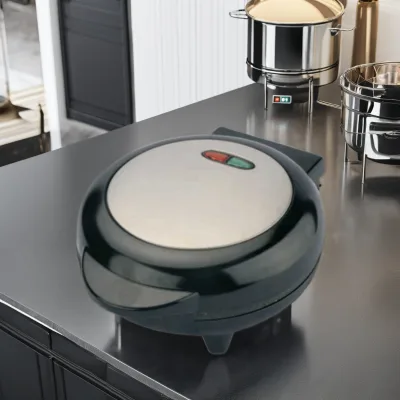


Mini Maker for Individual Waffles with Easy to Clean, Non-Stick Surfaces
$3.40 - $3.47
MOQ: 1000 Pieces

110V Multi-Function Burger Maker, Omelette Steak Maker, Breakfast Sandwich Maker
$15.42 - $16.32
MOQ: 1000 Pieces


110V Burger Maker, Sandwich Maker, Home Breakfast Maker, Omelette Toaster
$15.18 - $15.58
MOQ: 1000 Pieces


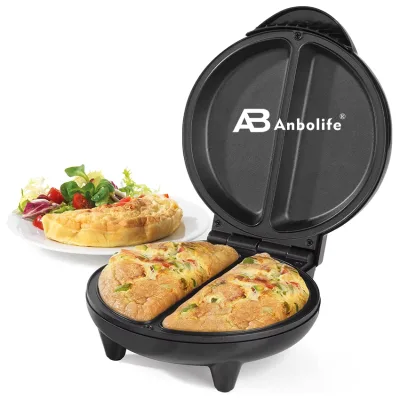
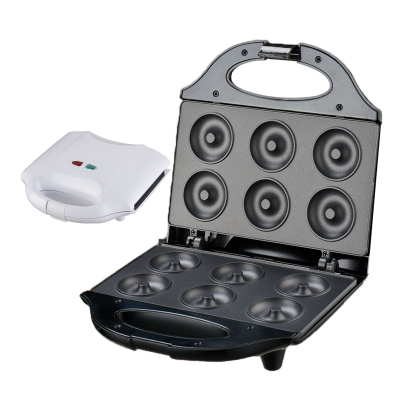

Multifunctional Breakfast Maker Pancake Machine 600W with Touch Button Control Non-Stick Plate
$20.93 - $23.40
MOQ: 40 Pieces

Multifunctional 4 Slice Waffle Maker 1500W Stainless Steel Mechanical Breakfast Machine
$10.40 - $11.63
MOQ: 90 Pieces


$700.00 - $850.00
MOQ: 1 Pieces
Guangzhou Junjian Kitchen Appliances & Refrigeration Equipment Co., Ltd.


Comprehensive Sourcing Guide
Strategic Sourcing Guide for Non-Stick Omelette Makers with Adjustable Thermostats
Technical Specifications and Plate Configuration Analysis
When sourcing a non-stick omelette maker with an adjustable thermostat, the primary technical differentiator lies in the plate geometry and the specific cooking surface material. Based on observed product data, the market offers distinct plate configurations that directly influence the final product output. Buyers must distinguish between units designed for fixed double plates versus those featuring specific omelet plates. The data indicates the presence of a "Waffle Plate" configuration with a diameter of 190mm and a separate "Omelet" plate configuration with a diameter of 18cm. Additionally, fixed double plates are observed with a diameter of 130mm, which may serve a dual-purpose function depending on the manufacturer's design intent.
The power source for these units is consistently electric, with observed wattage ratings reaching 1000W. This power level is critical for maintaining the thermal consistency required for omelette preparation. The adjustable thermostat functionality is a key requirement for the core keyword, allowing operators to modulate heat for different egg consistencies or fillings. The housing material is frequently stainless steel, providing durability and ease of cleaning. The presence of a "Non-Stick Coating Cooking Plate" is a standard feature in this category, ensuring that the delicate egg proteins do not adhere to the surface during the cooking cycle.
Buyers should verify the automatic grade of the machinery. The supply chain includes both "Automatic" and "Semi-Automatic" grades. An automatic grade implies a higher level of process integration, potentially including automated temperature regulation or plate movement, whereas semi-automatic units may require manual intervention for loading or flipping. The control mechanism is observed to be a "Mechanical Timer," which suggests that the adjustable thermostat is often paired with a manual time-setting dial rather than a fully digital interface. This mechanical approach is robust but requires verification of the thermostat's range to ensure it covers the necessary temperature spectrum for omelette cooking.
Compliance, Certification, and Safety Standards
In the B2B procurement of kitchen appliances, compliance with international safety and environmental standards is non-negotiable. The product data confirms that suppliers in this category provide units with CE certification, which is essential for market access in Europe and indicates compliance with health, safety, and environmental protection standards. Furthermore, a more comprehensive certification profile observed in the market includes EMC (Electromagnetic Compatibility), CE, RoHS (Restriction of Hazardous Substances), and LFGB (German Food and Feed Code).
The inclusion of LFGB certification is particularly significant for omelette makers, as it specifically addresses food safety and the migration of harmful substances from the non-stick coating into food. RoHS compliance ensures that the electronic components within the adjustable thermostat and heating elements do not contain restricted hazardous materials. EMC certification verifies that the unit does not emit excessive electromagnetic interference that could disrupt other equipment, a critical factor for commercial kitchens where multiple devices operate simultaneously.
Safety devices are another critical area of verification. The data highlights the presence of a "High Pressure Protection Device" in some models, although this is more commonly associated with pressure cookers. For omelette makers, buyers must confirm the presence of overheat protection mechanisms that cut power if the thermostat malfunctions or if the unit is left on without a load. The "Safety Device" attribute suggests that manufacturers are integrating specific fail-safes, but the exact nature of these devices must be confirmed in the technical datasheet. Buyers should request test reports validating that the non-stick coating meets LFGB standards for food contact safety, as this is a primary concern for end-users and regulatory bodies.
Cost Drivers and Pricing Dynamics
The pricing for non-stick omelette makers with adjustable thermostats varies significantly based on the complexity of the control system, the quality of the non-stick coating, and the volume of the order. The observed price range in the market spans from 3 USD to 2980 USD. This wide disparity indicates that the lower end of the spectrum likely represents simple, single-plate units or basic consumer-grade appliances, while the higher end reflects commercial-grade units with advanced features, robust stainless steel housings, and higher power outputs.
The Minimum Order Quantity (MOQ) is a substantial cost driver, with observed ranges from 1 to 5000 units. For buyers seeking to minimize initial capital expenditure, targeting suppliers with an MOQ of 1 to 100 units allows for market testing without significant inventory risk. However, for large-scale procurement, negotiating an MOQ closer to the 5000-unit range can significantly reduce the unit cost, potentially moving the price toward the lower end of the observed spectrum.
Packaging and logistics also influence the final landed cost. The data shows variations in packaging, such as "6PCS/Carton" or "Color Box + Carton Box." The carton dimensions vary, with observed sizes including 385332468mm and 416238590mm. These dimensions affect the number of units that can be shipped per container, directly impacting freight costs. Buyers should calculate the cubic volume per unit to optimize container utilization. Additionally, the "prod_packing" attribute, which includes options like "Gift Box/Carton," suggests that premium packaging can increase the unit price but may be necessary for specific retail markets.
Typical Applications and Operational Use Cases
The application of these omelette makers extends beyond simple breakfast preparation. The product data explicitly lists "Ice Cream" and "Chocolate" as applications, indicating that the adjustable thermostat allows for versatile cooking processes. This versatility is crucial for commercial operators who may need to switch between cooking savory omelettes and preparing frozen desserts or confectionery items on the same equipment. The "Thermal Processing" attribute confirms that these units are designed for controlled heat application, making them suitable for a variety of food items that require precise temperature management.
In a commercial setting, the "2-3 Slot Number" configuration observed in some models suggests that these units can handle multiple servings simultaneously, increasing throughput. The "Capacity: 2 Slices" attribute further defines the output volume per cycle, which is essential for estimating production rates in high-volume environments. The "Without Baking Rack" and "Without Dust Cap" attributes indicate that these units are designed for specific cooking tasks rather than general-purpose baking, streamlining the design for efficiency.
The "Easily Cleaned" feature is a critical operational advantage. In a busy kitchen, the ability to quickly clean the non-stick plates between batches reduces downtime and maintains hygiene standards. The "Save Energy" advantage noted in the product data suggests that efficient thermal management is a key selling point, reducing operational costs over the long term. Buyers should evaluate how the adjustable thermostat contributes to energy efficiency by allowing the unit to maintain the exact temperature required for the specific food item, avoiding unnecessary heat loss.
Supplier Evaluation and Quality Control Protocols
Evaluating suppliers for non-stick omelette makers requires a rigorous assessment of their manufacturing capabilities and quality control systems. The origin of the products is consistently listed as "China," which is a major manufacturing hub for small kitchen appliances. Buyers should verify the supplier's ability to maintain consistent quality across batches, particularly regarding the non-stick coating durability and the accuracy of the adjustable thermostat.
Quality control should focus on the "prod_standard" dimensions, which vary significantly across models (e.g., 316122225mm, 128224280mm, 27.514.223cm). These variations suggest different form factors and internal component layouts. Buyers must ensure that the supplier adheres to strict tolerances for these dimensions to guarantee that the plates align correctly and that the heating elements function as intended. The "prod_model" numbers (e.g., JW-510, JW-507C, JW-512, JW-B012, JW-1002) serve as unique identifiers for specific configurations, and buyers should request detailed specifications for each model to avoid confusion.
The "Customization" and "Customized" attributes indicate that suppliers are willing to tailor products to specific buyer requirements. This could include custom branding, specific voltage requirements, or modified plate sizes. However, buyers must clarify the extent of customization and any associated costs or lead time implications. The "Automatic Grade" distinction between "Automatic" and "Semi-Automatic" also requires clear definition to ensure the supplier delivers the exact level of automation required for the buyer's operational workflow.
Long-Term Procurement and Maintenance Considerations
Long-term procurement success depends on the availability of spare parts, the durability of the non-stick coating, and the reliability of the thermostat mechanism. The "Without Automatic Pop-Up" and "Without Reheat Function" attributes suggest that these units are designed for straightforward operation, which can simplify maintenance. However, the lack of automatic features means that the mechanical timer and thermostat are the primary points of failure. Buyers should inquire about the expected lifespan of the thermostat and the availability of replacement parts.
The "Housing: Stainless Steel" construction offers a significant advantage in terms of longevity and resistance to corrosion, which is essential in a commercial kitchen environment. Buyers should verify the grade of stainless steel used, as this affects the unit's resistance to rust and its ability to withstand frequent cleaning with harsh chemicals. The "Feature: Easily Cleaned" attribute implies that the design minimizes crevices where food residue can accumulate, but buyers should confirm that the non-stick coating is resistant to scratching and peeling over time.
Sustainability is another long-term consideration. The "Save Energy" advantage suggests that these units are designed to minimize energy consumption, which aligns with global trends toward energy-efficient appliances. Buyers should request energy consumption data to compare different models and ensure that the adjustable thermostat effectively reduces energy usage during operation. Additionally, the "Package: 6PCS/Carton" and "Carton Size" data should be reviewed to assess the environmental impact of packaging materials and shipping efficiency.
Comparative Analysis of Key Product Attributes
To facilitate informed decision-making, the following table summarizes the key attributes observed in the market for non-stick omelette makers with adjustable thermostats. This comparison highlights the variability in specifications that buyers must navigate during the sourcing process.
| Attribute | Observed Variations | Procurement Implication |
|---|---|---|
| Plate Type | Waffle Plate, Omelet Plate, Fixed Double Plate | Must match the specific food product requirements (e.g., omelet vs. waffle). |
| Plate Size | 130mm, 18cm, 190mm, 20cm | Determines the size of the final product and cooking capacity. |
| Certification | CE, EMC, RoHS, LFGB | Essential for regulatory compliance and food safety assurance. |
| Power Source | Electric (1000W observed) | Ensures compatibility with standard electrical infrastructure. |
| Control Type | Mechanical Timer | Requires manual operation; verify accuracy of time and temperature settings. |
| Housing | Stainless Steel | Offers durability and ease of cleaning for commercial environments. |
| MOQ Range | 1 to 5000 units | Influences initial investment and inventory strategy. |
| Price Range | 3 USD to 2980 USD | Reflects differences in quality, features, and volume. |
| Origin | China | Standard manufacturing location; verify supplier reliability and logistics. |
| Customization | Available | Allows for branding and specific feature modifications. |
This table underscores the importance of detailed specification verification. Buyers should not assume that all units in this category share the same attributes. Instead, they must request detailed datasheets for each potential supplier to confirm that the specific model meets the required technical and compliance standards. By systematically evaluating these attributes, buyers can mitigate risks and secure a supply chain that delivers high-quality, reliable non-stick omelette makers with adjustable thermostats.
FAQs
What certifications do these omelette makers have?
These units typically carry CE certification for European market access. Some models also include EMC, RoHS, and LFGB certifications to ensure food safety and electromagnetic compatibility for commercial kitchens.
Which plate sizes are available for omelette preparation?
Available plate sizes include diameters of 130mm, 18cm, and 190mm depending on the specific model. Buyers should verify the exact plate configuration, such as Omelet or Waffle plates, to match their production needs.
Can I customize the product specifications for my brand?
Yes, customization is available for these electric omelette makers. Suppliers offer options for modified packaging, branding, and specific voltage requirements, though lead times may vary based on the extent of the changes.
How is the power source configured for these appliances?
All listed units operate on an electric power source with wattage ratings reaching up to 1000W. This power level ensures consistent thermal processing required for cooking omelettes and other items like chocolate or ice cream.
What is the minimum order quantity for these makers?
The minimum order quantity ranges from 1 to 5000 units depending on the supplier and model. Lower MOQs allow for market testing, while larger orders may reduce the unit cost significantly.
Which materials are used for the housing and plates?
Housing is frequently made of stainless steel for durability and easy cleaning. The cooking plates feature a non-stick coating, with some models offering fixed double plates or specific omelet configurations.