Source Non Stick Rectangle Baking Tray for Bakery, Restaurant, Home Kitchen
Compare 30 listings for the Non Stick Rectangle Baking Tray featuring aluminum alloy and stainless steel options with Teflon or hard-anodized coatings. Buyers can evaluate sizes like 600x400mm and customization services from suppliers in Shanghai and Guangdong.
Key considerations
Products List


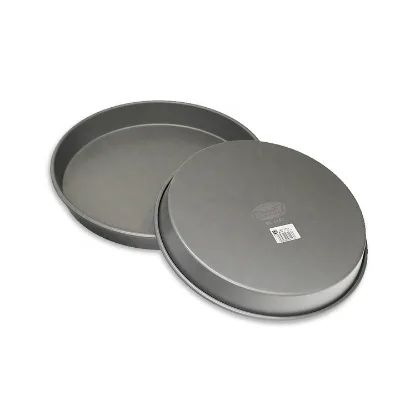


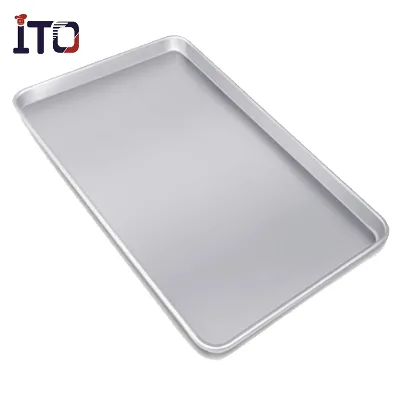

Rectangular Bake Pan Cake Pizza Bakeware Nonstick Baking Tray for Home Kitchen
$4.50 - $5.80
MOQ: 1000 Pieces


Comprehensive Sourcing Guide
Strategic Sourcing Guide for Non-Stick Rectangle Baking Trays
Understanding Product Specifications and Material Variations
When sourcing non-stick rectangle baking trays, buyers must first navigate a complex landscape of material compositions and dimensional standards. The core keyword implies a specific shape and surface treatment, yet the underlying construction varies significantly between suppliers. Based on available market data, the primary material for these trays is often Aluminum Alloy, chosen for its superior thermal conductivity which ensures even heat distribution during baking. However, Stainless Steel is also a prevalent material in this category, offering different durability and weight characteristics. The thickness of the material is a critical specification that directly impacts performance; observed values in the market range from 0.7mm to 1.0mm. A 1.0mm thickness is frequently cited for heavy-duty commercial applications, such as the MH11111 model, which features a 600 x 400 x 20 mm dimension. Conversely, lighter gauges like 0.7mm may be found in other listings, potentially affecting the tray's rigidity and resistance to warping under high heat.
The surface treatment is the defining feature of a "non-stick" tray. The supplied data indicates that Teflon (PTFE) coatings are a standard offering, providing the necessary release properties for baked goods. Some products also feature Hard-Anodized Coating, which offers a different set of durability benefits compared to standard non-stick layers. The surface finish can be specified as Natural, PTFE Non-Stick, or Silicone Non-Stick, allowing buyers to select based on their specific food processing needs. Dimensional consistency is equally vital; while the standard size often aligns with 600 x 400 mm (or 40 x 60 cm), suppliers also offer variations such as 460 x 660 mm and custom sizes. Buyers must verify if the "standard" dimensions provided by a supplier match their existing oven racks and conveyor systems, as discrepancies in the 400x600mm range can lead to operational inefficiencies.
Compliance, Certification, and Safety Standards
In the food service and manufacturing sectors, compliance is not merely a formality but a prerequisite for market entry. While specific certification names are not universally listed in general product descriptions, buyers must rigorously verify that any non-stick coating used meets international food safety standards. The presence of Teflon or PTFE coatings requires confirmation that the manufacturing process adheres to regulations regarding heavy metals and chemical leaching. For aluminum alloy trays, the anodization or coating process must ensure that the surface remains inert when exposed to acidic foods or high temperatures.
Buyers should request documentation proving that the product standards align with recognized industry benchmarks. The supplied context mentions standards such as 600 x 400 x 30mm and 300 x 220 x 25mm, which serve as dimensional baselines. However, these are physical specifications rather than safety certifications. When evaluating a supplier, procurement teams must ask for specific food-grade certifications relevant to the destination market, such as FDA compliance for the United States or LFGB standards for Europe. The "Eco-Friendly" attribute observed in some product listings suggests that certain manufacturers may be focusing on sustainable production methods, but this claim requires verification through third-party audit reports. Without explicit certification data in the product listing, the buyer must treat such claims as observations to be validated during the supplier audit phase.
Cost Drivers and Pricing Dynamics
The pricing of non-stick rectangle baking trays is influenced by a confluence of factors, primarily material cost, coating technology, and order volume. The observed price range in the market spans from $0.64 to $280 per unit, a vast disparity that reflects differences in quality, size, and order quantity. The lower end of this spectrum likely corresponds to basic aluminum trays with standard non-stick coatings ordered in high volumes, while the upper end may represent specialized, heavy-gauge trays with advanced coatings or custom branding.
Minimum Order Quantity (MOQ) is a significant driver of unit cost. The market data indicates an MOQ range from 1 to 3000 units. Suppliers offering an MOQ of 1 are typically catering to prototyping or small-scale testing, which carries a premium per unit. Conversely, an MOQ of 3000 units usually unlocks significant economies of scale, reducing the per-unit price. The customization of the tray, such as adding a custom logo or altering the dimensions from the standard 600 x 400 mm, introduces additional tooling and setup costs. Furthermore, the thickness of the material is a direct cost factor; a 1.0mm tray consumes more raw aluminum than a 0.7mm tray, inherently increasing the base cost. Buyers must balance the initial unit price against the longevity of the product, as a cheaper, thinner tray may require more frequent replacement, ultimately increasing the total cost of ownership.
Typical Applications and Operational Use Cases
Non-stick rectangle baking trays are versatile tools designed for a wide array of applications across the food industry. The supplied data highlights their use in bakeries, restaurants, food factories, and home kitchens. The specific shape and size make them ideal for producing standardized products such as pizzas, cakes, toast, and hamburgers. The "Pizza Pan" and "Baking Sheet Pan" designations in the product listings confirm their suitability for high-volume production environments where consistency is key.
The application extends beyond simple baking. The "Deep Sheet Pan" feature and "Wire in Rim" design suggest utility in holding liquids or heavy doughs without spillage, making them suitable for industrial food processing lines. The "Integrated Machine Stamp" workmanship indicates that these trays are manufactured for durability in automated environments. For commercial bakeries, the ability to stack trays efficiently is crucial, and the rectangular shape facilitates this. The "Hamburger, Bagutte, Toast" applications listed imply that these trays are often used in conveyor ovens or deck ovens where uniform heat exposure is required for mass production. Buyers should ensure that the tray's dimensions match their specific equipment; for instance, a 600 x 400 mm tray must fit the specific rack spacing of their ovens. The "Oven Safe" attribute is a baseline requirement, but buyers must verify the maximum temperature tolerance of the specific non-stick coating to prevent degradation during high-heat operations.
Supplier Evaluation and Manufacturing Capabilities
Selecting the right supplier requires a deep dive into their manufacturing capabilities and service offerings. The data indicates that many suppliers offer ODM (Original Design Manufacturing) and OEM (Original Equipment Manufacturing) services, welcoming custom logo application and specific product modifications. This flexibility is essential for brands looking to differentiate their products. The "Customization Available" attribute suggests that buyers can request changes to the standard 600 x 400 mm size or the 1.0mm thickness.
When evaluating suppliers, buyers should assess their production location and logistics capabilities. The origin of these products is frequently listed as Shanghai or Guangdong, China, regions known for robust manufacturing ecosystems. However, the specific location impacts lead times and shipping costs. The packaging methods, ranging from "Export Carton" to "Plywood Case" or "Carton Box," are critical for protecting the trays during transit, especially given their large surface area and potential for surface damage. A supplier that offers "Custom Packing Available" can provide solutions tailored to specific shipping requirements, such as palletization for container loading. Buyers must also verify the supplier's ability to maintain consistent quality across large batches, as the "Workmanship" of integrated machine stamping requires precise calibration to ensure every tray meets the specified dimensions and thickness.
Quality Control and Long-Term Procurement Strategy
Ensuring long-term value from non-stick baking tray procurement requires a robust quality control (QC) strategy. The "Non Stick or Natural Surface" options highlight the importance of verifying the integrity of the coating. Buyers should implement a QC protocol that includes visual inspection for coating defects, adhesion testing to ensure the non-stick layer does not peel, and dimensional checks to confirm the tray meets the 600 x 400 mm or other specified standards. The "Hard-Anodized Coating" and "Teflon" options require different testing parameters; for instance, thermal shock testing may be necessary to ensure the coating withstands rapid temperature changes without cracking.
For long-term procurement, buyers should consider the lifecycle of the product. A 1.0mm aluminum alloy tray with a high-quality non-stick coating may offer a longer service life than a thinner alternative, reducing the frequency of replacement. The "Eco-Friendly" attribute, if verified, can also play a role in sustainability goals, potentially reducing waste in the production cycle. Buyers should establish a relationship with suppliers who offer consistent quality and are responsive to issues, as the "Highly Welcomed" ODM&OEM service suggests a collaborative approach. Finally, maintaining a buffer stock of trays is advisable to mitigate supply chain disruptions, given that lead times can vary based on the complexity of customization and the supplier's current production load. By focusing on these strategic elements, buyers can secure a reliable supply of high-performance non-stick rectangle baking trays.
FAQs
What materials are used for non stick rectangle baking trays?
The primary materials are Aluminum Alloy and Stainless Steel. Aluminum Alloy is common for its thermal conductivity, often at 1.0mm thickness, while Stainless Steel offers different durability. Some trays feature Teflon or Hard-Anodized coatings for non-stick performance.
Which standard sizes are available for these baking trays?
Standard sizes include 600 x 400 mm and 40 x 60 cm. Other common dimensions are 460 x 660 mm and 300 x 220 x 25 mm. Custom sizes are also available to match specific oven racks or production needs.
Can I get a custom logo on these baking trays?
Yes, custom logo application is available and highly welcomed. Suppliers offer ODM and OEM services to accommodate branding requests. This customization can be combined with specific material or size requirements.
How thick are the aluminum alloy baking trays?
Thickness typically ranges from 0.7mm to 1.0mm. A 1.0mm thickness is often used for heavy-duty commercial applications like the MH11111 model. Thinner gauges may be found in lighter duty listings.
What packaging options exist for shipping these trays?
Packaging options include Export Cartons, Plywood Cases, and standard Carton Boxes. Some suppliers offer custom packing solutions like OPP bags. The choice depends on the order volume and protection requirements during transit.
Where are these baking trays typically manufactured?
Products originate from major manufacturing hubs in China, specifically Shanghai and Guangdong. These locations provide access to robust supply chains for aluminum and coating technologies. Buyers should verify specific factory locations for logistics planning.
What is the minimum order quantity for these trays?
The minimum order quantity ranges from 1 to 3000 units. Lower MOQs suit prototyping or small testing, while higher volumes unlock better pricing. The specific MOQ depends on the supplier and customization level required.