Source Notre Dame 3D Puzzle Model for Education, Decoration, and Gifts
Find 30 listings for the Notre Dame 3D Puzzle Model from Chinese manufacturers. Buyers can compare piece counts, materials like paper and EPS foam, and minimum order quantities ranging from 24 to 5000 sets.
Key considerations
Products List
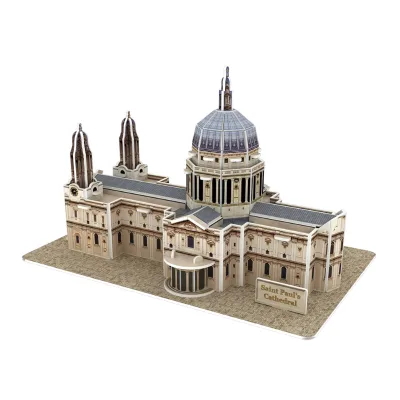
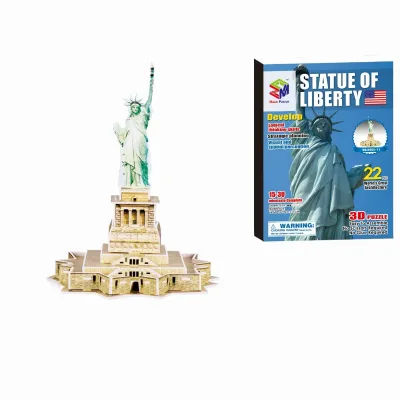


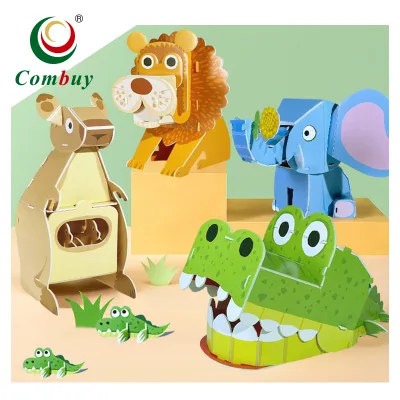


3D Wooden Cross Puzzle, Adult 3D Wooden Puzzle, 3D Wooden Magic Trick Puzzle Factory
$3.98 - $4.98
MOQ: 5000 Pieces


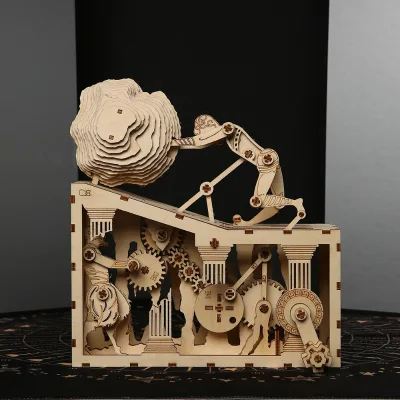
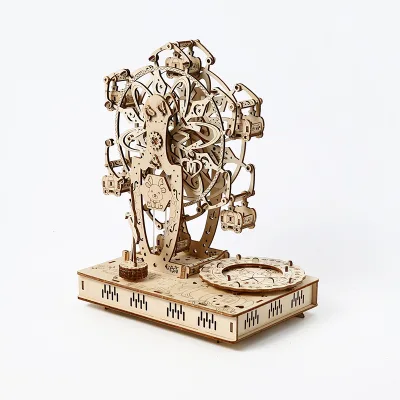
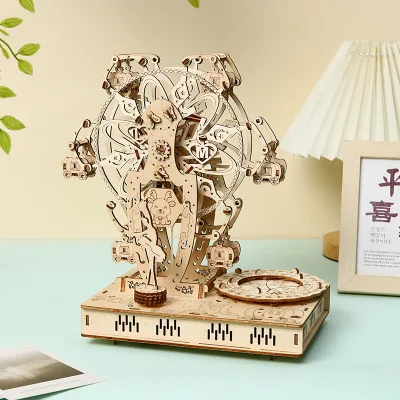
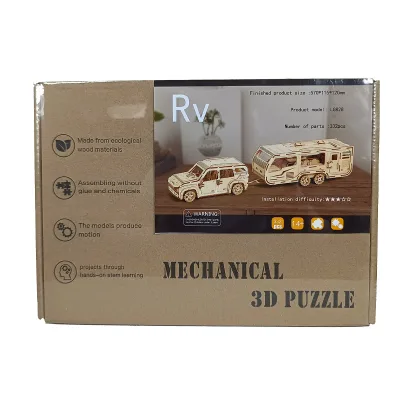
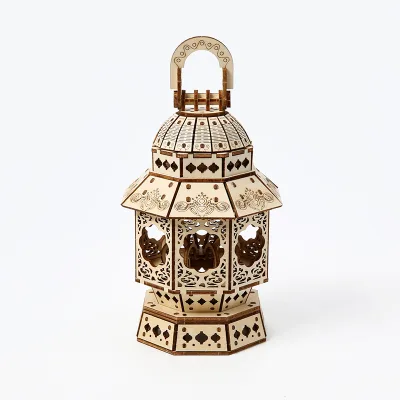

Factory Customized France Notre Dame Cathedral Model Ornaments Tourist Souvenirs
$0.10 - $5.00
MOQ: 500 Pieces

Custom Resin France Cathedrale Notre Dame Famous Building Model Tourist Souvenirs
$2.35 - $4.32
MOQ: 500 Pieces
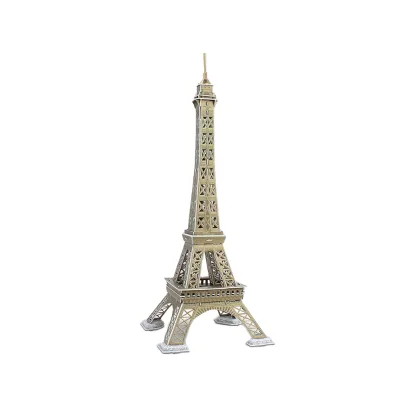
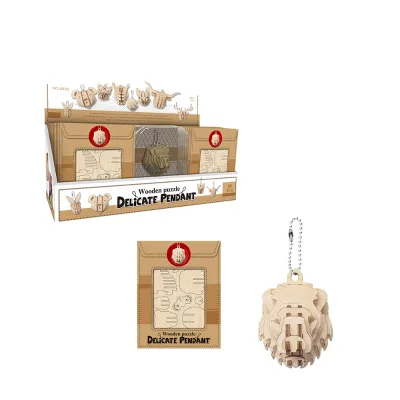


Comprehensive Sourcing Guide
Strategic Sourcing Guide for Notre Dame 3D Puzzle Models
Understanding Product Variants and Technical Specifications
When sourcing a Notre Dame 3D Puzzle Model, buyers must first navigate the significant variance in product configurations available in the market. The core keyword often masks distinct product lines that differ in material composition, piece count, and assembly complexity. Based on current market observations, the Notre Dame model is frequently categorized under the "World Famous Building" or "Famous Building Series" themes. A critical technical distinction lies in the piece count, which directly influences the target demographic and assembly time.
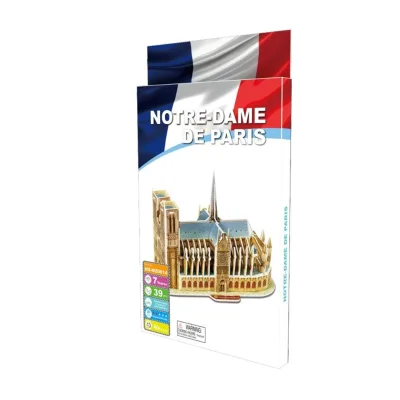
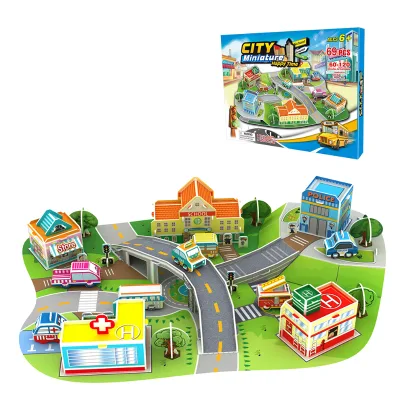
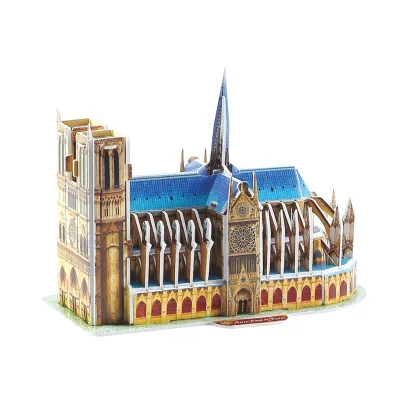
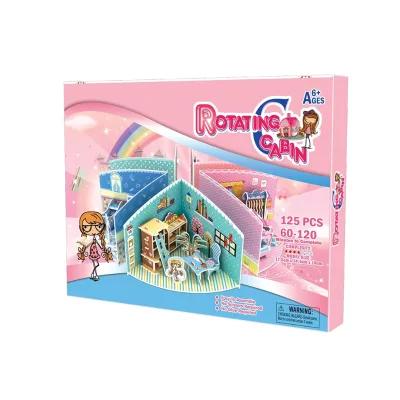
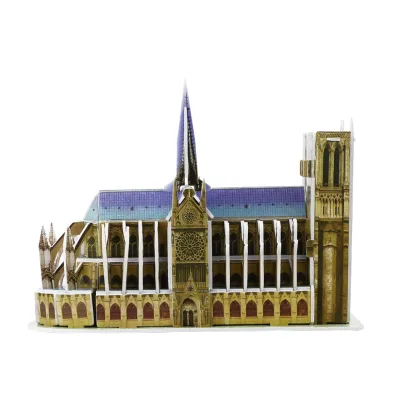
Data indicates the existence of a specific 39-piece variant, often identified by model numbers such as AE215756C or AE215756B. This version is explicitly described as a "39PCS Notre Dame De Paris Model" and is designed for a younger demographic, with age ranges extending from 2 to 4 years up to 14 years and older. In contrast, other building series models in the same supply chain may feature higher piece counts, such as the 69-piece "Miniature City Model" or the 125-piece "Rotating Cabin Model." The 39-piece Notre Dame version utilizes a specific material blend of paper and EPS (Expanded Polystyrene) foam. This combination is distinct from pure cardboard or wood puzzles, offering a lightweight yet durable structure that mimics the architectural details of the cathedral without the fragility of thin paper alone.
The physical dimensions of the finished product and its packaging are equally vital for logistics planning. The 39-piece Notre Dame model typically has a finished product size of approximately 15.5711 CM. However, the packaging dimensions can vary significantly between SKUs. One observed configuration lists a package size of 2514.31.3 CM, while another related model in the same series shows a package size of 2228.83.5 CM. These discrepancies highlight the necessity for buyers to verify the exact carton dimensions for each specific model number before finalizing orders, as these figures directly impact container loading efficiency and shipping costs. The packaging itself is generally a color box contained within a master carton, a standard format for retail-ready toys.
Material Composition and Safety Compliance Verification
The material composition of these 3D puzzles is a primary driver for both safety compliance and product longevity. The standard specification for the Notre Dame and similar building series models is a hybrid of "Paper + EPS Foam." This material choice is intentional; the EPS board provides structural rigidity and a three-dimensional form that flat paper cannot achieve, while the paper layer allows for detailed printing of architectural features. Some listings specify the material as "High quality bond + environmental EPS board," suggesting a focus on eco-friendly sourcing, though buyers must independently verify the specific environmental certifications of the EPS foam used.
From a compliance perspective, the use of paper and foam requires rigorous testing against international toy safety standards. While specific test results are not provided in the general product data, buyers must ensure that the materials comply with regulations such as EN71 (European Standard) or ASTM F963 (US Standard). The "environmental" claim on the board requires proof of non-toxic adhesives and inks, particularly given the target age range which includes children as young as 36 months. The age range for these products is broad, spanning from "2 to 4 Years" to "14 Years & up." This wide spectrum implies that the product must be safe for the youngest users, necessitating checks for small parts hazards if the pieces are not sufficiently large, although the 39-piece count suggests larger, chunkier pieces suitable for younger children.
Buyers should also verify the flammability ratings of the EPS foam and the chemical composition of the paper. Since the product is a "DIY Assemble Toy," the assembly process involves handling these materials. Ensuring that the materials are free from heavy metals and harmful phthalates is a non-negotiable requirement for B2B procurement in the toy sector. The "Unisex" gender attribute and "Educational Toy" style further reinforce the need for non-toxic, safe materials that are suitable for a global market.
Cost Drivers and Minimum Order Quantity Analysis
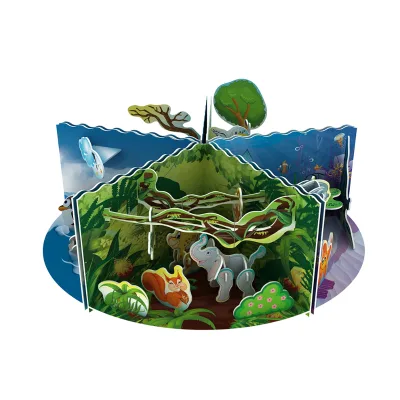
The pricing and order volume for Notre Dame 3D puzzle models are influenced by several structural factors. The observed price range in the market is extensive, spanning from $0.10 to $14.25 USD. This wide variance is likely driven by the complexity of the model, the quality of the paper and foam, the level of detail in the printing, and the volume of the order. The 39-piece Notre Dame model, being a simpler configuration compared to the 125-piece rotating cabin or the 97-piece nature scene, generally occupies the lower end of this price spectrum, but exact pricing is contingent on the specific supplier's cost structure and the negotiated volume.
Minimum Order Quantity (MOQ) is another critical cost driver. The data reveals a highly fragmented MOQ landscape. For the 39-piece Notre Dame model, an MOQ of 192 sets has been observed. In contrast, other models in the same supplier's catalog, such as the 69-piece city model or the 97-piece nature scene, have MOQs as low as 24 or 30 sets. Conversely, some bulk configurations or specific model numbers like ZCB668-6 may carry an MOQ of 1000 PCS. This disparity suggests that suppliers often tier their pricing and order requirements based on the specific product line and the complexity of the tooling or printing setup required.
Buyers must calculate the total landed cost, which includes the unit price, the MOQ commitment, and the shipping costs associated with the carton dimensions. For instance, a model with a carton size of 744531 CM will have a significantly different freight cost per unit compared to one with a carton size of 432946.5 CM. The "Selling Units" are listed as "Single item," meaning the product is sold individually in retail packaging, but the MOQ applies to the master carton level. Understanding these MOQ tiers is essential for inventory management, especially for buyers testing the market who may not have the capital to commit to the 1000-piece minimums often seen in bulk toy categories.
Typical Applications and Market Positioning
The Notre Dame 3D Puzzle Model serves multiple applications beyond simple entertainment, positioning itself as an educational and decorative item. The product is explicitly categorized under "Educational Toy" and "DIY TOY" styles. This positioning appeals to parents and educators looking for activities that foster fine motor skills, spatial reasoning, and patience. The "Miniature Scale Toy" feature allows the product to function as a display piece, making it suitable for home decor, classroom displays, or museum gift shops.
The "World Famous Building" theme capitalizes on cultural and historical interest. The Notre Dame de Paris is a globally recognized landmark, which adds intrinsic value to the product as a souvenir or a learning aid about architecture and history. The product is designed for a "3D World Famous Building Replica" experience, offering a tactile alternative to digital media. The age range of "36 Months+" to "14 Years & up" indicates a broad market appeal, from toddlers engaging in simple assembly to teenagers or adults who appreciate the architectural challenge.
In a B2B context, these puzzles are often sourced for retail chains, toy stores, and online marketplaces. The "Cartoon Toy" and "Educational Toy" attributes suggest versatility in marketing; they can be sold as a fun activity for children or as a sophisticated model for collectors. The "Multi-color" attribute ensures visual appeal, which is crucial for shelf presence. The product's ability to be assembled into a "Rotating Cabin" or "Indoor Display" model in related series further expands its application potential, allowing buyers to create a cohesive product line of building-themed puzzles.
Supplier Evaluation and Quality Control Protocols
Selecting a supplier for Notre Dame 3D puzzle models requires a rigorous evaluation process focused on consistency and reliability. The "Place of Origin" for these products is consistently listed as Guangdong, China, a major hub for toy manufacturing. Buyers should verify the supplier's capacity to handle the specific material requirements, particularly the bonding of paper to EPS foam. The quality of the adhesive used is critical; poor bonding can lead to pieces separating during assembly or in transit.
Quality control (QC) protocols must be established before production begins. Given the "High quality bond" specification, buyers should request samples to test the structural integrity of the finished model. The QC process should include checks for print quality, ensuring that the architectural details of the Notre Dame are accurate and not blurred or misaligned. Since the product is a "3D Paper Foam DIY Puzzle," the precision of the die-cutting is paramount. Misaligned cuts can result in pieces that do not fit together, leading to customer returns and negative reviews.
Buyers should also evaluate the supplier's ability to maintain consistent carton dimensions and packaging quality. The observed variation in package sizes (e.g., 2514.31.3 CM vs. 2228.83.5 CM) suggests that different production runs or model variants may have different packaging standards. A robust QC plan should include random sampling of finished cartons to verify that the "Color Box+Carton" packaging is intact and that the "QTY/CTN" (Quantity per Carton) matches the order specifications. For example, a carton containing 96 PCS must be verified to ensure no missing or damaged units.
Long-Term Procurement and Inventory Management
Sourcing these puzzles requires a long-term strategy that accounts for seasonal demand and inventory turnover. The "Notre Dame" theme has a year-round appeal, but it may see spikes during holiday seasons or when associated with cultural events. Buyers should plan their inventory levels based on the specific MOQ requirements of the supplier. If the MOQ is 192 sets for the 39-piece model, the buyer must ensure they have the storage capacity and sales velocity to absorb this volume without incurring excessive holding costs.
The "Model Number" is a crucial identifier for long-term procurement. Using the correct model number (e.g., AE215756C) ensures that the buyer receives the exact product configuration they ordered, avoiding confusion with similar models like the 69-piece city model. Consistency in model numbers also aids in reordering and supply chain management. Buyers should establish a relationship with the supplier to ensure that the "High quality bond + environmental EPS board" specifications remain consistent over time, even if the supplier makes minor adjustments to their production lines.
Furthermore, buyers should monitor the "Lead Time" and "MOQ" trends. While specific lead times are not provided in the current data, the variation in MOQs (from 24 sets to 1000 PCS) suggests that suppliers may have different production schedules for different product lines. A strategic approach involves diversifying the product portfolio to include a mix of high-MOQ and low-MOQ items to balance risk and cash flow. By understanding the technical specifications, material requirements, and market positioning of the Notre Dame 3D Puzzle Model, buyers can make informed decisions that ensure product quality, compliance, and profitability in the competitive toy market.
FAQs
What materials are used for the Notre Dame 3D Puzzle Model?
The model is constructed from paper combined with EPS foam to ensure durability and structural integrity. This hybrid material blend allows for detailed architectural printing while maintaining a lightweight form suitable for assembly by children and adults alike.
Which age groups can safely use this paper puzzle toy?
The product is designed for a broad age range spanning from 2 to 4 years up to 14 years and older. Specific safety considerations apply for the youngest users, requiring supervision during the assembly of the 39-piece or larger variants.
How many pieces are included in the 39-piece Notre Dame set?
The specific 39-piece variant contains exactly 39 individual parts designed for the Notre Dame de Paris replica. Other models in the same series may contain between 51 and 100 pieces or up to 125 pieces depending on the specific model number selected.
What is the minimum order quantity for the 39-piece model?
The minimum order quantity for the 39-piece Notre Dame model is 192 sets according to observed specifications. Buyers should verify this figure as other models in the catalog may have lower MOQs of 24 or 30 sets or higher bulk requirements of 1000 pieces.
Where are these 3D building puzzle models manufactured?
These products originate from Guangdong, China, a major hub for toy manufacturing and export. Buyers sourcing these items should expect shipping logistics to be managed from this specific region in southern China.
Can I find the Notre Dame model in a rotating cabin series?
The Notre Dame model is part of the World Famous Building Series, while the rotating cabin model is a separate 125-piece indoor display product. Both utilize similar paper and foam materials but feature distinct assembly designs and piece counts.
What are the typical packaging dimensions for this puzzle set?
Package sizes vary by model, with one configuration measuring 25 by 14.3 by 1.3 CM and another at 22 by 28.8 by 3.5 CM. Finished product sizes also differ, ranging from 15.5 by 7 by 11 CM for the 39-piece set to larger dimensions for city models.