Source Notebook HDD Caddy with Cover Bracket for upgrades, repairs, and storage
Compare 30 listings for a Notebook HDD Caddy with Cover Bracket designed for laptop storage upgrades and repairs. Buyers can evaluate specifications like material, model compatibility, and packaging options from verified suppliers in China.
Key considerations
Products List




Portable Adjustable Aluminum Alloy Laptop Holder Stand Desk Notebook Holder
$1.69 - $1.85
MOQ: 100 Pieces




Comprehensive Sourcing Guide
Strategic Sourcing Guide for Notebook HDD Caddy with Cover Bracket
Understanding Product Specifications and Material Composition
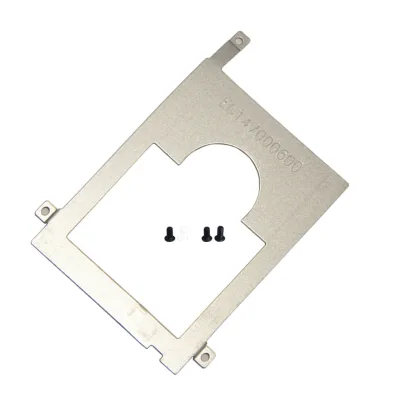
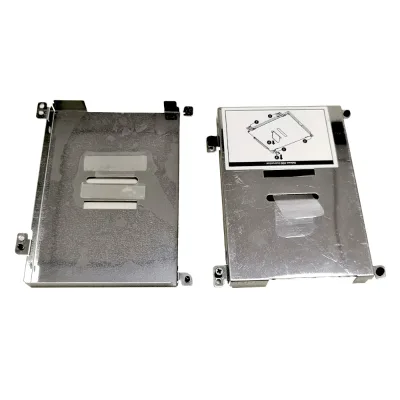
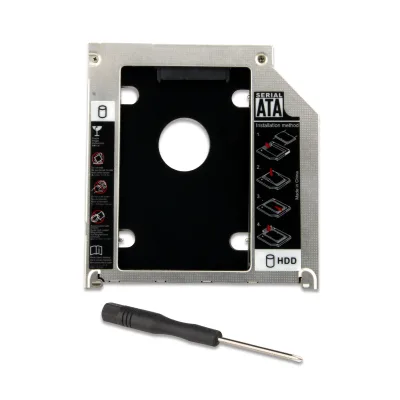
When sourcing a notebook HDD caddy with a cover bracket, the primary objective is to identify components that ensure structural integrity while maintaining compatibility with specific laptop chassis designs. The core product functions as an adapter, allowing the installation of a 2.5-inch hard disk drive into a bay originally designed for optical drives or other form factors. Based on available market data, the material composition is a critical differentiator. Suppliers frequently list products constructed from aluminum alloys or a combination of aluminum and plastic. Aluminum alloy is often preferred for its balance of weight reduction and rigidity, which is essential for protecting the internal drive mechanisms during transport. Some listings specify a material mix of aluminum and plastic, suggesting a design where the structural frame is metal while the cover or internal lining may utilize polymers to reduce cost or add specific damping properties.
The physical dimensions and tolerances of the caddy must align precisely with the host laptop's specifications. For instance, specific model numbers such as YL-PLS-002 or E7450 indicate that these components are engineered for exact fitment within Dell E7450 laptops or similar chassis. The industry standard for these components often references a 10-inch sizing convention in broader metal stamping contexts, though the actual product is significantly smaller, typically packaged in dimensions around 10x11x2 cm. Buyers must verify the "Single package size" and "Single gross weight," which can be as low as 0.03 kg, indicating a lightweight, compact design. Tolerances are a vital specification; while some data points suggest a tolerance of 10mm in broader metal part contexts, for a precision laptop component, the tolerance must be significantly tighter to ensure the bracket does not interfere with the laptop's hinges or keyboard. The color of the product is typically black to match internal laptop aesthetics, though white or self-colored options may exist depending on the customization capabilities of the supplier.
Compliance, Certification, and Manufacturing Standards
In the B2B procurement of electronic accessories, verifying the manufacturing environment and quality certifications is non-negotiable. The supply chain for these components often originates from regions with established metalworking industries, such as Guangdong, China. When evaluating potential suppliers, buyers should look for evidence of ISO9001 certification. This standard indicates that the supplier has implemented a quality management system capable of ensuring consistent product quality. While the presence of this certification is a strong indicator of process control, it does not guarantee that every single unit produced meets specific performance thresholds without further testing.
The manufacturing process for the cover bracket and caddy body often involves metal stamping, specifically cold stamping and fine blanking techniques. Some suppliers utilize double-acting fine blanking, which allows for high precision in the cutting and forming of the metal parts. The use of multistep progressive dies suggests a high-volume production capability where the material is fed through a series of stations to complete the forming process. This method is efficient for producing complex shapes with tight tolerances. However, buyers must verify if the specific order requires custom molds or if the supplier relies on existing private molds. Data indicates that some suppliers do not utilize private molds, which can be advantageous for reducing lead times and costs for smaller orders, but it may limit the ability to customize the design for unique laptop models.
Surface processing is another critical compliance aspect. Polishing is a common surface treatment for aluminum components to prevent corrosion and ensure a smooth finish that does not damage the laptop's internal casing. Buyers should confirm that the surface finish meets the requirements for the specific laptop model, as rough edges can cause short circuits or physical damage to the drive. Additionally, the product status should be verified as "Stock" or "New" to ensure that the components are not refurbished or used items, which could compromise reliability. The warranty period, often cited as 3 months or 90 days, serves as a baseline guarantee of quality, but buyers should negotiate terms that align with their internal risk management policies.
Cost Drivers and Pricing Dynamics
The pricing of notebook HDD caddies is influenced by a complex interplay of material costs, manufacturing complexity, and order volume. The observed price range in the market spans from $0.10 to $215.00 USD. This wide variance is not necessarily indicative of quality differences alone but often reflects the scope of the transaction. The lower end of the spectrum typically corresponds to single-unit purchases or small batch orders of standard models, where the per-unit cost includes a premium for handling and logistics. Conversely, the higher price points may reflect bulk orders of specialized components, custom-molded parts, or kits that include additional accessories such as screws, brackets, or specialized packaging.
Material costs play a significant role in the final price. Aluminum alloy is generally more expensive than plastic, and the specific grade of aluminum used can impact the cost. Suppliers offering a combination of aluminum and plastic may offer a more budget-friendly option, but buyers must weigh the cost savings against the potential reduction in durability. The "Customization" factor is another major cost driver. If a buyer requires a specific model number, unique color, or custom logo printing, the supplier may charge a premium or require a higher Minimum Order Quantity (MOQ). The data suggests that some suppliers accept small orders with an MOQ of 10 pieces, while others may require quantities up to 5,000 pieces.
MOQ values are a critical consideration for procurement planning. The observed MOQ range is 1 to 5,000 units. For buyers with immediate, low-volume needs, suppliers accepting an MOQ of 10 or even 1 unit are essential. These suppliers often operate on a "small orders accepted" basis, making them suitable for testing or replacing a single failed unit in a fleet. However, for large-scale deployments, such as equipping an entire corporate fleet, buyers should target suppliers with higher capacity and lower per-unit costs. The "Selling Units" are typically listed as single items, which simplifies the purchasing process but may not be cost-effective for bulk procurement. Buyers should calculate the total cost of ownership, including shipping and potential customs duties, rather than focusing solely on the unit price.
Typical Applications and Compatibility Requirements
The primary application for a notebook HDD caddy with a cover bracket is the upgrade or replacement of storage in laptops that have been discontinued or lack sufficient internal storage capacity. These components are specifically designed for models like the Dell E7450, as indicated by specific model numbers in the market. The caddy allows users to install a 2.5-inch HDD in place of an optical drive, effectively doubling the storage capacity of the device. This is particularly useful for businesses looking to extend the lifecycle of older hardware rather than replacing entire units.
The compatibility of the caddy is paramount. The product must fit the specific bay dimensions of the laptop, which are often standardized but can vary slightly between manufacturers and models. The "Usage" field explicitly states "For DE E7450 Laptop HDD," highlighting the need for precise model matching. Buyers must verify the "prod_model" or "Model Number" against their inventory to ensure a perfect fit. The inclusion of screws and the E7450 HDD caddy in the package ensures that the installation is straightforward, reducing the need for additional hardware purchases.
Beyond the specific model, the caddy serves as a protective cover bracket, shielding the hard drive from physical impact and dust. The "Feature" attributes such as "Flexible" and "Heat Resistance" are crucial for maintaining drive performance. Heat resistance ensures that the caddy does not warp or degrade under the thermal load generated by the drive, while flexibility may refer to the ability of the bracket to absorb minor shocks. The "Condition" of the product, whether "Brand new" or "New," is essential for ensuring that the component has not been previously used or damaged. Buyers should also consider the "Industry" classification, which may include "Metal Stamping Parts," indicating the component's role in the broader electronics manufacturing ecosystem.
Supplier Evaluation and Quality Control Protocols
Evaluating a supplier for notebook HDD caddies requires a rigorous assessment of their production capabilities and quality control measures. The "Origin" of the product, often Guangdong, China, suggests a mature supply chain with access to advanced manufacturing technologies. However, buyers should not rely solely on the location; they must verify the supplier's ability to meet specific quality standards. The presence of ISO9001 certification is a positive indicator, but it should be complemented by requests for recent test results or quality assurance reports.
Quality control should focus on several key areas: dimensional accuracy, material integrity, and surface finish. Buyers should request samples to verify the "Single package size" and "Single gross weight" against the specifications. The "Tolerances" must be checked to ensure the caddy fits the laptop bay without forcing or gaps. The "Surface Processing" should be inspected for smoothness and the absence of burrs that could damage the laptop chassis. The "Hardness" of the material, described as "Medium Soft" in some contexts, should be verified to ensure it provides adequate protection without being too brittle.
The "Warranty" terms, typically 3 months or 90 days, provide a baseline for quality assurance. Buyers should ensure that the warranty covers defects in materials and workmanship. Additionally, the "Products status" should be confirmed as "Stock" to avoid delays in procurement. The "Private mold" status is also relevant; if a supplier does not use private molds, it may indicate a reliance on standard designs, which could limit customization options. Buyers should also check the "Packaging" details, which often include plastic bags and cartons, to ensure the product is protected during transit.
Long-Term Procurement and Supply Chain Resilience
For long-term procurement, buyers must consider the scalability and reliability of their supply chain. The "Customization" availability is a key factor for future-proofing. If a buyer plans to upgrade multiple laptop models over time, they should seek suppliers who can accommodate custom molds and design changes. The "Logo Printing" option allows for branding, which can be useful for corporate assets. The "Gender" attribute, listed as "Unisex," is less relevant for this industrial component but indicates a general market orientation.
Supply chain resilience is enhanced by diversifying suppliers and maintaining a buffer stock. The "Small Orders: Accepted" attribute suggests that buyers can maintain a flexible inventory strategy, ordering small quantities as needed to avoid overstocking. However, for large-scale operations, establishing a relationship with a supplier capable of handling high volumes is essential. The "Lead time" and "MOQ" should be negotiated to align with the buyer's production schedule. The "Standard" of 10 inches mentioned in some contexts may refer to a broader industry standard, but buyers must verify the specific dimensions for their application.
In conclusion, sourcing a notebook HDD caddy with a cover bracket requires a balanced approach that considers technical specifications, compliance, cost, and supplier reliability. By carefully evaluating the material composition, manufacturing processes, and quality control measures, buyers can ensure they procure components that meet their specific needs. The wide range of available options, from standard models to customized solutions, provides flexibility for various procurement scenarios. Ultimately, the goal is to secure a reliable supply of high-quality components that extend the life and performance of laptop hardware.
FAQs
What materials are used for Notebook HDD Caddy with Cover Bracket construction?
These caddies are typically constructed from aluminum alloy or a combination of aluminum and plastic. The aluminum provides structural rigidity while the plastic may be used for the cover or internal lining to reduce weight and cost.
Which laptop model is this hard drive hdd caddy designed for?
This specific caddy is engineered for the Dell E7450 laptop to replace its optical drive bay. The product model E7450 ensures precise fitment within the chassis dimensions of this particular laptop series.
Can buyers place small orders for Notebook HDD Caddy with Cover Bracket?
Yes, suppliers accept small orders with a minimum quantity of 10 pieces for this product. Some vendors also list an MOQ of 1 unit, allowing for single-item purchases or small batch testing without bulk commitment.
What certifications do manufacturers of Notebook HDD Caddy with Cover Bracket hold?
Manufacturers often hold ISO9001 certification to demonstrate adherence to quality management standards. This certification indicates a controlled production process, though it does not guarantee specific performance thresholds for every individual unit.
How is the Notebook HDD Caddy with Cover Bracket packaged for shipment?
The product is typically packed in a plastic bag and then placed inside a carton for protection. The single package size is approximately 10 by 11 by 2 cm with a gross weight of 0.03 kg.
What warranty is provided for the Notebook HDD Caddy with Cover Bracket?
A standard warranty of 3 months or 90 days is commonly provided for these new components. This warranty covers defects in materials and workmanship but does not extend to damage caused by improper installation.
Which surface processing techniques are applied to the aluminum caddy?
Polishing is the common surface processing technique used on the aluminum components to prevent corrosion. This finish ensures a smooth texture that prevents damage to the laptop's internal casing during installation.