Source NS1 Antigen and IgG IgM Dengue Rapid Test for Hospitals Clinics Labs
Compare 30 listings for NS1 Antigen and IgG IgM Dengue Rapid Test from Jiangsu, Tianjin, and Foshan suppliers. Options include cassette and strip formats with CE and ISO certifications, offering 15-minute results for whole blood, serum, or plasma samples.
Key considerations
Products List

Dengue Ns1 Igg/Igm Rapid Test Infectious Disease Dengue Ns1 Antigen Rapid Test
$0.80 - $0.90
MOQ: 1250 Pieces


dengue test igg igm ns1 Antigen Test ISO CE marked rapid Dengue Blood Test
$0.70 - $1.50
MOQ: 5000 Pieces


CE Dengue Ns 1 Antigen Igg/Igm Antibody Combo Rapid Test Kit Quick Diagnosis
$0.80 - $2.50
MOQ: 1000 Pieces


Dengue Fever Combo Ns1 Antigen Igg/Igm Rapid Whole Blood Diagnostic Test
$1.50 - $3.00
MOQ: 5000 Pieces


Antigen and Igg/Igm Duo Panel Rapid Dengue Ns1 Antigen Test with Long Life
$0.40 - $0.85
MOQ: 2000 Pieces


Comprehensive Sourcing Guide
Strategic Sourcing Guide for NS1 Antigen and IgG/IgM Dengue Rapid Tests
The global demand for rapid diagnostic tools has elevated the strategic importance of sourcing high-quality Dengue rapid tests, specifically those targeting the NS1 antigen and IgG/IgM antibodies. For procurement professionals in the medical device sector, navigating the supply chain for these specific diagnostics requires a disciplined approach that balances technical performance, regulatory compliance, and supply chain reliability. This guide provides a comprehensive framework for evaluating suppliers and products, ensuring that the acquired reagents meet the rigorous standards required for both home and hospital environments. The focus remains on evidence-based decision-making, utilizing observed market data and verified product attributes to inform procurement strategies.
Technical Specifications and Operational Performance
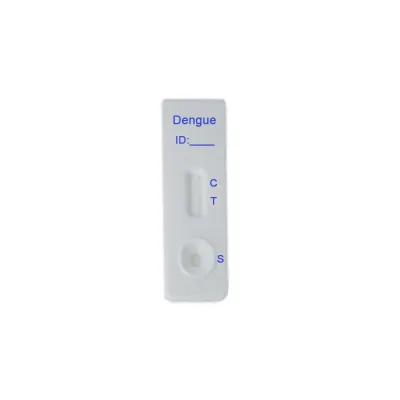
When evaluating Dengue rapid tests, the core technical specifications define the utility and reliability of the product. The primary mechanism for these diagnostics is immunochromatography, a principle that allows for the rapid detection of specific viral antigens or antibodies. The observed product attributes indicate a testing time of approximately 15 minutes, with reaction times consistently reported within this window. This speed is critical for point-of-care settings where immediate clinical decisions are necessary.
The specimen types accepted by these tests are a crucial technical differentiator. Verified data shows that high-confidence products accept whole blood, serum, and plasma. Some listings specifically note "whole blood" or "blood" as the primary specimen, while others broaden the scope to include serum and plasma. Procurement teams must verify that the specific model selected aligns with the intended sample collection method in their target market. The physical format of the test is another key specification. The market offers both strip and cassette formats, with the cassette being a predominant model type. The physical dimensions of the test components, such as the standard width, are observed to range between 2.5mm and 3.5mm, though these specific measurements should be confirmed against the supplier's technical datasheet for the exact model.
Sensitivity and accuracy are the paramount performance metrics. The observed data points to a sensitivity of 98% and an accuracy of 99% for certain models. However, buyers must treat these figures as observations of specific listings rather than universal guarantees for all products in the category. The principle of operation remains consistent across the category, relying on the immunochromatographic strip or cassette to visualize results. The storage conditions are also standardized, with a typical range of 2-30 degrees Celsius. Ensuring that the cold chain is maintained from the point of manufacture to the final point of use is essential to preserve the integrity of the reagents.
Regulatory Compliance and Certification Verification
In the medical device industry, regulatory compliance is not merely a formality but a prerequisite for market entry and legal operation. The observed certification landscape for Dengue rapid tests includes CE marking, specifically referencing the CE 1434 standard, alongside ISO certifications. Some product listings also mention FSC (Forest Stewardship Council) certificates, which relate to the sustainability of packaging materials rather than the medical device itself.
Buyers must distinguish between the different types of certifications. The CE mark indicates conformity with health, safety, and environmental protection standards for products sold within the European Economic Area. The ISO certification, often cited as ISO, ISO 13485, or similar, relates to quality management systems. The presence of these certifications on a product listing is a strong indicator of compliance, but verification is required. Procurement teams should request copies of the actual certificates and verify their validity with the issuing bodies. The "CE 1434" reference observed in the data suggests a specific regulatory pathway, likely related to the In Vitro Diagnostic (IVD) Reagent classification.
It is critical to note that certification status can vary by region and specific product model. While the observed data lists CE and ISO as common attributes, buyers should not assume that every product in a supplier's catalog holds these specific certifications. The verification process should include checking the certificate number against the official registry of the relevant regulatory body. Furthermore, the distinction between "CE 1434" and general "CE" marking should be clarified, as specific directives may apply to different classes of IVD devices.
Cost Drivers and Pricing Dynamics
Understanding the cost structure of Dengue rapid tests is essential for budgeting and negotiating effective contracts. The observed price range for these products in the market spans from 0.26 USD to 3.00 USD per unit. This wide variance is influenced by several factors, including the complexity of the test, the packaging configuration, and the volume of the order.
The primary cost driver is the order volume, which directly impacts the Minimum Order Quantity (MOQ). The observed MOQ range is substantial, spanning from 5 units to 5,000 units. This indicates that the market is heavily skewed toward bulk procurement. Suppliers often offer tiered pricing, where the unit cost decreases significantly as the order volume increases. For smaller buyers or those testing a new supplier, the lower end of the MOQ range (e.g., 5 to 1000 units) may be the only accessible entry point, albeit at a higher per-unit cost.
Packaging is another significant cost component. The observed data lists various packaging standards, such as 100 pieces per bottle, 25 tests per box, 40 tests per box, or 1 piece per pouch with 40 pieces per box. The choice of packaging affects the unit price and the logistics costs. Customized packaging, which is listed as an available customization option, will likely incur additional costs but may be necessary for specific branding or regulatory requirements in certain markets. Buyers should calculate the total cost of ownership, including shipping and storage, rather than focusing solely on the per-unit price.
Typical Applications and Usage Scenarios
The versatility of Dengue rapid tests allows them to be deployed in a variety of settings, from home use to professional hospital environments. The observed product attributes explicitly state "Home or Hospital Use" and "Professional Use," indicating a broad applicability. In hospital settings, these tests serve as critical triage tools, enabling rapid differentiation between Dengue and other febrile illnesses. The 15-minute result time is particularly valuable in emergency departments and outpatient clinics where quick decision-making is required.
For home use, the simplicity of the cassette format and the clear visual results make these tests accessible to non-specialist users. However, the "Professional Use" designation suggests that in many jurisdictions, these tests are intended for use by trained healthcare personnel. This distinction is important for procurement, as it may dictate the training requirements for the end-users and the regulatory framework governing the sale of the device.
The specific application also depends on the test type. The NS1 antigen test is most effective in the early stages of infection, typically within the first five days of symptom onset. In contrast, the IgG/IgM antibody tests are more useful in the later stages of the disease or for detecting past infections. A comprehensive procurement strategy may involve sourcing a combination of these tests to cover the full spectrum of the disease timeline. The specimen type (whole blood, serum, or plasma) also influences the application; whole blood tests are ideal for finger-prick sampling in remote or home settings, while serum/plasma tests are standard in laboratory environments.
Supplier Evaluation and Production Capacity
Evaluating potential suppliers requires a deep dive into their production capabilities and operational history. The observed data indicates a production capacity of up to 1,000,000 units per day, suggesting that large-scale manufacturers are capable of meeting high-volume demands. However, buyers must verify that this capacity is consistent and reliable, as production fluctuations can impact supply chain stability.
The geographic origin of the products is another critical factor. The observed data lists origins in Jiangsu, Tianjin, Foshan, and generally "China." These regions are known for their manufacturing hubs, but buyers should verify the specific factory location to assess logistics costs and lead times. The proximity to ports and the efficiency of local infrastructure can significantly impact the delivery timeline.
Customization is a key differentiator among suppliers. The availability of OEM (Original Equipment Manufacturer) and ODM (Original Design Manufacturer) services allows buyers to tailor the product to their specific needs. This includes customizing the packaging, branding, and even the test design. Buyers should inquire about the supplier's experience with customization projects and their ability to maintain quality standards while adapting the product. The "Quality Guarantee Period" of two years is a standard offering, but buyers should confirm the terms of this guarantee, including what constitutes a defect and the process for claims.
Quality Control and Long-Term Procurement Considerations
Maintaining high quality standards is essential for the safety and efficacy of medical diagnostics. The observed data highlights a "Quality Guarantee Period" of two years, which aligns with the "Validity" of 24 months for the products. This consistency suggests that the reagents are stable within the specified storage conditions (2-30 degrees Celsius). However, buyers must implement their own quality control measures upon receipt of the goods. This includes checking the expiration dates, verifying the storage conditions during transit, and conducting random sampling tests to ensure performance.
Long-term procurement considerations involve building a resilient supply chain. The "Shipment" options observed include air and sea freight, offering flexibility based on urgency and cost. For routine replenishment, sea freight may be more cost-effective, while air freight is suitable for urgent needs. Buyers should negotiate clear terms regarding lead times and delivery schedules. The "Service" aspect, including OEM/ODM support, should be formalized in a contract to ensure that the supplier remains committed to the buyer's needs over the long term.
Finally, buyers should consider the scalability of the supplier. As demand for Dengue tests may fluctuate based on seasonal outbreaks or public health initiatives, the supplier must be able to ramp up production quickly. The observed production capacity of 1,000,000 units per day is a strong indicator of scalability, but buyers should verify the supplier's ability to handle sudden spikes in demand without compromising quality.
Comparative Analysis of Product Attributes
To facilitate decision-making, the following table summarizes the key attributes observed in the market for Dengue rapid tests. This comparison highlights the variability in specifications and helps buyers identify the most suitable products for their specific needs.
| Attribute Category | Observed Range/Options | Key Considerations for Buyers |
|---|---|---|
| Test Type | NS1 Antigen, IgG/IgM, Combo Dengue | Verify the specific target antigen/antibody for the intended clinical stage. |
| Specimen Type | Whole Blood, Serum, Plasma | Ensure compatibility with local sample collection protocols. |
| Format | Cassette, Strip | Cassette is generally preferred for ease of use and stability. |
| Testing Time | 15 Minutes | Standard for rapid tests; verify consistency across batches. |
| Sensitivity | 98% (Observed) | Treat as a specific product claim; verify with independent data. |
| Accuracy | 99% (Observed) | Confirm with clinical validation studies for the specific model. |
| Certification | CE 1434, CE, ISO, FSC | Verify validity and scope of each certificate with issuing bodies. |
| Storage | 2-30 Celsius | Ensure cold chain logistics are maintained during shipping. |
| MOQ | 5 to 5,000 Units | Negotiate based on volume; lower MOQs may have higher unit costs. |
| Packaging | 1pc/pouch, 25/40/100 per box | Consider logistics and shelf-life implications of packaging size. |
| Origin | Jiangsu, Tianjin, Foshan, China | Assess logistics costs and lead times based on specific location. |
| Warranty | 2 Years / Two Years | Confirm terms of the quality guarantee period. |
This structured approach to sourcing ensures that buyers can navigate the complexities of the Dengue rapid test market with confidence. By focusing on verified technical specifications, rigorous certification checks, and robust supplier evaluation, procurement teams can secure high-quality diagnostics that meet the needs of both healthcare professionals and patients. The ultimate goal is to build a supply chain that is reliable, compliant, and capable of delivering life-saving diagnostic tools efficiently.
FAQs
What is the testing time for these rapid tests?
The testing time is 15 minutes for most models. This rapid result allows for immediate clinical decisions in both home and hospital settings without requiring long waiting periods.
Which specimen types are accepted by the test?
The tests accept whole blood, serum, and plasma specimens. This versatility supports various collection methods, from finger-prick sampling to laboratory-based serum separation.
What certifications do these IVD reagents hold?
Products typically hold CE 1434 and ISO certifications. These marks indicate compliance with health and safety standards for medical devices sold in regulated markets.
How is the product packaged for shipment?
Packaging options include cartons with 25 or 40 tests per box, or customized packages. Buyers can select standard configurations or request specific branding for their distribution needs.
Can suppliers provide OEM or ODM services?
Yes, suppliers offer OEM and ODM services for customization. This allows buyers to tailor product branding, packaging, and specifications to meet specific regional or client requirements.
What is the storage condition for the reagents?
The reagents must be stored between 2 and 30 degrees Celsius. Maintaining this temperature range ensures the stability and accuracy of the immunochromatographic results.
What is the minimum order quantity for purchase?
The minimum order quantity ranges from 5 to 5000 units depending on the supplier. Bulk orders often benefit from lower unit prices and tiered pricing structures.
Where are these tests manufactured?
Products originate from manufacturing hubs in Jiangsu, Tianjin, and Foshan, China. These locations provide access to established supply chains and efficient logistics for international shipping.