Source Nylon Oxford Fabric for Garments, Bags, and Sportswear
Compare 30 listings of Nylon Oxford Fabric from verified suppliers. Buyers can evaluate features like waterproofing, stretch levels, and customization options for applications in garments, bags, and sportswear.
Key considerations
Products List


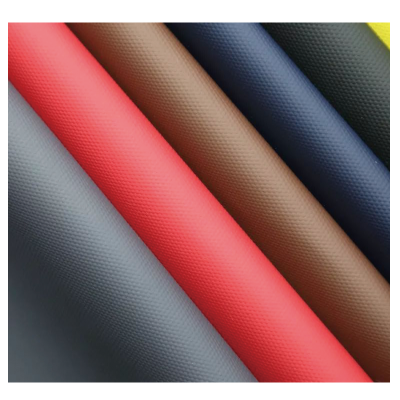
Oxford Nylon Fabric Nylon Oxford Fabric Jacquard Waterproof Ripstop Nylon Fabric
$1.55 - $1.70
MOQ: 2000 Meters


Comprehensive Sourcing Guide
Strategic Sourcing Guide for Nylon Oxford Fabric Procurement
Navigating the global market for Nylon Oxford Fabric requires a disciplined approach that balances technical performance with supply chain reliability. Buyers entering this sector must distinguish between generic woven descriptions and specific product attributes that define performance in end-use applications. The following guide synthesizes available market data to provide a framework for evaluating suppliers, verifying specifications, and managing procurement risks without relying on unverified claims.
Understanding Technical Specifications and Material Composition
The foundation of a successful Nylon Oxford Fabric procurement lies in precise technical definition. Market observations indicate that "Nylon/Spandex Fabric" and "Taslan Fabric" are common designations, yet the underlying construction varies significantly. A critical distinction in the current supply landscape is the fiber cross-section. While many listings specify "Polyester" or "Filament" fibers, some data points reference unique cross-sections such as "Goat," which suggests specialized texturing or blending not typical of standard nylon oxford. Buyers must verify the actual fiber composition, as the term "Nylon" in a product title does not always guarantee the presence of nylon filaments in the final weave.
Weight and denier are the primary metrics for determining fabric durability. Observed specifications range from 74D to 70D160D, with a broader weight range of 80-230 GSM. These figures dictate the fabric's suitability for different applications. A 74D fabric may be appropriate for lightweight linings, whereas a 70D160D construction suggests a heavier, more robust material suitable for heavy-duty bags or outdoor gear. Width is another critical variable; standard observations list widths of 57/58 inches, but buyers should confirm if custom widths are available, as this impacts cutting efficiency and waste reduction in manufacturing.
The knitting or weaving technique is equally vital. While the core keyword implies a woven structure, specific listings identify "Warp" knitted types alongside "Woven" technics. This discrepancy highlights the need for rigorous specification sheets. A woven structure typically offers superior dimensional stability, while warp-knitted variants may offer different stretch characteristics. The "Firm Stretch" attribute observed in some listings suggests a specific elastic component, likely spandex, which differentiates standard oxford from high-performance stretch variants.
Compliance, Certification, and Standard Verification
In the B2B textile sector, compliance is not merely a formality but a prerequisite for market access. Buyers must approach certification claims with skepticism unless supported by third-party documentation. While some background data mentions "Oeko-Tex," this should be treated as a potential category rather than a guaranteed attribute of every listed product. No specific certification status or test results are confirmed in the provided supply data, meaning buyers cannot assume a supplier is compliant based on product listings alone.
When evaluating suppliers, the "Standard" field often contains physical dimensions rather than regulatory compliance. For instance, observed standards include "162CM30CM30CM" and "74D," which describe packaging or denier rather than safety or environmental standards. Buyers must explicitly request proof of compliance with relevant regional regulations, such as REACH in Europe or CPSIA in the United States, rather than relying on the "Standard" column in a catalog.
The "Color Fastness" attribute is a measurable quality metric that serves as a proxy for manufacturing quality. Observed data indicates a "3-4 Grade" for color fastness. This is a specific, verifiable claim that buyers should use as a baseline. Any supplier claiming higher grades must provide laboratory test reports to substantiate the assertion. Similarly, while "Customed" finishing is listed as a standard, the specific chemical treatments used for properties like "Waterproof," "Windproof," or "Flame Retardant" must be verified against the intended application's safety requirements.
Cost Drivers and Pricing Dynamics
The pricing structure for Nylon Oxford Fabric is influenced by a complex interplay of material costs, customization levels, and order volume. The observed price range in the market spans from $0.50 to $13.00 USD per unit, a variance that reflects differences in denier, functional treatments, and order quantity. A fabric priced at $0.50 likely represents a basic, uncoated, or lower-denier variant, whereas the $13.00 tier suggests high-performance features such as "Waterproof," "Breathable," "Downproof," and "Anti-Static" treatments combined with custom dyeing.
Minimum Order Quantity (MOQ) is a significant cost driver. The observed MOQ range is extensive, spanning from 1 to 2000 units. Suppliers offering an MOQ of 1 are typically catering to sampling or prototyping needs, often at a premium unit cost. Conversely, suppliers requiring 2000 units are likely offering volume discounts that bring the unit price closer to the lower end of the observed range. Buyers must calculate the total landed cost, including the impact of MOQ on inventory holding costs, rather than focusing solely on the unit price.
Customization is a primary factor increasing costs. Attributes such as "Customized" color, "Accept Custom Designs," and "Logo Custom" services add value but also increase the production complexity. The "Make-to-Order" supply type indicates that production is triggered by specific demand, which can affect pricing stability. Buyers should expect a price premium for "Free" samples that are customized, as the cost of development is often amortized into the first production run.
Typical Applications and Performance Requirements
The versatility of Nylon Oxford Fabric is evident in its diverse application list. The data identifies usage in "Garment," "Bag," "Sportswear," "Lining," "Trousers," "Tent," "Raincoat," "Car Cover," "Umbrella," and "Luggage." Each application imposes different performance requirements that must be matched to the fabric's technical specifications.
For outdoor applications like tents and raincoats, the "Waterproof," "Windproof," and "Breathable" attributes are non-negotiable. The "Downproof" feature is specifically critical for outerwear and sleeping bags to prevent feather penetration. In contrast, applications like "Lining" and "Trousers" may prioritize the "Anti-Crease" and "Anti-Bacterial" properties observed in the data. The "High Strength" and "Tear-Resistant" functions are essential for luggage and car covers, where mechanical stress is a primary failure mode.
The "Plain Dyed" and "Plain" style attributes suggest a focus on solid colors, which is common for functional gear. However, the availability of "Customized" colors and "Custom Designs" allows for branding opportunities in sportswear and fashion garments. Buyers must ensure that the "Firm Stretch" capability aligns with the movement requirements of the end product; for example, sportswear requires high elasticity, while a car cover requires stability and resistance to stretching.
Supplier Evaluation and Sourcing Strategy
Evaluating suppliers requires a focus on their operational capabilities and transparency. The "Production Origin" data points to China, specifically regions like "Jiangsu," "Shengze," and "Suzhou." These regions are known for textile manufacturing clusters, but buyers should verify the specific factory location to assess logistics and potential geopolitical risks. The "Supply Type" of "Make-to-Order" indicates a flexible production model, but it also necessitates clear communication regarding timelines.
Lead time is a critical metric for supply chain planning. Observed delivery times range from 15 to 30 days, with some specific listings citing 15-25 days. Buyers must account for these durations in their production schedules, especially when dealing with "Customed" finishing or "Custom Designs" which may extend the timeline. The "Sample" availability is a positive indicator of supplier confidence, with "Free" samples often available for qualified buyers.
When assessing a supplier, buyers should request a detailed breakdown of their "Packing" methods. The data shows variations from "Roll Packing in Plastic Bag" to "Polybag Inside+Weaving Bag Outside" and "All Type of Package Is Avaible." Consistent and protective packaging is essential to prevent damage during transit, particularly for fabrics that are sensitive to moisture or crushing. A supplier offering "Standard Package" may be less flexible than one willing to accommodate specific logistical needs.
Quality Control and Long-Term Procurement Considerations
Quality control must be embedded in the procurement process from the outset. Given the wide range of observed attributes, from "Anti-Static" to "Flame Retardant," buyers should establish a clear acceptance criteria document. The "Color Fastness" of 3-4 Grade serves as a concrete benchmark, but buyers should also define acceptable tolerances for weight (80-230 GSM) and width (57/58").
Long-term procurement success depends on the supplier's ability to maintain consistency. The "Customed" nature of many products implies that each batch may differ slightly if not strictly controlled. Buyers should implement a system for batch testing, particularly for functional attributes like "Waterproof" and "Tear-Resistant" capabilities. The "Recycled nylon" material option, while present in the data, requires verification of the recycled content percentage and the integrity of the recycling process to ensure it meets sustainability claims.
Finally, buyers should consider the scalability of the supply chain. With an observed MOQ range up to 2000 units, suppliers must demonstrate the capacity to ramp up production without compromising quality. The "Delivery Time" of 15-30 days should be viewed as a baseline; during peak seasons, this may extend. Establishing a long-term partnership with a supplier who offers "All Type of Package" flexibility and "Accept Custom Designs" can provide a strategic advantage in adapting to market changes. By focusing on verifiable data points like denier, weight, and specific functional tests, buyers can mitigate the risks associated with the diverse and sometimes ambiguous product listings in the Nylon Oxford Fabric market.
FAQs
What are the key features of this Nylon Oxford Fabric?
The fabric offers waterproof, windproof, and breathable properties along with anti-static and downproof capabilities. Some variants also include anti-crease and anti-bacterial features suitable for garment and outdoor applications.
Can I customize the color and design of the fabric?
Yes, customized colors and custom designs are accepted for this product. Buyers can request specific color requirements and logo customization to meet unique branding needs for their projects.
What is the typical delivery time for orders?
Delivery times generally range from 15 to 30 days depending on order specifics. Some listings indicate a shorter window of 15 to 25 days for standard production runs.
Which specifications define the fabric weight and width?
The fabric weight spans from 80 to 230 GSM with denier options like 74D or 70D*160D. Standard width is observed at 57/58 inches, though custom widths may be available.
How does the minimum order quantity affect pricing?
MOQs vary significantly from 1 to 2000 units, influencing the unit price structure. Lower quantities often incur higher per-unit costs, while larger orders typically access lower price tiers.
What packing methods are available for shipment?
Packing options include roll packing in plastic bags or polybag inside with weaving bags outside. Suppliers may also accommodate all types of packaging based on specific logistical requirements.