Source Nylon Polyester Messenger Bag for Sports, Travel, and Work
Find a selection of 30 nylon polyester messenger bags suitable for sports, traveling, and daily commuting. Buyers can compare features like waterproofing, material types including oxford and canvas, and customization options from verified suppliers in China.
Key considerations
Products List


$0.30 - $0.50
MOQ: 1000 Pieces


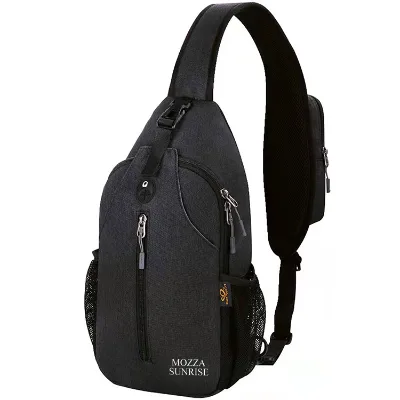
Comprehensive Sourcing Guide
Strategic Sourcing Guide for Nylon and Polyester Messenger Bags
The global B2B market for messenger bags has evolved significantly, driven by the dual demands of urban commuters and outdoor enthusiasts who require durable, lightweight, and versatile carry solutions. When sourcing a Nylon Polyester Messenger Bag, buyers must navigate a complex landscape of material specifications, manufacturing capabilities, and compliance requirements. This guide provides a structured approach to identifying reliable suppliers and selecting products that meet specific operational needs without relying on unverified claims. The focus remains on evidence-based procurement strategies, utilizing observed market data and standard industry practices to inform decision-making.
Material Composition and Technical Specifications
The foundation of any messenger bag procurement lies in the material composition. In the current market, the intersection of nylon and polyester offers a robust balance of strength, weight, and cost-efficiency. Observed product data indicates that suppliers frequently utilize Oxford fabric and Polyester as primary materials. Oxford fabric, known for its durability and resistance to abrasion, is often paired with high-elastic nylon threads to enhance structural integrity. This combination is particularly effective for bags intended for heavy loads, such as laptops or camping gear.
When evaluating technical specifications, buyers should scrutinize the thread count and weave density. The presence of high-elastic nylon threads often correlates with improved waterproofing capabilities, a critical feature for outdoor and travel applications. However, not all products in this category share the same water resistance. Market observations reveal a split in product attributes where some bags are explicitly labeled as "Waterproof" while others are marked as "Non-Waterproof" or "Not Waterproof." This distinction is vital for procurement planning. For instance, a bag with the model number SY-MB210420-8 is noted for its waterproof characteristics, whereas a Canvas Messenger Bag variant (Model 026U) is explicitly non-waterproof.
Buyers must also consider the internal lining. The "Inside Material" is frequently listed as Fabric, which can vary in texture and durability. A "Soft" pH attribute suggests a specific treatment or material quality that may affect user comfort, particularly for bags carried against the body. Furthermore, the "Hardness" of the bag, often described as "Medium Soft," influences the bag's ability to protect contents like electronics. When sourcing, it is essential to request physical samples to verify these tactile properties, as visual descriptions on product pages can be misleading.
Design Attributes and Functional Versatility
Design functionality is a primary driver for messenger bag selection. The market offers a wide array of styles, ranging from "Simplicity" to "Antique," catering to diverse aesthetic preferences. The "Fashion Element" of stitching bags adds a layer of visual appeal and structural reinforcement. For buyers targeting specific demographics, the "Gender" attribute is often listed as "Unisex," making these products suitable for a broad customer base.
Seasonality plays a crucial role in product selection. While some suppliers offer "All" season bags, others specify "Summer" or "Sports" usage. The "Usage" field in product data highlights applications such as Sports, Camping & Traveling, Student use, and specific activities like Running or Biking. This versatility suggests that a single SKU can often serve multiple market segments. For example, a bag designed for "Traveling" with a "Medium" capacity is ideal for short trips, while a model with specific size options like 11, 12, or 13 inches is tailored for laptop users.
The closure mechanism is another critical design factor. The "Closed Way" is predominantly identified as a "Zipper," which offers security and ease of access. However, the quality of the zipper hardware and the smoothness of its operation are not always guaranteed by the product listing alone. Buyers should verify the durability of the zipper pull and the track to ensure it can withstand repeated use. Additionally, the "Capacity" is a key specification; a "Medium" capacity bag typically fits standard 13-inch laptops and daily essentials, making it a versatile choice for corporate and educational sectors.
Compliance, Certification, and Safety Standards
In the B2B sector, compliance with international standards is non-negotiable. Suppliers often cite specific certifications to validate their manufacturing processes. One observed standard is "RoHs" (Restriction of Hazardous Substances), which ensures that the materials used in the bag do not contain hazardous levels of lead, mercury, cadmium, or other toxic substances. This is particularly important for products intended for children or those sold in regions with strict environmental regulations.
However, the presence of a certification claim on a product page does not automatically guarantee compliance for every batch. Buyers must verify the validity of these certifications through third-party testing reports. For instance, while one product listing mentions "RoHs" compliance, another might list "Customized" as the standard, indicating that the product can be tailored to meet specific regulatory requirements of the buyer's target market.
Environmental and safety standards also extend to the production process. The "prod_standard" field sometimes lists physical dimensions (e.g., 20"W x 12"H x 4.5"D) rather than a certification name, which can be confusing. Buyers should clarify whether these dimensions represent a standard size or a specific compliance metric. Furthermore, the "Quality" attribute is often described as "Best," but this is a subjective claim. To mitigate risk, procurement teams should request evidence of quality control processes, such as ISO certifications or specific factory audit reports, rather than relying on marketing descriptors.
Cost Drivers and Pricing Dynamics
Understanding the cost structure of nylon polyester messenger bags is essential for effective budgeting. The observed price range in the market spans from $0.30 to $50.00 USD, reflecting a vast difference in material quality, brand positioning, and manufacturing complexity. Several factors drive these price variations.
First, the material cost is a primary driver. Bags made from high-grade Oxford fabric with high-elastic nylon threads will command a higher price than those using standard polyester or canvas. The "Hardness" and "Waterproof" features also add to the cost, as they require specialized treatments and higher-quality components. Second, customization options significantly impact pricing. Suppliers offering "Customized" logos, specific color options (Black, Purple, Red, Blue, Grey), and tailored dimensions will charge a premium over standard SKUs.
The "MOQ" (Minimum Order Quantity) is another critical cost factor. The observed MOQ range is between 2 and 1000 units. Suppliers with lower MOQs, such as those accepting "Small Orders" or requiring only 50 pieces, often have higher per-unit costs due to the setup expenses involved in smaller production runs. Conversely, larger orders benefit from economies of scale, reducing the unit price. Buyers must balance their inventory needs with their budget constraints. For example, a buyer needing 50 units for a promotional campaign may accept a higher unit cost, while a retailer stocking 1000 units can negotiate a lower price point.
Supplier Evaluation and Production Capabilities
Selecting the right supplier requires a thorough evaluation of their capabilities and track record. The origin of the products is a significant indicator of supply chain stability. Most observed products originate from China, with specific manufacturing hubs in Guangdong (including Dongguan) and Fujian. These regions are known for their established textile and bag manufacturing ecosystems, offering a wide range of suppliers with varying levels of expertise.
When evaluating suppliers, buyers should look for flexibility in production. Attributes such as "Customization: Available" and "Logo: by Your Request" indicate a supplier's willingness to adapt to specific client needs. The "Sample Time" of 7 days is a standard benchmark for quick turnaround, allowing buyers to test product quality before committing to a large order. Additionally, the "Shipment" method, often listed as "by Sea," suggests that suppliers are equipped to handle international logistics, though buyers should verify lead times and shipping costs separately.
The "prod_packing" method is also a key consideration. Options like "Poly Bag," "OPP/CTN," or "PP Bag/as Your Requirements" show that suppliers can accommodate different packaging needs, which is crucial for retail presentation and protection during transit. Buyers should ensure that the packaging meets their sustainability goals and retail requirements.
Quality Control and Long-Term Procurement Strategy
Quality control is the final barrier to successful procurement. Given the variability in product attributes, such as the difference between "Waterproof" and "Non-Waterproof" models, a robust quality assurance process is essential. Buyers should implement a multi-stage QC strategy that includes pre-production sample approval, in-process inspection, and final random inspection.
For long-term procurement, building a relationship with suppliers who offer "OEM" (Original Equipment Manufacturer) services is beneficial. This allows for greater control over the product design and branding. The "Quality: Best" claim should be backed by a clear definition of what constitutes "best" in the context of the buyer's specific requirements. This might involve testing for seam strength, zipper durability, and water resistance under simulated conditions.
Furthermore, buyers should consider the "Character" of the bag, such as "Anti-Friction" and "Anti-Static" properties, which add value in specific environments. These features require specific manufacturing techniques and materials, and their inclusion should be verified through testing. By focusing on these technical details and maintaining a rigorous evaluation process, buyers can ensure a steady supply of high-quality nylon polyester messenger bags that meet their operational and market demands.
Comparative Analysis of Product Attributes
To facilitate decision-making, the following table summarizes key attributes observed in the market for nylon polyester messenger bags. This comparison highlights the variability in specifications and helps buyers identify products that align with their specific needs.
| Attribute Category | Observed Option A (High Performance) | Observed Option B (Standard/Casual) | Key Verification Point |
|---|---|---|---|
| Material | Oxford, High Elastic Nylon Thread | Canvas, Polyester | Verify weave density and thread strength |
| Water Resistance | Waterproof (via Nylon Thread) | Non-Waterproof / Not Waterproof | Request water resistance test reports |
| Style | Simplicity, Stitching Bag | Antique | Review physical samples for finish |
| Capacity | Medium (11-13 Inch) | Medium | Confirm internal dimensions and laptop fit |
| Customization | Logo by Request, Custom Colors | Logo Print/Emd | Check MOQ for custom orders |
| Origin | Guangdong, China (Dongguan) | Fujian, China | Verify factory audit status |
| Standard | RoHs | Customized | Request third-party certification docs |
| MOQ | 50 PCS | 2 - 1000 PCS | Negotiate based on volume |
This table underscores the importance of matching product specifications to application requirements. A buyer seeking a rugged, waterproof bag for outdoor use should prioritize Option A, while a buyer looking for a stylish, casual bag for urban commuting might prefer Option B. By systematically evaluating these attributes, procurement teams can minimize risk and maximize the value of their sourcing investments.
FAQs
What materials are commonly used for nylon polyester messenger bags?
Common materials include Oxford fabric, Polyester, and Canvas. Some models feature high-elastic nylon threads for enhanced durability and waterproofing, while others use standard fabric linings for a softer feel against the body.
Which capacity sizes are available for these messenger bags?
Available sizes typically include 11, 12, and 13 inches, suitable for laptops. The capacity is generally classified as medium, making them ideal for students, commuters, and travelers carrying daily essentials.
Can buyers request custom logos and colors for these bags?
Yes, customization is available for logos via print or embroidery. Buyers can also select from color options like black, purple, red, blue, and grey, with some suppliers accepting small orders for tailored requests.
How do waterproof and non-waterproof options differ in this category?
Some bags utilize high-elastic nylon threads to achieve waterproof characteristics, while others made of canvas are explicitly non-waterproof. Buyers must verify specific product attributes to ensure the bag meets their weather resistance needs.
What is the typical minimum order quantity for these messenger bags?
The minimum order quantity ranges from 2 to 1000 pieces depending on the supplier. Some vendors accept small orders or set a standard MOQ of 50 pieces, allowing flexibility for promotional campaigns or bulk stocking.
Which certifications are commonly associated with these bag manufacturers?
Some products list RoHs compliance to ensure restricted hazardous substances are not used. Other listings may indicate customized standards, so buyers should request third-party test reports to verify safety and regulatory adherence.