Source Odor Eliminator Active Carbon Filter for Industry HVAC and Air Purification
Find 30 verified products for Odor Eliminator Active Carbon Filter including electrostatic precipitators and industrial filters. Compare specifications, materials, and certifications to select the right solution for your facility.
Key considerations
Products List


Activated Carbon Filter for Effective Odor Control in Kitchen Environments
$589.00 - $989.00
MOQ: 1 Pieces


Activated Carbon Filter for Odor Remover Carbon Air Filter Manufacturer
$600.00 - $1000.00
MOQ: 1 Pieces


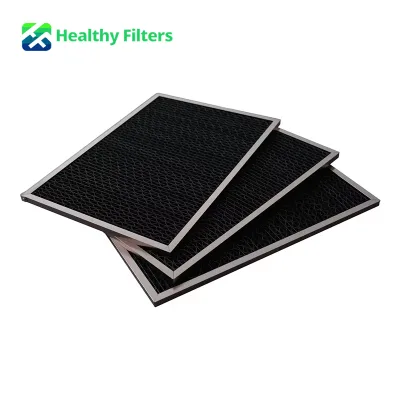


Activated Carbon Filter for Odor Remover, Activated Carbon Air Filter Manufacturer
$100.00 - $1000.00
MOQ: 5 Pieces


Advanced Activated Carbon Filter Cartridge for Odor Removal in HVAC Systems
$0.36 - $0.46
MOQ: 50 Pieces


Air Purifier Replacement 3-in-1 High-Efficiency Activated Carbon Filter
$145.00 - $185.00
MOQ: 3 Pieces



Comprehensive Sourcing Guide
Strategic Sourcing Guide for Odor Eliminator Active Carbon Filters
Understanding Technical Specifications and Core Attributes
When sourcing odor eliminator active carbon filters, buyers must first distinguish between general filtration components and specialized electrostatic or multi-layered units. The market presents a diverse array of configurations, ranging from simple cartridge replacements to complex industrial air purification systems. A critical observation in the current supply landscape is the variation in structural design. Some units are explicitly defined as Multilayered, while others utilize a Bunk layer configuration. These structural differences directly impact the surface area available for adsorption and the flow dynamics of the air passing through the system.
The physical dimensions of the filter elements are equally vital for compatibility. Standardized models often adhere to specific metric profiles, such as the 294x240x10mm specification observed in certain product lines, whereas heavy-duty industrial units may require custom dimensions like 930x1231x1275.5mm. Buyers must verify that the Hole Shape of the filter housing or element matches the Hexagonal profile if the system relies on specific mechanical interlocking or flow distribution. Furthermore, the Medium Material is a primary determinant of performance. While many units utilize Metal Fiber or Stainless Steel for durability and fire resistance, others are constructed from PP Material (Polypropylene) to offer chemical resistance and lightweight properties. The choice between these materials often dictates the Operating Principle, which can be a combination of Active + Passive mechanisms or rely solely on electrostatic precipitation.
Compliance, Certification, and Safety Standards
In the realm of industrial air filtration, regulatory compliance is not merely a formality but a prerequisite for operational safety and legal adherence. Buyers should prioritize suppliers who can provide documented proof of ISO and CE certifications. These certifications indicate that the manufacturing processes and the final product meet international quality management and European safety standards, respectively. The presence of CE marking is particularly significant for products intended for the European market, ensuring they adhere to health, safety, and environmental protection requirements.
Safety features are another critical compliance area. Certain industrial-grade filters are designed with Fire Protection capabilities, a non-negotiable attribute for facilities handling volatile organic compounds or high-temperature processes. The Removal Efficiency of these units is a key performance metric that must be verified against specific application needs. Data from the current market suggests that high-performance units can achieve a removal efficiency of More Than 95%, but this figure is not universal across all product models. Buyers must request specific test data for the exact model number they intend to purchase, as efficiency ratings can vary significantly based on the Dust Collecting Method employed, such as Half Dry systems versus fully automated wet scrubbing.
Cost Drivers and Pricing Variables
The pricing structure for odor eliminator active carbon filters is highly variable, influenced by a complex interplay of material costs, manufacturing complexity, and customization levels. The observed market price range spans from 0.36 USD for basic components to 1500 USD for fully integrated, large-scale industrial systems. This vast disparity is driven by several factors. First, the Material composition plays a dominant role; Stainless Steel and specialized Metal Fiber constructions generally command higher prices than standard PP Material or basic cardboard housings. Second, the level of Customization available significantly impacts the final cost. While standard models like the FC-01 or KL-8CS may be priced competitively, custom-engineered solutions with unique dimensions or specialized media will incur additional tooling and engineering fees.
The MOQ (Minimum Order Quantity) also serves as a primary cost driver. The market shows an MOQ range from 1 unit for sample orders or small-scale applications to 500 units for bulk industrial procurement. Buyers should be aware that ordering near the lower end of the MOQ spectrum often results in a higher unit cost due to the fixed costs of production setup. Conversely, larger orders can leverage economies of scale but require significant upfront capital and storage capacity. Additionally, the Packing method affects the total landed cost. Options range from simple Cartons and Bare Packing to more robust Wooden Box and Pearl Cotton or Container Package solutions, which are essential for preventing damage during long-distance shipping but add to the overall expense.
Typical Applications and Operational Context
Odor eliminator active carbon filters are deployed across a wide spectrum of industries, each with unique operational requirements. The Usage category for these products is broadly defined as Industry, but specific applications vary. For instance, Air Filter elements are essential in manufacturing plants to remove particulate matter and volatile gases, while Electrostatic Precipitator units are often utilized in heavy industrial settings for high-volume dust and fume removal. The Operation Type of the system must align with the facility's workflow. Some facilities require Semiautomatic or Automatic cleaning cycles to minimize downtime, while others may opt for Manually operated units where maintenance schedules are strictly controlled by human intervention.
The Installation Method is another critical consideration for application fit. Horizontal installation is common in ductwork systems where space is constrained vertically, whereas Floor Standing structures are preferred for standalone units that require easy access for maintenance. The Life Span of the filter is a crucial metric for long-term operational planning. High-quality units, particularly those made from Stainless Steel or advanced Metal Fiber, can offer a service life of 8-10 Years or even up to 10 Years under optimal conditions. However, this lifespan is contingent upon the Condition of the unit, which should be New, and the frequency of Automatic Cleaning cycles, which are often an Optional feature that can extend the operational life of the media.
Supplier Evaluation and Quality Assurance
Evaluating a supplier for odor elimination filters requires a rigorous assessment of their technical capabilities and quality control processes. Buyers should verify the Treatment methods used during manufacturing, such as Chemical Treatment, which can enhance the adsorption capacity of the carbon or the structural integrity of the filter media. The Screw configuration, such as Multi-Screw designs, can indicate the robustness of the assembly and the ease of disassembly for maintenance. A supplier's ability to provide a Warranty, typically One Year for standard units, is a strong indicator of their confidence in product durability.
Quality assurance should extend beyond the final product to the supply chain transparency. Buyers must confirm the Prod_Orgin, which is currently listed as China for many of these industrial components. While this location offers competitive pricing, it necessitates a thorough vetting of the supplier's logistics and export compliance. The Automation level of the supplier's own production line can also be a proxy for their ability to maintain consistent quality. Suppliers utilizing Semi-Automatic or Automatic machinery are generally better equipped to handle large volumes with minimal variance compared to those relying solely on manual assembly. Additionally, the Colour of the product, often Creamy-White/Grey, can serve as a visual indicator of material purity and consistency, though this should not be the sole criterion for acceptance.
Long-Term Procurement and Maintenance Considerations
Sourcing odor eliminator active carbon filters is not a one-time transaction but a long-term procurement strategy that requires careful planning for maintenance and replacement. The Service Life of the filter, often cited as 8-10 Years, suggests that these are capital-intensive assets rather than consumables. However, the Removal Efficiency will degrade over time, necessitating a proactive replacement schedule. Buyers should evaluate the Automatic Cleaning options available, as units with this feature can significantly reduce the frequency of media replacement and lower long-term operating costs.
The Packing method chosen at the time of purchase also influences long-term storage and handling. Container Package solutions are ideal for bulk storage in humid environments, whereas Bare Packing may be suitable for immediate installation in controlled settings. Buyers must also consider the Standard specifications of the replacement parts. While some models offer Customized standards, most rely on established dimensions like 294x240x10mm or specific model numbers like BS-216Q-KL40K+AC. Ensuring that the replacement parts are compatible with existing infrastructure is essential to avoid costly retrofitting. Finally, the Air Volume capacity, such as >400m³/h, must be matched to the facility's ventilation requirements to ensure that the filter does not become a bottleneck in the airflow system, which could lead to increased energy consumption and reduced odor elimination effectiveness.
FAQs
What certifications do odor eliminator active carbon filters typically have?
These filters typically hold ISO and CE certifications to ensure international quality and safety standards. The presence of these marks indicates compliance with European safety requirements and global quality management processes for industrial air purification systems.
How is the removal efficiency of these filters measured?
High-performance units achieve a removal efficiency of more than 95% for particulate matter and odors. This metric depends on the specific dust collecting method used, such as half dry systems, and the operational configuration of the electrostatic precipitator.
Which materials are used to construct these industrial filters?
Manufacturers commonly use stainless steel, metal fiber, or PP material depending on the required durability and chemical resistance. Stainless steel and metal fiber offer fire protection, while PP material provides lightweight properties for specific chemical treatment applications.
Can buyers request customization for filter dimensions and specifications?
Yes, customization is available for dimensions and specific model requirements like the FC-01 or BS-216Q series. Buyers can specify standard sizes such as 294x240x10mm or request fully customized standards to fit unique industrial ventilation infrastructure.
What is the typical service life of these odor elimination units?
The service life ranges from 8 to 10 years for high-quality units made from durable materials. This lifespan is contingent on the condition of the unit being new and the implementation of optional automatic cleaning cycles to maintain performance.
How are these filters installed in industrial facilities?
Installation methods vary between horizontal setups for ductwork and floor-standing structures for standalone units. The choice depends on the available space and the specific operating principle, which may combine active and passive mechanisms for optimal air volume handling.