Source Childproof Trigger Sprayer for Gardening, Cleaning, and Cosmetics
Compare 30 Childproof Trigger Sprayer options from verified suppliers. These units feature plastic construction, various capacities up to 20L, and are suitable for irrigation, medicine, and cosmetic applications with internal or external thread connections; compare the available evidence and request quotations based on your requirements.
Key considerations
Products List


Customized Colored, Plastic Trigger Sprayer, with Special 3 Finger Trigger
$0.06 - $0.10
MOQ: 20000 Pieces

Customized Colored, Plastic Trigger Sprayer, with Special 3 Finger Trigger Arm
$0.06 - $0.10
MOQ: 20000 Pieces

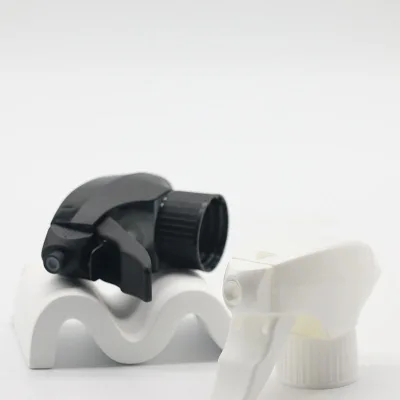


Trigger Sprayer Factory, Custom Trigger Sprayer, Home Care Trigger Sprayer
$0.12 - $0.15
MOQ: 10000 Pieces


PP Sprayer Trigger 24/410, PP White Garden Sprayer, Mini Trigger Sprayer
$0.28 - $0.33
MOQ: 10000 Pieces


Comprehensive Sourcing Guide
Childproof Trigger Sprayer Sourcing Guide
Procuring childproof trigger sprayers requires balancing safety mechanisms with functional reliability for diverse liquid applications. The observed market data indicates a strong presence of plastic-based units, specifically utilizing PE and PP materials, designed for capacities ranging up to 20 liters. Buyers must distinguish between models intended for home gardening irrigation and those formulated for dispensing medicines, cosmetics, or cleaning agents. The variation in product models, such as the XF series and BL series, suggests distinct engineering approaches for different fluid viscosities and usage scenarios.
Selection criteria should prioritize the specific locking mechanism and thread compatibility required for the target application. While some units feature internal thread connections suitable for specific tank configurations, others utilize external thread connections for broader compatibility. The observed capacity limits and material compositions, including injection molding and screen printing techniques, directly influence the durability and chemical resistance of the final product. Sourcing decisions must align the sprayer's physical attributes with the intended liquid containment to ensure operational safety and long-term performance.
Product Scope and Observed Listing Signals
The current market listings reveal a diverse range of trigger sprayers, including knapsack types and compact units with capacities up to 20 liters. These products are primarily manufactured in Taizhou and Ningbo, utilizing materials like plastic, PE, and PP to ensure cost-effectiveness and chemical resistance. The observed product models, such as XF-1A and XF-20W1, demonstrate that manufacturers offer solutions for both large-scale irrigation and smaller cosmetic or medicinal dispensing needs. Buyers should note the specific packing configurations, which vary from 20 pieces per carton to bulk orders of 500 pieces, affecting logistics planning.
Application scenes are clearly defined, with many units specifically designed for home gardening, flowers, and general cleaning tasks. The spraying shapes observed include circular, full cone, solid cone, and liquid column outputs, allowing for precise targeting of liquids. Some models are explicitly marked as disposable, while others are designed for repeated use with electric or pressure power sources. Understanding these distinctions is critical, as the choice between a pressure-powered irrigation sprayer and an electric cosmetic dispenser dictates the necessary supply chain partners and technical specifications.
Technical Specifications to Verify
Buyers must rigorously verify thread specifications, as the data indicates a mix of 28/400, 28/410, and 28/415 standards alongside internal and external thread connections. Mismatched threads can lead to leakage or incompatibility with existing tanks, making this the primary technical checkpoint during the sourcing process. The material composition, whether PE or PP, must be confirmed against the chemical properties of the liquid to be contained, ensuring resistance to degradation or reaction. Additionally, the production techniques, such as injection molding versus screen printing, should be validated to assess the structural integrity and aesthetic finish of the sprayer.
Capacity and power source requirements vary significantly across the observed product range, necessitating a clear definition of operational needs. While some units are pressure-based and suitable for manual irrigation, others rely on electric power supplies for automated or high-volume dispensing. The observed capacity limit of 20 liters serves as a benchmark for larger knapsack models, whereas smaller units may be optimized for specific cosmetic or salon applications. Verifying the spraying shape, whether stream, spray, or foam, ensures the device delivers the intended coverage pattern for the specific application scene.
Compliance and Safety Documentation
Safety documentation is paramount when sourcing childproof mechanisms, particularly for products containing medicines, disinfectors, or cleaning agents. While ISO certification is observed in the market, buyers must request specific test reports validating the child-resistant locking functionality against recognized safety standards. The presence of a "disposable" feature in certain models requires verification of material safety and environmental compliance, ensuring that the product meets local disposal regulations. Documentation should explicitly confirm that the locking mechanism prevents accidental activation by children while remaining operable for adults.
Chemical compatibility and containment safety must be supported by material safety data sheets (MSDS) for the specific liquid being dispensed. The observed applications range from flowers to salon products, each presenting unique chemical interaction risks with the plastic or polyethylene components. Buyers should ensure that the supplier provides evidence of testing for leakage and pressure resistance under the intended operating conditions. Without verified documentation, the risk of product failure or safety incidents increases, potentially leading to liability issues and brand reputation damage.
Cost Drivers and Commercial Terms
Cost structures are heavily influenced by the material type, production volume, and specific customization requirements observed in the listings. The MOQ range of 200 to 30,000 units suggests that economies of scale play a significant role in unit pricing, with higher volumes likely reducing the cost per piece. Customization options, such as specific tank colors or branding via screen printing, add variable costs that must be factored into the total landed cost. Buyers should negotiate based on the total order value rather than unit price alone, considering the impact of packing configurations like 20 pieces per carton on shipping efficiency.
Commercial terms must account for the diverse origin locations, primarily Taizhou and Ningbo, which may affect lead times and shipping logistics. The observed standard packing dimensions, such as CBM measurements of 554531CM, are critical for calculating freight costs and container utilization. Lead times can vary based on the complexity of the injection molding process and the availability of specific thread standards. Clear agreements on payment terms, delivery schedules, and quality acceptance criteria are essential to manage the financial risks associated with large-scale procurement of these specialized components.
Supplier Qualification and Quality Control
Supplier qualification should focus on manufacturers with proven experience in producing plastic sprayers for diverse applications, from irrigation to cosmetics. The presence of ISO certification is a positive indicator, but buyers must verify the scope of this certification to ensure it covers the specific manufacturing processes used. Quality control protocols must include rigorous testing of the childproof mechanism, thread integrity, and material consistency across different production batches. Suppliers should demonstrate a robust system for handling defects, particularly regarding the injection molding and assembly of the trigger mechanisms.
Inspection plans must be tailored to the specific product model and intended application, as the functional requirements vary widely. For instance, a sprayer for medicine requires different leak testing standards compared to one used for garden irrigation. Buyers should implement pre-shipment inspections that verify the locking mechanism's effectiveness and the visual quality of the screen printing or molding. Establishing a clear communication channel for quality feedback ensures that any deviations from the agreed specifications are addressed immediately, maintaining the integrity of the supply chain.
Long-Term Procurement Checks
Long-term procurement success depends on maintaining consistent quality and supply stability over extended periods. Buyers should establish regular audits of the supplier's production lines to ensure that material sources and manufacturing techniques remain unchanged. The observed variation in product models and specifications suggests that suppliers may introduce new designs; therefore, a formal change management process is necessary to validate any modifications before they impact the supply chain. Continuous monitoring of the childproof mechanism's performance ensures that safety standards are maintained as production volumes scale.
Market trends and regulatory changes in child safety and chemical containment must be monitored to anticipate future compliance requirements. As regulations evolve, suppliers must be capable of adapting their product lines to meet new standards without disrupting the supply. Building a strategic partnership with suppliers who demonstrate flexibility and a commitment to quality will mitigate risks associated with market shifts. Regular reviews of performance metrics, including defect rates and delivery reliability, will help identify potential issues early and foster a resilient procurement strategy.
FAQs
What materials are used for childproof trigger sprayers?
Childproof trigger sprayers are typically constructed from durable plastic materials such as PE or PP. These materials ensure chemical resistance and longevity for various applications. The main body is often molded using injection molding techniques to maintain structural integrity. Some models may feature screen printing for labeling. These material choices support safe handling of liquids like cosmetics or cleaning agents in home gardening or salon settings.
Can childproof trigger sprayers be customized for specific needs?
Yes, customization is available for many Childproof Trigger Sprayer models. Buyers can often select specific nozzle types, such as trigger or knapsack styles, to suit their requirements. Customization may also extend to tank colors, including white, blue, orange, or yellow options. Additionally, packing configurations can be adjusted, such as 20 pieces per carton or 500 pieces per larger carton. This flexibility helps brands align packaging with their marketing and logistical needs.
What is the typical capacity range for these sprayers?
The typical capacity for these sprayers is generally up to 20 liters. Specific models like the XF-20W1 and XF-20W2 are designed with a 20-liter tank size. This capacity is suitable for home gardening irrigation or larger-scale application of medicines and disinfectants. The internal thread connection ensures secure attachment to compatible containers. This size balances portability with sufficient volume for extended use without frequent refilling.
Which certifications are associated with these sprayer products?
Some Childproof Trigger Sprayer products carry ISO certification, indicating adherence to international quality management standards. This certification is particularly relevant for manufacturers producing sprayers for cosmetics, cleaning agents, or salon products. The presence of ISO certification suggests a commitment to consistent manufacturing processes and product safety. Buyers should verify specific certification documents with suppliers to ensure compliance with their regional regulatory requirements for chemical packaging.
How are childproof trigger sprayers packaged for shipment?
Packaging varies by model, with options including 20 pieces per carton or 500 pieces per large carton. Specific models like BL-F-1 use standard carton packaging, while others may use colorful cartons for better visibility. The standard packing dimensions are often around 55x45x31 cm or 54x38x39 cm. This efficient packaging design minimizes shipping volume and protects the sprayers during transit. Buyers should confirm the exact packing configuration with the supplier to optimize logistics and storage.
What spraying shapes are available for these trigger sprayers?
Available spraying shapes include full cone, liquid column, stream, or spray patterns. Some models offer solid cone shapes for targeted application. The choice of spraying shape depends on the intended use, such as irrigation for flowers or application of cosmetics. Trigger mechanisms allow for controlled dispensing, while knapsack types may offer different flow dynamics. Selecting the correct spraying shape ensures efficient coverage and minimizes waste of the contained liquid, whether it is medicine or a cleaning agent.