Source White Printed Self-Adhesive Labels for Food, Beverage, and Packaging
Compare 30 listings for White Printed Self-Adhesive Labels suitable for food, beverage, and packaging applications. Buyers can evaluate customization options, material types like paper and synthetic paper, and delivery times ranging from 7 to 10 days from Jiangsu and Wuxi suppliers.
Key considerations
Products List


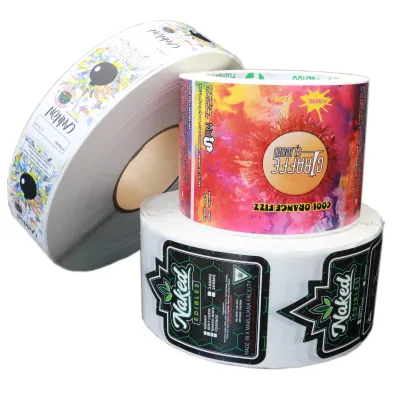


High Quality Self-Adhesive Labels From Professional Manufacturer
$0.22 - $0.33
MOQ: 4590 Square Meters


Comprehensive Sourcing Guide
White Printed Self-Adhesive Labels Sourcing Guide
Procuring White Printed Self-Adhesive Labels requires careful attention to material composition and surface treatment to ensure durability in diverse environments. Buyers should verify that the selected product utilizes paper or synthetic materials like polyester and synthetic paper, as these are the primary substrates observed in current listings. The surface treatment often includes lamination to enhance resistance against moisture and abrasion, which is critical for applications involving bottled beverages or food packaging where exposure to liquids is common.
The customization capabilities of these labels allow for specific shape and content requirements, ranging from custom shapes to tailored material usage. Suppliers typically offer a range of printing technologies including letterpress, offset, flexographic, and digital printing to meet distinct visual and functional needs. When sourcing, it is essential to confirm that the adhesive type is permanent and that the backing paper, such as glassine, aligns with the intended application speed and equipment compatibility.
Product Scope and Observed Listing Signals
The market for White Printed Self-Adhesive Labels presents a wide range of price points and minimum order quantities, reflecting the diversity of product specifications available. Observed listings indicate prices ranging from nominal amounts to significant values, with minimum order quantities varying from single units up to ten thousand pieces. However, specific high-confidence data points suggest a standard MOQ of 3000 or 5000 pieces for many custom configurations, which buyers must factor into their initial budgeting and inventory planning strategies.
Listing signals also highlight specific usage scenarios such as food labeling, cosmetic packaging, and industrial applications like agro pesticide identification. The product features often include barcode capabilities and waterproof properties, ensuring legibility and integrity in challenging conditions. Buyers should note that while some listings mention specific models like SAL-332 or MCL-003, the core scope remains focused on versatile adhesive solutions that can be customized for size, content, and usage requirements across multiple industries.
Technical Specifications to Verify
Technical verification must begin with the printing type and color accuracy, as listings specify options like CMYK or Pantone matching to ensure brand consistency. The transparency level of the label is another critical variable, with observed products ranging from opaque to translucent, depending on the underlying material such as synthetic paper or polyester. Buyers need to confirm that the chosen transparency level does not interfere with the visibility of underlying product information or barcodes, especially for food and medicine applications.
Adhesive performance and temperature resistance are equally vital for long-term reliability. The observed specifications indicate that these labels are designed to withstand room, low, and high temperatures, making them suitable for various storage and transport conditions. It is imperative to verify that the adhesive is permanent and that the surface treatment, such as lamination, provides the necessary protection against water and chemicals. Additionally, the artwork format requirements, typically accepting AI, PDF, CDR, or PSD files, must be clearly communicated to avoid production delays.
Compliance and Safety Documentation
Compliance documentation is a non-negotiable aspect of sourcing adhesive labels, particularly for food and cosmetic applications where safety standards are stringent. High-confidence data confirms that suppliers often hold ISO9001 and SGS certifications, which serve as indicators of a structured quality management system and adherence to international safety norms. Buyers should request current certification copies to verify that the manufacturing facility maintains these standards consistently, rather than relying on general claims found in marketing materials.
Beyond general certifications, specific material safety and regulatory compliance must be confirmed based on the intended end-use. For instance, labels intended for direct food contact or beverage bottles must meet relevant food safety regulations, which may not be explicitly detailed in every listing. Buyers should ensure that the supplier can provide documentation proving the materials are safe for the specific application, such as food labeling or pharmaceutical use, to mitigate the risk of regulatory non-compliance in the destination market.
Cost Drivers and Commercial Terms
Cost drivers for White Printed Self-Adhesive Labels are heavily influenced by the complexity of customization, the volume of the order, and the specific material chosen. While observed price ranges are broad, the minimum order quantity acts as a primary cost determinant, with standard runs often requiring 3000 to 5000 pieces. Buyers should anticipate that custom shapes, specialized printing techniques like letterpress, or premium surface treatments like lamination will increase the unit cost compared to standard roll-fed labels.
Commercial terms and logistics also play a significant role in the total cost of ownership. Delivery times are typically observed between 7 to 10 days, though this can vary based on order complexity and supplier capacity. Payment terms generally include T/T, Western Union, or PayPal, and the port of shipment is often listed as Shanghai, Ningbo, or any port depending on the supplier's flexibility. Buyers must negotiate trade terms carefully to ensure that shipping costs and delivery timelines align with their supply chain requirements.
Supplier Qualification and Quality Control
Supplier qualification should focus on verifying the origin and production capabilities of the manufacturer, as observed data points to origins in Jiangsu and Wuxi regions. These locations are known for their manufacturing clusters, but buyers must confirm the specific factory's capacity to handle their required volume and technical specifications. It is advisable to request samples that match the exact material and printing type to validate the supplier's ability to deliver consistent quality before committing to a large order.
Quality control processes must be robust to ensure that every batch meets the specified standards for adhesion, print quality, and durability. Buyers should inquire about the supplier's internal testing procedures for waterproofing, temperature resistance, and adhesive strength, as these are critical performance indicators. Additionally, verifying the packaging standards, such as export cartons, ensures that the labels arrive in pristine condition, preventing damage during transit that could compromise the integrity of the product.
Long-Term Procurement Checks
Long-term procurement success depends on establishing a reliable supply chain that can adapt to changing volume requirements and design updates. Buyers should maintain open communication channels with suppliers to ensure that lead times remain consistent and that any changes in material availability or production capacity are communicated promptly. Regular audits of the supplier's quality control records and certification status help maintain high standards and prevent disruptions in the supply of critical labeling materials.
Continuous monitoring of market trends and technological advancements is also essential for maintaining a competitive edge. As printing technologies evolve, suppliers may offer new options that improve efficiency or reduce costs, such as advanced digital printing or eco-friendly materials. Buyers should stay informed about these developments and periodically review their current specifications to ensure they are utilizing the most effective and cost-efficient solutions available for their specific application needs.
FAQs
What materials are used for White Printed Self-Adhesive Labels?
These labels utilize paper, synthetic paper, and polyester PET surfaces. The backing paper is typically glassine, ensuring smooth application. Options include opaque or translucent finishes, allowing for versatile design choices across various industries while maintaining structural integrity during handling and storage processes.
Can these labels withstand different temperature conditions?
Yes, the adhesive labels are designed to resist room temperature, low temperature, and high temperature environments. This thermal stability ensures that the label remains intact and legible across diverse storage and usage conditions, making them suitable for food, beverage, and industrial applications without degradation.
What is the typical delivery time for custom orders?
The standard delivery time ranges from 7 to 10 days after order confirmation. This efficient turnaround supports rapid project needs. Buyers should note that specific timelines may vary slightly based on order volume and customization complexity, but the baseline remains consistent for standard production runs.
Which certifications do these adhesive labels hold?
The products hold ISO9001 and SGS certifications, ensuring quality management and safety standards. These credentials verify that the manufacturing processes meet international requirements for reliability and consistency. Buyers can trust these labels for regulated industries such as food, cosmetics, and pharmaceuticals where compliance is critical for market entry.
What is the minimum order quantity for these labels?
The minimum order quantity varies between 3000 and 5000 pieces depending on the specific product model and customization requirements. This range allows flexibility for both small-scale trials and larger bulk purchases. Buyers should confirm the exact MOQ with suppliers to ensure alignment with their production volume needs.
How are these labels customized for specific branding needs?
Customization is available for material, content, usage, and size. Buyers can provide artwork in AI, PDF, CDR, or PSD formats. The printing process supports letterpress, offset, flexographic, and digital methods. This flexibility ensures that unique brand identities and specific functional requirements are accurately realized in the final product.