Source Organic Mushroom Collagen Coffee for wellness drinks
Compare 30 listings of Organic Mushroom Collagen Coffee from suppliers in China. Buyers can evaluate customization options, dosage forms, and packaging details for instant coffee and extract blends.
Key considerations
Products List


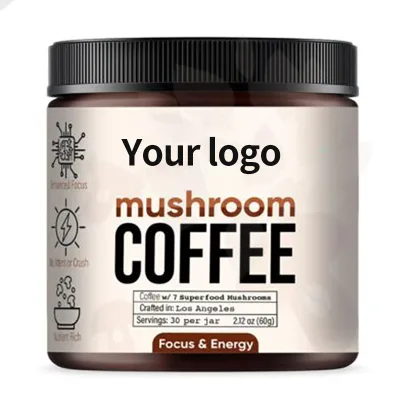
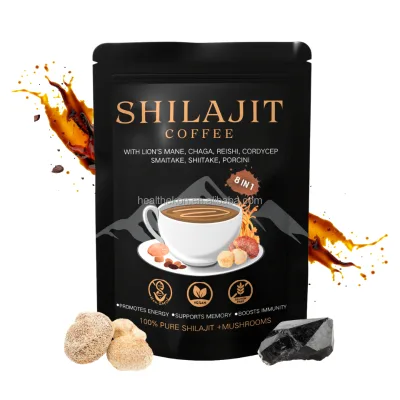
OEM/ODM Organic Mushroom Coffee Instant Coffee Provides Better Focus for Health
$5.00 - $5.50
MOQ: 500 pieces

OEM/ODM Organic Mushroom Coffee Instant Coffee Provides Better Focus for Health
$5.00 - $5.50
MOQ: 500 Pieces




Comprehensive Sourcing Guide
Strategic Sourcing Guide for Organic Mushroom Collagen Coffee
The global B2B market for functional beverages has expanded rapidly, with Organic Mushroom Collagen Coffee emerging as a high-potential niche. Buyers entering this sector must navigate a complex landscape of botanical extracts, functional ingredients, and regulatory requirements. This guide provides a disciplined framework for sourcing these products, relying strictly on observable product attributes and established industry standards. The focus is on technical specifications, compliance verification, and supply chain stability rather than speculative market trends.
Technical Specifications and Product Composition
Understanding the precise technical composition of Organic Mushroom Collagen Coffee is the first step in any procurement process. The product is not a monolithic entity but a blend of specific functional ingredients. Based on available product data, the core dosage form is often identified as mushroom powder, specifically derived from Ganoderma Lucidum (Reishi). The product name frequently appears as "Ganoderma Lucidum Extract Cappuccino Coffee," indicating a hybrid formulation that combines coffee with herbal extracts.
The ingredient profile is critical for buyers defining their product requirements. While some listings indicate "Non" as a primary ingredient descriptor, this often refers to the absence of specific allergens or fillers rather than the total composition. The main ingredient is consistently listed as raw material powder, which suggests a base of mushroom extract. The flavor profile is highly customizable, with specific mentions of "Herbal and Reishi" aromas. This customization capability is a key differentiator, allowing buyers to tailor the sensory experience to their target demographic.
Nutritional and physical specifications vary significantly across listings. The Brix percentage is noted as less than 0.1g/100g, suggesting a low-sugar or sugar-free formulation, which aligns with the "Sugar-Free" feature observed in several product attributes. Moisture content is strictly controlled, with maximum levels cited as less than 0.3g/100g. This low moisture content is essential for the shelf stability of powdered blends. The dosage form is typically powder, with a recommended daily intake ranging from 3.5g to 7g.
Packaging dimensions and weight are also critical for logistics planning. Single package sizes are observed at 18x9.5x12 cm, with single gross weights varying between 1.5 kg and 1.7 kg depending on the specific packaging configuration. The storage method requires a cool, dry place, and some specifications note "Insect Prevention" as a storage note, highlighting the need for pest control in the supply chain. The shelf life is standardized at 24 months, provided these storage conditions are met.
Compliance, Certification, and Regulatory Standards
In the functional food and beverage sector, compliance is not merely a formality but a prerequisite for market entry. Buyers must verify that suppliers hold valid certifications that align with the target market's regulatory framework. The observed product data lists several high-confidence certifications, including KOSHER, HACCP, GMP (Good Manufacturing Practice), and ISO. These certifications indicate that the manufacturer adheres to strict hygiene, quality management, and food safety protocols.
The ISO certification mentioned is specific to food safety management systems. While some background information references ISO 22000, buyers should treat this as a verification target rather than a guaranteed attribute of every listing. The presence of GMP and HACCP is particularly vital for products involving mushroom extracts, as these processes ensure that the raw materials are free from contaminants and that the manufacturing environment is controlled.
The grade of the product is explicitly stated as "Food Grade," which is a fundamental requirement for any consumable item. However, buyers must distinguish between general food grade and specific organic certifications. The keyword "organic" implies a specific agricultural standard, but the provided data does not explicitly confirm organic certification status for all listed items. Therefore, buyers must request specific organic certificates (such as USDA Organic or EU Organic) from the supplier to validate the "organic" claim in the product name.
Regulatory compliance also extends to labeling and claims. The product is classified as a "Food" product with an "Adults" age group and "Unisex" gender designation. Claims regarding effectiveness are often framed as "Function Can Be Customized" or require consultation with customer service, suggesting that specific health claims must be vetted against local advertising laws. The "Low-Salt, Low-Fat, Sugar-Free" features observed in some listings must be substantiated by lab test results to avoid regulatory penalties in strict markets.
Cost Drivers and Pricing Structures
The pricing structure for Organic Mushroom Collagen Coffee is influenced by several variable factors, including raw material costs, customization levels, and order volume. The observed price range in the market is between 1 and 60 USD, but this wide range likely reflects differences in packaging formats, ingredient concentrations, and order quantities.
The Minimum Order Quantity (MOQ) is a significant cost driver. Data indicates an MOQ range from 1 piece to 3000 pieces, with a specific listing noting an MOQ of 25 pieces. This variability allows for flexibility for small startups while accommodating large-scale distributors. However, the unit price will inevitably decrease as the order volume increases, a standard economic principle in B2B procurement.
Customization is a primary cost driver. The product attributes confirm that customization is available for flavor, packaging, and labeling. OEM (Original Equipment Manufacturer) and ODM (Original Design Manufacturer) services are explicitly accepted, meaning buyers can request private labeling and specific formulation changes. These services incur additional costs compared to purchasing standard off-the-shelf products. The "Service" attribute lists OEM, ODM, and Private Label services, confirming that value-added services are a standard part of the offering.
Supply ability is another factor influencing cost stability. The observed supply ability is listed as 300,000,000 kilograms per year, indicating a high-capacity manufacturing environment. High supply capacity generally suggests better price stability and the ability to handle large orders without significant lead time increases. However, buyers should verify this capacity against current production schedules to ensure the supplier can meet demand during peak seasons.
Typical Applications and Market Positioning
Organic Mushroom Collagen Coffee is designed for a specific market segment: health-conscious consumers seeking functional benefits in their daily beverages. The product is positioned as a dietary supplement or a functional food item rather than a standard beverage. The "Adults" age group and "Unisex" gender designation suggest a broad target audience, but the specific functional benefits (such as the Reishi aroma and low sugar content) appeal to consumers interested in immunity support, stress relief, and energy management.
The "Instant Coffee" type attribute indicates that the product is designed for convenience. It is intended to be mixed with water or milk to create a ready-to-drink beverage. The "Cappuccino Coffee" naming convention suggests a creamy, rich flavor profile, likely achieved through the addition of dairy or dairy alternatives, though the "Low-Fat" attribute implies a focus on reduced-calorie formulations.
Applications extend beyond direct consumption. The "Raw Material Powder" classification suggests that the product can also be used as an ingredient by other manufacturers. For instance, food processors might incorporate this mushroom-collagen blend into energy bars, smoothies, or other functional food products. The "Customization" of the flavor and "Function" allows for B2B clients to create proprietary blends that differentiate their own product lines.
The "Herbal and Reishi" aroma is a unique selling point that differentiates this product from standard coffee blends. This positioning allows marketers to target consumers looking for "adaptogenic" benefits, which are associated with Reishi mushrooms. The low sugar and low salt content further align with current consumer trends toward clean label and health-focused products.
Supplier Evaluation and Selection Criteria
Selecting the right supplier requires a rigorous evaluation process based on verifiable data points. The first criterion is the supplier's location and origin. The product origin is consistently listed as China, with specific mentions of Fujian province. Fujian is a known hub for tea and mushroom cultivation, which suggests a strong local supply chain for raw materials. Buyers should verify the specific address and logistics capabilities of the supplier in this region.
The manufacturer's reputation and capacity are critical. The brand name "Lanhu" and the manufacturer "Herbal Treasure" are observed in the data, but buyers should not rely on these names as exclusive endorsements. Instead, they should use these as reference points to identify similar manufacturers. The key is to verify the supplier's ability to deliver the stated supply ability of 300 million kilograms per year.
Service capabilities are another evaluation metric. The supplier must demonstrate proficiency in OEM, ODM, and private label services. The "Packaging Details" indicate that packaging can be customized according to customer requirements, which is essential for branding. Buyers should request samples of previous work to assess the quality of their labeling and packaging execution.
Quality control is paramount. The supplier must provide evidence of their adherence to the listed certifications (KOSHER, HACCP, GMP, ISO). Buyers should request recent audit reports and test results for moisture content, Brix levels, and microbial counts. The "Instruction for Use" being listed as "Consulting" suggests that the supplier provides technical support, which is a valuable asset for buyers who may need assistance with formulation or regulatory compliance.
Quality Control and Long-Term Procurement Considerations
Maintaining product quality over the long term requires a robust quality control (QC) framework. The shelf life of 24 months is a key metric, but it is contingent on proper storage. The "Storage Method" of "Cool Dry Place" and "Storage Conditions" of "Normal Temperature" must be strictly enforced throughout the supply chain. Any deviation, such as exposure to humidity or high temperatures, can compromise the product's integrity, leading to clumping, microbial growth, or flavor degradation.
The "Single Gross Weight" variations (1.5 kg vs. 1.7 kg) highlight the need for precise inventory management. Buyers must ensure that the packaging specifications match their logistical requirements to avoid discrepancies in shipping costs and storage space. The "Single Package Size" of 18x9.5x12 cm is a standard dimension, but buyers should verify this against their palletization strategies to optimize container utilization.
Long-term procurement considerations include supply chain resilience and scalability. The high supply ability suggests that the supplier can scale production, but buyers should assess the risk of raw material shortages. Since the product relies on mushroom extracts, fluctuations in agricultural yields or climate conditions could impact supply. Buyers should establish contingency plans, such as maintaining safety stock or identifying alternative suppliers.
Contractual agreements should clearly define the terms for customization, quality standards, and delivery schedules. The "MOQ" flexibility allows for phased ordering, but buyers should negotiate volume discounts for larger commitments. The "Service" attributes, including OEM and ODM, should be detailed in the contract to ensure that intellectual property rights and branding guidelines are protected.
Comparative Analysis of Product Attributes
To facilitate decision-making, the following table summarizes the key attributes observed in the market for Organic Mushroom Collagen Coffee. This comparison helps buyers identify the most suitable product specifications for their needs.
| Attribute Category | Observed Value / Range | Verification Requirement |
|---|---|---|
| Dosage Form | Mushroom Powder, Instant Coffee | Verify solubility and texture |
| Main Ingredient | Raw Material Powder, Ganoderma Lucidum | Confirm extract concentration |
| Flavor Profile | Herbal, Reishi, Customizable | Request sensory evaluation samples |
| Nutritional Claims | Sugar-Free, Low-Salt, Low-Fat | Require lab test certificates |
| Certifications | KOSHER, HACCP, GMP, ISO | Verify current certificate validity |
| Shelf Life | 24 Months | Confirm storage condition adherence |
| MOQ | 1 - 3000 Pieces (25 Pieces noted) | Negotiate based on volume |
| Packaging | Box, Bottle, Customizable | Verify packaging material safety |
| Origin | Fujian, China | Verify factory audit reports |
| Supply Ability | 300,000,000 kg/year | Confirm production capacity |
This table underscores the importance of verifying each attribute against actual documentation. While the data provides a strong baseline, the variability in specific values (such as weight and MOQ) necessitates direct communication with suppliers to finalize specifications.
Conclusion
Sourcing Organic Mushroom Collagen Coffee requires a methodical approach that balances technical specifications, regulatory compliance, and supply chain reliability. Buyers must prioritize verification of certifications, customization capabilities, and quality control measures. By adhering to the guidelines outlined in this guide, procurement professionals can mitigate risks and build successful partnerships with suppliers in this dynamic market. The focus on data-driven decision-making ensures that the final product meets both quality standards and market expectations.
FAQs
What is the shelf life of Organic Mushroom Collagen Coffee?
The shelf life is 24 months when stored correctly. This duration requires keeping the product in a cool, dry place with insect prevention measures to maintain quality and prevent spoilage.
Can I customize the flavor and packaging of this product?
Yes, customization is available for flavor, packaging, and labeling. Buyers can request OEM or ODM services to tailor the herbal and Reishi aroma profile and package dimensions to specific requirements.
What certifications do the manufacturers hold for this coffee?
Manufacturers hold KOSHER, HACCP, GMP, and ISO certifications. These standards verify that the food-grade product meets strict hygiene and quality management protocols for safe consumption.
What is the minimum order quantity for this product?
The minimum order quantity ranges from 1 to 3000 pieces depending on the supplier. Some specific listings indicate an MOQ of 25 pieces, allowing flexibility for different order sizes.
Where are the manufacturers of this coffee located?
The product origin is China, specifically in the Fujian province. This region is a known hub for mushroom cultivation, ensuring a strong local supply chain for raw materials.
What is the recommended daily dosage for this supplement?
The recommended daily dosage is between 3.5 and 7 grams. This intake level is designed for adults and aligns with the product's classification as a functional food or dietary supplement.
Does the product contain sugar or high moisture content?
The product is sugar-free with a Brix percentage below 0.1g per 100g. Moisture content is strictly controlled at less than 0.3g per 100g to ensure stability and shelf life.