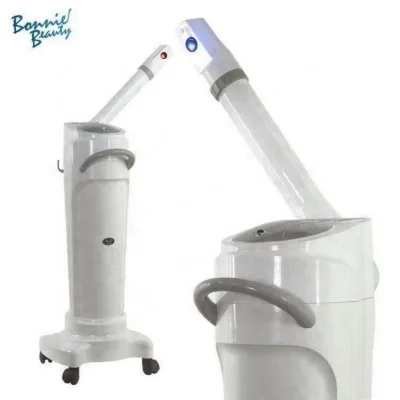
Source Ozone Facial Humidifier for Salon, Home, and SPA
Explore 30 listings for the Ozone Facial Humidifier suitable for salon, home, and spa environments. Buyers can compare models with ozone therapy, facial steam, and portable or non-portable designs from verified Guangzhou suppliers.
Key considerations
Products List




Ozone Oxidation Disinfection Device
$2200.00 - $2300.00
MOQ: 1 Tons
Shandong Longantai Environmental Protection Sci-Tech Co., Ltd.


Air Purifier Ozone Purifier Portable Ozone Generator with Ce Certification
$1.00 - $200.00
MOQ: 1 Pieces


Comprehensive Sourcing Guide
Strategic Sourcing Guide for Ozone Facial Humidifiers in B2B Markets
Understanding the Product Category and Technical Variability
The term "Ozone Facial Humidifier" often encompasses a spectrum of devices that blend atmospheric conditioning with therapeutic applications. In the current B2B marketplace, buyers must distinguish between devices primarily designed for facial steaming and those integrating ozone therapy for postpartum repair or medical-grade purification. The observed market data reveals a significant divergence in product attributes. Some units are classified strictly as "Facial Steamers" with "Cold or Hot" steam capabilities, while others are designated as "Postpartum Repair Instruments" utilizing "Ozone" as their primary operation therapy. This distinction is critical for procurement, as the technical requirements for a salon-grade steamer differ vastly from a medical-grade ozone generator.
Buyers should verify the specific "Operating Principle" of the unit. The market includes devices described as "Active" in their operation, which often implies the generation of ions or specific gas concentrations. For instance, some units in the category boast an "Anion Density" of up to 2,000,000 pcs/m³, suggesting a focus on air purification rather than simple humidity. Conversely, other models focus on "Facial Steam" functionality with optional "Aroma Function." The "Structure" of these units also varies, ranging from "Floor Standing" configurations suitable for heavy-duty salon use to more compact designs. Understanding whether the device is intended for "Medical, Home, Industry" use or specifically for "Salon, Home" application is the first step in defining technical specifications.
Compliance and Certification Verification Protocols
In the B2B procurement of devices involving ozone and electrical components, compliance is not merely a formality but a safety imperative. The supply chain for these products, particularly those originating from manufacturing hubs in China, requires rigorous verification of certification status. The observed market data indicates that reputable suppliers often provide "CE" and "RoHS" approvals. Some manufacturers go further, listing a comprehensive suite of certifications including "ISO," "ETL," "CQC," "GS," and "UL."
Buyers must treat these certifications as evidence of adherence to specific safety and environmental standards rather than generic marketing claims. The "CE" mark, for example, is a mandatory conformity mark for products sold within the European Economic Area, indicating compliance with health, safety, and environmental protection standards. "RoHS" (Restriction of Hazardous Substances) ensures that the device does not contain specific hazardous materials like lead or mercury. When evaluating a potential supplier, procurement teams should request valid, up-to-date certificates that match the specific model number. For instance, a model designated as "B-8707" might carry different certification documentation than a "WD-04" unit. It is essential to verify that the "Certification" listed on the product page matches the physical unit being shipped, as discrepancies can lead to customs seizures or legal liabilities in the destination market.
Cost Drivers and Pricing Structure Analysis
The pricing landscape for ozone facial humidifiers and related therapeutic devices is highly variable, reflecting differences in power, complexity, and intended application. The observed price range in the market spans from approximately $1 to over $14,600 USD. This wide disparity is driven by several key factors. High-end units, often categorized as "Postpartum Repair Instruments" or large "Floor Standing" air purifiers, command premium prices due to advanced features like "HEPA" filtration, high "Anion Density," and complex "Ozone" generation systems. These units may also include "OEM&ODM" capabilities, allowing for custom branding and design, which adds to the cost.
Conversely, basic "Facial Steamers" with simple "Hot or Cold" steam functions and minimal additional features are available at the lower end of the price spectrum. The "Power supply" requirements also influence cost; units with higher wattage, such as those rated at 750W or 800W, typically require more robust internal components and electrical safety mechanisms, increasing the manufacturing cost. Additionally, the "Single gross weight" of the product, which can range from 1.9kg to 12kg, affects shipping logistics and final landed costs. Buyers must analyze the total cost of ownership, including the "After-Sales Service" warranty, which is commonly offered as a "One Year" period. A lower initial purchase price may be offset by higher maintenance costs or a lack of comprehensive support if the supplier does not offer robust "OEM&ODM" services or clear warranty terms.
Typical Applications and Operational Context
The application of these devices is diverse, ranging from commercial beauty services to specialized medical and home care settings. The market data highlights specific use cases, including "Salon," "Home," "Massage Parlour," "Beauty Salon," and "SPA." For commercial buyers, the "Application Area" is a crucial metric. Some units are designed for large spaces, with specifications indicating an application area of greater than 61 square meters, making them suitable for entire treatment rooms or waiting areas. Others are compact, intended for individual client use at a treatment station.
The "Operation Therapy" of "Ozone" suggests a specific therapeutic application, often associated with sterilization, skin treatment, or postpartum recovery. In a salon context, an "Ozone" function might be used for deep cleansing or disinfecting tools and surfaces. In a medical or home setting, the same technology might be utilized for air purification or specific skin therapies. The "Type" of the device, whether labeled as a "Facial Steamer" or a "Postpartum Repair Instrument," dictates the operational workflow. A "Facial Steamer" typically involves a process of steaming the face, potentially with "Aroma Function" for relaxation, while a "Postpartum Repair Instrument" implies a more clinical procedure. Buyers must ensure the device's intended application aligns with their business model to avoid purchasing equipment that is either over-engineered or insufficient for their needs.
Supplier Evaluation and Customization Capabilities
When selecting a supplier for ozone facial humidifiers, the ability to customize the product is a significant differentiator. The market data indicates that "Customization" is "Available" for many models, and "OEM&ODM" services are explicitly offered. This allows buyers to brand the device with their own "Logo/graphic design," which can be applied via "Laser Printing" or other methods. The "Brand Name" on the product, such as "Everplus" or "BonnieBeauty," may be the supplier's private label, but the capacity for private labeling is a key indicator of a supplier's flexibility.
Buyers should evaluate the supplier's capacity to handle "OEM&ODM" requests, including the ability to modify the "prod_model" or "prod_packing" to suit specific market requirements. The "prod_packing" details, such as "Carton Box EPE" or "1PCS/Color Box," are important for logistics and retail presentation. Furthermore, the "Place of Origin" is consistently listed as "Guangzhou China" or "Guangdong, China," which are established manufacturing hubs. While this provides access to a robust supply chain, buyers must verify the specific factory's capabilities. The "Single package size" and "Product size" dimensions, such as 479×269×710mm or 96×44×44 cm, are critical for determining shipping volume and warehouse storage needs. A supplier that can provide detailed packaging and dimension data is more likely to be reliable for large-scale orders.
Quality Control and Long-Term Procurement Considerations
Ensuring long-term reliability requires a focus on quality control measures and after-sales support. The "Wanranty" (Warranty) period is a standard metric, with "One Year" being the most common offering observed. However, buyers should look beyond the warranty duration to the specifics of the "After-Sales Service." Does the supplier provide technical support, replacement parts, or training for staff? The "Power Source" being "AC Source" and the "Frequency" of 50Hz-60Hz are standard, but the consistency of power delivery and the durability of internal components like the "HEPA" filter or "Ozone" generator are vital.
Quality control should also extend to the "Standard" of the product. While "CE" and "RoHS" are common, the specific "prod_standard" for dimensions and weight must be verified against the actual shipment. For example, a product listed with a "Package Size" of 20cm x 20cm x 15cm should match the physical dimensions upon arrival. Discrepancies in "Single gross weight" or "Product size" can indicate quality control issues or incorrect labeling. Additionally, the "Air Volume" and "Anion Density" specifications should be tested if possible, as these directly impact the device's performance. For buyers planning long-term procurement, establishing a relationship with a supplier who offers "OEM&ODM" services ensures that the product can be updated or modified as market needs evolve. The "Selling Units" being "Single item" suggests that the supply chain is flexible enough to handle both bulk orders and smaller, trial shipments, which is beneficial for testing market response before committing to large volumes.
Comparative Analysis of Product Attributes
To facilitate decision-making, buyers can compare key attributes across different product models. The following table summarizes the observed variations in specifications, helping to categorize devices based on their primary function and technical capabilities.
| Attribute | Model B-8707 | Model WD-04 | Model BE-F06J |
|---|---|---|---|
| Primary Type | Postpartum Repair Instrument | Facial Steamer | Air Purifier / Steamer |
| Operation Therapy | Ozone | Steam (Cold/Hot) | Active (HEPA/Ion) |
| Application | Salon, Home | Salon, Home | Massage Parlour, SPA |
| Portability | Non Portable | Portable | Floor Standing |
| Certifications | CE, ROHS | CE, RoHS | ISO, ETL, CQC, GS, CE, RoHS, UL |
| Power Supply | AC Source | AC Source | AC Source (750W/800W) |
| Warranty | One Year | One Year | One Year |
| Origin | Guangzhou China | Guangzhou China | China |
| Customization | Available | Available | Available |
This comparison highlights that while all models share commonalities like "AC Source" power and "One Year" warranty, their core functions and certifications differ significantly. The "Model B-8707" is clearly positioned for therapeutic repair, whereas "Model WD-04" focuses on facial steaming, and "Model BE-F06J" integrates advanced air purification with high-power output. Buyers must align their procurement strategy with the specific functional requirements of their business, ensuring that the selected model meets the necessary technical and compliance standards for their intended market.
FAQs
What certifications do ozone facial humidifiers typically hold?
Most units carry CE and RoHS approvals to ensure safety and environmental compliance. Some advanced models also include ISO, ETL, CQC, GS, and UL certifications for broader international acceptance and rigorous quality standards.
Can these devices be customized with my brand logo?
Yes, customization is available for many models including logo and graphic design via laser printing. Buyers can request OEM and ODM services to adapt the product model and packaging to their specific market requirements.
What is the standard warranty period for these instruments?
The standard warranty period is typically one year for both facial steamers and repair instruments. This coverage ensures after-sales service support, though specific terms may vary slightly depending on the supplier and model.
Where are these ozone facial humidifiers manufactured?
These devices are primarily manufactured in Guangzhou and Guangdong, China. This region serves as a major hub for beauty equipment production, offering a robust supply chain for various product types and specifications.
What power supply requirements do these units need?
Units generally operate on an AC source with a frequency of 50Hz to 60Hz. Power consumption varies by model, with some facial steamers rated at 750W or 800W depending on their specific function and structure.
Are these machines portable or floor-standing?
Product structures vary from portable facial steamers to large floor-standing air purifiers. Buyers should check the specific model type, as some are designed for salon stations while others are intended for fixed medical or home use.
What is the minimum order quantity for these products?
The minimum order quantity ranges from 1 to 500 units depending on the supplier and customization needs. Single item selling units are available, allowing buyers to test the market before committing to larger bulk orders.