Source Oxygenation Forklift Steering Cylinder for Repair, Rental, Logistics
Find 30 Oxygenation Forklift Steering Cylinder options from Zhejiang and Hefei suppliers. Compare specifications for TCM, electric stacker, and diesel models with varying weights and certifications.
Key considerations
Products List


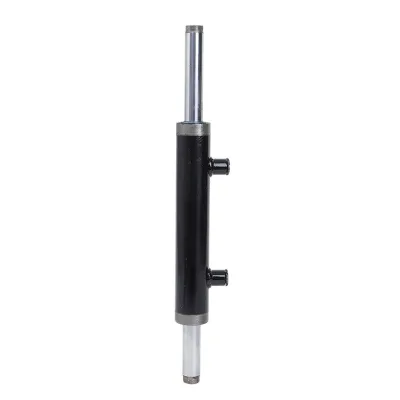
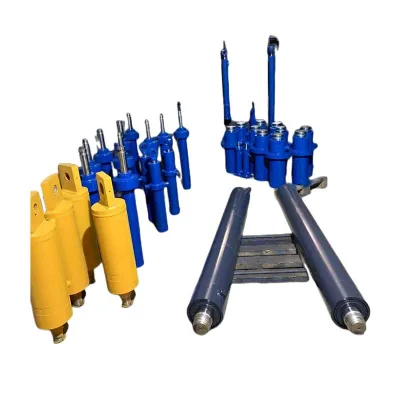


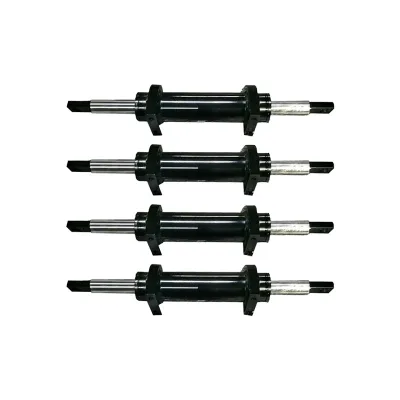
Comprehensive Sourcing Guide
Strategic Sourcing Guide for Oxygenation Forklift Steering Cylinders
Understanding the Technical Scope of Oxygenation Processes in Steering Systems
When sourcing components described with the attribute "Oxygenation" for forklift steering cylinders, buyers must first clarify the technical context. In the context of industrial machinery, surface treatments often involve specific chemical or thermal processes designed to enhance material properties. The provided product data explicitly lists "Oxygenation" under the "Surface Treatment" category. This suggests a process intended to modify the surface characteristics of the cylinder, likely to improve corrosion resistance or wear properties, which is critical for the high-stress environment of a steering system.
The core material for these components varies significantly across the market. The observed data indicates that products are manufactured from both "Carbon Steel" and "Stainless Steel." Carbon steel offers high strength and cost-effectiveness, making it suitable for heavy-duty applications where weight is a primary constraint. Conversely, stainless steel provides superior resistance to oxidation and corrosion, which is particularly valuable in environments with high humidity or exposure to chemicals. The choice between these materials should be driven by the specific operational environment of the forklift. For instance, a facility with strict hygiene requirements or outdoor storage may necessitate the stainless steel variant, while an indoor warehouse might find carbon steel sufficient.
Furthermore, the "Oxygenation" treatment is often applied to specific models. The data references specific forklift models such as "Tcm T6 T7" and "Tcm Fd40 T8." These are not generic categories but specific chassis and hydraulic configurations. A steering cylinder designed for a Tcm T6 will have different mounting points, stroke lengths, and bore diameters compared to a unit for a Tcm Fd40. Buyers must verify that the "Applied Forklift" attribute matches their exact fleet model. The data also notes "Diesel Forklift" as an application category, implying that the hydraulic pressure and flow rates in diesel-powered units may differ from electric models, further influencing the cylinder's design requirements.
Compliance and Certification Verification Protocols
Ensuring that a steering cylinder meets international safety and quality standards is a non-negotiable step in the procurement process. The available data confirms that products in this category carry the "CE" certification. This indicates that the manufacturer claims compliance with European Union safety, health, and environmental protection requirements. However, the presence of a CE mark on a product listing does not automatically guarantee that every unit in a bulk order meets the standard. Buyers must request valid test reports or certification documents that specifically cover the batch being purchased.
In addition to CE, the data references a "Standard" attribute, though the specific value is listed as "Standard" in some entries and as specific part numbers like "214A4-50111" or "524W2-40202" in others. This ambiguity highlights a critical verification point. Buyers should not assume that a "Standard" label refers to a universal ISO or ANSI standard. Instead, they must demand the specific standard number (e.g., ISO 4413 for hydraulic fluid power systems) that the manufacturer adheres to. The part numbers themselves, such as "214A4-50111," often serve as the primary reference for the original equipment manufacturer (OEM) specifications. Cross-referencing these part numbers with the forklift's service manual is essential to ensure compatibility.
The data also mentions "Quality: 100% Professional Test" for certain items. This is a strong indicator of the manufacturer's internal quality control (QC) processes. However, "Professional Test" is a qualitative description. To validate this claim, buyers should inquire about the specific parameters tested, such as pressure testing, leak testing, and cycle fatigue testing. The absence of specific test data in the general listing means that the buyer must explicitly request these results before finalizing an order. Relying solely on the claim without verification introduces significant risk of receiving components that may fail under operational stress.
Cost Drivers and Pricing Structure Analysis
The pricing landscape for oxygenation-treated steering cylinders is highly variable, with observed ranges spanning from $4.6 to $20,000 USD. This vast disparity is not indicative of a single product type but rather reflects the diversity of components available, ranging from small seals or minor fittings to complete, heavy-duty hydraulic cylinders for large industrial trucks. The lower end of the spectrum likely corresponds to smaller, less complex parts or accessories, while the upper end represents full assemblies for heavy-load applications.
Several factors drive these costs. First, the material composition is a primary determinant. Stainless steel cylinders are inherently more expensive than carbon steel counterparts due to the raw material costs and the additional processing required. Second, the complexity of the "Oxygenation" surface treatment plays a role. If the process involves specialized equipment or multiple stages to achieve a specific finish, the manufacturing cost increases. Third, the weight of the component is a significant logistical factor. The data shows weights ranging from 0.45 kg to 33.72 kg. Heavier components incur higher shipping costs and may require specialized packaging, such as "Non-Fumigation Wooden Box" or "Strong Box with Foam Inside," which adds to the final price.
Minimum Order Quantity (MOQ) is another critical cost driver. The observed MOQ range is 1 to 10 units. This flexibility allows buyers to purchase single samples for testing or small batches for immediate replacement needs. However, buyers should be aware that purchasing at the lowest MOQ (1 unit) often results in a higher unit price compared to bulk orders. The data also notes that "Sample Is Acceptable," which is beneficial for validating the product before committing to a larger order. Buyers should leverage this policy to test the "Oxygenation" quality and fitment before scaling up their procurement.
Typical Applications and Operational Fit
The application of oxygenation-treated steering cylinders extends beyond simple steering functions. The data indicates that these components are used in "Forklift Rent & Service Shop" and "Forklift Repair Shop" environments. This suggests that the market includes both original equipment replacement and aftermarket service parts. The versatility of these cylinders is further highlighted by their use in "Logistics Equipment" and "Retail" sectors.
Specific model compatibility is paramount. The data lists applications for "Electric Stacker" models, as well as diesel forklifts like the "Tcm T6 T7" and "Tcm Fd40 T8." This diversity means that a single supplier may offer a wide range of products, but the buyer must ensure the specific cylinder matches their vehicle's hydraulic system. For example, an "Electric Stacker" typically operates at lower voltages (e.g., 24V) and lower power outputs (e.g., 165W) compared to a large diesel forklift. The steering cylinder for an electric stacker may have different pressure ratings and flow requirements.
The "Condition" of the product is another application factor. The data distinguishes between "New Assembled" and "Assembled" units. "New Assembled" implies a factory-fresh product with all new seals and components, whereas "Assembled" could potentially include refurbished parts. For critical safety components like steering cylinders, "New Assembled" is generally the preferred choice to ensure reliability. The data also notes that the "Number Per Vehicle" is "One," indicating that these are single-point replacements rather than multi-part kits. Buyers must verify that the single unit they purchase is the correct replacement for their specific vehicle model, such as the "S6s" or "J2.00-2.50ex."
Supplier Evaluation and Origin Verification
Evaluating suppliers requires a close examination of the product origin and the consistency of the data provided. The data lists origins in "Zhejiang," "Hefei, China," and generally "China." Zhejiang and Hefei are major manufacturing hubs in China, known for their industrial capabilities. However, the presence of multiple origin locations for similar products suggests a fragmented supply chain. Buyers should verify the specific factory location to assess the supplier's logistical capabilities and potential lead times.
The "Customization" attribute is a key differentiator in supplier evaluation. The data shows that some products offer "Customization: Available" or "Customized," while others are "Non-Customized." For standard replacement parts, a non-customized option is usually sufficient and more cost-effective. However, if a buyer has a unique forklift model or specific hydraulic requirements, a supplier offering customization is essential. The ability to customize implies that the supplier has the engineering capacity to modify the cylinder's dimensions, mounting points, or surface treatment.
Packaging is another indicator of supplier professionalism. The data lists various packaging types, including "Wooden Case," "Strong Box with Foam Inside," "Carton Box," and "Non-Fumigation Wooden Box." The choice of packaging depends on the weight and fragility of the cylinder. For heavy items like the 33.72 kg unit, a "Non-Fumigation Wooden Box" is likely necessary to prevent damage during transit. Buyers should ensure that the supplier's packaging aligns with international shipping regulations, particularly regarding wood treatment, to avoid customs delays.
Quality Control and Long-Term Procurement Strategy
Maintaining quality in the long term requires a robust quality control strategy. The data mentions "Quality: 100% Professional Test" and "Condition: New Assembled," which are positive indicators. However, buyers must go beyond these claims. Implementing a rigorous incoming inspection process is crucial. This should include visual inspections for surface treatment consistency, dimensional checks against the part number (e.g., "214A4-50111"), and functional testing if possible.
The "Standard" attribute, while sometimes listed as generic, often refers to specific manufacturing tolerances. Buyers should request the technical drawing or specification sheet that details these tolerances. The weight of the component, ranging from 0.45 kg to 6 kg/PC, can also serve as a quick verification metric. If a received cylinder deviates significantly from the expected weight, it may indicate a defect or a mismatch in material density.
For long-term procurement, establishing a relationship with a supplier who offers "Sample Is Acceptable" is beneficial. This allows for periodic testing of new batches to ensure consistency. Additionally, buyers should monitor the "Lead Time" and "MOQ" trends. While the current data shows an MOQ of 1-10, larger orders may require longer lead times. Planning inventory levels based on the "Application" frequency (e.g., high turnover in repair shops) can prevent downtime. Finally, buyers should maintain a record of the specific part numbers and standards used in their fleet to streamline future reordering and ensure compatibility with new equipment purchases.
Comparative Analysis of Product Attributes
To facilitate a clearer decision-making process, the following table summarizes the key attributes observed in the product data, highlighting the variations that buyers must consider.
| Attribute Category | Observed Variations | Procurement Implication |
|---|---|---|
| Material | Carbon Steel, Stainless Steel | Select based on corrosion resistance needs vs. cost. |
| Surface Treatment | Oxygenation | Verify the specific process and its impact on durability. |
| Forklift Model | Tcm T6/T7, Tcm Fd40/T8, Electric Stacker | Must match exact vehicle model for hydraulic compatibility. |
| Part Number | 214A4-50111, 524W2-40202, 1500300001 | Use as primary reference for ordering and verification. |
| Weight | 0.45 kg to 33.72 kg | Influences shipping costs and packaging requirements. |
| Packaging | Wooden Case, Strong Box, Carton, Non-Fumigation Box | Ensure packaging protects the cylinder and meets customs rules. |
| Origin | Zhejiang, Hefei, China | Verify specific factory for quality assurance and logistics. |
| Certification | CE | Request specific test reports to validate compliance. |
| Customization | Available, Customized, Non-Customized | Choose based on fleet standardization or unique needs. |
This table underscores the complexity of sourcing oxygenation forklift steering cylinders. The wide range of attributes means that a "one-size-fits-all" approach is ineffective. Buyers must carefully match their specific operational requirements with the detailed specifications provided by the supplier. By rigorously verifying material, model compatibility, and certification, buyers can mitigate risks and ensure the procurement of high-quality, reliable steering cylinders that maintain the safety and efficiency of their forklift fleets.
FAQs
What certifications do oxygenation forklift steering cylinders have?
Products in this category carry CE certification, indicating compliance with European safety standards. Buyers should verify specific test reports for the batch being purchased rather than assuming universal compliance based on the listing alone.
Which materials are used for oxygenation treated steering cylinders?
The observed data indicates manufacturing from both Carbon Steel and Stainless Steel. Carbon steel offers high strength for heavy-duty use, while stainless steel provides superior corrosion resistance for humid or chemical environments.
Can I order samples for oxygenation forklift steering cylinders?
Yes, sample orders are acceptable for validating product quality and fitment before bulk purchasing. This policy allows buyers to test the oxygenation surface treatment and verify compatibility with specific forklift models like Tcm T6 T7.
What is the minimum order quantity for these steering cylinders?
The observed minimum order quantity ranges from 1 to 10 units depending on the supplier. Purchasing at the lowest MOQ often results in a higher unit price compared to bulk orders, so buyers should plan accordingly.
How are oxygenation steering cylinders packaged for shipping?
Packaging varies by weight and includes options like Wooden Cases, Strong Boxes with Foam, and Non-Fumigation Wooden Boxes. Heavy units up to 33.72 kg typically require robust wooden packaging to prevent transit damage.
Which forklift models are compatible with these steering cylinders?
Specific models include Tcm T6 T7, Tcm Fd40 T8, and Electric Stackers. Buyers must verify the part number and applied model attributes to ensure the cylinder matches their vehicle's hydraulic system and mounting points.
What is the price range for oxygenation forklift steering cylinders?
The observed price range spans from 4.6 to 20000 USD, reflecting diverse component types. Lower prices likely correspond to smaller parts, while higher prices represent full heavy-duty hydraulic assemblies for large industrial trucks.