Source Painted Steel Front Spring Bracket for Automotive Use
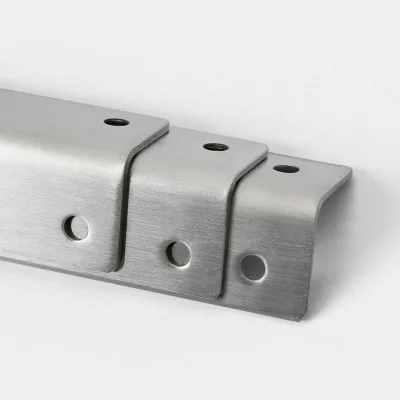
Find 30 options for the Painted Steel Front Spring Bracket, featuring cold stamping and custom surface treatments like spraying. Compare specifications from Chinese manufacturers to identify suitable metal stamping parts for your assembly needs; compare the available evidence and request quotations based on your requirements.
Key considerations
Products List





Comprehensive Sourcing Guide
Painted Steel Front Spring Bracket Sourcing Guide
Buyers seeking painted steel front spring brackets must first distinguish between generic stamped components and those engineered for specific automotive suspension loads. The observed product data indicates a material base of steel and stainless steel, with surface treatments ranging from spraying to power coating and galvanizing. This variation suggests that the "painted" finish is not a single uniform standard but a customizable attribute dependent on the client's drawing or specific environmental requirements. Procurement teams should verify that the selected finish aligns with the intended operating environment, as the listed options include diverse treatments like electroplating and anodizing which may not be suitable for all heavy-duty applications.
Commercial listings reveal a wide spectrum of customization capabilities, with many suppliers offering multistep progressive dies and cold stamping processes to meet unique design specifications. The availability of custom sizes and client drawings as primary specifications implies that off-the-shelf solutions may not exist for complex bracket geometries. Buyers must therefore prioritize suppliers who explicitly state their ability to handle custom sheet metal fabrication services rather than those offering only standard catalog items. Understanding the distinction between standard models like WG9100520033 and fully customized orders is critical for defining the scope of the initial request and ensuring the supplier has the necessary tooling capacity.
Product Scope and Observed Listing Signals
The market for these components displays significant variability in packaging and shipping methods, ranging from ocean freight to individual carton or plastic bag packaging. This inconsistency in logistics data suggests that the product scope extends beyond the physical bracket to include complex supply chain requirements. Buyers should not assume a standard packing method applies to all orders; instead, they must explicitly define whether the brackets require protective wooden cases for heavy industrial transport or simple single-item packs for smaller assembly lines. The presence of specific model numbers like 520006 and SMP1088291 alongside custom designations indicates a hybrid market where both standardized and bespoke parts coexist.
Observations of the product attributes highlight a strong emphasis on the "Industry" classification as metal stamping parts, with specific mentions of fine blanking and shaping metal processes. This signals that the core product scope involves high-precision forming rather than simple casting or welding. Buyers should verify if the supplier's "Fine Blanking" capability is open or closed, as this directly impacts the dimensional accuracy and edge quality of the final bracket. The listing data also notes a "Design Style" of contemporary, which may influence the aesthetic integration of the bracket into modern vehicle chassis designs, requiring a supplier capable of balancing functional engineering with visual specifications.
Technical Specifications to Verify
Dimensional precision is a primary concern when sourcing stamped steel brackets, as the observed tolerance data points to a capability of 0.01mm for specific high-precision applications. Buyers must confirm that the supplier can consistently maintain these tight tolerances across the entire production run, especially when the part is subject to dynamic suspension loads. The specification of "Customized Size or Client's Drawings" as a standard attribute means that the buyer's engineering drawings are the ultimate authority, and the supplier must demonstrate a proven track record of translating these 2D or 3D inputs into physical parts without deviation.
Surface processing requirements vary significantly, with options including spraying, power coating, galvanizing, and anodizing. It is essential to verify which specific surface treatment is applied to the Painted Steel Front Spring Bracket, as the choice dictates corrosion resistance and adhesion properties. The data indicates that "Surface Treatment" is a customizable parameter, meaning a buyer cannot assume a standard paint finish without explicit confirmation. Additionally, the "Processing Type" is listed as shaping metal, which requires verification of the specific forming process used to ensure the metal grain structure remains intact and the bracket retains its structural integrity under stress.
Compliance and Safety Documentation
While the provided data does not list specific certification numbers, the mention of "Export Markets: Global" implies that suppliers must adhere to international trade compliance standards. Buyers should request documentation proving that the steel and stainless steel materials used meet the chemical composition requirements of the destination country. The absence of explicit ASTM or ISO references in the high-confidence facts means that buyers cannot assume compliance based on the listing alone; instead, they must demand material test reports (MTRs) that verify the grade of steel and the quality of the surface treatment against relevant international standards.
Safety documentation for automotive components often requires proof of load-bearing capacity and fatigue resistance, which are not explicitly detailed in the observed product attributes. Buyers must ensure that the supplier provides engineering validation data, such as finite element analysis (FEA) results or physical test reports, to confirm the bracket can withstand the maximum voltage and thermal ratings if the component is integrated into an electrical or high-heat environment. The "Application" field lists pipe insulation and automotive wiring, suggesting potential cross-functional uses that may trigger additional safety regulations regarding fire resistance or electrical isolation, necessitating a thorough review of the supplier's quality management system.
Cost Drivers and Commercial Terms
The observed price range of 0.1 to 800 USD and MOQs spanning from 1 to 5000 units indicate that cost is heavily influenced by the level of customization and order volume. Buyers should anticipate that highly customized brackets requiring multistep progressive dies will command a higher unit price and potentially a higher minimum order quantity compared to standard models. The variability in "Selling Units" from single items to bulk packs suggests that packaging costs are a significant driver, and buyers should negotiate these terms explicitly to avoid unexpected surcharges on small or large orders.
Lead times and production capacity are critical commercial factors, particularly given the "Customization: Available" attribute which often extends the manufacturing cycle. Buyers must clarify the lead time for tooling setup versus mass production, as the use of "Multistep Progressive Dies" implies a significant upfront investment in mold creation. The "Standard" attribute of "By The Customer Needs" further complicates pricing, as non-standard requirements may incur additional engineering fees. It is advisable to structure contracts that separate tooling costs from per-unit pricing to ensure transparency and protect against cost overruns during the initial production phase.
Supplier Qualification and Quality Control
Qualifying a supplier for painted steel front spring brackets requires a deep dive into their manufacturing capabilities, specifically their proficiency with cold stamping and laser cutting technologies. The observed "Technics" list includes laser cutting, bending, stamping, and welding, indicating a need for a facility equipped with a diverse range of metalworking machinery. Buyers should verify that the supplier's quality control protocols cover every stage of this multi-step process, from raw material inspection to final surface treatment, to ensure the final product meets the stringent requirements of automotive applications.
Quality control verification should also focus on the supplier's ability to handle "Customized Color" and "Customized Size" without compromising structural integrity. The presence of "Tolerances: 0.01mm" in the data suggests that high-precision suppliers are available, but buyers must confirm that this precision is maintained consistently across batches. It is essential to request a sample of the actual production run to verify the surface finish quality, such as the uniformity of the power coating or galvanizing, and to ensure that the "Product Origin" in China or Zhejiang meets the buyer's specific logistical and quality expectations.
Long-Term Procurement Checks
Sustaining a successful procurement relationship for these components requires regular audits of the supplier's ability to maintain consistent material quality and surface treatment standards over time. Buyers should establish a schedule for periodic re-verification of the "Material" composition and "Surface Processing" methods to ensure that no unauthorized substitutions have occurred. The dynamic nature of the automotive industry means that design updates are frequent, and the supplier must demonstrate the agility to adapt their "Multistep Progressive Dies" and production lines to accommodate these changes without disrupting the supply chain.
Long-term checks must also include a review of the supplier's export performance and their ability to manage global logistics effectively. Given the "Export Markets: Global" attribute, buyers should assess the supplier's experience with international shipping, including their handling of "Ocean Freight" and various packaging options like wooden cases or cartons. Establishing a clear communication channel for addressing any deviations in "Standard" or "Specification" is vital, ensuring that any issues regarding the "Single Gross Weight" or "Single Package Size" are resolved promptly to prevent delays in the final assembly process.
FAQs
What materials are used for painted steel front spring brackets?
These brackets are primarily manufactured from steel and stainless steel to ensure structural integrity and durability under heavy loads. The surface is treated with spraying or power coating to provide corrosion resistance and a grey finish. This combination of materials and treatments ensures the component withstands harsh automotive environments while maintaining precise tolerances.
Can I customize the size and design of the bracket?
Yes, customization is available to meet specific client requirements. Manufacturers offer customized sizes based on client drawings or specific design styles. The production process includes shaping metal and cold stamping using multistep progressive dies. This allows for precise adaptation to various automotive applications while maintaining high-quality standards and specific tolerance levels.
What is the typical packaging method for these parts?
Packaging options include cartons, plastic bags, or wooden cases to ensure safe transit. Some items are packed in PP bags or polished individually for protection. The choice depends on the order volume and shipping method, such as ocean freight. This flexible packaging strategy helps prevent damage during international logistics and ensures the parts arrive in optimal condition for assembly.
Which processing techniques are applied to these metal parts?
The manufacturing involves laser cutting, bending, stamping, and welding processes. Surface treatments like galvanizing, anodizing, or electroplating may be applied for enhanced durability. The parts are often produced using fine blanking and forming processes with multistep progressive dies. These techniques ensure high precision and consistency, meeting the rigorous demands of automotive structural components and metal stamping applications.
Where are these steel brackets typically manufactured?
These components are predominantly manufactured in China, with specific production hubs located in Zhejiang. The origin ensures access to advanced metal stamping facilities and supply chains. Manufacturers in this region are equipped to handle global export markets, offering competitive pricing and reliable lead times. This geographic concentration supports efficient production of customized steel parts for international automotive clients.
What standards or specifications apply to these brackets?
Specifications vary based on customer needs, with models like WG9100520033 and AZ9719520007 available. Standards may include specific weight limits or dimensional tolerances of 0.01mm. Custom sizes are available with mounting holes as required. The production adheres to client drawings and specific industry requirements, ensuring that each part meets the precise engineering specifications necessary for safe and effective automotive suspension systems.