Source Pale Yellow Magnesium Oxide Powder for Heating Element, pH Control, and Food Additive
Compare 30 listings for Pale Yellow Magnesium Oxide Powder from verified Chinese suppliers. Buyers can evaluate specifications, pricing, and packaging options for industrial and food-grade applications.
Key considerations
Products List

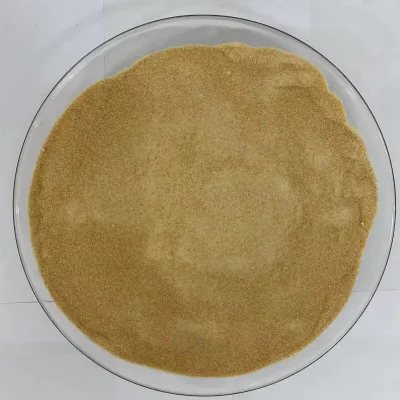


Ndustrial Grade Light and Heavy Magnesium Oxide Powder 85% 90% 95% Purity
$110.00 - $350.00
MOQ: 1 Tons

Comprehensive Sourcing Guide
Strategic Sourcing Guide for Pale Yellow Magnesium Oxide Powder
Understanding Product Attributes and Technical Specifications
When sourcing Pale Yellow Magnesium Oxide Powder, buyers must first distinguish between the various grades and physical manifestations available in the global market. The core keyword "pale yellow" indicates a specific visual characteristic that often results from trace impurities or specific calcination conditions, distinguishing it from the standard white powder often associated with high-purity magnesium oxide. Based on observed market data, the product classification frequently aligns with "Magnesium Oxide" or "Magnesia," with chemical formulas typically denoted as MgO. The molecular weight for this compound is standard at 40.30 g/mol, a critical constant for stoichiometric calculations in industrial applications.
The physical appearance of the powder is a primary verification point. While some listings describe the product as a "White Powder" or "Light Brown Powder," the specific requirement for a "Pale Yellow" hue requires careful visual inspection against the supplier's provided samples. The observed color spectrum in the market ranges from white to yellow, and in some instances, a light brown tint. This variation suggests that the "pale yellow" designation is not a universal standard but a specific product attribute that must be explicitly confirmed during the sampling phase. The shape is consistently reported as "Powder," and the solubility is generally categorized as "Easy Soluble" or "Soluble Alkali," indicating its reactivity in aqueous environments.
Chemical purity is another paramount specification. Market observations reveal a wide range of purity levels, with specific instances noting 98% and 99% purity. The "Industrial Grade" and "Food Grade" designations suggest that the same chemical compound serves vastly different regulatory and performance contexts. For a pale yellow variant, the buyer must verify if the coloration is inherent to the grade or a result of processing. The "Kind" is universally identified as an "Alkaline Oxide," which dictates its behavior in pH control applications. The "Ionization Capacity" is described as "Strong Alkali," a critical factor for applications requiring rapid pH adjustment or neutralization.
Compliance, Certification, and Regulatory Standards
Navigating the compliance landscape for magnesium oxide requires a rigorous verification of certifications and standard classifications. The product market displays a diverse array of certifications, including ISO, RoHS, CIQ, and CCIC. These certifications are not merely marketing labels but essential indicators of a supplier's adherence to international quality management systems and environmental standards. For buyers targeting specific industries, such as food or pharmaceuticals, the presence of these certifications is often a prerequisite for market entry.
The "Grade Standard" is a critical compliance metric. The observed data indicates the existence of both "Industrial Grade" and "Food Grade" products. If the pale yellow magnesium oxide is intended for food additive applications, the supplier must provide documentation proving compliance with food-grade standards. Conversely, for industrial applications like heating elements, the "Industrial Grade" designation may suffice, provided the chemical composition meets the required purity thresholds. The "EINECS No." (215-171-9) and "CAS No." (1309-48-4) serve as unique identifiers that must be cross-referenced with regulatory databases to ensure the product is legally recognized for import and use in the target jurisdiction.
Furthermore, the "Standard" field in product listings often contains conflicting information, ranging from specific chemical standards like "food grade, pharma grade, electronic grade" to numerical purity ranges like "80%-99%." This discrepancy highlights the need for buyers to demand explicit test reports that align with the specific grade claimed. A supplier claiming "Food Grade" must substantiate this with a Certificate of Analysis (CoA) that verifies the absence of heavy metals and other contaminants prohibited in food applications. Similarly, for electronic grade applications, the purity must be verified to ensure no conductive impurities interfere with device performance. The "Single package size" and "prod_packing" details, such as "25kg/Bag" or "Drum," also play a role in compliance, as packaging materials must often meet specific safety and containment standards for hazardous or reactive alkalis.
Cost Drivers and Pricing Dynamics
The pricing structure for Pale Yellow Magnesium Oxide Powder is influenced by a complex interplay of factors, including grade, purity, packaging, and order volume. The observed price range in the market is extensive, spanning from $0.51 to $1980 per unit. This vast disparity is not indicative of a single product but rather reflects the difference between bulk raw materials and specialized, high-purity, or small-quantity samples. The "Selling Units" are typically listed as "Single item," which can range from small samples of 500g to 1kg up to full industrial drums.
The "MOQ" (Minimum Order Quantity) is a significant cost driver, with observed values ranging from 1 to 500 units. For buyers seeking to test the "pale yellow" attribute, the lower end of the MOQ spectrum allows for cost-effective sampling without committing to large inventory. However, for long-term procurement, the cost per unit generally decreases as the order volume increases, aligning with standard economies of scale. The "prod_packing" method also impacts cost; bulk packaging like "25kgs Paper Bag" or "25kg/50kg/1mt Bag" is typically more cost-efficient than smaller, specialized packaging.
It is crucial to note that the "Single gross weight" of 1.000 kg for a single package suggests that some listings may represent sample kits rather than bulk industrial shipments. Buyers must be vigilant in distinguishing between sample pricing and bulk pricing to avoid misinterpreting the true cost of goods. The "Shelf Life" of 2 years also influences cost dynamics, as products with longer shelf lives may command a premium due to reduced risk of spoilage or degradation during storage. Additionally, the "Place of Origin," such as "Tian, China" or "Liaoning," can affect logistics costs and tariffs, which are often factored into the final landed cost.
Typical Applications and Performance Requirements
The versatility of magnesium oxide powder allows it to serve in a wide array of applications, from food additives to industrial heating elements. The "Application" field in product listings reveals this diversity, with uses ranging from "Food Additive" to "pH Control" and "for Heating Element." The "pale yellow" coloration may be particularly relevant for specific applications where visual consistency is required, such as in certain ceramic formulations or specialized chemical processes.
In the food industry, magnesium oxide is used as an anti-caking agent, pH regulator, and nutrient supplement. The "Food Grade" designation is essential here, ensuring the product meets strict safety standards for human consumption. For industrial applications, the "Strong Alkali" nature of the product makes it ideal for pH control in water treatment and chemical processing. The "Solubility" characteristics, described as "Easy Soluble," facilitate its use in processes requiring rapid dissolution.
The "Classification" as an "Alkaline Oxide" underscores its chemical behavior in various environments. In the context of heating elements, the thermal stability and electrical insulation properties of magnesium oxide are critical. The "Appearance" and "Color" of the powder can affect the final product's aesthetics in applications like ceramics or coatings. Buyers must ensure that the "pale yellow" hue does not interfere with the desired color of the end product. The "MF" (Molecular Formula) of MgO confirms the chemical identity, but the specific grade and purity determine its suitability for high-performance applications.
Supplier Evaluation and Sourcing Strategy
Evaluating suppliers for Pale Yellow Magnesium Oxide Powder requires a multi-faceted approach that goes beyond price comparison. The "Brand Name" and "prod_origin" are key indicators of supplier reliability. For instance, suppliers from regions like "Jiangsu, China" or "Liaoning" may have established reputations in specific chemical sectors. The "Brand Name" such as "Buysway" can serve as a reference point for brand consistency, though buyers should not rely solely on brand recognition without verifying specific product attributes.
The "Sample" availability is a critical component of supplier evaluation. The ability to obtain a 500g-1kg sample allows buyers to physically verify the "pale yellow" color, texture, and solubility before committing to a larger order. Suppliers who readily provide samples and detailed CoAs are generally more transparent and reliable. The "prod_model" and "prod_standard" fields provide additional context, with models like "YR-029" or "YY" potentially indicating specific product lines or formulations.
Buyers should also assess the supplier's capacity to meet "Quality" standards, which are listed as "Superior Grade" or "First Class." These terms are subjective and must be backed by objective test data. The "Certification" status, including ISO and RoHS, provides a baseline for quality management systems. A supplier with a robust certification portfolio is more likely to maintain consistent product quality over time. Additionally, the "prod_packing" options should align with the buyer's logistical needs, ensuring that the product arrives in optimal condition.
Quality Control and Long-Term Procurement Considerations
Implementing a robust quality control (QC) protocol is essential for managing the risks associated with sourcing Pale Yellow Magnesium Oxide Powder. The "Shelf Life" of 2 years necessitates careful inventory management to prevent degradation. Buyers should establish a schedule for periodic re-testing of stored inventory to ensure that the "purity" and "color" remain within specified limits. The "Standard" of "80%-99%" observed in the market highlights the importance of defining precise acceptance criteria for each purchase order.
Long-term procurement considerations involve building a relationship with suppliers who can provide consistent quality and reliable lead times. The "Place of Origin" and "prod_origin" details can influence supply chain stability, especially in the event of geopolitical or logistical disruptions. Buyers should diversify their supplier base to mitigate these risks. The "Single package size" and "prod_packing" details should be standardized to streamline logistics and reduce handling costs.
Furthermore, the "Usage" and "Application" requirements should be clearly communicated to suppliers to ensure that the product meets the specific needs of the buyer's processes. For example, if the product is used for "pH Control," the supplier must guarantee the "Ionization Capacity" and "Solubility" meet the required specifications. The "Grade Standard" must be strictly enforced, with regular audits and inspections to ensure compliance. By maintaining a proactive approach to quality control and supplier management, buyers can secure a reliable supply of Pale Yellow Magnesium Oxide Powder that meets their technical and operational requirements.
Comparative Analysis of Product Variants
To facilitate informed decision-making, buyers should compare the different variants of magnesium oxide powder available in the market. The following table summarizes key attributes observed in the product listings, highlighting the variations in grade, purity, and packaging.
| Attribute | Variant A (Industrial) | Variant B (Food/Pharma) | Variant C (Specialty) |
|---|---|---|---|
| Grade Standard | Industrial Grade | Food Grade / Pharma Grade | Electronic Grade |
| Purity | 98% | 99% | 80%-99% (Variable) |
| Color | White Powder | White | Pale Yellow / Light Brown |
| Application | Industrial Alkali | Food Additive | Heating Element |
| Packing | Drum | 25kgs Paper Bag | 25kg/50kg/1mt Bag |
| Certification | ISO, RoHS | CIQ, CCIC | ISO, RoHS, CIQ, CCIC |
| Origin | Tian, China | Jiangsu, China | Liaoning / China |
This comparison underscores the importance of matching the specific product variant to the intended application. The "pale yellow" color is most likely found in the "Specialty" or specific industrial variants, while the "Food Grade" options are typically white. Buyers must carefully review the "prod_model" and "prod_standard" to ensure they are selecting the correct variant for their needs. The "Single gross weight" and "Single package size" also vary, affecting logistics and storage requirements. By understanding these differences, buyers can optimize their procurement strategy and ensure they receive a product that meets their specific technical and regulatory requirements.
FAQs
What is the typical purity level for Pale Yellow Magnesium Oxide Powder?
The typical purity levels observed are 98% or 99% depending on the specific grade. Buyers must verify the Certificate of Analysis to confirm if the pale yellow color correlates with the claimed Industrial or Food Grade purity.
Can I obtain a sample to verify the pale yellow color before bulk order?
Yes, samples ranging from 500g to 1kg are available for verification. This allows buyers to physically inspect the pale yellow hue and solubility before committing to larger quantities like 25kg bags or drums.
Which certifications should I look for when sourcing this chemical?
Look for suppliers holding ISO, RoHS, CIQ, and CCIC certifications. These credentials indicate adherence to quality management systems and safety standards required for both industrial and food-grade applications.
How does the packaging affect the storage and transport of this powder?
The product is commonly packed in 25kg paper bags, drums, or 1mt bags. Proper packaging ensures the alkaline oxide remains stable and prevents moisture absorption during the two-year shelf life.
What are the primary applications for this specific grade of magnesium oxide?
Applications include use as a food additive, pH control agent, and for heating elements. The strong alkali nature makes it suitable for industrial processes requiring rapid neutralization or specific thermal properties.
Where are the main manufacturing origins for this product located?
Primary origins include Tian, Liaoning, and Jiangsu in China. Buyers should consider these locations when calculating logistics costs and lead times for international procurement of the powder.
What is the minimum order quantity for purchasing this chemical?
The minimum order quantity ranges from 1 unit for samples up to 500 units for bulk orders. This flexibility allows buyers to test the pale yellow variant before scaling up their procurement volume.