Source Palisade Fence for Garden, Highway, and Airport Uses
Compare 30 Palisade Fence options from Chinese manufacturers with customizable heights, coatings, and assembly features. Buyers can evaluate specifications for garden, highway, and airport applications while reviewing packing and certification details; compare the available evidence and request quotations based on your requirements.
Key considerations
Products List




Comprehensive Sourcing Guide
Palisade Fence Sourcing Guide
Product Scope and Observed Listing Signals
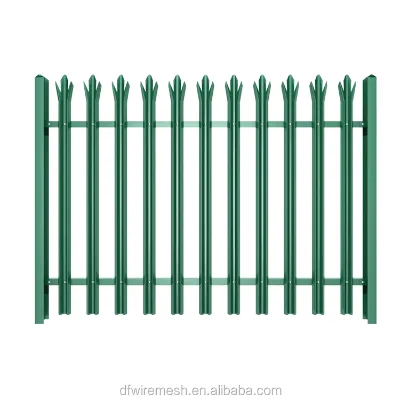
The Palisade Fence market features a diverse array of products designed for high-security and boundary demarcation across various sectors. Listings indicate that these systems are primarily constructed from iron or metal, with specific models such as HT-P-022 and HX-01507 representing common structural configurations. The observed product range includes customizable colors and various pale profiles, including D-Section, W-Section, and Angle Steel, allowing buyers to select designs that match specific aesthetic or functional requirements. This variety ensures that procurement teams can find solutions tailored to distinct environmental conditions and security levels.
Observed listing signals reveal a wide spectrum of application contexts, ranging from residential and municipal fencing to high-security installations like airports, stadiums, and railway perimeters. The presence of features such as waterproofing, rot proofing, and rodent proofing suggests that these fences are engineered for durability in harsh outdoor environments. Additionally, the availability of easily assembled components indicates a focus on efficient installation processes, which is critical for large-scale infrastructure projects where labor costs and timeline adherence are significant concerns for project managers.
Technical Specifications to Verify
Buyers must rigorously verify the physical dimensions and structural integrity of the Palisade Fence components to ensure compatibility with existing site requirements. Key specifications include pale heights ranging from 1m to 6m and widths typically around 2.75m, with thickness options of 2.0mm, 2.5mm, or 3.0mm. The horizontal rails are often specified as 45x45mm, 50x50mm, or 60x60mm, providing necessary support for the vertical pales. Confirming these exact measurements is essential to prevent structural failures and ensure that the fence meets the intended security and load-bearing standards for the specific installation site.
Surface treatment and finishing processes are equally critical for long-term performance and maintenance reduction. Common finishing techniques include galvanization, powder coating, and PVC coating, which protect the iron or metal substrate from corrosion and environmental degradation. The weave technique, such as satin weave for mesh variants, and the cold-rolled or hot-rolled production methods also influence the final product's strength and flexibility. Procurement teams should request detailed technical datasheets that confirm the specific surface treatment applied, as this directly impacts the lifespan of the fence in coastal or industrial environments.
Compliance and Safety Documentation
Ensuring that palisade fences meet relevant international and local standards is a fundamental requirement for compliant procurement. Many suppliers claim adherence to ISO9001 and CE certification, which indicates a baseline level of quality management and European conformity. However, buyers should verify the specific scope of these certifications to ensure they cover the manufacturing processes and materials used in the final product. Documentation such as material test reports and factory audit results provide objective evidence of compliance, reducing the risk of sourcing substandard materials that could compromise site safety.
Safety features and additional security measures must also be documented and verified before finalizing any purchase order. The availability of accessories like straight fish-plates, bolts, and nuts, along with various post fixing methods such as concrete embedding or bolt-down installations, contributes to the overall stability of the fence. Buyers should inquire about optional security enhancements, such as anti-climb designs or specific pale head styles like rounded, notched, or single-spike tops. These details are crucial for assessing the fence's effectiveness against unauthorized access and ensuring that the installation meets local regulatory safety requirements.
Cost Drivers and Commercial Terms
The cost of palisade fencing is influenced by several key factors, including material thickness, surface treatment complexity, and order volume. Observed price ranges vary significantly, reflecting differences in quality, customization, and production methods. Buyers should note that thicker pales and more robust surface treatments, such as heavy-duty galvanization or multi-layer powder coating, will increase the unit cost. Understanding these cost drivers allows procurement teams to balance budget constraints with performance requirements, ensuring that they do not overspend on unnecessary features or underspend on critical structural elements.
Commercial terms and payment conditions play a vital role in the overall procurement strategy and risk management. Typical trade conditions include Telegraphic Transfer (TT) and Letter of Credit (LC), which offer varying levels of security for both buyers and suppliers. Minimum Order Quantities (MOQ) can range from small batches to large industrial orders, impacting logistics and inventory management. Buyers should negotiate clear terms regarding packaging, such as palletized or bulk shipping, to minimize damage during transit and reduce handling costs at the destination port.
Supplier Qualification and Quality Control
Selecting a qualified supplier requires a thorough evaluation of their manufacturing capabilities and quality control processes. Suppliers originating from regions like Hebei, China, often have established supply chains for iron and metal products, but buyers must verify their production capacity and consistency. Requesting samples and conducting factory audits can provide insights into the supplier's ability to maintain uniform quality across large production runs. This due diligence is essential to ensure that the palisade fences delivered meet the specified technical standards and performance expectations.
Quality control measures should be integrated into the procurement process to mitigate the risk of receiving defective products. Buyers should insist on pre-shipment inspections that verify dimensions, surface finish, and structural integrity. Clear communication regarding customization requirements, such as specific colors or pale head styles, must be documented in the purchase order to avoid misunderstandings. Establishing a robust quality assurance protocol helps ensure that the palisade fences perform as intended throughout their service life, reducing the need for costly repairs or replacements.
Long-Term Procurement Checks
Long-term procurement success depends on establishing a reliable supply chain that can adapt to changing project requirements and market conditions. Buyers should maintain open lines of communication with suppliers to discuss potential design modifications or security enhancements as technology evolves. Regular performance reviews of installed fences can provide valuable feedback on durability and maintenance needs, informing future purchasing decisions. This proactive approach ensures that the fencing solutions remain effective and compliant with evolving security standards and environmental challenges.
Sustainability and environmental considerations are increasingly important in modern procurement strategies. Features such as eco-friendly materials and renewable source components may be available, offering buyers opportunities to align their projects with corporate sustainability goals. Buyers should inquire about the recyclability of the iron or metal components and the environmental impact of the surface treatment processes. By prioritizing sustainable sourcing practices, organizations can reduce their environmental footprint while maintaining high standards of security and durability for their infrastructure projects.
FAQs
What material are the Palisade Fence panels made from?
The Palisade Fence panels are made from iron and other metal materials. Options include cold rolled or hot rolled construction, with galvanized or powder coated finishes available for corrosion protection. Pale thickness options are 2.0mm, 2.5mm, and 3.0mm, so you can select a specification suited to your security level and site conditions.
What panel heights and widths can I order for palisade fencing?
Fence panel heights range from 1m to 6m, with widths from 1m to 3m, and 2.75m is the standard width. Common stocked heights include 1.5m, 1.8m, and 2.4m. Customizable specifications are accepted, so confirm your required height and width with the supplier before ordering.
Which pale profiles and head styles are available?
Available pale profiles include D-section, W-section, and angle steel, with round, D, and W type options also listed. Pale head styles include rounded, rounded and notched, and single-spike designs. Horizontal rails are rolled steel angle (RSA), and posts can be RSJ or square posts. Specify your preferred combination when requesting a quote.
How are the fence posts installed and fixed?
Posts can be fixed in two ways: concrete-in installation or bolt-down mounting on hard surfaces. Posts come as RSJ posts or square posts, and accessories include straight fish-plates, bolts, and nuts. Choose concrete-in for permanent installations and bolt-down when ground conditions or future relocation require surface fixing.
Can I order customized colors and surface treatments?
Yes, customizable colors are available, and finishes include PVC coating, powder coating, and galvanizing. Cold rolled and hot rolled techniques are both offered depending on the specification. Since customization is available across the listing, share your color code, coating preference, and application so suppliers can confirm feasibility and pricing.
What certifications and standards do these palisade fences have?
Listed certifications and standards include ISO9001, CE, FSC, and ASTM compliance, with some products manufactured to client requirements. One listing references ISO 9001:2008. Certification coverage varies by product and supplier, so request valid certificate copies for the specific model you intend to purchase before placing an order.
What is the minimum order quantity and payment terms?
Minimum order quantities vary widely across the range, from as low as 1 unit up to 1000 units, and one listing states a minimum of 100 meters. Trade conditions include TT, LC, and PP payment terms. Confirm the exact MOQ and accepted payment method for your chosen specification directly with the supplier.
How are Palisade Fence products packed for shipping?
Packing options include pallets, wooden pallets, metal pallets, bulk packing, and bubble film wrapping, with packing methods adjustable to your requirements. Palletized packing protects powder coated and galvanized finishes during transit. For export shipments, confirm pallet dimensions, loading quantity, and whether packing charges are included in the quoted price.