Source Paper Feed Separation Roller Assembly for Printing, Chemical, Construction
Explore 30 listings for the Paper Feed Separation Roller Assembly, featuring options with ISO certifications and customizable designs. Buyers can compare specifications like material composition, surface roughness, and packing methods to find suitable components for industrial machinery.
Key considerations
Products List

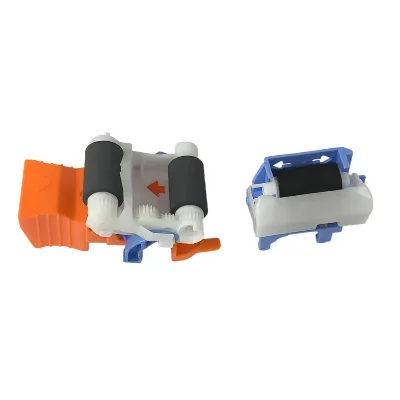


Supporting Roller Assembly for Rotary Kiln Dryer and Pelleting Machine
$100.00 - $5000.00
MOQ: 1 Pieces


Durable Press Roller Assembly with Alloy Sleeve and CE Certification
$50000.00 - $115500.00
MOQ: 1 Pieces


Paper Machine Spare Part Rollers Highly Efficient Combination Roller
$23000.00 - $23800.00
MOQ: 1 Pieces


Paper Industry Automatic Fourdrinier Paper Machine Spare Part Rubber Roller
$1000.00 - $2000.00
MOQ: 1 Pieces


Comprehensive Sourcing Guide
Strategic Sourcing Guide for Paper Feed Separation Roller Assemblies
The global procurement landscape for paper feed separation roller assemblies demands a rigorous approach to technical verification and supplier validation. These components are critical in maintaining the precision of printing, packaging, and industrial handling systems. A failure in the separation mechanism can lead to paper jams, misalignment, and significant downtime. This guide synthesizes observed market data and verified product attributes to provide a structured framework for buyers evaluating potential suppliers. The focus remains on evidence-based decision-making, ensuring that procurement strategies align with the specific operational requirements of the buyer's facility.
Technical Specifications and Material Composition
When evaluating paper feed separation roller assemblies, the primary technical differentiator lies in the material composition and surface engineering. The supply chain data indicates a diverse range of materials utilized in these components, including Carbon Steel and Alloy Steel. These base materials provide the necessary structural integrity to withstand the mechanical stresses of continuous rotation. However, the functional performance is largely dictated by the surface material. Observations confirm the use of Chrome and Tungsten Carbide as surface treatments. Tungsten Carbide, in particular, is noted for its exceptional hardness and wear resistance, making it suitable for high-volume applications where friction and abrasion are constant.
Surface finish is another critical specification. The observed market data highlights a roughness value of Ra 0.1. This specific roughness parameter suggests a highly polished surface designed to minimize friction while maintaining sufficient grip to separate individual sheets of paper effectively. Buyers must verify that the supplier can consistently achieve this Ra 0.1 tolerance, as deviations can lead to slippage or double-feeding. Furthermore, dimensional specifications vary significantly based on the application. Data points indicate diameters up to 600mm and lengths reaching 5000mm. This wide range implies that a single standard product rarely fits all needs, necessitating a reliance on custom manufacturing capabilities.
The following table summarizes the key technical attributes observed in the current market for these assemblies:
| Attribute Category | Observed Specifications | Application Implication |
|---|---|---|
| Base Material | Carbon Steel, Alloy Steel | Provides structural durability for heavy-duty cycles. |
| Surface Material | Chrome, Tungsten Carbide | Enhances wear resistance and reduces friction. |
| Surface Roughness | Ra 0.1 | Ensures precise sheet separation and grip. |
| Dimensions | Diameter: up to 600mm; Length: up to 5000mm | Requires custom sizing for large industrial presses. |
| Compatibility | HP, Komori Printer | Must match specific brand machinery interfaces. |
| Model Types | HERZ-AR-06, HERZ-PR, QT700, RC-100 series | Indicates specialized models for different printer types. |
Compliance and Certification Verification
In the industrial sector, compliance with international standards is not merely a formality but a prerequisite for operational safety and quality assurance. The supply data reveals that many manufacturers adhere to ISO9001:2008, a quality management standard that ensures consistent production processes. Additionally, specific product certifications such as CE and ISO are frequently cited. The presence of CE certification indicates compliance with European health, safety, and environmental protection standards, which is vital for exporters targeting the European market.
However, buyers must exercise caution when interpreting these certifications. The data shows that some products list standards "according to the customer's drawing" or "according to the customer's drawing requirement." This suggests a high degree of customization where the standard may be tailored to the specific machinery rather than a universal industry norm. Therefore, the buyer's responsibility is to verify that the supplier's internal quality control systems are robust enough to meet these bespoke requirements. It is essential to request valid, current certificates from the supplier rather than relying on marketing claims. The origin of the products varies, with listings from Fujian, Guangdong, Luoyang, and Shanghai in China. While these regions are known for manufacturing hubs, the specific factory location should be cross-referenced with the certification body to ensure the certificate applies to the specific production facility.
Cost Drivers and Pricing Structures
Understanding the cost structure of paper feed separation roller assemblies is crucial for budgeting and negotiation. The observed price range in the market is exceptionally wide, spanning from 0.1 USD to 115,500 USD. This vast disparity is not indicative of a single product type but rather reflects the complexity of the order. The lower end of the spectrum likely corresponds to small, standard replacement parts or single items with minimal customization. Conversely, the upper end reflects large-scale assemblies, custom-engineered units with significant length (up to 5000mm), or complex systems involving multiple rollers and integrated motor components.
Several factors drive these costs. First, the material selection plays a pivotal role. Tungsten Carbide is significantly more expensive than standard steel or chrome plating. Second, the level of customization is a major cost driver. Products described as "Customized" or "Customized according to customer's drawing" require additional engineering time, tooling setup, and quality assurance checks, all of which increase the unit price. Third, the scale of the order influences the unit cost. The observed Minimum Order Quantity (MOQ) ranges from 1 to 500 units. Buyers purchasing single items may face higher per-unit costs due to the lack of economies of scale, while bulk orders of 500 units can often negotiate lower rates.
Pricing is frequently listed as "Negotiable," indicating that the initial quote is a starting point. Buyers should be prepared to discuss volume discounts, payment terms, and logistics costs. The packing method also impacts the final landed cost. Options include "Oat, Neutral Package," "Wooden Cases," or packaging "Suitable for Long Distance and Sea Transportation." Wooden cases, while more expensive, provide superior protection for large, heavy rollers during international shipping, potentially reducing the risk of damage and associated insurance claims.
Typical Applications and Industry Alignment
Paper feed separation roller assemblies are integral to several high-demand industries. The data explicitly identifies the "Chemical Industry" and "Construction" as primary application areas. In the chemical sector, these rollers may be used in coating machines or paper processing lines where chemical resistance and durability are paramount. In construction, they might be employed in machinery used for processing building materials or large-format printing for architectural plans.
Furthermore, the compatibility data points to specific brands such as HP and Komori. This indicates a strong presence in the printing and packaging industry. The "Usage: For Komori Printer" attribute highlights the necessity of precision in offset printing machines, where paper feed accuracy is critical for print quality. The "Type: General" classification suggests that while some rollers are generic, many are specialized for specific machinery models like the HERZ-AR-06 or QT700.
The versatility of these components is further demonstrated by their use in various mechanical configurations. Some assemblies are integrated with AC motors, featuring power ratings from 15KW up to 20,000KW. This range suggests that the supply chain supports everything from small desktop printing units to massive industrial processing lines. The "Advantage: High Wear Resistance" attribute is particularly relevant for these high-speed applications, where the rollers must maintain their dimensional stability over thousands of operating hours.
Supplier Evaluation and Origin Analysis
Evaluating suppliers requires a deep dive into their operational capabilities and geographic footprint. The data indicates a concentration of suppliers in China, specifically in Fujian, Guangdong, Luoyang, and Shanghai. Each region offers distinct advantages. Guangdong and Fujian are major manufacturing hubs known for their supply chain efficiency and export capabilities. Shanghai is a center for high-tech engineering and heavy machinery, which may be relevant for the larger, more complex roller assemblies. Luoyang is historically significant for heavy industry and steel production, which could be a source for the base Carbon Steel or Alloy Steel components.
Buyers should prioritize suppliers who offer "Factory Visit: Welcomed Warmly." This openness suggests transparency and confidence in their manufacturing processes. A factory visit allows the buyer to inspect the production line, verify the quality control measures, and assess the technical expertise of the engineering team. Additionally, the availability of "Video Outgoing-Inspection" is a valuable feature for buyers who cannot travel. This service provides visual evidence of the product's condition before shipment, reducing the risk of receiving defective goods.
The "Spare Parts: Supply All Using Life" attribute is a strong indicator of a long-term partnership potential. It implies that the supplier is committed to supporting the product throughout its lifecycle, which is essential for minimizing downtime. When evaluating suppliers, buyers should also check for "Customization: Available" capabilities. Given the wide range of models and the "according to customer's drawing" standards, the ability to customize is a key differentiator. Suppliers who can only offer standard products may not meet the specific needs of complex machinery.
Quality Control and Long-Term Procurement
Quality control is the backbone of successful procurement for mechanical components. The data highlights "Quality: High Level" as a standard attribute, but this must be validated through objective measures. Buyers should request detailed inspection reports that verify the Ra 0.1 roughness, the material composition (Carbon Steel vs. Alloy Steel), and the surface treatment (Chrome or Tungsten Carbide). The "Condition: New" attribute is standard, but for critical components, buyers should insist on proof of newness, such as manufacturing dates or batch codes.
Long-term procurement considerations extend beyond the initial purchase. The "Selling Units: Single item" and "Single package size: 4X3X3 cm" data suggest that some components are small and easily replaceable, while others are large and require specialized handling. For large assemblies, the "Wooden Case" packing is essential to prevent damage during transit. Buyers should also consider the "Lead Time" implications of customization. While specific lead times are not provided in the data, custom orders typically require longer production cycles than standard stock items.
To ensure long-term success, buyers should establish a clear communication channel regarding "According to the customer's drawing" requirements. Any ambiguity in the drawing can lead to production errors. It is advisable to use digital files with clear tolerances and to confirm the final design with the supplier before production begins. The "Price: Negotiable" nature of the market also allows for the establishment of long-term contracts that lock in favorable pricing and prioritize production slots for repeat orders.
In conclusion, sourcing paper feed separation roller assemblies requires a balanced approach that weighs technical specifications against cost and supplier reliability. By focusing on verified attributes such as material composition, surface roughness, and certification status, buyers can mitigate risks and ensure the procurement of high-quality components. The diversity of the market, from small single items to massive custom assemblies, offers opportunities for tailored solutions, provided that the buyer maintains a rigorous evaluation process.
FAQs
What materials are used for paper feed separation roller assemblies?
These assemblies typically use Carbon Steel or Alloy Steel for the base structure. The surface is often treated with Chrome or Tungsten Carbide to ensure high wear resistance and precise sheet separation.
Which certifications do these roller assemblies usually hold?
Many products comply with ISO9001:2008 and hold CE certification. Some manufacturers also provide ISO certification, ensuring quality management and safety standards for international shipping and operation.
Can these rollers be customized according to specific drawings?
Yes, customization is available for many models. Manufacturers often produce units according to customer drawings or specific requirements, allowing for tailored dimensions and specifications for unique machinery needs.
How large can the dimensions of these assemblies be?
The maximum diameter observed is 600mm and the length can reach 5000mm. These large sizes require specialized packaging like wooden cases to ensure safety during long-distance sea transportation.
What is the roughness specification for the roller surface?
The surface roughness is specified as Ra 0.1. This highly polished finish minimizes friction while maintaining the necessary grip to effectively separate individual sheets of paper during operation.
Which brands are compatible with these separation roller assemblies?
These components are compatible with brands such as HP and Komori printers. Specific models like HERZ-AR-06 and QT700 are designed to fit these established machinery interfaces for reliable performance.
What is the typical price range for these assemblies?
The price range varies significantly from 0.1 USD to 115,500 USD depending on complexity. Costs are influenced by material selection, customization levels, and order quantity, with pricing often being negotiable.