Source Pickled and Phosphated Adjustable Corrosion-Protection Rack for Warehouse, Industrial, and Supermarket
Compare 30 listings for pickled and phosphated adjustable corrosion-protection rack suitable for warehouse, industrial, and supermarket applications. These steel racks feature electrostatic spraying, powder coating, and customizable dimensions to meet diverse storage needs.
Key considerations
Products List


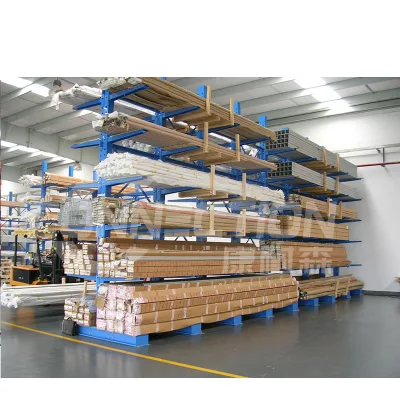


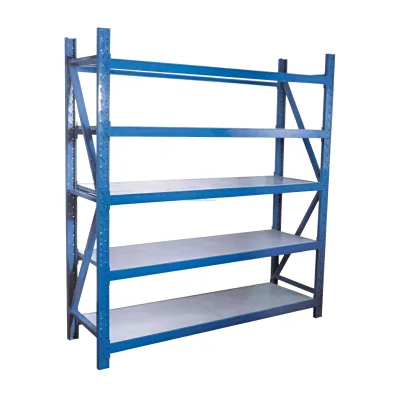

High Capacity Corrosion Resistant Rack with Anti Rust Shelf for Storage
$8.64 - $18.85
MOQ: 2000 Pieces


Comprehensive Sourcing Guide
Strategic Sourcing Guide for Pickled and Phosphated Adjustable Corrosion-Protection Racks
Understanding the Core Technical Architecture and Surface Integrity
When sourcing a pickled and phosphated adjustable corrosion-protection rack, the buyer must first distinguish between the chemical pretreatment processes and the final structural configurations available in the market. The core keyword implies a specific manufacturing sequence where cold-rolled steel undergoes pickling to remove mill scale and rust, followed by phosphating to create a micro-crystalline conversion coating that enhances paint adhesion and provides a baseline level of corrosion resistance. This combination is critical for environments where humidity or chemical exposure is a factor, yet the primary defense remains the subsequent powder coating or electrostatic spraying layer.
The structural integrity of these racks varies significantly based on the "Mobility" and "Development" attributes observed in current listings. Some units are categorized as "Conventional" with "Fixed" mobility, designed for static warehouse storage where the footprint remains constant. In contrast, other models are described as "New Type" with "Adjustable" mobility, allowing for reconfiguration of shelf heights or beam positions without tools. The "Type" attribute further differentiates these units into "Boltless/Rivet Racking" systems, which rely on friction and interlocking mechanisms for assembly, or traditional bolted structures. The "Structure" is universally defined as a "Shelf" or "Rack" system, with heights ranging from 0-5 meters for standard warehouse applications up to 5-15 meters for high-bay industrial storage.
Material composition is a non-negotiable verification point. The primary material is consistently identified as "Cold-Rolled Steel," which offers superior dimensional stability compared to hot-rolled alternatives. The "Surface Treatment" process explicitly mentions "Pickling and Phosphating," often followed by "Electrostatic Spraying" or "Powder Coated" finishes. This dual-layer approach ensures that the steel substrate is protected before the aesthetic and additional protective color layer is applied. Buyers should note that while "Blue, White, Grey, or Customized" colors are common, specific configurations may dictate "Blue for Upright, Orange for Beam" to enhance safety visibility in busy industrial zones.
Compliance Verification and Certification Standards
Navigating the regulatory landscape for industrial racking requires a rigorous verification of certifications, as these documents validate the safety and quality of the steel structure. The supply chain for these racks frequently cites compliance with international standards such as CE, ISO, SGS, and TUV. These certifications are not merely marketing terms but are essential for insurance validation and legal liability protection in many jurisdictions. For instance, the "prod_standard" field often lists "CE, ISO, SGS" as the governing framework, ensuring that the manufacturing process meets specific European and international safety requirements.
However, buyers must exercise caution when interpreting these certifications. The presence of a certification label on a product listing does not automatically guarantee that every unit in a specific order batch meets the standard without independent verification. The "prod_standard" for specific models, such as the "EBIL-PBR" or "W-300," may reference specific dimensional tolerances like "2000mm* 60mm * 2000mm" or "400MM," which serve as the baseline for compliance testing. It is imperative to request the actual test reports or certificates from the supplier to confirm that the "Pickled and Phosphated" treatment process was performed under the conditions required to meet these standards.
Furthermore, the "Location" of origin plays a significant role in the regulatory context. Products originating from "Weifang, China" or "Nanjing, China" may be subject to different export regulations and quality control protocols. While the "Place of Origin" is listed as "CN;SHN" for certain cantilever models, the specific factory's adherence to ISO standards must be confirmed. Buyers should verify that the "Certification" claims are current and applicable to the specific model number being procured, as standards can vary between different product lines within the same manufacturer. The "Standard" attribute often includes specific dimensions like "2000mm* 600mm* 2000mm," which must align with the physical requirements of the intended storage facility to ensure compliance with load-bearing regulations.
Cost Drivers and Economic Factors in Procurement
The pricing structure for adjustable corrosion-protection racks is influenced by a complex interplay of material costs, surface treatment complexity, and logistical factors. The observed price range in the market spans from $0.5 to $750, a wide variance that reflects differences in unit size, load capacity, and customization levels. A unit priced at the lower end of this spectrum is likely a basic, fixed-height shelf component, whereas the higher end represents a fully assembled, high-bay system with advanced mobility features. The "Load Capacity," ranging from 100 to 500 Kgs per level, is a primary cost driver; racks designed to support heavier loads require thicker gauge steel and more robust welding, directly impacting the final price.
Customization is another significant variable. The "Customization" attribute is marked as "Available," allowing buyers to specify dimensions, colors, and structural configurations. However, custom orders often incur higher costs due to the need for specialized tooling and non-standard production runs. The "Size" attribute, which can be "as Request" or fixed at "2000mm* 600mm* 2000mm," dictates the amount of raw material required. Similarly, the "Color" selection, whether standard "Blue, White, Grey" or a specific "Yellow" for high-visibility areas, can affect the cost if the requested pigment requires a more expensive powder coating formulation.
Minimum Order Quantity (MOQ) also plays a crucial role in the total cost of ownership. The observed MOQ range is between 1 and 2000 units. Ordering a single unit may result in a higher per-unit cost due to setup fees and lack of economies of scale, while bulk orders of 2000 units can significantly reduce the average price. The "Packaging" method, described as "Protective Film and Carton" or "Film + Hardboard," adds to the cost but is essential for preventing damage during transit. Buyers must balance the initial unit price against the total landed cost, including shipping and handling, to determine the most economical procurement strategy. The "Development" stage, whether "Conventional" or "New Type," may also influence pricing, as newer technologies often command a premium until they become industry standards.
Typical Applications and Operational Scenarios
The versatility of pickled and phosphated adjustable racks makes them suitable for a diverse array of industrial and commercial applications. The "Usage" attribute lists a broad spectrum of environments, including "Warehouse Rack," "Industrial," "Food," "Supermarket," "Tools," "Clothing," "Beverage," and "Tool Rack." This diversity underscores the need for buyers to match the specific rack configuration to the operational demands of their facility. For instance, the "Food" and "Supermarket" applications require racks that are easy to clean and resistant to moisture, making the "Pickled and Phosphated" surface treatment particularly valuable. In "Industrial" settings, the "Load Capacity" of 100-500 Kgs ensures that heavy machinery parts or raw materials can be stored safely.
The "Storage Way" attribute, such as "Filo," indicates specific organizational methods that may be required for certain inventory types. The "Level" count, ranging from 2 to 7, allows for flexible vertical storage solutions that maximize warehouse space. In "Beverage" and "Clothing" sectors, the "Mobility" feature becomes critical; "Mobile" racks can be repositioned to create aisles only when needed, increasing storage density, while "Fixed" racks provide stability for high-volume, static inventory. The "Closed" attribute, which can be "Open," "Semi-closed," or fully enclosed, further dictates the application. "Semi-closed" structures might be preferred for "Tools" to prevent dust accumulation while maintaining visibility, whereas "Open" structures are ideal for "Warehouse Rack" applications where airflow and visibility are paramount.
The "Structure" type, whether "Shelf" or "Rack," also influences the application. "Shelf" structures are typically used for lighter, smaller items in "Supermarket" or "Tool Rack" scenarios, while "Rack" structures support heavier pallets or large components in "Industrial" warehouses. The "Height" of the rack, ranging from 0-5m to 5-15m, determines the suitability for different ceiling heights and forklift capabilities. High-bay racks in the 5-15m range are essential for maximizing vertical space in large distribution centers, while lower racks are more appropriate for retail environments or smaller workshops.
Supplier Evaluation and Quality Assurance Protocols
Evaluating suppliers for adjustable corrosion-protection racks requires a multi-faceted approach that goes beyond price comparisons. The "Brand Name" and "Origin" are initial indicators of reliability, with "Ebilmetal" being a recognized entity in the market. However, the physical location of the supplier, such as "Weifang, China" or "Nanjing, China," should be verified to ensure the supplier has the necessary infrastructure to produce high-quality steel racks. Buyers should assess the supplier's "Serviceability" for "Common Use" applications, ensuring they have the capacity to handle standard orders efficiently.
Quality control is paramount, especially given the "Pickled and Phosphated" process which requires precise chemical control. Buyers should request documentation on the "Surface Treatment" and "Finishing" processes to verify that the phosphating layer is applied correctly and that the subsequent "Powder Coated" or "Electrostatic Spraying" finish is uniform and durable. The "Packaging" method, described as "Experienced Export Packing" or "Normal Export Package," is a critical indicator of the supplier's attention to detail. Proper packaging, such as "Protective Film and Carton" or "Film + Hardboard," ensures that the racks arrive without scratches or dents, which could compromise the corrosion protection.
The "Certification" status should be cross-referenced with the supplier's actual production capabilities. While "CE, ISO, SGS, TUV" are listed, buyers must confirm that these certifications are valid for the specific models being ordered. The "Standard" compliance, such as "2000mm* 60mm * 2000mm" or "400MM," should be verified through third-party testing if possible. Additionally, the "Development" stage of the product, whether "Conventional" or "New Type," can indicate the supplier's commitment to innovation and continuous improvement. Suppliers offering "New Type" racks with "Adjustable" mobility are likely more invested in R&D and quality assurance than those offering only static, conventional models.
Long-Term Procurement and Lifecycle Management
Sourcing adjustable corrosion-protection racks is not a one-time transaction but a long-term investment that requires careful lifecycle management. The "Mobility" and "Customization" features offer flexibility that can extend the useful life of the racks as business needs evolve. However, the "Weight" of the racks, ranging from 150 to 500kg, necessitates proper installation and maintenance to ensure safety and longevity. Regular inspections of the "Surface" condition are essential to detect any signs of corrosion or damage to the "Pickled and Phosphated" layer, especially in harsh environments.
The "Load Capacity" of 100-500 Kgs per level must be strictly adhered to, as overloading can lead to structural failure and safety hazards. Buyers should implement a maintenance schedule that includes checking the integrity of the "Boltless/Rivet Racking" connections and ensuring that the "Adjustable" mechanisms function smoothly. The "Color" fading or chipping can also be an indicator of wear, signaling the need for touch-up painting or replacement. The "Packaging" and "Storage" conditions during the initial delivery and subsequent storage should be optimized to prevent damage to the "Cold-Rolled Steel" substrate.
Furthermore, the "Standard" compliance and "Certification" status should be reviewed periodically to ensure that the racks continue to meet evolving safety regulations. As the "Development" of racking technology advances, suppliers may introduce new models with improved features, such as enhanced mobility or better corrosion resistance. Buyers should stay informed about these developments to make informed decisions about future upgrades or replacements. The "Usage" in specific sectors like "Food" or "Beverage" may require additional hygiene standards, necessitating regular cleaning and inspection protocols to maintain compliance with industry regulations. By adopting a proactive approach to lifecycle management, buyers can maximize the value and safety of their adjustable corrosion-protection rack investments.
Comparative Analysis of Rack Configurations
To facilitate informed decision-making, the following table compares key attributes of different rack configurations based on the provided product facts. This comparison highlights the trade-offs between mobility, load capacity, and structural design.
| Attribute | Fixed Conventional Rack | Adjustable New Type Rack | Mobile High-Bay Rack |
|---|---|---|---|
| Mobility | Fixed | Adjustable | Mobile |
| Development | Conventional | New Type | New Type |
| Height Range | 0-5m | 5-15m | 5-15m |
| Load Capacity | 100-500 Kgs | 100-500 Kgs | 100-500 Kgs |
| Structure | Shelf / Rack | Shelf / Rack | Rack |
| Surface Treatment | Pickling & Phosphating | Pickling & Phosphating | Pickling & Phosphating |
| Typical Usage | Warehouse, Industrial | Industrial, Food | Industrial, Beverage |
| Customization | Limited | High | High |
| Mobility Feature | None | Adjustable Shelves | Wheels/Casters |
This comparison illustrates that while the core material and surface treatment remain consistent across configurations, the mobility and height capabilities vary significantly. The "Adjustable New Type" and "Mobile High-Bay" racks offer greater flexibility for dynamic storage environments, whereas the "Fixed Conventional" rack is better suited for stable, high-volume storage where reconfiguration is infrequent. Buyers should select the configuration that best aligns with their specific operational needs and space constraints.
FAQs
What surface treatments are applied to these racks?
The racks undergo pickling and phosphating followed by electrostatic spraying or powder coating. This dual-layer process removes mill scale and creates a micro-crystalline conversion coating to enhance paint adhesion and provide baseline corrosion resistance before the final color finish is applied.
Which certifications validate the safety of these steel racks?
Common certifications include CE, ISO, SGS, and TUV. These documents validate that the manufacturing process meets specific European and international safety requirements, though buyers should verify that these certifications are current and applicable to the specific model number being procured.
How much load capacity can these adjustable racks support?
Load capacity typically ranges from 100 to 500 kilograms per level. Racks designed to support heavier loads require thicker gauge steel and more robust welding, which directly impacts the final price and structural integrity of the unit.
Can I customize the dimensions and colors of the racks?
Customization is available for dimensions, colors, and structural configurations. Buyers can specify sizes like 2000mm by 600mm by 2000mm or request custom colors such as blue, white, grey, or yellow, though custom orders may incur higher costs due to specialized tooling.
What materials are used to construct these warehouse racks?
The primary material is consistently identified as cold-rolled steel. This material offers superior dimensional stability compared to hot-rolled alternatives and serves as the substrate for the pickling, phosphating, and subsequent powder coating or electrostatic spraying processes.
Where are these racks typically manufactured and shipped from?
Products originate from locations such as Weifang, Nanjing, and other parts of China. The specific factory's adherence to ISO standards must be confirmed, as the location influences export regulations and quality control protocols for the finished steel structures.