Source Picnic Folding Table for Beach Park Cafe
Source 30 verified options for the Picnic Folding Table designed for outdoor dining. Compare specifications including material, weight, and dimensions from suppliers in China to find the right fit for beach, park, or cafe use.
Key considerations
Products List


Folding Table Portable Outdoor Camping Picnic Garden Plastic Folding Table
$10.00 - $20.00
MOQ: 500 Pieces


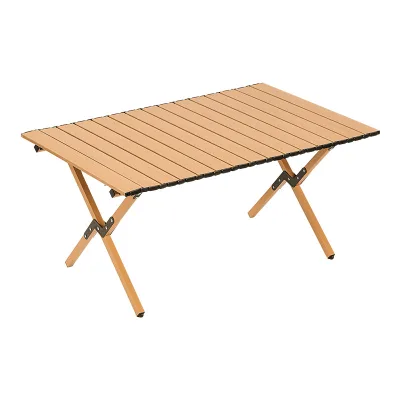
Camping Table Outdoor Folding Table Aluminum Wooden Picnic Camping Table
$34.70 - $35.50
MOQ: 100 Pieces


Foldable Folding Tables Aluminum Picnic Camping Table Lightweight Table
$10.99 - $11.99
MOQ: 100 Pieces

Beach Outdoor Folding Picnic Table Portable Camping Table Wooden BBQ Table
$40.73 - $42.50
MOQ: 300 Pieces




Comprehensive Sourcing Guide
Strategic Sourcing Guide for Picnic Folding Tables
The global demand for portable outdoor furniture has surged, driven by a growing emphasis on leisure activities, camping, and outdoor dining experiences. For B2B buyers entering this sector, the "Picnic Folding Table" represents a critical product category that balances utility with logistical efficiency. Sourcing this item requires a nuanced understanding of material science, manufacturing capabilities, and supply chain logistics. The following guide synthesizes available market data and technical observations to provide a disciplined framework for procurement decisions.
Technical Specifications and Material Composition
When evaluating picnic folding tables, the primary differentiator lies in the material composition and structural design. Market observations indicate a bifurcation between plastic and metal constructions, each serving distinct use cases. Plastic models are frequently noted for their lightweight nature and resistance to corrosion, making them suitable for high-volume, low-cost applications. Conversely, metal variants, particularly those utilizing aluminum, offer superior load-bearing capacity and durability for heavy-duty outdoor environments.
A critical technical parameter to verify is the weight specification. Data points suggest a wide variance in product mass, ranging from lightweight units around 700 grams to heavier commercial-grade tables weighing up to 9.6 kilograms. This disparity directly impacts shipping costs and the ease of transport for end-users. For instance, a table weighing 6.45 kilograms may be optimized for portability in camping scenarios, whereas a unit at 9.6 kilograms likely incorporates reinforced joints for restaurant or park stability. Buyers must cross-reference the net weight (N.W) and gross weight (G.W) to calculate accurate freight charges.
Dimensions are equally vital. Standardized folding sizes often appear in the range of 835214 cm for packed units, while expanded dimensions can vary significantly, with some models reaching 80*110 cm. The unfolded height and surface area determine the table's suitability for specific applications. For example, a standard height range of 77.5 cm to 70.5 cm is typical for dining, whereas lower profiles might be designed for children or specific recreational uses. The "Folded" attribute is a key indicator of the table's portability, with some units designed to collapse into compact bags for single-person transport.
Compliance, Certification, and Safety Standards
In the B2B procurement of outdoor furniture, compliance with safety and quality standards is non-negotiable, yet specific certification data varies by manufacturer. While the provided context does not list specific third-party certifications (such as ISO or ASTM), buyers must actively verify that products meet the safety requirements of their target markets. For tables intended for commercial use in parks or cafes, structural integrity is paramount.
Buyers should request documentation regarding the "Loading Bear" capacity. Observations indicate specific models are rated for 15 kg, which is a critical threshold for determining suitability for heavy dining or equipment placement. For general outdoor furniture, the "General Use" classification often implies a need for weather resistance. Materials like aluminum and specific plastics must be treated to resist UV degradation and moisture.
Furthermore, the "Warranty" attribute is a strong proxy for manufacturer confidence. A standard one-year warranty suggests a baseline expectation of durability. However, buyers should not assume this applies universally without contract confirmation. When sourcing from regions like Zhejiang Province or Anhui, China, it is essential to verify that the production processes adhere to local and international safety guidelines, particularly regarding the stability of the folding mechanisms and the non-toxicity of surface coatings.
Cost Drivers and Pricing Dynamics
The pricing structure for picnic folding tables is influenced by a complex interplay of material costs, manufacturing complexity, and order volume. The observed price range in the market spans from $0.01 to $120 USD, a vast spectrum that reflects differences in quality, material, and customization. The lower end of this range typically corresponds to basic plastic models with minimal finishing, while the upper end encompasses heavy-duty aluminum tables with advanced features like anti-friction surfaces or custom branding.
A significant cost driver is the Minimum Order Quantity (MOQ). The market data shows an MOQ range from 1 to 1000 units. High-volume buyers can leverage economies of scale to reduce the unit price significantly. For instance, an MOQ of 100 units is a common threshold for custom orders, allowing for OEM (Original Equipment Manufacturer) services. Conversely, smaller buyers may face higher per-unit costs but benefit from lower capital outlay.
Logistics costs also play a pivotal role in the total landed cost. The "40hq" (40-foot high cube container) loading capacity is a critical metric for large-scale procurement. Data indicates that a single 40HQ container can hold approximately 2000 pieces of certain models. This density directly affects the freight cost per unit. Buyers must optimize their order mix to maximize container utilization, considering the packing dimensions (e.g., 403529 cm for small sizes) and the "One PC One Bag" or "2PCS/CTN" packing methods.
Typical Applications and Usage Scenarios
The versatility of picnic folding tables allows them to serve a diverse array of applications. The observed usage categories include Beach, Park, Cafe, Restaurant, Courtyard, and Outdoor settings. This broad applicability means that a single product line can often address multiple market segments, provided the specifications align with the specific environment.
For beach and park applications, the priority is often portability and resistance to sand and saltwater. Lightweight models with "Easy Carrying" features and anti-friction surfaces are ideal here. In contrast, tables destined for cafes and restaurants require higher stability and a more robust "Modern" or "Simple" aesthetic. The "Style" attribute, ranging from Simple to Modern, influences the visual appeal and integration into commercial spaces.
The "Suitable For" attribute also provides insight into target demographics. While many tables are unisex, some specifications highlight suitability for specific user groups, such as females, which may influence design choices regarding weight and handle ergonomics. Additionally, the "Wood Style" option, such as panel designs, caters to buyers seeking a natural aesthetic for outdoor dining areas, blending synthetic durability with visual warmth.
Supplier Evaluation and Operational Capabilities
Selecting the right supplier requires a rigorous evaluation of their operational capabilities and flexibility. The market data highlights several key attributes that indicate a supplier's readiness to meet B2B demands. "Customization" and "OEM" acceptance are critical indicators. Suppliers that accept OEM orders can provide branding, color customization, and logo placement, which is essential for retailers and corporate buyers.
Lead time is another vital factor in supplier selection. The observed delivery time ranges from 15 to 30 days, which is standard for manufacturing and shipping cycles. However, buyers should also consider the "Sample Time," which can be as short as 1 to 3 days. A short sample turnaround allows for rapid quality verification before committing to a large production run.
Geographic location is a significant consideration. The data points to origins in Zhejiang Province and Anhui, China, both of which are established manufacturing hubs. These regions offer a mature supply chain ecosystem, but buyers should verify the specific factory capabilities rather than relying solely on the province name. The "Condition" of the products is consistently listed as "New," ensuring that buyers receive fresh inventory.
Quality Control and Inspection Protocols
Effective quality control (QC) is essential to mitigate the risks associated with mass-produced furniture. Given the wide variance in weight and material, a standardized inspection protocol is necessary. Buyers should prioritize checking the structural integrity of the folding mechanism, as this is the most common point of failure. The "Folded" state must be secure, and the "Packing Size" must be consistent to prevent damage during transit.
Inspection should also focus on the surface finish and material quality. For metal tables, verifying the "Metal Type" (e.g., Aluminum) and checking for corrosion resistance is crucial. For plastic tables, ensuring the material is free from brittleness and UV degradation is key. The "Feature" attribute, such as "Anti-Friction," should be tested to ensure it performs as advertised.
Packaging integrity is another area requiring strict QC. The "Packing Method" varies from "Single Bag" to "Carton" with specific counts like "1PCS/Carton" or "2PCS/CTN." Buyers must ensure that the packaging is robust enough to withstand the rigors of shipping, especially for heavy items with a gross weight of 9.6 kg. The "Mail Packing" attribute, marked as "Y" (Yes) in some contexts, suggests suitability for direct-to-consumer shipping, which requires enhanced protective packaging.
Long-Term Procurement Considerations
Sourcing picnic folding tables is not merely a transactional exercise but a strategic partnership that requires long-term planning. Buyers should consider the scalability of their supply chain. As demand fluctuates, the ability of the supplier to adjust production volumes without compromising quality is vital. The "MOQ" flexibility observed in the market (1 to 1000) suggests that many suppliers can accommodate both pilot runs and large-scale orders.
Sustainability and lifecycle management are increasingly important. Buyers should inquire about the recyclability of materials, particularly for plastic and metal components. The "Warranty" period of one year provides a baseline for product lifespan, but buyers should assess the long-term durability based on usage intensity. For commercial applications, the cost of replacement and maintenance should be factored into the total cost of ownership.
Finally, maintaining a relationship with suppliers who offer "Customized" solutions can provide a competitive edge. The ability to tailor products to specific market needs, such as unique dimensions or branding, allows buyers to differentiate their offerings in a crowded marketplace. By focusing on these long-term factors, buyers can build a resilient supply chain that adapts to changing market dynamics while maintaining high quality standards.
FAQs
What materials are used for picnic folding tables?
Picnic folding tables are primarily constructed from plastic or metal, with aluminum being a common metal type. Plastic models offer lightweight portability, while aluminum variants provide superior load-bearing capacity for heavy-duty outdoor environments.
How much does a Picnic Folding Table cost?
The observed price range for these tables spans from 0.01 to 120 USD. Lower prices typically correspond to basic plastic models, whereas higher costs reflect heavy-duty aluminum tables with advanced features or custom branding.
What is the minimum order quantity for customization?
The minimum order quantity ranges from 1 to 1000 units depending on the supplier. A common threshold for custom orders with OEM services is 100 units, allowing for branding and specific design modifications.
Can these tables be used in cafes and parks?
Yes, these tables are suitable for use in beaches, parks, cafes, and restaurants. Their design supports both casual outdoor dining and commercial applications requiring stability and durability in various public settings.
How long is the delivery time for these tables?
The standard delivery time is between 15 and 30 days. Buyers should also note that sample times can be as short as 1 to 3 days, allowing for rapid quality verification before full production.
What is the loading capacity of the tables?
Specific models are rated for a loading bear capacity of 15 kg. This threshold is critical for determining suitability for heavy dining or equipment placement in outdoor scenarios.
Where are these tables manufactured?
Products originate from manufacturing hubs in Zhejiang Province and Anhui, China. These regions offer a mature supply chain ecosystem for producing new condition outdoor furniture with consistent quality standards.