Source Pigment Filter Testing Machine for PP PE PVC
Find and compare 30 Pigment Filter Testing Machine options from Guangdong suppliers. These single-screw extruders support PE, PP, and PVC processing with automatic computerized control and customizable screw diameters for accurate material evaluation.
Key considerations
Products List
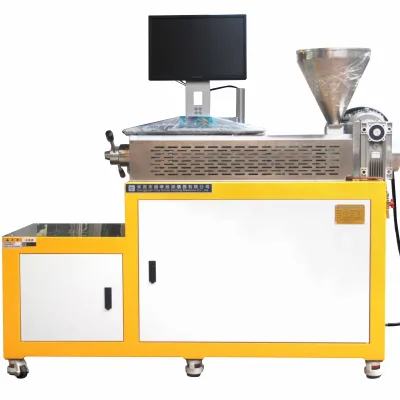


Filter Test Machine for Masterbatch Dispersion Properties Test Machine (FPV)
$27800.00 - $29800.00
MOQ: 1 Pieces

Professional Filter Testing Machine for Pigments with En Certification
$29000.00 - $31000.00
MOQ: 1 Pieces


Lab Filterability Testing Machine for Plastic Extruders High Quality Extruding Equipment
$27500.00 - $31000.00
MOQ: 1 Pieces

Ollital Lab Filter Testers Filter Testing Machine for Pigments and Masterbatches
$26800.00 - $29800.00
MOQ: 1 Sets

Automatic Filter Testing Machine Filter Pressure for Pigment Masterbatch
$26800.00 - $29800.00
MOQ: 1 Sets

Color Masterbatch Polymer Mixing Test Dispersibility Filter Press Value Testing Machine
$26800.00 - $29800.00
MOQ: 1 Sets

Electrical Lab Testing Machine Filter Pressure Value for Pigment and Masterbatch
$26800.00 - $29800.00
MOQ: 1 Sets

Resin Masterbatch Filter Testing Machine with Core Components Pressure Vessel
$26800.00 - $29800.00
MOQ: 1 Sets


Lab Equipment Membrane Filter Integrity Tester, Compliance with CFR Part
$9500.00 - $15000.00
MOQ: 1 Pieces
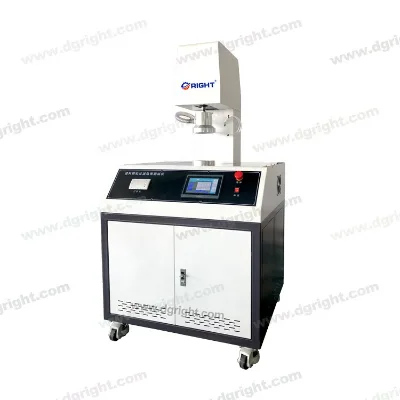
Universal Filter Test Machine Testing Air Filter Tester Integrity Filtration Lab Filter Test Machine
$5000.00 - $15000.00
MOQ: 1 Minimum
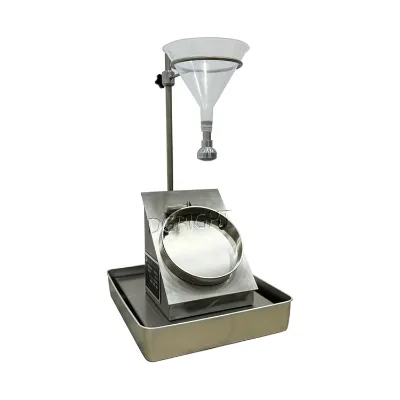
Textiles Waterproofing Performance Testing and Evaluation Water Repellency Spray Tester
$100.00 - $500.00
MOQ: 1 Minimum


Filter Integrity Tester Filter Integrity Testing Machine Sample Processing Equipment
$1000.00 - $3500.00
MOQ: 1 Pieces

Automated Filter Integrity Tester for Membrane Filter Integrity Testing
$4000.00 - $15000.00
MOQ: 1 Sets
Comprehensive Sourcing Guide
Pigment Filter Testing Machine Sourcing Guide
Selecting the right equipment for evaluating pigment dispersion and filter performance requires a clear understanding of the specific machinery capabilities available in the global market. The core keyword for this procurement category is the Pigment Filter Testing Machine, which often overlaps with specialized single-screw extruders designed for profile extrusion and material testing. Buyers must distinguish between general-purpose extrusion lines and dedicated filter testers that offer high-accuracy monitoring of melt pressure and flow consistency. This guide provides evidence-based procurement strategies to help sourcing professionals evaluate suppliers, verify technical specifications, and mitigate risks associated with industrial plastic processing equipment.
The procurement landscape for these machines is characterized by a wide variance in pricing and minimum order quantities, reflecting the customizability of the hardware. Observed market data indicates a price range from approximately $100 to over $31,000 USD, with minimum order quantities (MOQs) spanning from single units to batches of 500. This disparity suggests that buyers will encounter both basic laboratory-scale testers and robust industrial-grade units. Understanding these market signals is crucial for budgeting and negotiating terms, as the final cost will heavily depend on the desired screw diameter, motor power, and specific customization requirements for handling materials like PE, PP, PVC, and TPU.
Product Scope and Observed Listing Signals
The product scope for pigment filter testing machines typically encompasses single-screw extruders configured for profile extrusion molding and material analysis. These units are designed to process a variety of thermoplastics, including polyethylene (PE), polypropylene (PP), polyvinyl chloride (PVC), and thermoplastic polyurethane (TPU). The machinery often features a deep screw channel structure and an integral type extruder assembly, which are critical for maintaining consistent melt flow during filter changeover tests. Buyers should note that while the primary function is testing, the hardware is frequently marketed under broader categories such as profile extruders or granule processing equipment, requiring careful scrutiny of the product description to ensure it meets specific testing accuracy needs.
Observed listing signals reveal significant variability in technical attributes, which serves as a key indicator of supplier transparency and product maturity. For instance, power ratings listed for these machines range from 3 kW to 4 kW, and screw speeds are commonly observed at 95 rpm, with some units offering variable speed controls from 0-95 rpm. The screw diameter is a critical variable, with standard options including 20mm, 25mm, and 30mm, or fully customized dimensions. Additionally, the L/D ratio is frequently cited as 28:1, a specification that influences the mixing and homogenization of pigments within the polymer matrix. Buyers must verify these parameters against their specific material processing requirements to ensure the machine can achieve the necessary shear rates and temperature profiles for accurate pigment dispersion analysis.
Technical Specifications to Verify
When evaluating technical specifications, the screw material and construction are paramount for ensuring durability and resistance to wear during abrasive pigment processing. High-quality units often utilize 38CrMoAlA steel for the screw, a nitrided alloy known for its hardness and corrosion resistance. The core components of the extruder should include a robust motor, bearing, pump, PLC control system, pressure vessel, and gearbox. Buyers should verify that the control system is computerized and offers automatic operation, as this ensures precise regulation of temperature zones and screw speed, which are essential for reproducible filter testing results. The temperature range typically spans from room temperature up to 300°C, covering the processing requirements for most common engineering plastics.
Dimensional and capacity specifications must be aligned with the buyer’s facility constraints and production volume expectations. The machine dimensions observed in the market vary, with some units measuring 1553x650x1350 mm and others listed as 1600x700x1650 mm, while single package sizes can reach 130x75x145 cm. The output capacity for these testing machines is generally modest, ranging from 5 to 10 kg/h, which is appropriate for laboratory or pilot-scale testing rather than mass production. Buyers should also confirm the voltage requirements, which are typically 380V, and ensure that the electrical infrastructure at the installation site is compatible. The weight of the machine, often around 750 kg for the unit itself, necessitates careful planning for floor loading and logistics during installation.
Compliance and Safety Documentation
Compliance and safety documentation are critical components of the procurement process, ensuring that the machinery meets international safety standards and operational reliability expectations. Buyers should request machinery test reports from the supplier, which provide evidence of pre-shipment quality checks and performance validation. These reports should detail the functionality of key components such as the PLC, pressure sensors, and heating zones. Additionally, the warranty terms, typically offered as one year for core components, should be clearly defined in the contract. This warranty coverage protects the buyer against early failures in critical parts like the motor, bearing, and screw, reducing the total cost of ownership during the initial operational phase.
Safety features and electrical compliance must be verified to prevent workplace accidents and ensure smooth integration into existing factory environments. The machine should be equipped with appropriate safety guards, emergency stop mechanisms, and thermal overload protection for the motor and heating bands. Buyers should inquire about the certification status of the electrical components, such as the PLC and motor, to ensure they meet local regulatory requirements. While specific standards like EN 13900-5 or ISO 23900 are sometimes referenced in the broader category, buyers must confirm that the specific model they are purchasing complies with the relevant machinery directives and electrical safety codes applicable in their region. Clear documentation of these compliance aspects is essential for risk management and insurance purposes.
Cost Drivers and Commercial Terms
The cost of a Pigment Filter Testing Machine is driven by several key factors, including the degree of customization, the quality of core components, and the level of automation. Customized screw diameters and specialized motor powers can significantly increase the base price, while standard configurations may offer more competitive pricing. The inclusion of advanced features such as high-accuracy pressure monitoring systems and computerized control interfaces also contributes to the cost. Buyers should analyze the price range of $100 to $31,000 USD to understand the value proposition of different suppliers, recognizing that lower prices may correspond to basic models with limited customization or fewer safety features.
Commercial terms, including minimum order quantities (MOQ) and packaging, play a significant role in the total procurement cost. MOQs can range from 1 to 500 units, allowing for flexibility in purchasing small quantities for testing purposes or larger batches for deployment across multiple facilities. Packaging is typically done in wooden cases to protect the machine during transit, which adds to the shipping weight and volume. Buyers should negotiate clear terms regarding shipping responsibilities, insurance, and delivery lead times. Given the heavy nature of the equipment, freight costs can be substantial, and buyers should factor these into their total cost analysis. Additionally, payment terms should be structured to protect the buyer’s interests, such as using letters of credit or escrow services for high-value transactions.
Supplier Qualification and Quality Control
Supplier qualification is a critical step in ensuring the reliability and long-term performance of the Pigment Filter Testing Machine. Buyers should verify the supplier’s place of origin, with many manufacturers located in Guangdong, China, particularly in Dongguan, a hub for plastic machinery production. Assessing the supplier’s manufacturing capabilities, including their assembly structure and quality control processes, is essential. Suppliers that provide machinery test reports and offer customization services demonstrate a higher level of technical competence and customer focus. Buyers should also evaluate the supplier’s after-sales support structure, including the availability of spare parts and technical assistance, to ensure minimal downtime during operations.
Quality control measures should be implemented both during the manufacturing process and upon delivery. Buyers should request detailed inspection reports that cover the dimensional accuracy of the screw, the alignment of the gearbox, and the functionality of the electrical components. The use of high-quality materials, such as 38CrMoAlA for the screw, should be verified through material certificates. Additionally, buyers should consider conducting a factory audit or hiring a third-party inspection agency to verify the supplier’s production capabilities and quality management systems. Establishing a clear communication channel with the supplier for technical queries and issue resolution is also vital for a successful procurement experience.
Long-Term Procurement Checks
Long-term procurement checks focus on the sustainability of the supplier relationship and the ongoing performance of the machinery. Buyers should monitor the machine’s performance over time, tracking metrics such as output consistency, energy consumption, and maintenance frequency. Regular maintenance of core components like the bearing, motor, and screw is essential to prevent premature wear and ensure accurate test results. Buyers should establish a preventive maintenance schedule based on the manufacturer’s recommendations and keep a stock of critical spare parts to minimize downtime. Additionally, staying informed about technological advancements in extrusion and testing equipment can help buyers upgrade their capabilities and improve process efficiency over time.
Feedback loops with the supplier are crucial for continuous improvement and addressing any emerging issues. Buyers should provide detailed feedback on the machine’s performance, including any operational challenges or desired feature enhancements. This feedback can help the supplier refine their products and offer better solutions for future purchases. Furthermore, buyers should regularly review their procurement strategies to ensure they are aligning with changing business needs and market conditions. By maintaining a proactive approach to supplier management and equipment maintenance, buyers can maximize the return on investment from their pigment filter testing machines and ensure consistent, high-quality test results.
FAQs
What materials can a Pigment Filter Testing Machine process?
This filter tester suits plastics such as PE, PP, PET, PVC, and TPU, working with pigment or masterbatch granules. The single screw design lets you evaluate filter performance across common polymer types. If your material differs, customization is available, so confirm compatibility with the supplier before ordering.
How fast does the single screw run during testing?
The screw speed reaches 95 rpm, and one configuration lists a variable range of 0-95 rpm. This lets you test filtration under different shear and throughput conditions. Output for the machine is roughly 5-10 kg/h, which suits laboratory and small-batch filter evaluation work.
What are the screw dimensions and specifications?
Standard screw diameters are 20, 25, or 30 mm, with customization available if you need another size. The screw uses 38CrMoALA material with an L/D ratio of 28:1. Deeper channel structures and full intermeshing designs are listed, so choose the specification matching your filtration test plan.
How many heating zones does the machine have?
The machine provides 5 total heating zones with a temperature range from room temperature up to 300 degrees. This covers melting and testing conditions for PE, PP, PVC, PET, and similar polymers. Computer control manages zone temperatures, helping you maintain stable conditions during filter pressure measurements.
What is included in the machine warranty and testing support?
The listed warranty is 1 year, and a machinery test report is provided with the equipment. Core components include the motor, pump, PLC, gearbox, bearing, pressure vessel, and screw. Confirm warranty scope for these components with the supplier and request the test report before shipment.
What are the power and voltage requirements?
Listed power figures are 3 kW and 4 kW depending on configuration, and the electricity requirement is 380V. Main motor power of 4 kW or a customized value is available. Verify your facility's power supply matches the 380V three-phase requirement before arranging installation and commissioning.
How is the machine packed and what does it weigh?
Packaging is a wooden case, with a single package size of 130x75x145 cm and a single gross weight of 380 kg. Machine weight is listed around 750 kg in one configuration. Check whether shipping quotes include wooden case treatment requirements for your destination before confirming the order.
Can I customize the filter tester for my specific needs?
Yes, customization is available. Screw diameter can be made to order beyond standard 20/25/30 mm sizes, motor power can be adjusted, and the model is offered in variants such as ZS-431 and ZS-431-EN. Discuss your test material, throughput targets, and control preferences with the supplier during inquiry.