Source Pink Mini Claw Machine for arcades, malls, and events
Compare 30 Pink Mini Claw Machine listings from verified suppliers in Guangdong, China. Buyers can review voltage options, customization services, and packaging details to find the right doll machine for retail or entertainment venues.
Key considerations
Products List
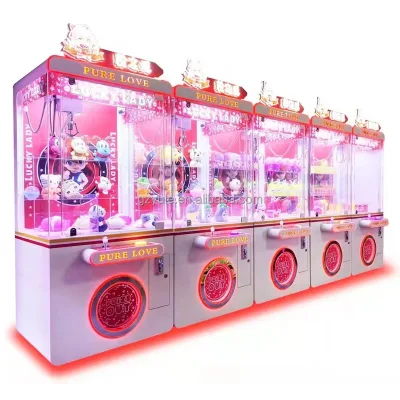


Crane Claw Machine Coin Operated Games Mini Doll Kids Small Claw Machine
$229.00 - $268.00
MOQ: 1 Pieces

Coin-Operated Claw Machine Game Machine Mini Doll Kids Small Claw Machine
$229.00 - $268.00
MOQ: 1 Pieces


Comprehensive Sourcing Guide
Strategic Sourcing Guide for Pink Mini Claw Machines
Procuring a Pink Mini Claw Machine for commercial or entertainment venues requires a disciplined approach that balances aesthetic requirements with technical reliability and regulatory compliance. The market for these amusement devices is characterized by a wide variance in specifications, particularly regarding dimensions, power consumption, and payment integration. Buyers focusing on the "Pink Mini Claw Machine" keyword must navigate a landscape where visual customization is often paired with complex mechanical and electrical systems. This guide outlines the critical factors for sourcing these units, ensuring that procurement decisions are grounded in verified product attributes rather than marketing generalizations.
Technical Specifications and Dimensional Analysis
The physical footprint and internal architecture of a claw machine are paramount for venue planning. When sourcing a pink variant, buyers must verify that the aesthetic choice does not compromise the operational envelope. The product data indicates a standard "Doll Machine" type with a specific model designation often associated with dimensions around 8192202cm for larger units, while "mini" variants may adhere to different standards, such as the L55W32H155cm specification observed in single mini boutique models.
A critical distinction in the supply chain is the variance in "prod_standard" dimensions. Observed data reveals a spectrum of packaging and product standards, ranging from 231932 to 302636, and even 25.523.539.5. These figures likely represent internal component sizes or packaging constraints rather than the final assembled footprint. Buyers must explicitly request the assembled dimensions in centimeters to ensure the unit fits the intended floor space. The "Single package size" is frequently cited as 80X60X50 cm, which is essential for logistics planning and warehouse storage.
Furthermore, the mechanical configuration is a key differentiator. The observed "Claw Type" is specified as a "Three-Claw" system, which is the industry standard for most doll machines. However, the "Operated system" varies significantly, ranging from coin or bill acceptors to card readers. The "Voltage" specifications are equally diverse, with listings showing 110V/220V/230V compatibility, alongside specific 220V-only models. This variability necessitates a strict verification of the power supply requirements against the local grid standards of the installation site. The "Power" consumption is noted at 60W, a relatively low figure that suggests energy efficiency, but this must be confirmed for the specific model selected, as high-end versions with card readers and advanced lighting may draw more power.
Compliance, Certification, and Safety Standards
In the amusement equipment sector, regulatory compliance is non-negotiable. The supply chain data indicates that products may carry certifications such as RoHS, ISO, and CE. While these are listed as high-confidence attributes for certain models, buyers must treat them as observations of specific batches rather than universal guarantees for all pink mini claw machines. The "CE" certification, in particular, is a critical marker for entry into European markets, indicating conformity with health, safety, and environmental protection standards.
Buyers should verify the validity of these certifications for the specific unit being purchased. The "prod_standard" values listed, such as 25 X 23 X 34 or 19x16x31cm, appear to be internal reference codes or packaging dimensions rather than recognized international safety standards. Consequently, relying on these codes for compliance is insufficient. Instead, procurement teams must request the official test reports and certificates from the manufacturer. The "Condition" of the product is listed as "New," which is a standard expectation, but the integrity of the electrical components must be validated against the stated voltage and power ratings.
The "Material" composition is identified as "Plastic," which is typical for the cabinetry and claw mechanisms. However, the quality of this plastic determines durability and safety. Buyers should inquire about the flame retardancy ratings of the plastic materials used, especially for indoor venues with high foot traffic. The "Warranty" period is observed at 18 Months, which serves as a baseline for after-sales support. This warranty should explicitly cover the mechanical claw assembly, the electrical control board, and the payment system, as these are the components most prone to failure.
Cost Drivers and Pricing Dynamics
The pricing structure for pink mini claw machines is influenced by several variables, including customization, payment systems, and volume. The observed price range in the market spans from 6.65 to 1095 USD, a disparity that reflects the difference between basic coin-operated units and advanced models with card readers and custom branding. The "MOQ" (Minimum Order Quantity) ranges from 1 to 60, indicating that single-unit purchases are feasible for small operators, while bulk orders may unlock different pricing tiers.
The "Customization" attribute is a primary cost driver. The data confirms that "Customization" is available and that the "Service" includes OEM and ODM capabilities. Buyers seeking a specific shade of pink, custom logos, or unique control panel layouts should anticipate a premium over standard models. The "Brand Name" YULE games is associated with these products, but the availability of "is_customized" options suggests that private labeling is a common practice.
Additionally, the "Packaging Details" involving bubble pack, stretch films, and wood frames add to the logistical cost. The "Single gross weight" of 68.000 kg for standard units and 100kg for others significantly impacts shipping costs. Buyers must factor in freight charges, which can vary based on the weight and dimensions of the shipment. The "Selling Units" are listed as "Single item," which simplifies the procurement process for individual buyers but may result in higher per-unit costs compared to container-load orders.
Typical Applications and Operational Context
The versatility of the Pink Mini Claw Machine makes it suitable for a wide array of commercial applications. The "Age" specifications list categories such as >3 Years, <3 years, >6 Years, and >8 Years, suggesting the product is designed for a broad demographic, though the "Three-Claw" mechanism and "Doll Machine" type are most commonly targeted at children and young adults. The "Product Name" "Single Mini Boutique Doll Machine" implies a specific use case in retail environments, shopping malls, or boutique arcades where space is limited but visual appeal is critical.
The "Operated system" options allow for flexibility in revenue collection. Models with "coin or bill or card acceptor" capabilities are ideal for high-traffic venues where cash handling is minimized. The "Version" setting languages feature is particularly valuable for international locations or tourist-heavy areas, allowing operators to adjust the interface to local languages. The "Plug Type" is noted as "Us Plug," which is a specific requirement for North American markets; buyers in other regions must ensure the supplier provides the appropriate plug adapter or wiring configuration to match local electrical standards.
The "Color" options, including Pink, Blue, Black, and others, allow for brand alignment. A pink machine can be strategically placed in areas targeting a specific demographic or to match a venue's interior design scheme. The "Type" classification as a "Racing Game Machine" in some listings appears to be a data inconsistency, as the primary description is "Doll Machine." Buyers should clarify the exact game mechanics to ensure the unit matches the intended entertainment offering.
Supplier Evaluation and Verification Protocols
Selecting a reliable supplier is critical for long-term success. The "Place of Origin" is consistently listed as Guangdong, China, a major manufacturing hub for amusement equipment. However, the presence of multiple "prod_model" numbers, such as SP260403435, SP260403433, and SPKDL872, indicates a vast product catalog. Buyers must verify that the specific model number corresponds to the exact specifications required.
The "Service" offering of OEM and ODM suggests that suppliers are capable of custom manufacturing. However, buyers should evaluate the supplier's capacity to deliver on time and their track record for quality control. The "Warranty" of 18 Months is a strong indicator of supplier confidence, but the terms of the warranty must be clearly defined. Does it cover shipping costs for replacements? What is the process for claiming warranty service? These details are essential for risk management.
Buyers should also assess the "Packaging" quality. The use of "Seal Box" or "Color Box" with "bubble pack+stretch films+wood frame" is a robust method for protecting the unit during transit. The "Single package size" and "Single gross weight" data must be cross-referenced with the supplier's shipping quotes to avoid unexpected logistics costs. The "Condition" being "New" is a standard requirement, but buyers should request photos of the actual production line or finished units to verify the quality of the "Plastic" materials and the finish of the "Pink" color.
Quality Control and Long-Term Procurement Considerations
Ensuring the longevity of the Pink Mini Claw Machine requires a proactive quality control strategy. The "Power" rating of 60W and the "Voltage" specifications must be tested upon arrival to ensure the unit operates safely and efficiently. The "Claw Type" mechanism should be tested for grip strength and consistency, as this is the core function of the machine. The "Operated system" for coin, bill, or card acceptance should be rigorously tested to prevent jamming or rejection errors.
For long-term procurement, the availability of spare parts is a key consideration. The "Warranty" period covers the initial 18 months, but what happens after? Buyers should inquire about the availability of replacement parts such as claws, motors, and control boards. The "Customization" aspect, while attractive, can complicate future repairs if proprietary parts are used. Therefore, buyers should prioritize suppliers who offer standard, interchangeable components even for customized units.
The "Color" consistency is another factor for long-term maintenance. If a machine is damaged, can the supplier provide a replacement part that matches the original "Pink" shade? The "Material" being "Plastic" means that UV exposure and wear can affect the appearance over time. Buyers should consider the environmental conditions of the installation site and select models with high-quality, UV-resistant plastics if the machine will be placed near windows or in outdoor areas.
In conclusion, sourcing a Pink Mini Claw Machine involves a careful balance of aesthetic preferences, technical requirements, and regulatory compliance. By focusing on verified specifications, understanding the cost drivers, and establishing robust supplier relationships, buyers can secure units that meet their operational needs while minimizing risk. The diversity in models, from the 8192202cm standard to the L55W32H155cm mini boutique versions, offers flexibility, but it also demands a meticulous approach to verification and quality assurance.
FAQs
What are the standard dimensions for a Pink Mini Claw Machine?
Standard assembled dimensions vary, with some models measuring 81*92*202cm while mini boutique units are often L55*W32*H155cm. Buyers must verify the specific product size before purchase as packaging standards range widely from 23*19*32 to 30*26*36.
Can I customize the color and branding of the machine?
Yes, customization is available for colors like pink, blue, and black, along with OEM and ODM services. Buyers can request specific branding, but they should confirm that the customized plastic materials meet durability and safety requirements for their venue.
What voltage and power specifications does the machine require?
The machine typically operates at 60W with voltage options of 110V, 220V, or 230V depending on the model. Buyers must ensure the selected unit matches their local grid standards, as some listings specify 220V only or require specific plug types like US plugs.
Which certifications are available for these amusement machines?
Certain models carry RoHS, ISO, and CE certifications to ensure safety and regulatory compliance. Buyers should request official test reports for the specific batch, as these certifications are observations of specific units rather than universal guarantees for all pink mini claw machines.
What is the minimum order quantity for purchasing a single unit?
The minimum order quantity ranges from 1 to 60 units, allowing for single-item purchases. This flexibility supports small operators, though bulk orders may unlock different pricing tiers and shipping efficiencies depending on the supplier's capacity and packaging requirements.
How long is the warranty period for the claw machine?
The standard warranty period is 18 months, covering mechanical and electrical components. Buyers should verify if this warranty includes shipping costs for replacements and whether it explicitly covers the claw assembly, control board, and payment system against failure.