Source Plastic Metal Tailgate Release Handle for Automotive Use
Find and compare 30 listings for the Plastic Metal Tailgate Release Handle. Evaluate options including steel, iron, and zinc alloy variants with CE and TUV certifications. Compare specs and request quotes for reliable automotive components; compare the available evidence and request quotations based on your requirements.
Key considerations
Products List


Trunk Latch for 15798062 Car Tailgate Trunk Boot Switch Handle Cover Replacement
$22.00 - $25.00
MOQ: 10 Pieces


Metal Hybrid Plastic Side Release Buckle Half Metal Custom Logo Side Release Buckles
$0.70 - $0.77
MOQ: 5000 Pieces

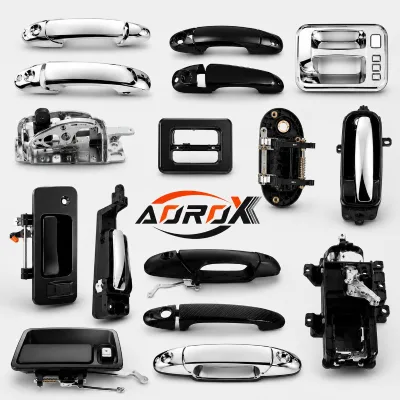


Comprehensive Sourcing Guide
Plastic Metal Tailgate Release Handle Sourcing Guide
Procuring a Plastic Metal Tailgate Release Handle requires distinguishing between automotive components and general hardware, as the supply chain often mixes these categories. The observed product data reveals a mix of materials including steel, plastic, and zinc alloy, with specific models like the SML-TG and VT-handle-2 appearing alongside automotive parts. Buyers must verify that the specific handle intended for a vehicle tailgate is distinct from generic cabinet or drawer hardware, which shares similar naming conventions but serves entirely different mechanical functions.
The market signals indicate a wide range of customization options, with some listings offering fixed rotary styles while others provide push or pull mechanisms. It is critical to confirm the working voltage and electrical requirements, as some observed items list a 12V working voltage, suggesting they may be electronic switches rather than purely mechanical latches. Sourcing teams should prioritize suppliers who explicitly define the product type as an automobile component to avoid receiving furniture-grade handles that lack the necessary durability for vehicle applications.
Product Scope and Observed Listing Signals
The product scope for tailgate release handles spans various material compositions, with observed listings featuring steel, iron, and zinc alloy constructions. While some data points mention plastic materials, the structural integrity required for a tailgate release often relies on metal reinforcements or full metal bodies. Buyers should scrutinize the material specification to ensure the handle can withstand the mechanical stress of repeated opening and closing cycles without deformation or failure.
Listing signals also vary significantly in terms of packaging and model identification, with some items packed on pallets and others in cartons containing 100 pieces. The observed models range from SML-TG to specific automotive identifiers like LY-N16-035-1, indicating a fragmented catalog where generic and specialized parts are often listed together. Procurement teams must carefully map the observed model numbers to their specific vehicle requirements to ensure compatibility with existing mounting systems and latch mechanisms.
Technical Specifications to Verify
Technical verification must begin with the physical dimensions and mounting configurations, as observed standards include measurements like 1382.6cm and 30X17X25cm. These dimensions likely refer to packaging or specific sub-components rather than the handle itself, necessitating a request for precise engineering drawings. Buyers should confirm the hole distance, which is observed as 32mm in some furniture contexts, to ensure it aligns with the specific vehicle's mounting hole pattern.
The mechanical operation of the handle is another critical specification, with observed attributes including push or pull actions and non-spring end connections. Some listings indicate a bowl shape handle switch, while others describe a button mechanism, requiring the buyer to select the actuation style that matches the vehicle's ergonomic design. Additionally, the working voltage of 12V observed in some listings suggests that electronic integration may be required, demanding verification of the electrical interface and power supply compatibility.
Compliance and Safety Documentation
Compliance documentation is essential for automotive components, with observed certifications including CE, ISO, RoHS, and CCC. These certifications indicate that the supplier has met specific regional safety and environmental standards, which is particularly important for parts installed in vehicles intended for export markets. Buyers should request valid certificates for the specific batch of handles to ensure that the materials used do not contain restricted substances and that the manufacturing process adheres to safety protocols.
For automotive applications, additional standards such as TUV and GS may be relevant, as observed in some listings for general hardware. While these certifications are valuable, they must be verified against the specific regulatory requirements of the destination market. Procurement teams should ensure that the supplier provides a Declaration of Conformity that explicitly covers the tailgate release handle, confirming that the product meets the necessary impact resistance and durability standards for vehicle safety.
Cost Drivers and Commercial Terms
Cost drivers for tailgate release handles are heavily influenced by the material composition, with zinc alloy and steel typically commanding higher prices than plastic-only alternatives. The observed price range of 0.01 to 1000 USD suggests a vast disparity between low-cost generic parts and high-specification automotive components. Buyers must clarify whether the quoted price includes tooling costs for custom molds, as customization is listed as available but often incurs significant upfront investment.
Commercial terms such as Minimum Order Quantity (MOQ) and lead times vary widely, with observed MOQs ranging from 1 to 10,000 units. The packaging details, which include pallets and cartons, also impact logistics costs and should be factored into the total landed cost calculation. Buyers should negotiate clear terms regarding payment schedules and delivery timelines, ensuring that the supplier can meet production schedules without compromising on quality or material specifications.
Supplier Qualification and Quality Control
Supplier qualification requires a thorough review of their manufacturing capabilities and quality control processes, particularly given the mix of materials and product types observed. Buyers should verify that the supplier has experience producing automotive-grade components, as the standards for tailgate handles differ significantly from those for furniture or general hardware. Requesting samples for stress testing and dimensional verification is a critical step to ensure the product meets the required performance criteria.
Quality control checks should focus on the consistency of the finish, the strength of the connection points, and the reliability of the actuation mechanism. Observed attributes like the "New" condition and specific warranty periods of 12 months provide a baseline for expectations, but these should be backed by a robust inspection protocol. Buyers should implement a pre-shipment inspection to verify that the handles match the approved samples and that the packaging protects the components from damage during transit.
Long-Term Procurement Checks
Long-term procurement checks involve establishing a relationship with the supplier to ensure consistent supply and quality over time. This includes monitoring the supplier's ability to maintain material consistency, particularly when switching between different metal alloys or plastic formulations. Buyers should require regular quality reports and maintain open communication channels to address any potential issues with the tailgate release handles before they impact production schedules.
It is also vital to review the supplier's capacity for customization and their ability to adapt to design changes or regulatory updates. The observed availability of customization suggests that the supplier can accommodate specific requirements, but this flexibility must be managed through clear change control procedures. Regular audits and performance reviews will help ensure that the supplier continues to meet the high standards required for automotive components, safeguarding the integrity of the final vehicle assembly.
FAQs
What materials are used in these plastic metal tailgate release handles?
These tailgate release handles are made from materials such as plastic, iron, and zinc alloy, depending on the model. Plastic handles suit cabinet, drawer, dresser, and wardrobe applications, while metal variants provide greater durability. The model listing shows steel construction for cantilever lift products and zinc alloy hook styles, so buyers should confirm the material per model before ordering.
Which models of tailgate release handle are available in this listing?
Available model references include SML-TG, VT-handle-2, VT-2# handle, FX-10104, FX-10106, FX-10037, FX-10416, FX-10078, and LY-N16-035-1. Each model differs in material, dimensions, and application, so review the specification blocks before requesting a quotation. If you need a specific size or finish, provide the model number when contacting the supplier so they can confirm current availability.
How are these handles packed for shipment?
Packing varies by product line. The VT-handle-2 model is packed in cartons with 100 pieces per carton, while cantilever lift products ship on pallets. Automobile components such as the tailgate rear handle use neutral packing, which suits buyers who resell under their own brand. Confirm the exact carton dimensions and gross weight with the supplier when calculating freight costs for your destination.
Can the Plastic Metal Tailgate Release Handle be customized?
Yes, customization is available for these handles. The product attributes list customization as available and customized options as supported, covering factors such as color, size, and finish. Provide drawings or samples with your requirements, and expect minimum order quantities and lead times to differ from standard catalog items. Discuss tooling costs and approval samples before confirming a customized production order.
What certifications do these products carry?
Certifications listed across the range include CE, ISO, RoHS, and CCC for the cantilever lift models, TUV and GS for certain items, and CE for the VT-2# handle. Certification coverage is product specific, so always request the relevant certificate copy for the exact model you intend to purchase. This ensures the handle complies with the import requirements of your target market.
How do I verify specifications before placing a bulk order?
Check the listed specifications first, such as the 1200*80*50 standard for the VT-handle-2, the 13*8*2.6cm size for FX-10104, and the 32mm hole distance for cabinet handles. Then request a sample to confirm fit, finish, and operating feel. For automobile components, verify working voltage details like the listed 12V two-pin button design, and confirm warranty terms, which are stated as 12 months.