Source Plastic Spoon Packing Machine for Tea, Meat, and Dairy
Compare 30 plastic spoon packing machines from verified Chinese suppliers. These automatic forming, filling, and sealing units handle vegetables, fruits, fish, meat, snacks, and dairy products with customizable film widths and speeds up to 180 bags per minute; compare the available evidence and request quotations based on your requirements.
Key considerations
Products List


Automatic Plastic Bag Honey Spoon Packing Machine Ice Cream Spoon Packaging Machine
$3800.00 - $4000.00
MOQ: 1 Pieces


Factory Direct Sale Automatic Disposable Spoon Flow Packing Machine with Good Price
$3600.00 - $3800.00
MOQ: 1 Pieces


Automatic Horizontal Plastic Forks Knives Cutlery and Spoon Packing Machine
$3350.00 - $3650.00
MOQ: 1 Sets


Automatic Honey Spoon Machine for Plastic Honey Spoon Packaging Machine
$24800.00 - $25000.00
MOQ: 1 Pieces

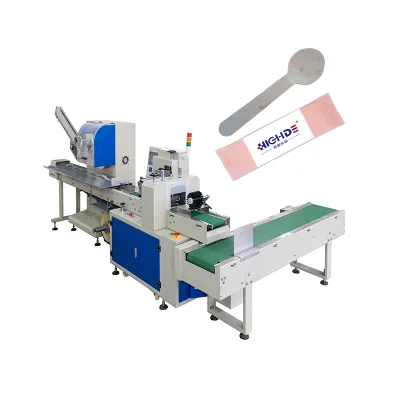


Comprehensive Sourcing Guide
Plastic Spoon Packing Machine Sourcing Guide
Buyers seeking automated packaging solutions for plastic cutlery must first distinguish between machines designed for forming, filling, and sealing versus those dedicated solely to bagging. The observed market data indicates a strong presence of horizontal, electric-driven units capable of handling thermoplastic materials in film form. These systems are engineered to process a wide array of food and non-food items, including vegetables, fruits, meats, and dairy products, suggesting their versatility extends beyond simple cutlery to broader consumer goods.
When evaluating specific listings, procurement teams should note that models like the HP-250D and DPP-350 offer distinct forming functions such as bag molding and sealing. The presence of computerized automation and hydraulic-mechanical clamping ways in certain configurations points to high-precision operations suitable for high-volume production lines. Buyers must verify if the specific machine's forming species aligns with the intended packaging format, whether it involves standard bags or specialized pouches for retail distribution.
Product Scope and Observed Listing Signals
The current catalog of available machinery reveals a diverse range of capabilities, from extrusion-based parison making to stretch blow molding methods using PET raw materials. Listings indicate that some units are specifically configured for film widths up to 350mm and can accommodate bag lengths ranging from 65mm to 280mm. This variability suggests that a single machine type may not suffice for all packaging needs, requiring buyers to match the machine's physical constraints with their specific product dimensions and throughput requirements.
Observations of packaging speeds ranging from 40 to 180 bags per minute highlight the performance differences between entry-level and industrial-grade units. The power consumption figures, such as the 2.6kw rating on specific models, provide a baseline for energy planning, while machine weights around 580kg indicate the substantial footprint and stability required for continuous operation. Buyers should carefully review the maximum roll film width and product height limits to ensure the selected equipment can handle their specific plastic spoon packaging dimensions without modification.
Technical Specifications to Verify
Technical due diligence must begin with the machine's structural configuration, as horizontal designs dominate the observed listings for this application. Buyers need to confirm the plasticizing method, specifically whether the unit utilizes a screw type mechanism suitable for thermoplastic processing, as this directly impacts the consistency of the formed packaging. The distinction between automatic and semi-automatic grades is critical, with the majority of observed units being fully automatic and computerized to ensure repeatable sealing quality and operational efficiency.
Dimensional verification is equally important, as the physical footprint of these machines varies significantly, with some models measuring nearly 4 meters in length. The standard export packing often involves wooden boxes, which protects the equipment during transit but requires specific handling protocols upon arrival. Buyers should cross-reference the listed voltage requirements, typically 220V at 50/60Hz, against their facility's power infrastructure to avoid costly electrical retrofitting or the need for step-down transformers.
Compliance and Safety Documentation
Safety and regulatory compliance are paramount when importing industrial machinery, with CE certification appearing as a standard requirement for many listed units. This certification indicates adherence to European health, safety, and environmental protection standards, which is often a prerequisite for importing into various global markets. Buyers must request the specific test reports and conformity declarations associated with the CE mark to ensure the machine meets the latest safety directives for electrical and mechanical components.
In addition to CE, ISO9001 certification for the manufacturing process suggests a commitment to quality management systems, though this applies to the supplier's production rather than the individual machine's performance. Documentation should also include detailed manuals for the hydraulic and mechanical clamping ways, which are critical for maintaining consistent pressure during the sealing process. Procurement teams should verify that all safety guards and emergency stop mechanisms are clearly documented and compliant with local occupational safety regulations in the destination country.
Cost Drivers and Commercial Terms
The price range for these machines is exceptionally broad, spanning from nominal entry-level costs to substantial investments exceeding $55,000, driven primarily by automation levels and forming capabilities. Factors influencing cost include the complexity of the computerized control systems, the precision of the screw-type plasticizing mechanism, and the inclusion of specialized tooling for specific bag dimensions. Buyers should anticipate that higher-priced units offering greater packaging speeds and wider film compatibility will deliver a better return on investment for large-scale operations.
Commercial terms such as Minimum Order Quantity (MOQ) and lead times vary significantly, with observed ranges extending from single units to thousands. The packaging method, often a standard export wooden box, adds to the overall logistics cost and must be factored into the total landed cost calculation. Buyers should negotiate clearly on the scope of the supply, ensuring that the quoted price includes all necessary accessories, spare parts, and the specific technical documentation required for immediate installation and commissioning.
Supplier Qualification and Quality Control
Supplier qualification requires a rigorous assessment of the manufacturing origin, with notable production hubs identified in Shanghai, Suzhou, and Zhejiang. These regions have established ecosystems for packaging machinery, but buyers must verify the specific factory's capacity to support the claimed automation and customization features. The presence of customization options suggests that suppliers can adapt machines for specific needs, but this requires clear communication of technical requirements to avoid misalignment between the delivered product and the buyer's expectations.
Quality control protocols should extend beyond the initial factory inspection to include pre-shipment testing of the machine's forming and sealing functions. Buyers should request video evidence of the machine running at its maximum specified speed to verify the stability of the hydraulic and mechanical clamping systems. It is essential to confirm that the supplier provides a comprehensive warranty and accessible after-sales support, particularly for troubleshooting the computerized systems that govern the machine's operation.
Long-Term Procurement Checks
Sustainable procurement involves establishing a clear maintenance schedule for the machine's critical components, such as the screw type plasticizing unit and the hydraulic clamping system. Regular inspection of the electrical components and the computerized control interfaces is necessary to prevent downtime and ensure consistent packaging quality over the machine's lifespan. Buyers should secure a supply of recommended spare parts, including seals and sensors, to minimize the impact of inevitable wear and tear during high-volume production cycles.
Future-proofing the investment requires monitoring the evolution of packaging standards and material compatibility, particularly as the industry shifts toward more sustainable film materials. Buyers should maintain open communication with the supplier to understand potential upgrades or modifications that could extend the machine's utility as packaging regulations change. Establishing a long-term partnership with a qualified supplier ensures access to technical updates and support, safeguarding the operational efficiency of the plastic spoon packing line for years to come.
FAQs
What forming functions does the machine perform?
The machine performs forming, filling, and sealing functions in a single automated process. It is designed for bag moulding applications using electric drive systems. This capability allows it to handle various products like vegetables, fruits, and dairy items efficiently without manual intervention.
Which certifications do the machines hold?
Selected models hold CE and ISO9001 certifications to ensure safety and quality standards. These certifications verify that the equipment meets international requirements for industrial machinery. Buyers can rely on these documented standards when selecting a unit for their production line.
Can the machine handle different packaging materials?
Yes, the machine processes thermoplastic materials and film types for various packaging needs. It supports roll films with widths up to 350mm and handles solid material types. This flexibility allows it to adapt to different product requirements including snacks, drinks, and cosmetics.
What is the maximum packaging speed?
The machine achieves a packaging speed ranging from 40 to 180 bags per minute. This output rate depends on the specific model and the dimensions of the bags being produced. It is suitable for medium to high-volume production lines requiring consistent throughput.
Where are these machines manufactured?
Manufacturing origins include Shanghai, Suzhou, and Zhejiang in China. Different models are produced in these specific locations, ensuring regional supply chain capabilities. Buyers can expect products to originate from these established industrial hubs within the country.
What is the standard machine size?
Standard dimensions vary by model, with sizes like 3770 by 670 by 1450mm or 4090 by 680 by 1420mm. These measurements define the physical footprint required for installation in a facility. Specific dimensions are provided for each model to assist in factory planning.
Is customization available for this equipment?
Customization is available to meet specific production requirements and operational needs. Buyers can request adjustments to accommodate unique product sizes or workflow integrations. This flexibility ensures the machine can be tailored to fit diverse manufacturing environments effectively.