Source Plated Sport Medal for Awards, Events, and Competitions
Compare 30 listings for Plated Sport Medal options featuring custom sizes, die casting techniques, and various plating finishes. Buyers can evaluate specifications including thickness, attachment methods, and delivery times from suppliers in Guangdong, China.
Key considerations
Products List
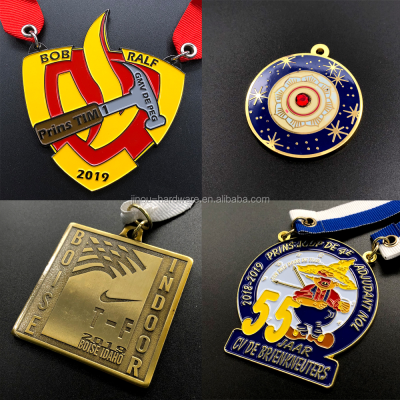


Custom High Quality Rotate Medal Sport Medal Championship Award Medallion
$0.55 - $0.90
MOQ: 500 Pieces


Comprehensive Sourcing Guide
Strategic Sourcing Guide for Plated Sport Medals
Understanding Product Variants and Technical Specifications
The market for plated sport medals presents a diverse landscape where "medal" serves as a broad category encompassing distinct product types with varying technical requirements. Based on current market observations, buyers must distinguish between standard sport medals and organizational badges, as the sourcing criteria differ significantly. The core product category identified is the "Medal," specifically designed for sports themes, yet the data also reveals the presence of "Organization Badge" variants which may serve similar ceremonial purposes but utilize different attachment mechanisms.
Technical specifications for these items are highly customizable, a critical factor for procurement teams managing large-scale events. The thickness of the metal components typically ranges from 2mm to 7mm, allowing buyers to select a gauge that balances durability with weight. For sport medals, the shape is predominantly round, though the "Customized" size attribute indicates flexibility for unique event branding. The production techniques observed include casting, die casting, and stamping, with enamel work (both soft and hard) serving as a primary decorative method. The plating finish is frequently gold, but the "Flashing" feature suggests options for dynamic visual effects or specific lighting requirements during award ceremonies.
A detailed comparison of the two primary observed variants highlights the need for precise specification before ordering:
| Feature | Sports Custom Metal Medal | Organization Badge |
|---|---|---|
| Primary Usage | Gift, Decoration, Souvenirs | Organizational identification |
| Wearing Way | Hanging | Breast |
| Attachment | Lanyard | Safety Pin |
| Typical Size | Customer Size / Customized | Standard 42mm/45mm/50mm or Custom |
| Production Technique | Casting, Die Casting, Stamping | Enamel, Die Casting |
| Logo Application | Customized Logo | Soft Enamel, Hard Enamel, Embossed, Laser |
| Material | Alloy, Metal | Metal |
Buyers must verify the specific "Wearing Way" and "Attachment" requirements early in the sourcing process. A medal intended for hanging around the neck requires a robust lanyard, whereas a badge designed for lapel wear necessitates a secure safety pin mechanism. The material composition is listed generally as "Alloy" or "Metal," with "Other" also appearing in the dataset, suggesting a need for material verification to ensure the alloy meets specific weight or corrosion resistance standards for the intended event duration.
Compliance, Certification, and Material Verification
When sourcing metal products from manufacturing hubs, verifying compliance and material integrity is paramount. The supplied data indicates that the "prod_standard" is often listed as "custom," which implies that there may not be a single, universal international standard governing all listed products. Instead, compliance is frequently defined by the buyer's specific requirements or the standards of the importing region. For instance, the "Regional Feature" is noted as Europe, which suggests that some suppliers may align their production with European safety or material regulations, but this should not be assumed without explicit verification.
Buyers should prioritize requesting material safety data sheets (MSDS) or specific alloy composition reports, particularly regarding lead content and nickel release, as these are common regulatory concerns for metal goods entering the European and North American markets. The term "custom" for the product standard indicates that the supplier may not hold pre-existing certifications for every SKU. Therefore, the procurement strategy must include a clause requiring the supplier to adhere to the specific standards requested by the buyer, such as REACH compliance for European markets or CPSIA for the United States.
Furthermore, the "Feature" attributes include "Flashing" and "3D," which may involve the use of specific chemical coatings or enamels. Buyers must ensure that these decorative elements do not introduce hazardous substances. While the data mentions "Soft Enamel" and "Hard Enamel" as logo application methods, it does not specify the chemical composition of the enamel. It is essential to request third-party test results confirming that the plating (e.g., gold) and enamel processes do not exceed permissible limits for heavy metals. The "Age" attribute is listed as "Modern," which generally implies contemporary manufacturing standards, but this is a descriptive term rather than a certification. Procurement teams should treat all standard claims as observations and demand documented proof of compliance for the specific batch ordered.
Cost Drivers and Pricing Dynamics
The pricing structure for plated sport medals is influenced by several variable factors, with the observed price range in the market spanning from $0.14 to $5.00 USD. This wide variance is not indicative of a single product tier but rather reflects the complexity of customization, material thickness, and finishing techniques. The primary cost drivers include the thickness of the metal, which ranges from 2mm to 7mm. A thicker medal requires more raw material and longer production cycles, directly increasing the unit cost.
The complexity of the logo application is another significant cost determinant. Options such as "Soft Enamel," "Hard Enamel," "Embossed," and "Laser" engraving involve different levels of labor and machinery time. Hard enamel, which involves filling the recessed areas with enamel and polishing it flat, typically commands a higher price than soft enamel or simple embossing. Additionally, the plating process, specifically the "Gold" plating observed in the data, adds cost based on the thickness of the plating layer and the quality of the base metal.
Order volume plays a crucial role in unit pricing, with the observed Minimum Order Quantity (MOQ) ranging from 5 to 500 units. Buyers purchasing at the lower end of the MOQ spectrum (e.g., 5-50 units) will likely face a higher per-unit cost due to the fixed setup costs for die casting and stamping molds. Conversely, orders approaching the 500-unit threshold may benefit from economies of scale. The "Customization" attribute is available, but it is important to note that custom designs often incur additional tooling fees. Buyers should clarify whether the quoted price includes the cost of creating a new mold or if they are utilizing an existing stock mold with a custom logo applied.
Typical Applications and Event Integration
The primary application for these products is clearly defined by the "Theme: Sports" and "Usage: Gift, Decoration, Souvenirs" attributes. Plated sport medals are integral to award ceremonies for athletic competitions, ranging from local community runs to international championships. The "Hanging" wearing way with a "Lanyard" attachment makes them ideal for events where participants need to wear the award visibly during the ceremony or as a keepsake.
Beyond traditional sports, the data also points to applications in corporate and organizational settings through the "Organization Badge" variant. These items, featuring "Breast" wearing ways and "Safety Pin" attachments, are suitable for employee recognition programs, conference attendance, or membership identification. The "3D" feature and "Customized Logo" capabilities allow these items to serve as high-value promotional gifts that reinforce brand identity.
The "Regional Feature: Europe" suggests that these products are frequently utilized in European sporting events or by European organizations sourcing globally. The "Modern" age classification indicates that the designs are current and suitable for contemporary branding needs. When planning an event, buyers should consider the logistics of distribution. The "Product Packing" options, which include "OPP Bag," "Bubble Bag," "Plastic," and "Velvet Box," offer varying levels of protection and presentation. For high-profile events, the "Velvet Box" option provides a premium unboxing experience, while "OPP Bag" is sufficient for bulk distribution where presentation is secondary to function.
Supplier Evaluation and Production Capabilities
Evaluating suppliers for plated sport medals requires a focus on their technical capabilities and logistical reliability. The "Place of Origin" is consistently identified as "Guangdong, China," a major manufacturing hub known for its metalworking and casting industries. Buyers should verify the specific factory location within this region, as proximity to ports can impact shipping efficiency. The "Technics" listed include "Die Casting & Stamping" and "Enamel," indicating that a capable supplier should possess in-house capabilities for these processes to ensure quality control and faster turnaround times.
The "Delivery Time" data provides a benchmark for supplier performance, with sampling taking 7-10 days and production requiring 12-15 days. These timelines are relatively short, suggesting efficient production lines, but buyers must confirm if these are standard lead times or if they apply only to specific order sizes. The "Shipment" options, including "Sea/Air/DHL, FedEx, UPS," indicate that suppliers are equipped to handle various logistics needs. However, the choice of shipping method will significantly impact the total landed cost and delivery speed.
When evaluating a potential supplier, buyers should request samples to verify the "Thickness" (2-7mm) and the quality of the "Plating." The "Feature: Flashing" should be tested to ensure it meets the visual expectations for the event. Additionally, the "Brand" attribute is listed as "Sjr" in some contexts, but buyers should be cautious of relying on brand names alone and instead focus on the supplier's track record with similar custom orders. The ability to handle "Customized" sizes and logos is a key differentiator, and suppliers should demonstrate a portfolio of previous custom work to prove their design and manufacturing flexibility.
Quality Control and Long-Term Procurement Considerations
Establishing a robust quality control (QC) protocol is essential for ensuring that the final products meet the event's standards. Given the "Customized" nature of the products, a pre-production sample approval process is non-negotiable. Buyers should insist on a physical sample that matches the approved digital artwork, paying close attention to the "Logo" application method (e.g., Soft Enamel vs. Hard Enamel) and the "Plating" finish. The "Product Packing" must also be verified to ensure that the "Velvet Box" or "Bubble Bag" protects the medals during transit without causing scratches or tarnishing.
For long-term procurement, consistency in material quality is critical. The "Material" is listed as "Alloy" or "Metal," but the specific alloy composition can vary between batches. Buyers should include a clause in their contract requiring the supplier to maintain consistent material specifications across all production runs. The "Standard" being "custom" means that the buyer effectively defines the standard; therefore, detailed technical drawings and material specifications should be part of the purchase order to avoid ambiguity.
Payment terms observed include "T/T, Paypal, Western Union," and in some cases "L/C, Credit Card." For large orders, using a Letter of Credit (L/C) can provide security for both parties. The "MOQ" range of 5-500 allows for flexibility, but buyers should negotiate tiered pricing to optimize costs as order volumes increase. Finally, the "Lead Time" of 12-15 days for production should be factored into the event timeline with a buffer for potential delays. By maintaining clear communication regarding specifications, materials, and timelines, buyers can ensure a successful procurement process for high-quality plated sport medals.
FAQs
What customization options are available for plated sport medals?
Customization is available for size, logo, and plating. Buyers can select customer sizes ranging from 42mm to 50mm or request fully custom dimensions. The logo can be applied using soft enamel, hard enamel, embossing, or laser techniques to meet specific branding needs.
How long does production take for custom metal medals?
Production typically requires 12 to 15 days after sample approval. Sampling takes 7 to 10 days to finalize the design and material specifications. These timelines apply to orders meeting the standard minimum order quantity requirements for the specific manufacturer.
Which materials are used to manufacture these sport medals?
The medals are primarily made from alloy or metal. Some listings specify the material as other or general metal types. Buyers should verify the specific alloy composition to ensure it meets weight and corrosion resistance standards for their event.
Can I get medals with a gold plating finish?
Yes, gold plating is a standard finish option for these medals. The plating is applied over the metal or alloy base to provide a durable and attractive appearance. Buyers should confirm the plating thickness during the sampling phase to ensure quality.
What are the standard wearing methods for these medals?
Medals are designed for hanging via a lanyard attachment. Alternatively, organization badges use a breast wearing way with a safety pin. The choice depends on whether the item is intended for sports award ceremonies or organizational identification purposes.
How does the MOQ affect the unit price of medals?
The minimum order quantity ranges from 5 to 500 units. Lower quantities near the 5-unit mark often incur higher per-unit costs due to setup fees. Larger orders approaching 500 units benefit from economies of scale and lower pricing tiers.
What packaging options are provided for shipping medals?
Packaging includes OPP bags, bubble bags, plastic boxes, and velvet boxes. The choice depends on the event's presentation needs, with velvet boxes offering a premium look for high-profile awards. All options protect the medals during transit.