Source Polyester Cotton Waiter Apron and Frock Set for bars, kitchens, and dining
Compare 30 listings for the Polyester Cotton Waiter Apron and Frock Set designed for kitchen, bar, and dining room use. Buyers can evaluate features like waterproofing, pocket counts, and customization options from suppliers in China.
Key considerations
Products List
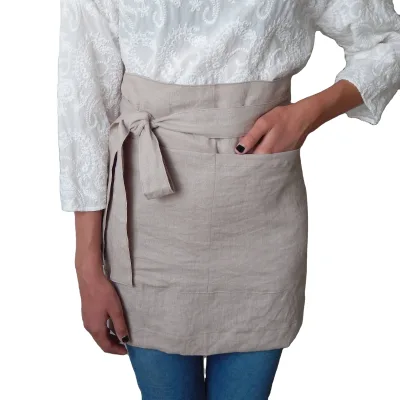


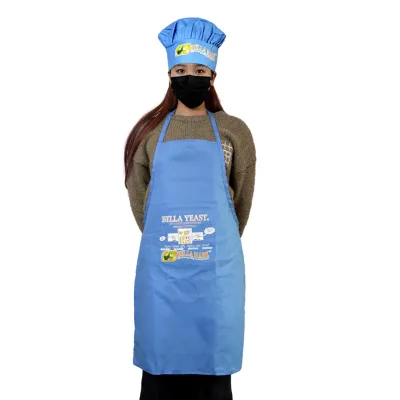
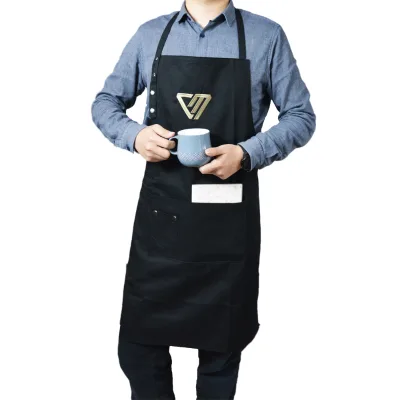


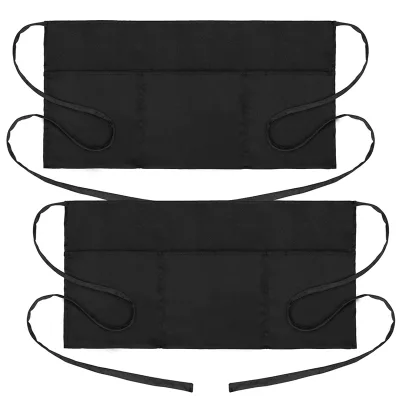
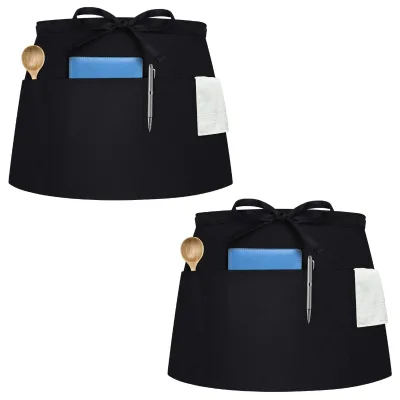
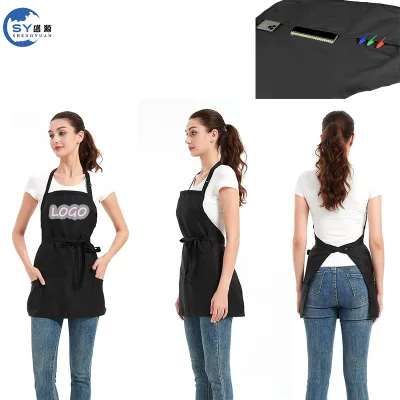
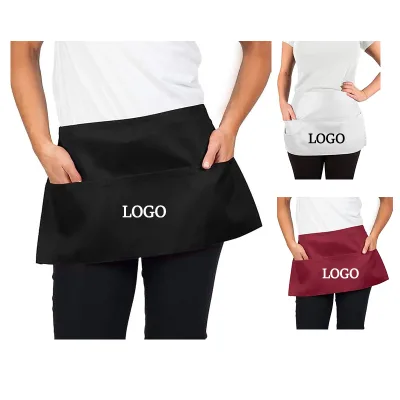
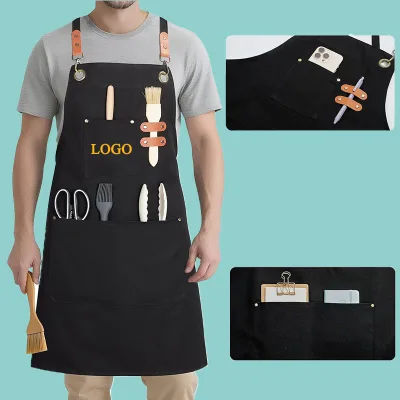
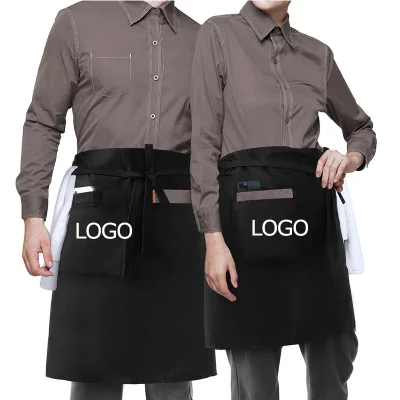
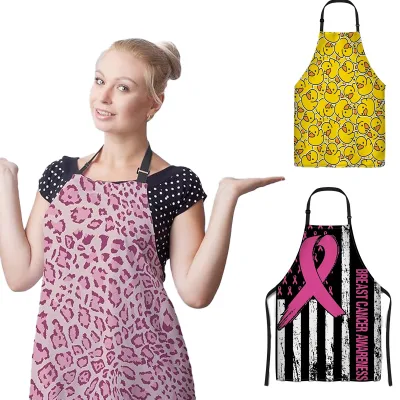
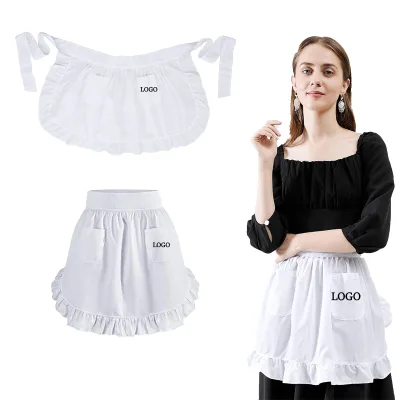
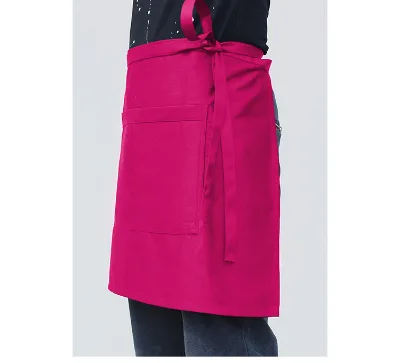
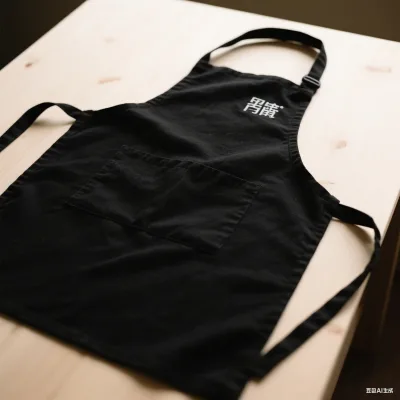
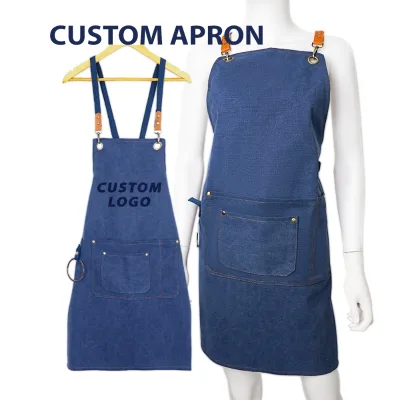


Comprehensive Sourcing Guide
Strategic Sourcing Guide for Polyester Cotton Waiter Apron and Frock Sets
Understanding Product Variations and Material Composition
When sourcing a Polyester Cotton Waiter Apron and Frock Set, buyers must first navigate the significant variation in material composition observed across the market. The core keyword suggests a blend, yet the available product data reveals distinct categories. Some listings specify a "cotton linen" or pure "Cotton" material, emphasizing breathability and a traditional aesthetic suitable for high-end dining environments. In contrast, other entries explicitly list "Polyester" as the primary material, often paired with claims of being "Waterproof" and "Anti-Dirty." This divergence is critical because the performance characteristics of a cotton-based frock differ fundamentally from a polyester-based one. Cotton offers superior comfort and absorbency, making it ideal for kitchen environments where heat and sweat are factors, while polyester provides durability, stain resistance, and ease of care, which are vital for high-volume service areas.
Buyers should not assume that a single product listing satisfies all criteria. The observed product attributes indicate that some items are classified as "Waist" aprons, while others are "Sleeved Aprons" or part of a "Apron Kit." The "Waist" style typically offers a classic look for waitstaff, whereas "Sleeved" options provide more comprehensive coverage, often preferred in kitchen or cleaning roles. Furthermore, the "Weaving method" is noted as "Woven," which generally implies a tighter, more durable fabric structure compared to knitted alternatives. When evaluating a potential supplier, the procurement team must verify the exact fiber content ratio. Is the product a true blend, or is it marketed as such while being predominantly one material? The presence of "Eco-freindly" attributes in some listings suggests that natural fibers may be a selling point for certain market segments, whereas "Waterproof" claims point toward synthetic treatments.
Technical Specifications and Functional Attributes
The technical specifications of a waiter apron and frock set are defined by a combination of functional requirements and design elements. A primary observation from the market data is the prevalence of "Functional, pocket apron" styles. The number of pockets varies, with listings indicating a range of "1-4" pockets. This variation directly impacts the utility of the garment for waitstaff who need to carry order pads, pens, or small tools. The "Style" is described as "functional," suggesting that the design prioritizes utility over purely decorative elements. Additionally, the "Classification" ranges from "Apron Kit" to "Sleeved Apron," indicating that buyers can source either a standalone piece or a complete uniform set.
Size customization is a major technical consideration. The data shows options for "Onesize" and "Customized" dimensions, with some suppliers offering sizes "At your request." This flexibility is essential for ensuring a professional fit across diverse staff demographics. The "Gender" specification is noted as "Man and Women" or "Chef or Waitress," confirming that the designs are generally unisex but may be tailored for specific roles. The "Pattern" is frequently "Printed," and the "Logo" can be applied via "printed, embroidery or adding a logo label." The "Imprint Size" is described as "Big," which is advantageous for branding visibility. However, buyers must verify the actual dimensions of the print area to ensure it aligns with their branding guidelines. The "Disposal" status is consistently "Non-Disposable," confirming that these are durable goods intended for long-term use rather than single-service applications.
Compliance, Certification, and Origin Verification
Navigating the compliance landscape for textile procurement requires careful attention to origin and certification data. The product listings indicate origins in "Guangdong, China" and "Zhejiang," both major manufacturing hubs. While the "place of origin" is listed as "China" in general terms, specific regional data can help buyers assess supply chain logistics and labor standards. One specific listing mentions a "CE" standard. It is crucial for buyers to understand that CE marking is typically associated with products sold in the European Economic Area, often indicating compliance with safety, health, and environmental protection requirements. However, the presence of a CE reference in a product description does not automatically guarantee that every item in a batch meets the standard. Buyers must request valid certification documents and verify the scope of the certification to ensure it covers the specific textile product being purchased.
Beyond specific certifications, general compliance regarding material safety and labor practices is paramount. Since the products are intended for "Kitchen Dining Room Indoor" use and "Cleaning Supplies," the materials must be safe for food service environments. The "Eco-freindly" attribute suggests an environmental consideration, but buyers should verify what this entails—whether it refers to organic cotton, low-impact dyes, or sustainable manufacturing processes. The "Standard" section of the product data is sparse, with only "CE" explicitly mentioned. This absence of other widely recognized standards (such as ISO or specific textile safety certifications) means that buyers cannot rely on the listing alone for compliance assurance. Instead, the procurement strategy must include a requirement for the supplier to provide third-party test reports for colorfastness, shrinkage, and chemical content (such as AZO dyes or formaldehyde) to ensure the garments are safe for repeated contact with food and skin.
Cost Drivers and Minimum Order Quantity Analysis
The financial structure of sourcing polyester cotton waiter aprons is influenced by several key drivers, primarily material cost, customization complexity, and order volume. The observed price range in the market is quite broad, spanning from $0.01 to $4.00 USD. This wide variance is likely driven by the difference between basic, non-branded items and those featuring complex embroidery, custom logos, or premium material blends. The "Selling Units" are typically "Single item," which simplifies the calculation of unit costs but requires careful aggregation for total budget planning.
Minimum Order Quantity (MOQ) is another significant cost driver. The data reveals an MOQ range from 5 to 1000 pieces. Some suppliers may offer low MOQs of 5 to 100 units, which is beneficial for small businesses or trial orders, while others, particularly those offering high levels of customization like "Customized" logos or specific "Customized" sizes, may enforce an MOQ of 1000 pieces. The "Promotion Waiter Apron" model specifically lists an MOQ of 1000PCS, suggesting that high-volume promotional items often require larger commitments. Buyers should be aware that lower unit prices are almost invariably tied to higher MOQs. The "MOQ" of 1000 pieces for a specific model indicates that economies of scale are a primary factor in pricing. Additionally, the "Sample" availability is noted as "Available" with a "sample_time" of 5-7 working days. While samples are essential for quality verification, they often incur a separate cost and do not count toward the final order volume, which can impact the initial cash flow for new buyers.
Typical Applications and Operational Use Cases
The versatility of the Polyester Cotton Waiter Apron and Frock Set is evident in the diverse applications listed. The primary "Application" areas include "Bar Restaurant Kitchen," "Coffee Bar and working," and general "Cleaning" tasks. This indicates that the product is designed for a multi-role environment where staff may transition between serving, food preparation, and cleaning duties. The "Occasion" is frequently listed as "Giveaways" or "Promotion," highlighting the product's utility in marketing campaigns where branded apparel is distributed to staff or customers. The "Use" is described as "Cleaning Supplies" and "Cleaning," reinforcing the garment's role in maintaining hygiene standards in food service establishments.
The "Advantage" of being "Eco-freindly" and "Washable" makes these aprons suitable for frequent laundering, a necessity in high-traffic restaurants. The "Feature" set includes "durable" and "easy care," which are critical for reducing operational downtime and replacement costs. The "Usage" context of "Coffee Bar" suggests that the aprons must withstand exposure to hot liquids, coffee spills, and frequent washing. The "Waterproof" attribute found in some listings is particularly relevant for environments where liquid spills are common, offering an extra layer of protection for the wearer's clothing. Whether the application is for a "Chef," "Waitress," or general "Waiter," the garment must balance aesthetic appeal with robust functionality. The "Style" being "functional" ensures that the apron does not hinder movement, which is essential for the dynamic nature of restaurant work.
Supplier Evaluation and Quality Control Protocols
Evaluating suppliers for waiter aprons requires a rigorous approach to quality control and capability assessment. Given the variation in "Material" (cotton, polyester, blends) and "Weaving method" (woven), buyers must verify that the supplier can consistently produce the specific fabric composition required. The "prod_packing" details, such as "1PC/OPP Bag, 100PCS/CTN," provide insight into the supplier's packaging capabilities, which affect shipping costs and product protection. However, the "packing" can also vary, with some listings noting "One piece per polybag." Buyers should confirm the packaging standards to ensure the products arrive in good condition and are ready for immediate distribution or retail display.
Quality control should focus on the durability of the "Stitching," the integrity of the "Pockets," and the longevity of the "Logo" application. Since the "Logo" can be "printed, embroidery or adding a logo label," each method has different quality implications. Embroidery generally offers higher durability but may be more expensive, while printing is cost-effective but may fade over time. The "Feature" of being "Washable" must be validated through actual washing tests to ensure the garment does not shrink excessively or lose its color. The "Customization" aspect is a key differentiator; suppliers offering "Customized" sizes and "Customized" logos must demonstrate a robust production line capable of handling small-batch variations without compromising quality. Buyers should request a "sample" before committing to a large order, utilizing the 5-7 day sample time to evaluate the physical product against their specifications.
Long-Term Procurement and Supply Chain Considerations
For long-term procurement, buyers must consider the scalability and consistency of the supply chain. The "prod_model" variations, such as "Promotion Waiter Apron," "apron," and "turban," suggest that suppliers may offer a range of related products. This diversification can be advantageous for buyers looking to source complete uniform sets. However, it also requires careful management to ensure that all items meet the same quality standards. The "Lead time" is not explicitly defined in the provided data, but the "sample_time" of 5-7 working days suggests a relatively quick turnaround for prototypes. For mass production, buyers should negotiate clear lead times based on the MOQ and customization level.
Sustainability is another long-term consideration. The "Eco-freindly" attribute indicates a market trend toward environmentally responsible products. Buyers should inquire about the supplier's sustainability practices, such as water usage in dyeing processes or waste management. The "place of origin" in Guangdong and Zhejiang offers access to a mature textile ecosystem, but buyers should also assess the supplier's ability to adapt to changing environmental regulations. Finally, the "Customization" availability allows for brand differentiation, but it requires a stable relationship with the supplier to maintain consistency over time. By focusing on these long-term factors, buyers can secure a reliable supply of high-quality waiter aprons and frock sets that meet both operational needs and brand values.
FAQs
What materials are used for polyester cotton waiter aprons?
Products are available in cotton linen, pure cotton, or polyester materials. Buyers must verify the exact fiber content as listings vary between natural fibers for breathability and synthetics for waterproofing.
Can I customize the size and logo on these aprons?
Customization is available for sizes, logos, and specific designs. Suppliers offer options for printed or embroidered logos, though some models require a minimum order of 1000 pieces for custom work.
What is the typical minimum order quantity for these items?
The minimum order quantity ranges from 5 to 1000 pieces depending on the supplier and customization level. Standard promotional models often require an MOQ of 1000 pieces to achieve lower unit pricing.
Are these aprons suitable for kitchen and cleaning tasks?
Yes, they are designed for kitchen, dining, coffee bar, and cleaning applications. Features like being washable, durable, and waterproof make them suitable for high-traffic food service environments.
How long does it take to receive a sample?
Sample production typically takes 5 to 7 working days. Samples are available for quality verification before committing to a large order, though they may incur a separate cost.
Which certifications are associated with these apron products?
Some listings reference CE standards, but buyers must request valid certification documents for verification. The presence of a CE reference does not guarantee every item meets the standard without third-party proof.
What packaging methods are used for shipping these aprons?
Packaging options include one piece per polybag or 100 pieces per carton. Suppliers vary their packing methods, so buyers should confirm the specific packing standard to ensure product protection during transit.